Best beaches in North Carolina for families
Updated .
| Option | Lifeguards | Parking | Dogs on the Beach | Family Attraction |
|---|---|---|---|---|
A compact barrier island a few minutes east of Wilmington, and the busiest, most town-like beach on this list: a walkable village of shops and restaurants, a permanent surf-school scene, and one of the most heavily staffed strands in the state. Families with new swimmers tend to pick it for exactly that reason. The trade-off is cost and crowding, since the island fills on summer weekends and the meters run eight months of the year. Dog owners should look elsewhere for a summer trip. | Lifeguards on duty in summersource | Paid parking in seasonsource | Not allowed in summersource | Wrightsville Beach Museum of Historysource |
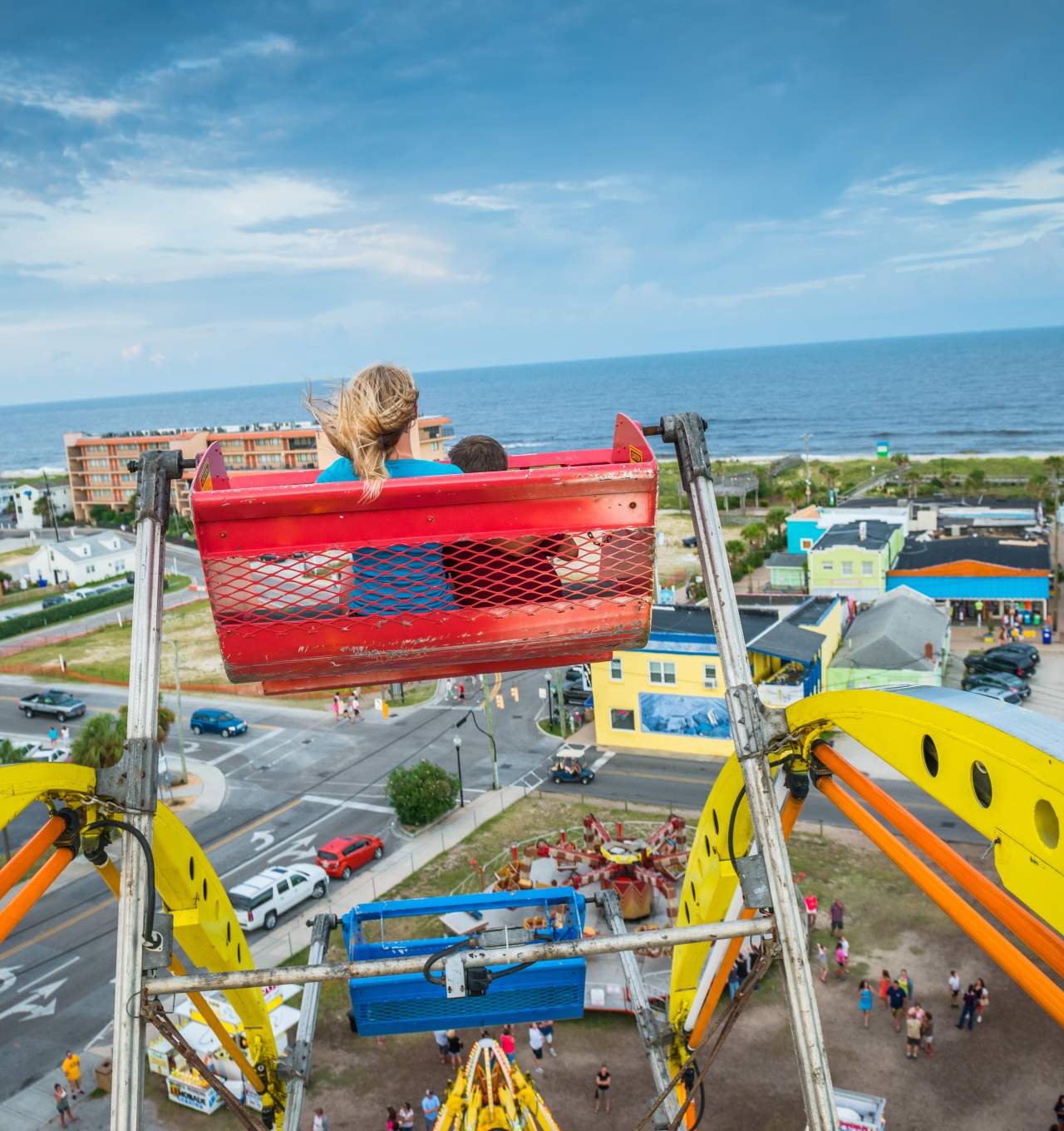
The one southern North Carolina beach town with a genuine boardwalk: a 1930s-era strip of shops, restaurants and amusement rides that Food and Wine ranked among the country's ten best, backed by a state park famous for its Venus flytraps. That makes it the easy pick for families who want somewhere to walk after dinner rather than a second night of cards in the rental. It is louder and more commercial than its neighbours on the same island, and the guarded strand is a modest three miles, so summer weekends feel busy. | Lifeguards on duty in summersource | Paid parking in seasonsource | Restricted hours in summersource | Carolina Beach Boardwalksource |
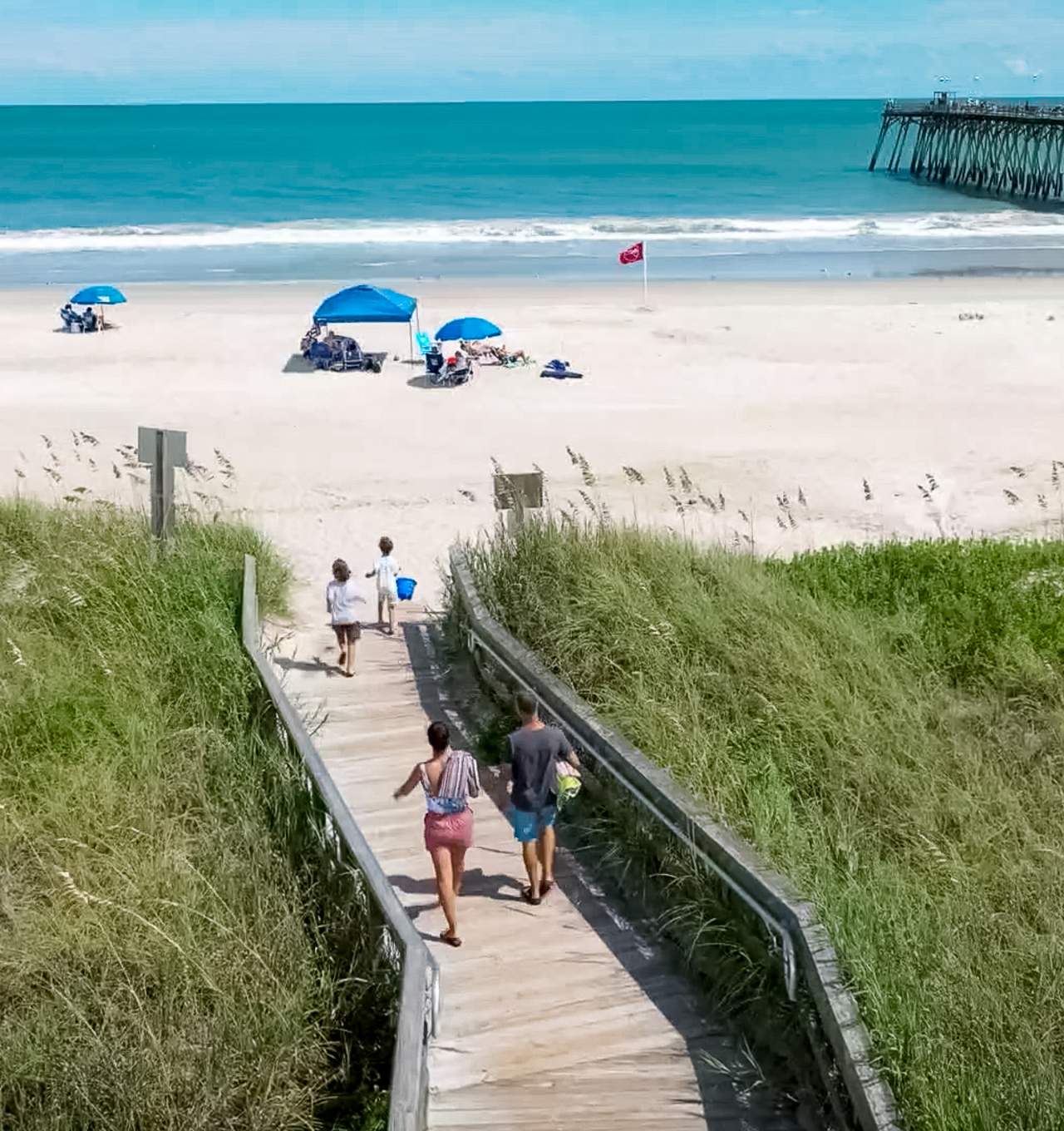
Kure Beach is the quiet southern half of Pleasure Island, a few minutes down the road from Carolina Beach and its amusements. Its own centre is a third-of-a-mile wooden boardwalk lined with benches and oceanfront swings, anchored by a fishing pier first built in 1923, and the aquarium and Civil War fort at Fort Fisher are a short drive further south. Families who want the boardwalk nearby but not outside the door usually end up here. There is much less to eat and shop for within walking distance than in Carolina Beach. | Lifeguards on duty in summersource | Paid parking in seasonsource | Restricted hours in summersource | Kure Beach fishing pier, the oldest on the East Coastsource |
The most developed town on the Crystal Coast, at the eastern tip of Bogue Banks, with hotels and rentals stacked close to the sand and a cluster of restaurants and shops around the Circle. Fort Macon State Park sits at the very end of the island: a restored Civil War fort, free to enter, with its own guarded swimming beach and miles of trails. Calmer water than the Outer Banks makes it a common choice for families with small children. One thing to check before booking a late-August trip is the town's lifeguard calendar, which winds down earlier than most. | Lifeguards on duty in summersource | Paid parking in seasonsource | Allowed year-roundsource | Fort Macon State Parksource |
Twelve miles of south-facing shoreline at the far western end of Bogue Banks, and the name that turns up most often on national best-family-beach lists. The scale is the whole point: even at peak season it is usually possible to find an uncrowded stretch of sand, and the water is gentler than the open Atlantic beaches further north. The town runs a longer guarded season than most of the coast, from spring into late September. It is mostly rental houses rather than hotels, and the nearest large town is a drive away. | Lifeguards on duty in summersource | Paid parking in seasonsource | Allowed year-roundsource | Bogue Inlet Piersource |
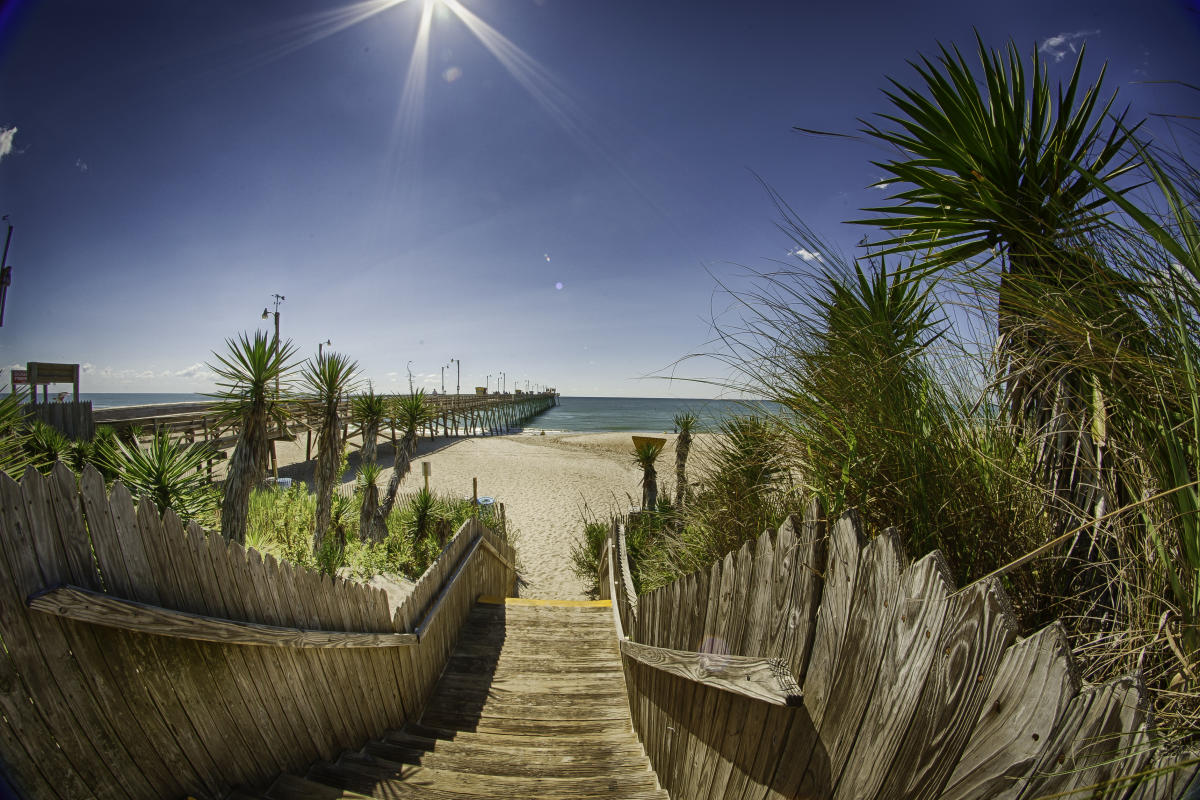
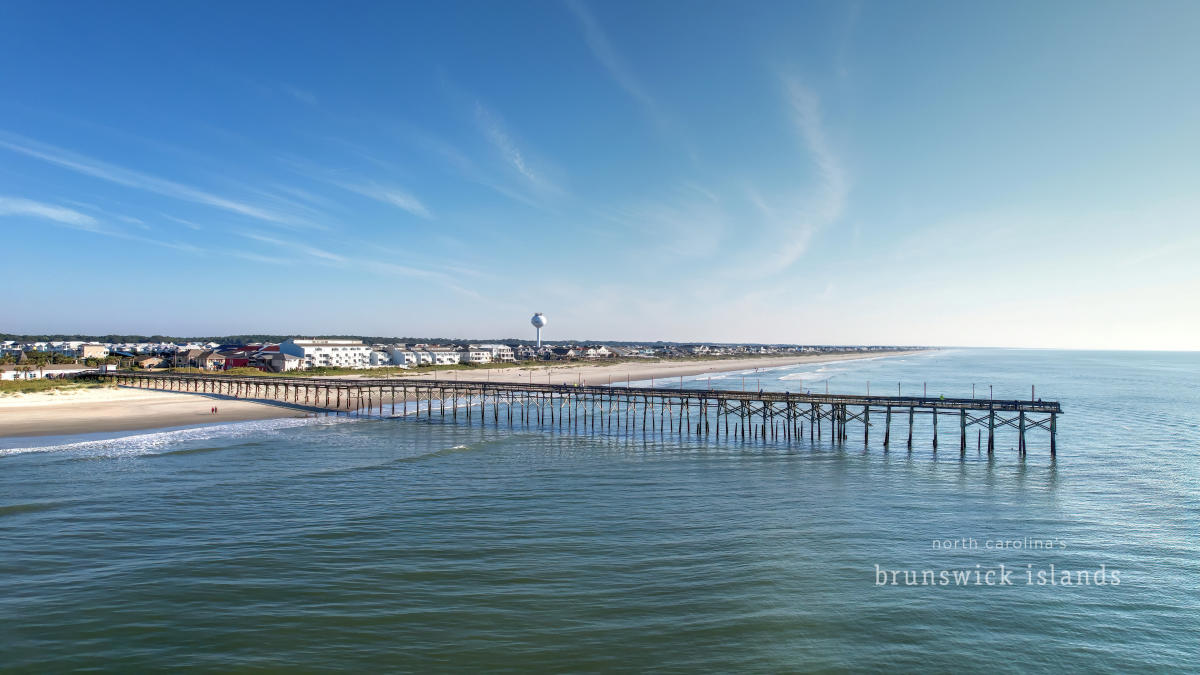
A Brunswick Islands beach that National Geographic Traveler named one of the best family beaches in the country, and it earns that on quietness rather than attractions. There is no boardwalk and no amusement strip: the island is almost entirely rental houses, with a fishing pier and a bridgeside park as the landmarks. Families come back year after year for wide, flat, uncrowded sand. The caveat that matters most for parents is that nobody is watching the water for you here. | No lifeguards on dutysource | Paid parking year-roundsource | Restricted hours in summersource | Shelling and bird watching on the undeveloped east endsource |
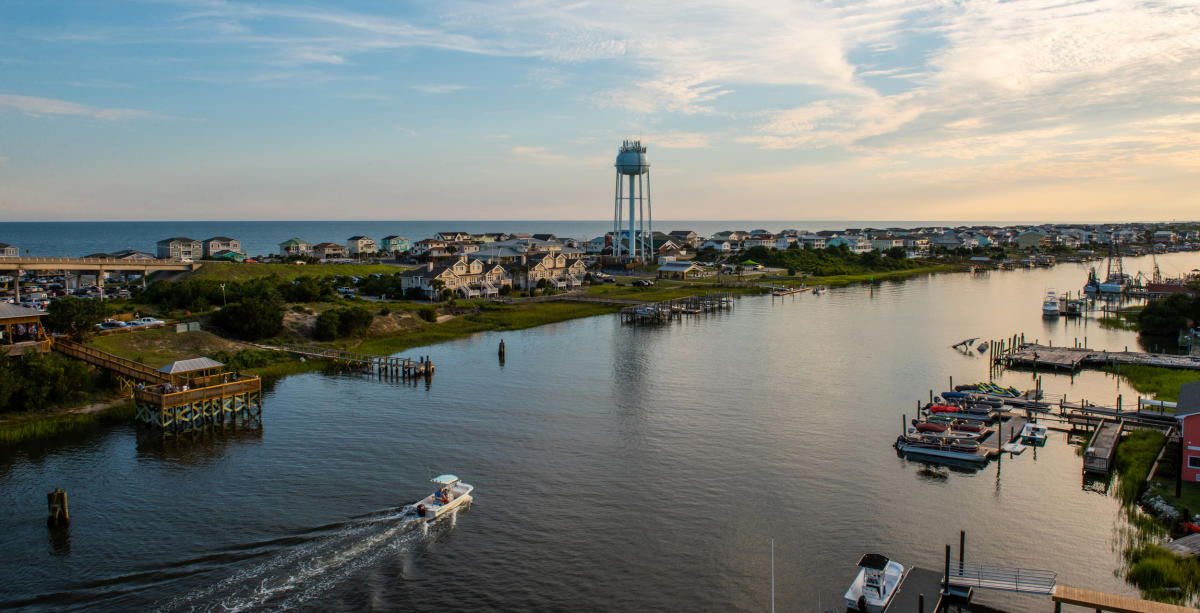
A small south-facing Brunswick island with a compact centre you can walk end to end: a fishing pier, a handful of restaurants with waterfront decks, and the Museum of Coastal Carolina and its touch tank a block off the sand. The same families have been coming for generations, which tells you most of what you need to know about the pace. It is a good fit for young children and a poor one for teenagers looking for nightlife. Swimming is unsupervised, a point the town's own beach rules make bluntly. | No lifeguards on dutysource | Paid parking in seasonsource | Restricted hours in summersource | Museum of Coastal Carolinasource |
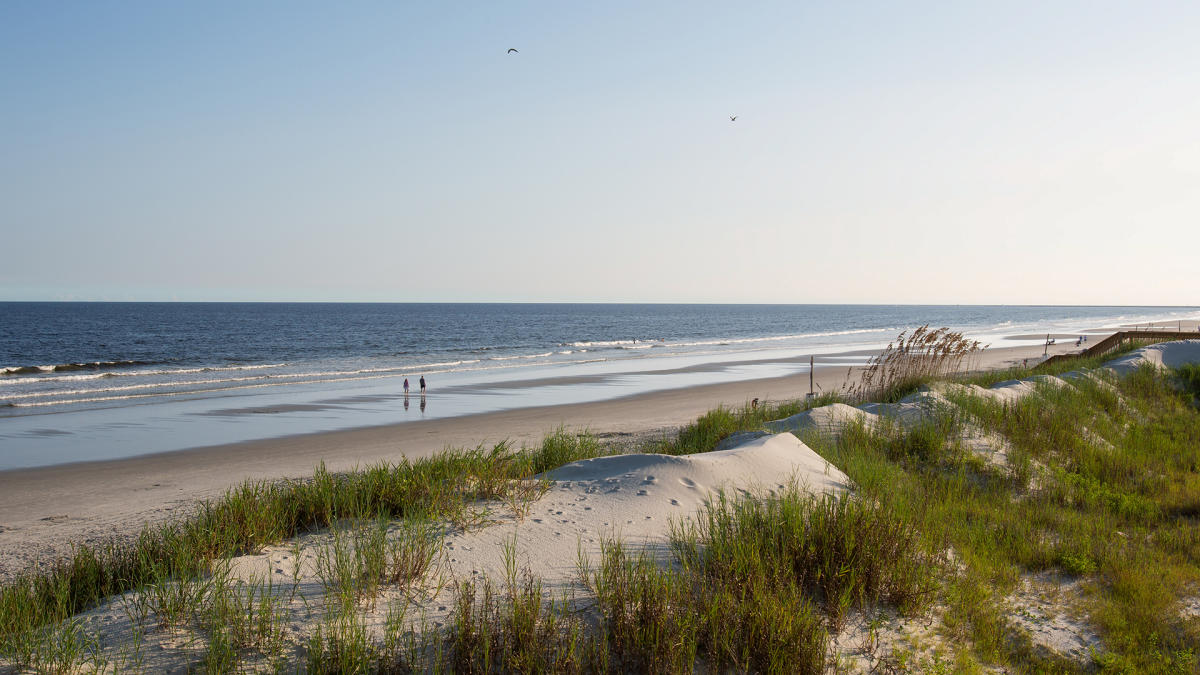
The southernmost of the Brunswick Islands and the quietest beach here, close enough to the South Carolina line to make Myrtle Beach a day trip. National Geographic put it on a list of the best beaches in the world, and the signature outing is the long walk west to undeveloped Bird Island and the Kindred Spirit Mailbox, where visitors leave notes in the notebooks kept inside. There is very little commercial development on the island, so plan on cooking in and driving out for almost everything else. | No lifeguards on dutysource | Paid parking in seasonsource | Restricted hours in summersource | Kindred Spirit Mailbox on Bird Islandsource |
The middle town on Topsail Island and its practical centre, with the groceries, restaurants and the ocean pier that the quieter ends of the island lack. Its best-known family stop is the Karen Beasley Sea Turtle Rescue and Rehabilitation Center on the mainland side, which runs ticketed guided tours of the turtle hospital. Topsail is close enough to Wilmington and Jacksonville to be an easy drive but far enough off the main tourist track to stay affordable. Treat the water as unguarded: the town's ocean rescue team responds to calls rather than watching from stands. | No lifeguards on dutysource | Paid parking in seasonsource | Allowed year-roundsource | Karen Beasley Sea Turtle Rescue and Rehabilitation Centersource |
The heart of Outer Banks family vacationing for well over a century, and the most complete town on this list: beach houses and seaside motels, an outlet mall and full-size groceries, Jennette's Pier, and the enormous sand dunes of Jockey's Ridge State Park across the bypass. It is also the most heavily guarded beach here, with more than fifteen stations running all summer, and parking at the town accesses has stayed free while much of the coast has gone metered. The Atlantic is rougher and the currents stronger than on the southern beaches, so it suits confident swimmers better than toddlers. | Lifeguards on duty in summersource | Free parkingsource | Allowed year-roundsource | Jockey's Ridge State Parksource |
The most practical base on the northern Outer Banks: dozens of public beach accesses a few streets apart, about twenty guarded stands in season, free parking, and grocery stores and restaurants within minutes of any rental. The Wright Brothers National Memorial sits in the middle of town, and the Avalon Fishing Pier is one of the last wooden piers left on the North Carolina coast. It is more built-up and less picturesque than Duck or the quieter end of Nags Head, which is exactly the trade you make for the convenience. | Lifeguards on duty in summersource | Free parkingsource | Restricted hours in summersource | Wright Brothers National Memorialsource |
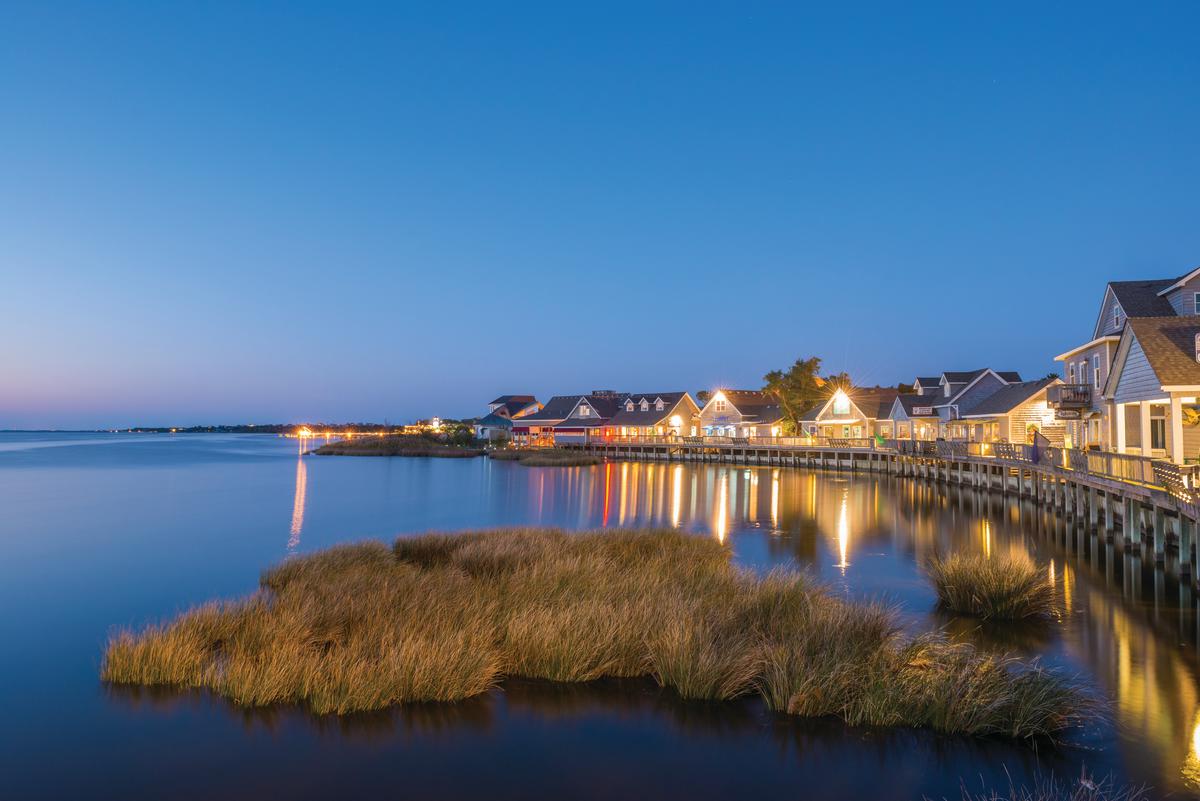
A small, wooded, deliberately low-key village at the northern end of the Outer Banks, built around a one-mile soundside boardwalk that links its shops and restaurants and is a genuine evening activity in itself. Duck also runs the longest guarded beach season of any town here, stretching from May into late October. The catch is access: the town keeps its beach accesses and parking for residents and guests, so it really only works if you are renting a house in town. Prices reflect that exclusivity. | Lifeguards on duty in summersource | No public beach parkingsource | Allowed year-roundsource | Duck's one-mile soundfront boardwalksource |