Best Camping Stoves
25 camping stoves compared on price, weight, fuel and ignition, from the 1.4 oz BRS-3000T to the Camp Chef Everest 2X and Coleman Cascade 3-in-1. Read our take
At a glance
| Option | Price | Stove Type | Fuel | Weight | Ignition | Packed Size |
|---|---|---|---|---|---|---|
| $50source | Small canistersource | Isobutane canistersource | 4.1source | Match-litsource | 1.3" x 1.6" x 3.1"source | |
| $85source | Small canistersource | Isobutane canistersource | 3.3source | Built-in ignitersource | 3.3" x 2.2" x 1.8"source | |
| $70source | Small canistersource | Isobutane canistersource | 3.8source | Built-in ignitersource | 4.7" x 3.9" x 3.6"source | |
| $50source | Small canistersource | Isobutane canistersource | 3.6source | Built-in ignitersource | 3.9" × 0.7" × 6.5"source | |
| $17source | Small canistersource | Isobutane canistersource | 1.4source | Match-litsource | 2" x 1.8" x 3.2"source | |
| $145source | Integrated canistersource | Isobutane canistersource | 12.2source | Built-in ignitersource | 4.1" x 7.1"source | |
| $180source | Integrated canistersource | Isobutane canistersource | 12.7source | Built-in ignitersource | 5" x 6"source | |
| $165source | Integrated canistersource | Isobutane canistersource | 7.3source | Match-litsource | 4.25" x 4.25" x 5"source | |
| $200source | Integrated canistersource | Isobutane canistersource | 14.7source | Match-litsource | 6" x 6" x 4.7"source | |
| $270source | Integrated canistersource | Isobutane canistersource | 15.1source | Match-litsource | 4.2" x 7"source | |
| $50source | Integrated canistersource | Isobutane canistersource | 15.7source | Built-in ignitersource | 5" x 6.8"source | |
| $140source | Liquid fuelsource | White gassource | 10.4source | Match-litsource | 4" x 4" x 4"source | |
| $200source | Liquid fuelsource | Multi-fuelsource | 10.9source | Match-litsource | 6 x 4 x 4 insource | |
| $220source | Liquid fuelsource | Multi-fuelsource | 15.2source | Match-litsource | 6" x 4" x 4"source | |
| $60source | Wood burningsource | Woodsource | 9source | Match-litsource | ||
| $199.95source | Wood burningsource | Woodsource | 32.96source | 5.0" x 7.91"source | ||
| $230source | Two-burner camp stovesource | Propanesource | 223.52source | Built-in ignitersource | 24" x 13" x 6"source | |
| $140source | Two-burner camp stovesource | Propanesource | 155.36source | Built-in ignitersource | 21" x 13" x 3.5"source | |
| $98source | Two-burner camp stovesource | Propanesource | 186.4source | Match-litsource | 22.5 x 5 x 14.5source | |
| $30source | One-burner camp stovesource | Butane or propanesource | 52.8source | Built-in ignitersource | 14" x 12" x 3.5"source | |
| $100source | One-burner camp stovesource | Butanesource | 48source | Built-in ignitersource | ||
| $160source | Freestanding two-burnersource | Propanesource | 488source | Match-litsource | 32.75 x 14 x 7.75 insource | |
| $285source | Two-burner camp stovesource | Propanesource | 207.2source | Built-in ignitersource | 22" x 12" x 4"source | |
| $80source | Two-burner camp stovesource | Propanesource | 72source | Built-in ignitersource | 10.63" x 9.06" x 5.12"source | |
| $350source | Two-burner camp stovesource | Propanesource | 102.4source | Built-in ignitersource | 9.75" x 4.5"source |









Our take
For most backpackers the Soto Amicus is the stove to buy: $50, 3.6 oz, and it lights with a push-button igniter. For car camping, the Camp Chef Everest 2X is the two-burner that gear testers rate highest, at $230 and about 14 pounds. If you want both, they are two different stoves, and this table shows why.
The real split is weight. The canister and liquid fuel stoves here weigh between 1.4 oz (BRS-3000T) and 15.7 oz (Fire Maple Fixed Star 1), and the heaviest pack stove, the wood-burning BioLite CampStove 2+, is about 2 pounds. The campground stoves start at 48 oz for the Snow Peak Home & Camp Burner and run to 488 oz for the freestanding Camp Chef Explorer. Within each group, the second split is fuel: screw-on isobutane canisters for most hikers, white gas or multi-fuel for deep cold and travel abroad, propane or butane at the campground, and wood for anyone who would rather not carry fuel at all.
Our picks
- Best backpacking value: Soto Amicus. $50 and 3.6 oz with a built-in igniter, cheaper than the MSR PocketRocket Deluxe at $85 for nearly the same weight.
- Lightest and cheapest: BRS-3000T. 1.4 oz for $17, the lightest stove in the table, though it has no igniter.
- Winter and expeditions: MSR WhisperLite. Runs on refillable white gas, which keeps working in cold that slows canisters, at $140 and 10.4 oz.
- Best for car camping: Camp Chef Everest 2X. $230 two-burner camp stove with a built-in igniter that packs to 24" x 13" x 6".
- Cheapest two-burner: ODSD 2 Burner. $80 for two propane burners with a built-in igniter, and only 72 oz for the stove alone.
Small canister stove or integrated system
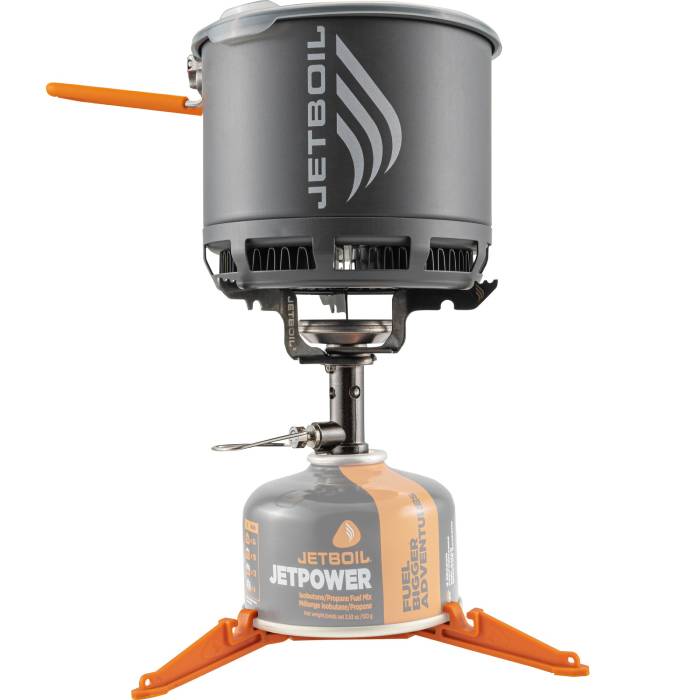
The five small canister stoves, from the BRS-3000T at 1.4 oz to the MSR PocketRocket 2 at 4.1 oz, cost $17 to $85 and you bring your own pot. The six integrated canister systems include the pot, which is why they weigh 7.3 oz (Jetboil Stash) to 15.7 oz (Fire Maple Fixed Star 1).
What the extra weight buys is efficiency and wind resistance: the MSR WindBurner and MSR Reactor, at $200 and $270, are built for cold, high and windy trips, while the Jetboil MiniMo at $180 is the integrated system for people who want to simmer. If you mostly boil water for freeze-dried meals, the Jetboil Stash at 7.3 oz is the lightest way into an integrated system.
Canister, liquid fuel or wood in the cold
Canister fuel loses pressure in freezing weather, and butane-only stoves suffer most: CleverHiker's reviewers watched the Snow Peak Home & Camp Burner struggle to crisp bacon on a 24-degree morning. The three liquid fuel stoves are the answer for winter. The MSR WhisperLite ($140) burns white gas, while the MSR WhisperLite Universal ($200) and MSR XGK EX ($220) are multi-fuel, so they take what a hardware store abroad sells. All three are match-lit and need priming.
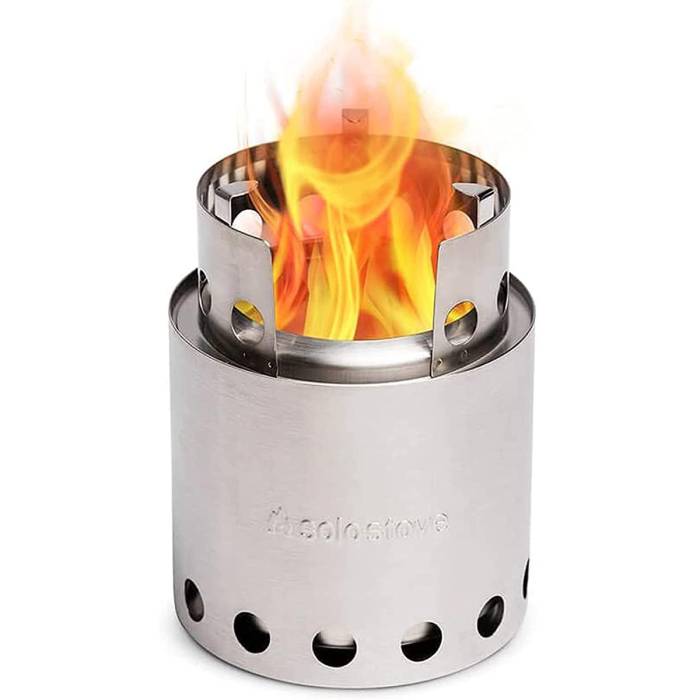
The two wood burners skip fuel entirely. The Solo Stove Lite is $60 and 9 oz; the BioLite CampStove 2+ is $199.95 and 32.96 oz, the extra weight going to a fan and a battery that can charge a phone. Both need dry sticks or pellets, and neither gives you fine flame control.
Picking a car-camping stove
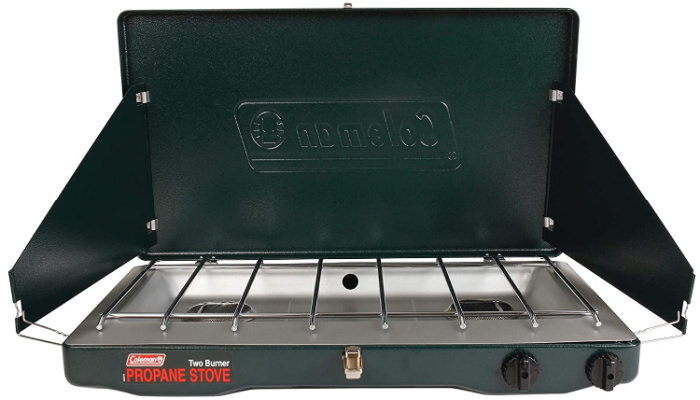
At the campground weight matters less than burners and fuel. The Gas One GS-3400P ($30) and Snow Peak Home & Camp Burner ($100) are single burners for coffee and one-pan meals. Among the two-burners, the ODSD 2 Burner at $80 is the cheapest and still has an igniter, the Coleman Classic 2-Burner Propane Stove at $98 is match-lit, the Coleman Cascade Classic at $140 adds an igniter, and the Camp Chef Everest 2X at $230 is the strongest performer.
Two of the two-burners trade on extras rather than power. The Coleman Cascade 3-in-1 ($285) comes with cast iron grill and griddle plates, and the Jetboil Genesis Basecamp ($350) folds down to 9.75" x 4.5" and weighs 102.4 oz, about 6.4 pounds. The Camp Chef Explorer ($160) is a different animal: a freestanding two-burner on legs that runs from a full-size propane tank and weighs 488 oz, about 30 pounds. Check that your vehicle has room for its 32.75 x 14 x 7.75 inch frame before you buy it for group trips.
The options in detail
MSR PocketRocket 2
The classic screw-onto-the-can backpacking stove, and the one a lot of hikers start with. Testers describe it as light, compact and durable, with better simmer control than you would expect from something this small, and it packs into a hard plastic case. Its fuel use is only average for its class, it has no push-button igniter, and the narrow pot supports are happier with small backpacking pots than with a wide pan.
MSR PocketRocket Deluxe
MSR's step up from the PocketRocket 2, with a push-button igniter and a burner head that testers found shines at precise, low-heat simmering, so it suits people who actually cook rather than just boil water. Fuel use landed mid-pack in testing. It costs noticeably more than the basic PocketRocket 2, and reviewers point to the Soto WindMaster as the stronger choice in wind.
Soto WindMaster
One of the highest-rated small canister stoves, prized for holding its flame in a breeze. It ships with a removable pot support that gives wider pots a stable base, and testers found it good at both simmering and boiling, slightly above average on fuel use for its class. It is among the more expensive small canister stoves, which reviewers say its versatility justifies.
Soto Amicus
A budget canister stove that testers rate as the best all-round value in its class: light, quick to light with its push-button igniter, and decent in wind for its size. Its pot stabilizers give small pots a steady footing. It is not the most fuel-efficient stove tested, so carry a little extra gas on longer trips.
BRS-3000T
An almost unbelievably small and cheap canister stove that ultralight hikers buy as a primary stove or a spare. Reviewers call it a middle-shelf stove at a bottom-shelf price. The trade-offs are real: it struggles badly in wind, simmers poorly, and some owners report durability problems, though the testers who bought it three times over several years had none.
Jetboil Flash
The archetypal all-in-one boil-water system: burner, insulated 1 L cup and canister stand nest together, and the latest version adds a better valve and a rubberized pot grip. Testers found it one of the more fuel-efficient stoves when the air is still, though efficiency drops by about a quarter in wind. Great for dehydrated meals and coffee, less good for real cooking, and heavier than ultralight options.
Jetboil MiniMo
Jetboil's integrated system for people who want to cook, not just boil: a wider pot and finer temperature control let it simmer far better than other integrated stoves. Testers recorded excellent fuel efficiency and found its cold-weather performance satisfactory. It is not the lightest integrated system and it is one of the more expensive ones.
Jetboil Stash
Jetboil's lightest integrated system, a minimalist burner and pot that nest together for boil-only trips. Testers were struck by its fuel efficiency, saying it sometimes doubled the life of a canister compared with rivals. There is no igniter, the pot is small, and simmering is not its strength, so it suits thru-hikers and solo trips rather than camp cooking.
MSR WindBurner
An integrated canister system built for bad weather, with a fully enclosed radiant burner that keeps working in gusts that slow other stoves down. Testers trusted it through four seasons, including cold and high-elevation trips, and it boils fast. It is heavy and bulky for summer backpacking, has no igniter, and is not meant for skillet cooking.
MSR Reactor
The most powerful integrated canister stove in this group, made for melting snow and boiling water fast in cold, high places. Testers found its fuel use held steady at altitude while other stoves faded. It is heavy, has no igniter, and is overkill for a few casual low-elevation trips a year.
Fire Maple Fixed Star 1
A low-cost take on the integrated canister system, with its own pot and a push-button igniter at a fraction of what the big names charge. Testers found it keeps up in some ways with stoves twice its price. It is the heaviest integrated system here and its fuel efficiency is closer to an ordinary canister stove, so pack extra fuel for long trips.
MSR WhisperLite
The long-running white gas stove that expedition backpackers have relied on for decades. It burns refillable liquid fuel, so it keeps working in deep cold where canisters fade, and it is easy to repair in the field. Lighting it means priming with a little burning fuel first, which takes practice, and casual backpackers are usually better served by a canister stove.
MSR WhisperLite Universal
A WhisperLite that also runs on canisters, which makes it the most versatile stove here: white gas, kerosene or unleaded fuel for cold trips and travel abroad, or a canister when you want easy simmering. Testers cooked for large groups on it, including on Denali. It costs more and weighs more than a simple canister stove, and liquid fuel still needs priming.
MSR XGK EX
MSR's expedition stove, a liquid fuel burner with very high heat output that runs on white gas, kerosene or diesel and is built for weeks of melting snow. Testers rate it the most dependable stove for cold, snowy places and praise how cleanly it burns, and its fuel use held up when temperatures dropped. It is heavy for a backpacking stove and more than a summer hiker needs.
Solo Stove Lite
A double-walled wood-burning stove that feeds its fire from below and above for a hot, low-smoke burn, so you never carry fuel. Reviewers liked its efficiency and stable pot support but noted there is no flame control and boiling is slow. It is heavier than a canister stove, though not carrying fuel offsets some of that, and it is sized for one or two people.
BioLite CampStove 2+
A wood-burning camp stove with a twist: built-in fan jets make the fire burn hotter and cleaner, and an onboard battery can charge a phone over USB. It burns small sticks or wood pellets, so there is no gas to buy, and BioLite sells kettle and grill add-ons. Owners note you have to keep feeding it fuel every minute or so while you cook.
Camp Chef Everest 2X
The two-burner car-camping stove gear testers hand their top award to. They praise its power, durability and simmering, the tall wind panels keep heat on the pan, and it is easy to clean. The catch is size: it is bulky and heavy, so it needs real trunk space.
Coleman Cascade Classic
Coleman's updated two-burner and an inexpensive way into a push-button igniter. It packs flat and testers found it fuel-efficient and good at simmering, so a propane bottle lasts. It is slow to boil water and loses ground in wind, so it suits simple campground cooking more than feeding a crowd at an exposed site.
Coleman Classic 2-Burner Propane Stove
The stove most people picture when they think of a camp stove, and still the sensible default for occasional car campers. Reviewers call it dependable, even-cooking and good at simmering, with adjustable wind panels and a slim profile that slides into a packed car. It is less powerful than the premium two-burners and must be lit with a match or lighter every time.
Gas One GS-3400P
A cheap single burner that runs on either a butane can or a propane bottle, so you can use whatever fuel the nearest shop has. Testers say it is the stove they reach for most for quick jobs like coffee or ramen. It has one modest burner and no windscreen, so it is slow and struggles in wind; buy it as a backup or a second burner rather than a group cooker.
Snow Peak Home & Camp Burner
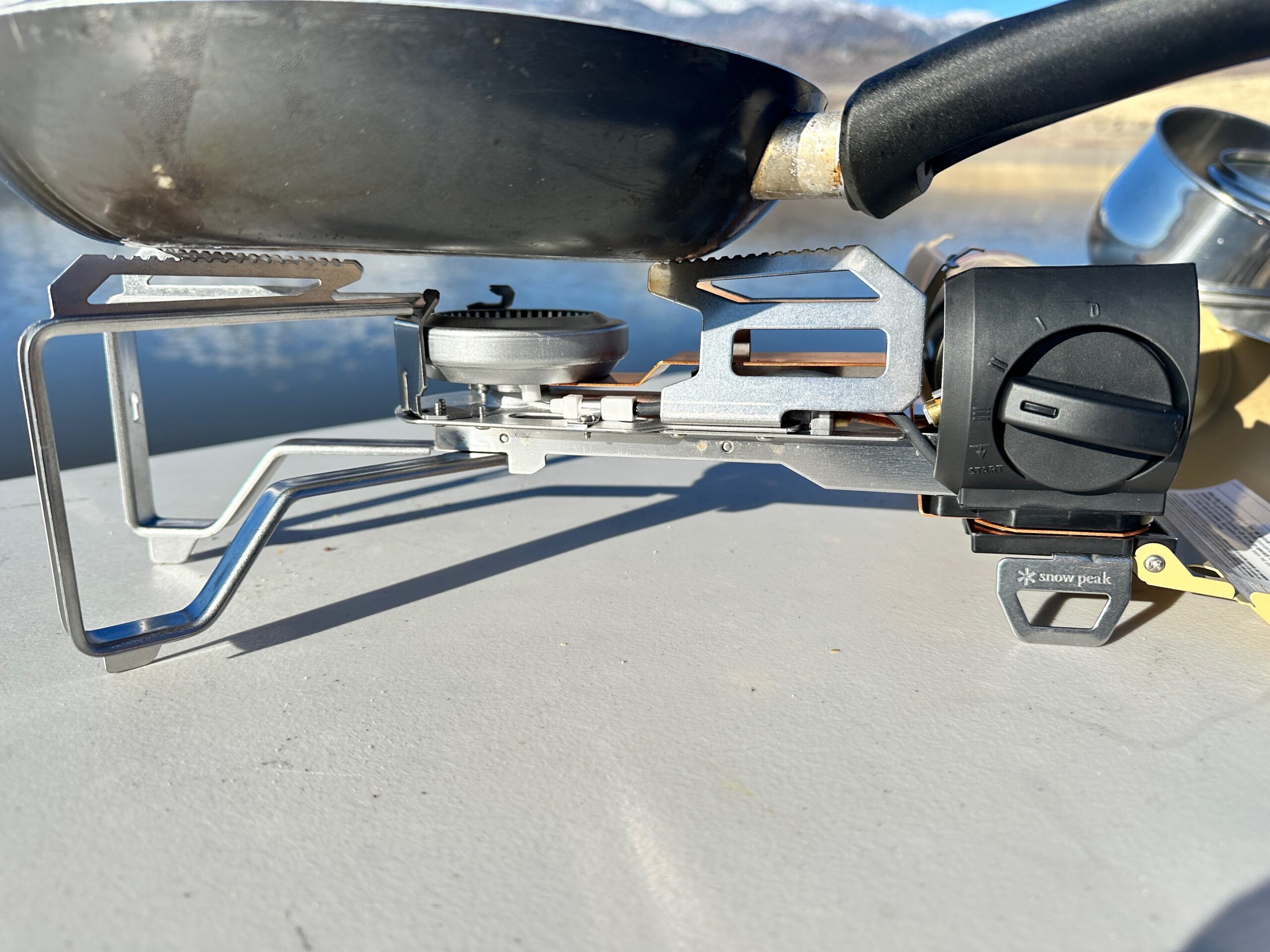
A single burner that folds into a slab about the size of a water bottle and opens into a wide trivet that takes pots up to 12 inches. One gear site rates it its best camping stove overall for how quickly and evenly it cooks. It runs only on butane, which loses power in freezing weather and at altitude; reviewers watched it barely crisp bacon on a cold morning.
Camp Chef Explorer
A freestanding two-burner on removable legs, and the usual answer for feeding a big group. Each burner puts out 30,000 BTU and it runs from a full-size propane tank rather than the small green bottles, so even with the legs off it is a large piece of kit. There is no igniter, and testers found wind can blow out low flames, which means relighting with a long lighter.
Coleman Cascade 3-in-1
A two-burner propane stove that comes with cast iron grill and griddle plates, so one box covers pancakes, burgers and a pot of pasta. OutdoorGearLab named it their best stove and grill combo, liking the easy heat adjustment, the compact carry case and the flavor the cast iron gives. Its wind guards are small, so it loses ground at an exposed site, and it is one of the pricier two-burners here.
ODSD 2 Burner
A budget two-burner propane setup that OutdoorGearLab picked as its best value two-burner stove. Testers found it light, quick to set up, steady at a low flame and simple to clean, a no-fuss way to run two pans at once at the campground. The burners sit close together, heat output is modest, it struggles in the cold, and the wind screen takes some work to keep in place.
Jetboil Genesis Basecamp
A folding two-burner propane stove that closes into a low, flat unit with its own carry case. OutdoorGearLab calls it the pick for anyone after a compact, foldable two-burner, and likes the easy ignition levers and the carrying handles. Jetboil also sells it as a system with a 5 L pot and a 10-inch pan. It is expensive, and OutdoorGearLab rated its wind resistance below average, so plan on a sheltered spot.
How we researched this
We read OutdoorGearLab's individual stove reviews, whose spec tables give a measured weight, list price, stove type, fuel and igniter for each model, plus CleverHiker's camping and backpacking stove guides and reviews, and the makers' own pages from Camp Chef, BioLite and MSR's parent Cascade Designs. Each value in the table is recorded with the sentence it came from. Weights are in ounces so backpacking and car-camping stoves sort on one scale, and the integrated systems include their pot. Where a review gave two weights, as for the ODSD 2 Burner and Jetboil Genesis Basecamp, the table uses the stove alone without its bag.
The set covers the stoves those reviewers test across every type, from ultralight canister stoves to freestanding two-burners, including the headline car-camping picks such as the Coleman Cascade 3-in-1, ODSD 2 Burner and Jetboil Genesis Basecamp. We left out the Jetboil Zip because its review's spec table described a different, wood-burning stove, and the MSR DragonFly and Primus Lite+ because their review pages carried no spec data. For more tabletop stoves, such as the Primus Kinjia and GSI Selkirk 540+, see the separate camp stoves for car camping page. A blank cell means no source stated the value. Prices are list prices and sales are common, so confirm the current price before you buy.