Best portable power stations for camping
Updated .
| Option | Price | Capacity | AC Output | Weight | Max Solar Input | Warranty |
|---|---|---|---|---|---|---|
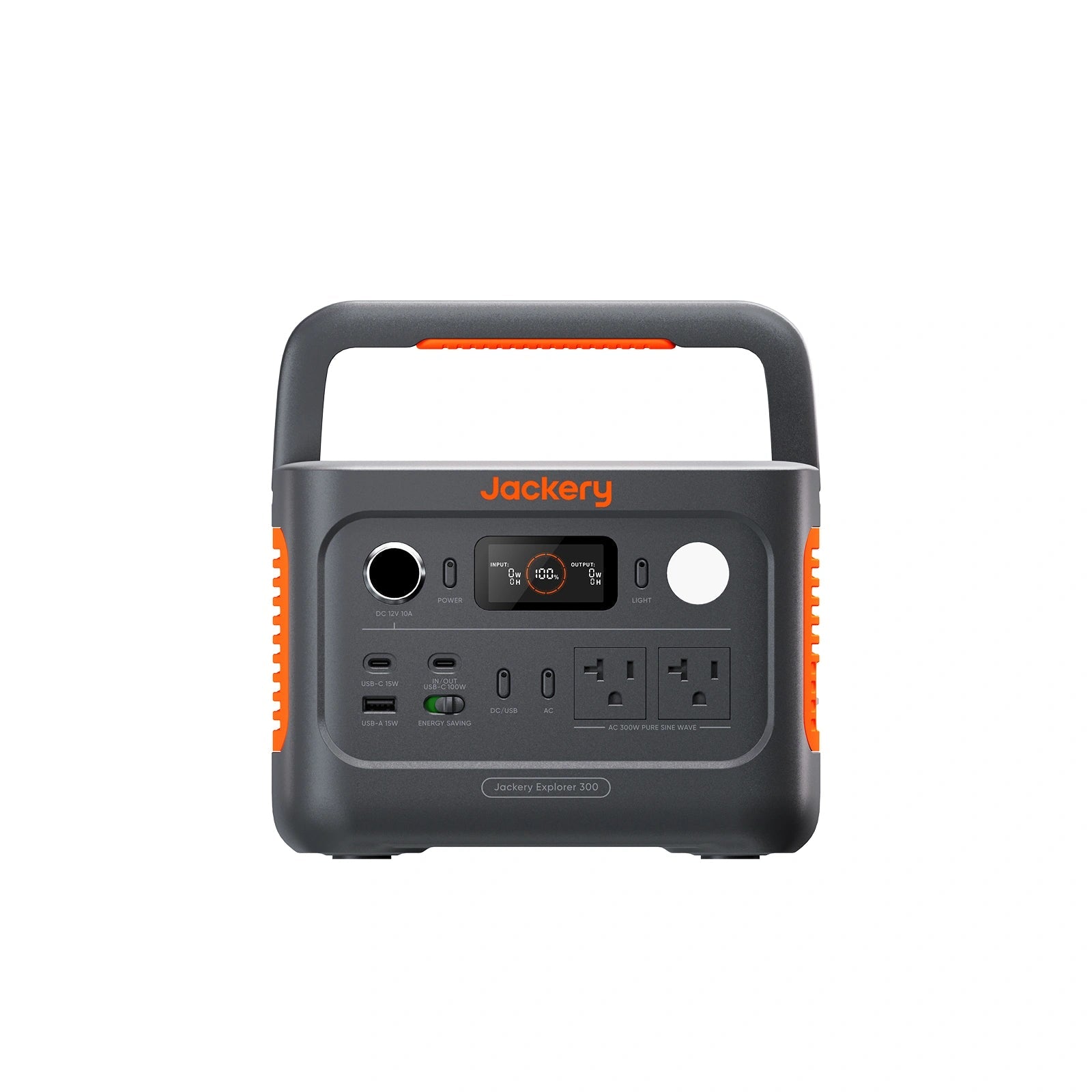
At just over eight pounds this is the lightest real power station here, small enough to sit in a tent vestibule and still run a fan overnight or refill a laptop from its 100W USB-C port. The LiFePO4 pack is rated for 4,000 cycles to 70% capacity, so it should outlast the trips you buy it for. The catch is the 300W inverter, which rules out kettles and induction burners, and the input ports: Jackery lists only AC and USB-C, with no dedicated solar socket, so panel charging goes through USB-C rather than a high-wattage DC input. | $269source | 288source | 300source | 8.16source | 100source | 3source |
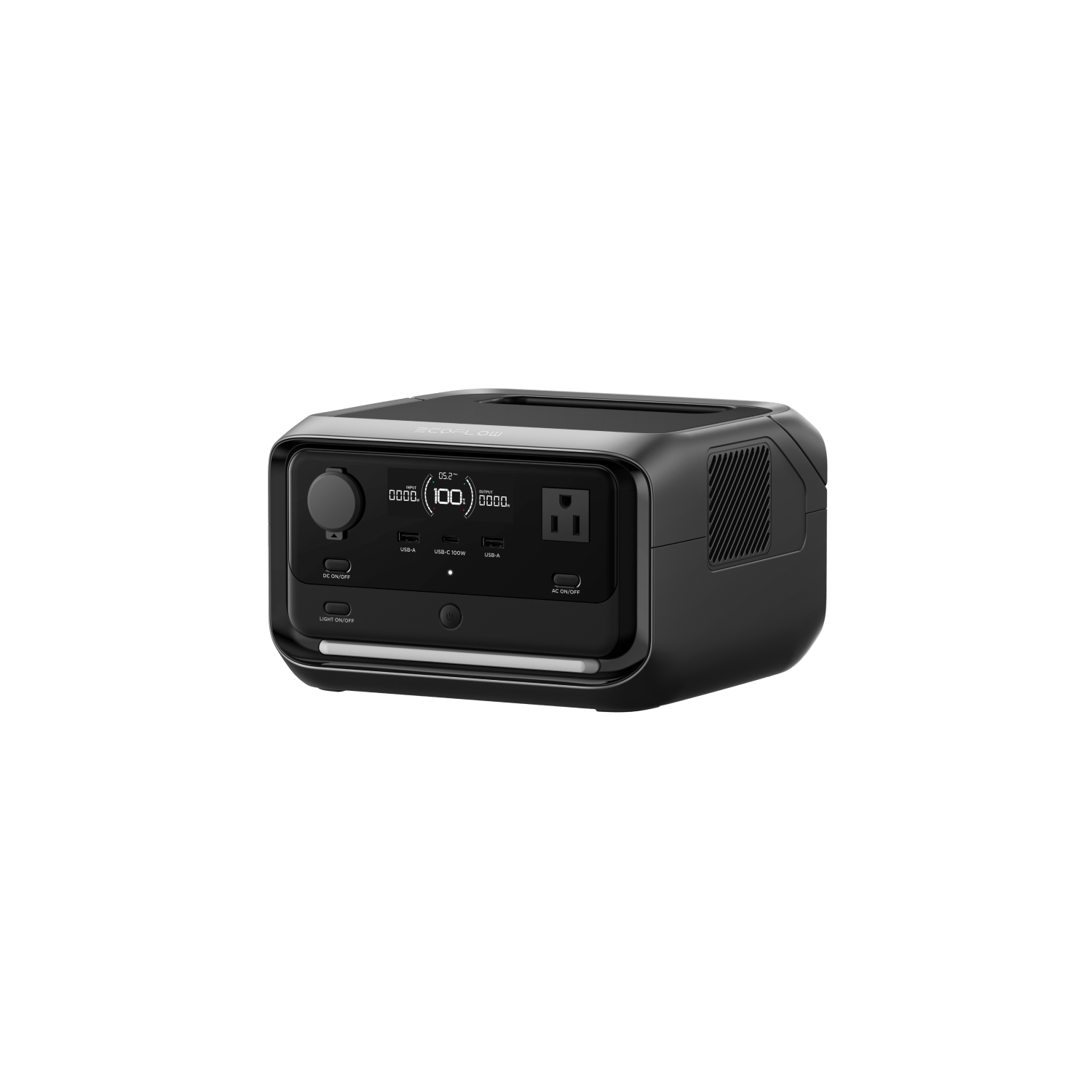
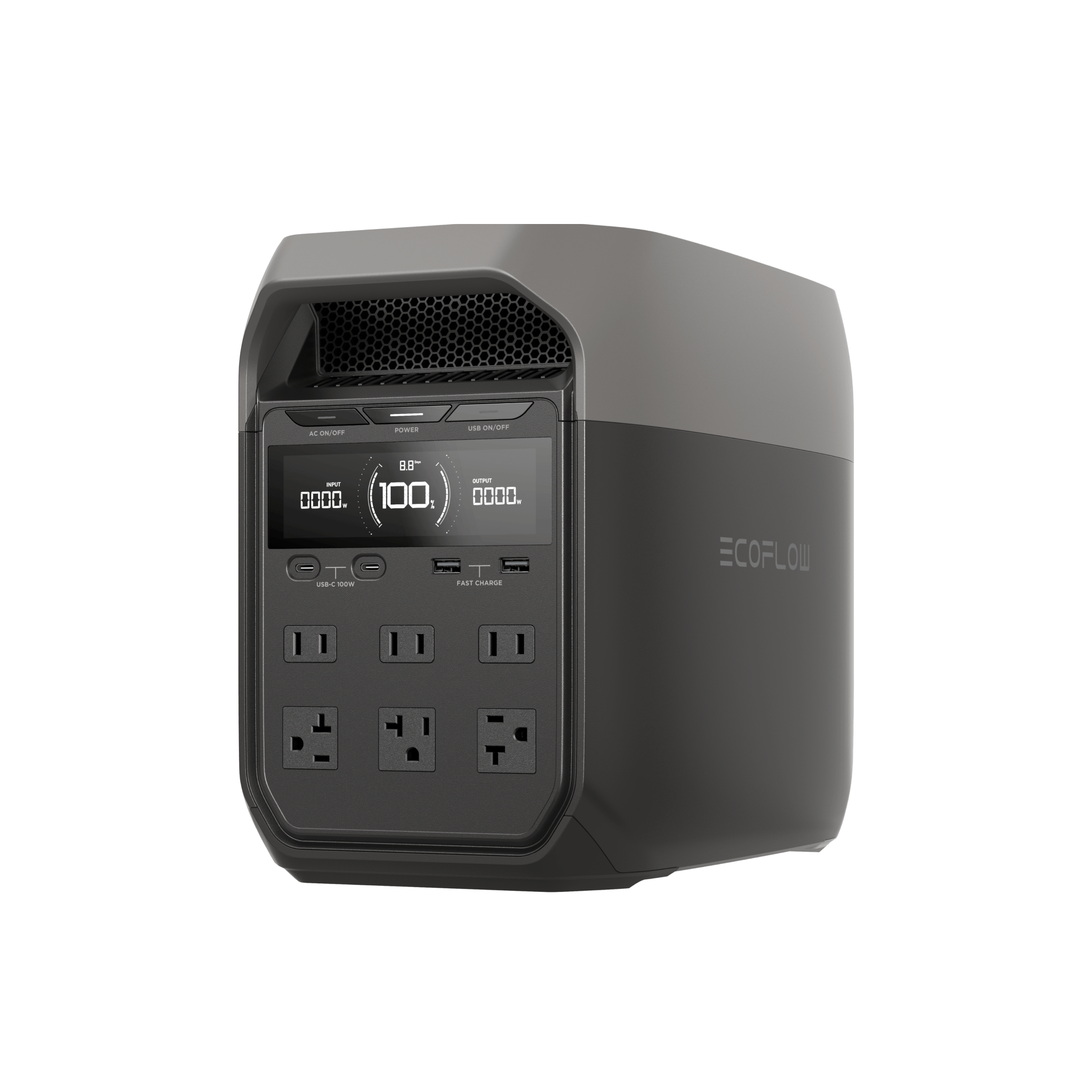
The most output per pound in this group: 600W of AC from a 286Wh pack that weighs 10.4 pounds, which covers a small kettle or a projector that a 300W unit would refuse. It takes 220W of solar and EcoFlow times a full refill at about an hour and a half from panels, or an hour from the wall. The battery is smaller than the Goal Zero and Anker units it sits beside on price, so think of it as a weekend battery rather than a week-long one, and EcoFlow does not state a warranty length anywhere on the product page. | $279source | 286source | 600source | 10.4source | 220source | 5source |
A 288Wh unit that leans on USB-C rather than its inverter: two 140W ports charge a laptop about as fast as its own wall charger, which no other sub-300Wh unit here manages. Anker lists it at 9.1 pounds, quotes 25dB of running noise from a few feet away, and backs it with a five-year warranty. Solar input is capped at 100W, so refilling from panels at camp is slower than on the similarly sized EcoFlow and Goal Zero units, and Anker recommends its own 60W or 100W panels rather than the bigger ones in its range. | $329.99source | 288source | 300source | 9.1source | 100source | 5source |
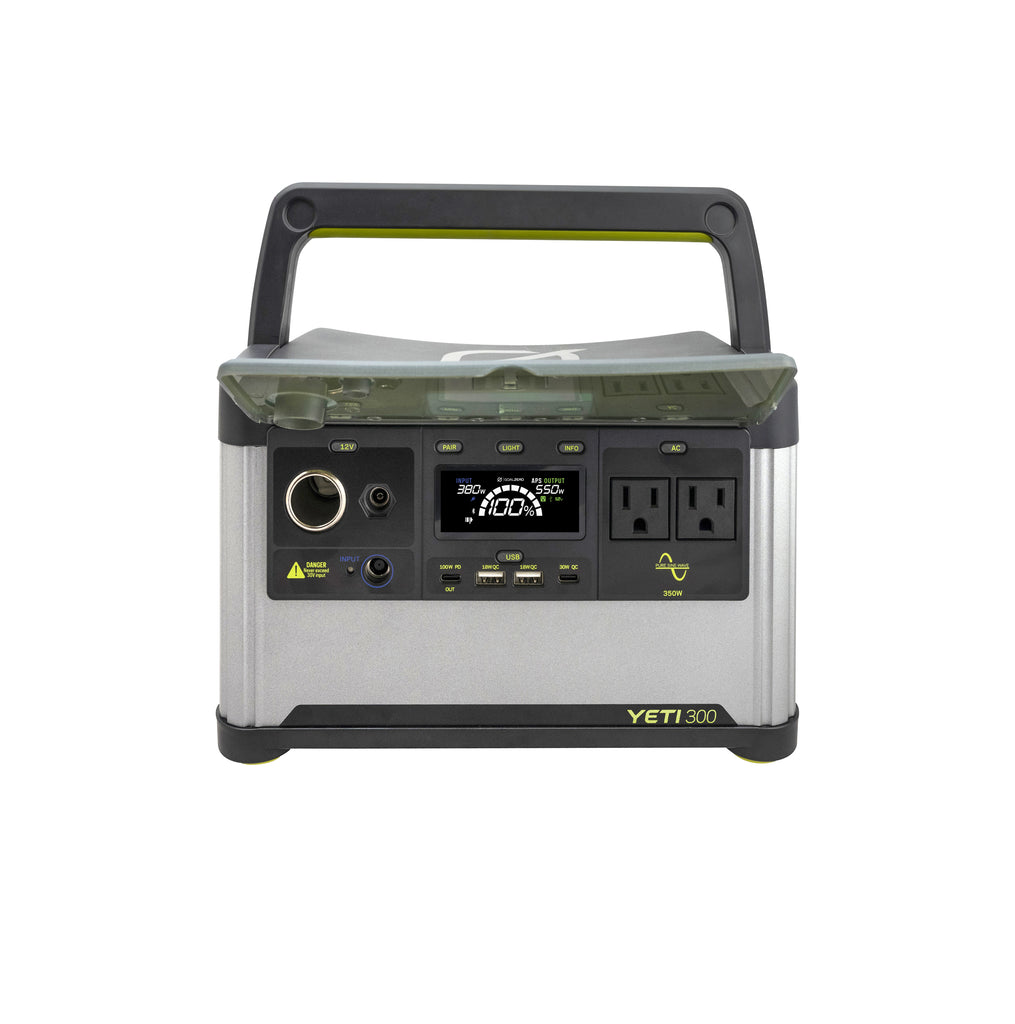
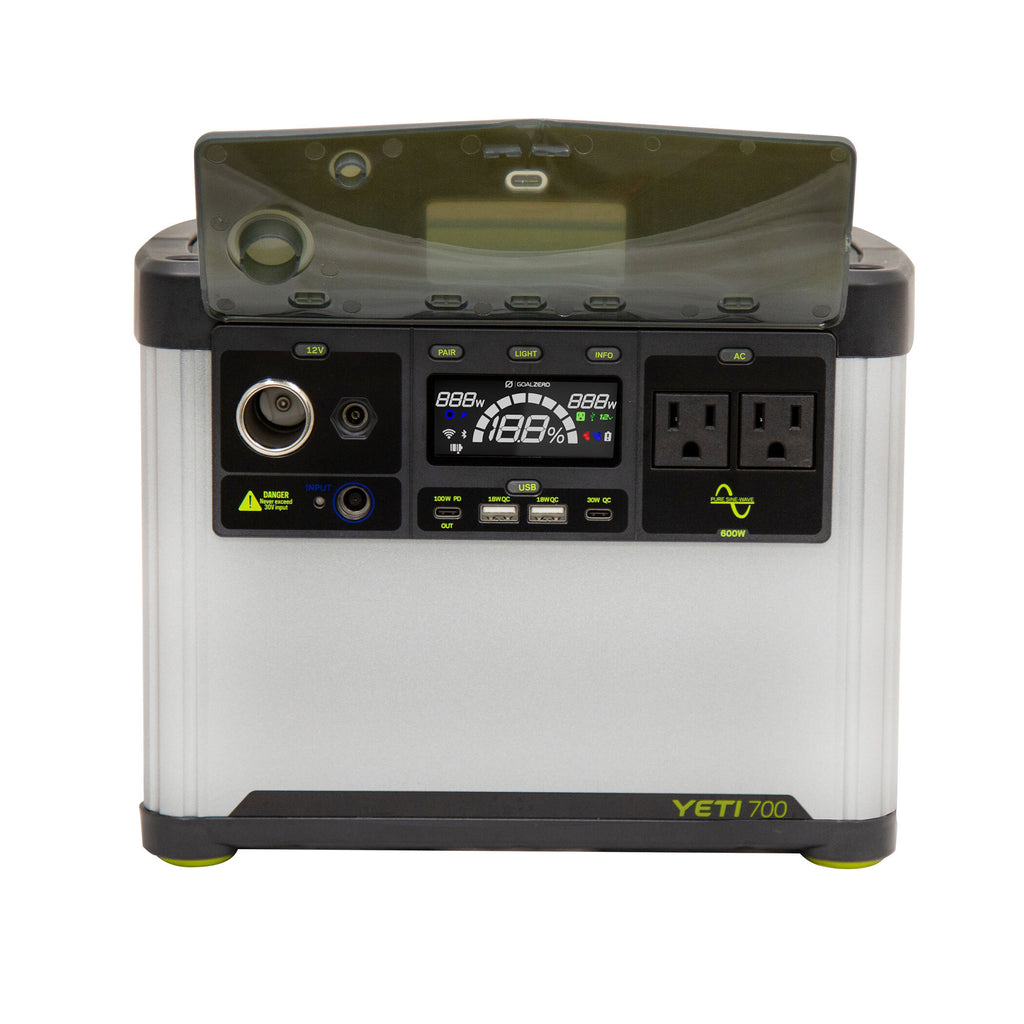
Goal Zero's compact sixth-generation unit pairs a 297Wh LiFePO4 pack with a 350W pure sine inverter and a claimed 50-minute fast recharge from the wall. It accepts 200W of solar, twice what the similarly sized Anker takes, which is the difference between topping up over a lunch stop and waiting out the afternoon. It is the heaviest of the roughly 300Wh group at 13.7 pounds and the priciest, so you are paying for the pure sine output, the app control and Goal Zero's panel ecosystem rather than for capacity. | $349.95source | 296.96source | 350source | 13.7source | 200source | 5source |
The middle of Goal Zero's camping line: a 499Wh battery and a 500W pure sine inverter in a 16-pound case, which is where most people land for a long weekend of phones, lights and a CPAP. Goal Zero times a full wall charge at 1.4 hours and a 200W panel refill at 2.8 hours, and rates the pack at 4,000 cycles. The 500W inverter is the ceiling worth knowing about: anything with a heating element needs one of the kilowatt-hour units further down this table. | $499.95source | 499.2source | 500source | 16.1source | 200source | 5source |
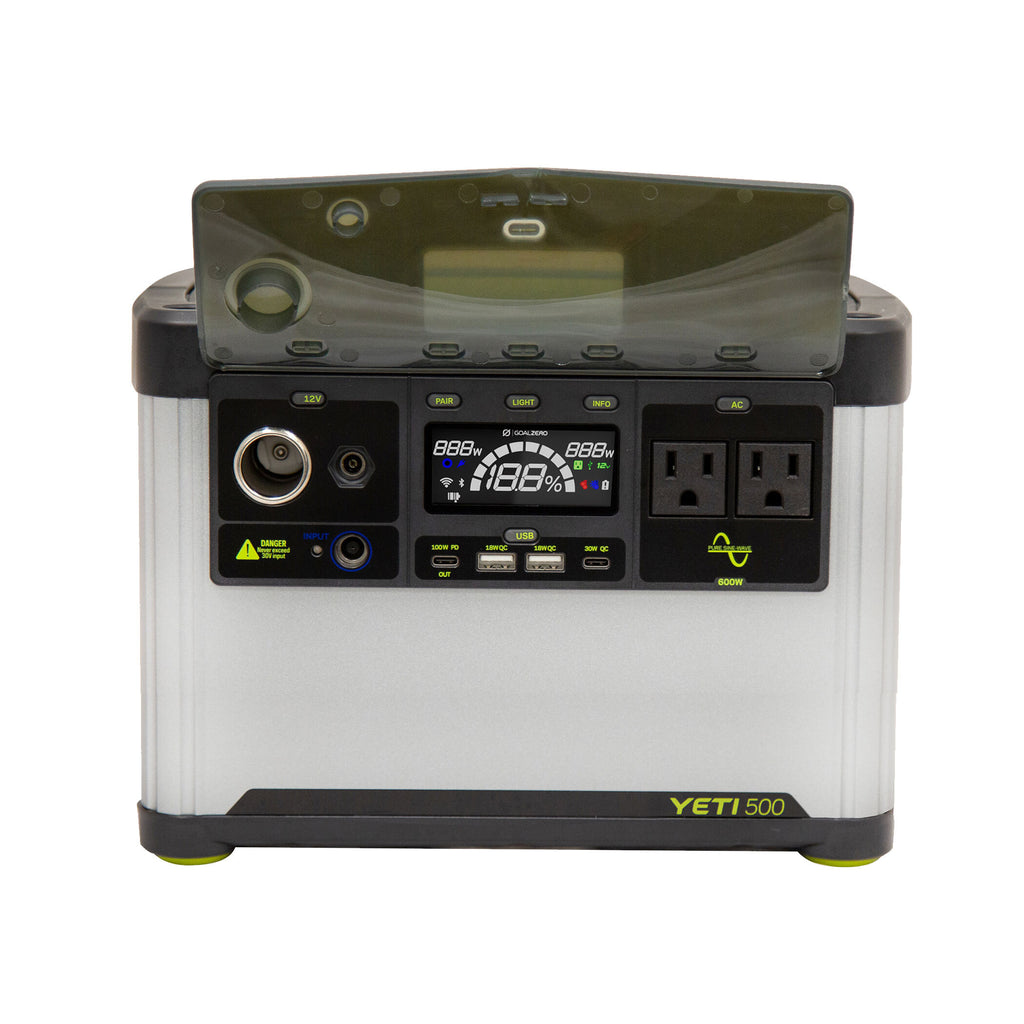
The largest sixth-generation Yeti that still carries like a cooler: 677Wh and 20.3 pounds behind a 600W pure sine inverter. It is the one to look at if you run a 12V fridge, since the 12V ports are rated to 182W combined and it takes 200W of solar to claw the charge back during the day. It costs the same as the 1,000Wh-plus Anker and Jackery units below, so the trade is roughly a third less battery in exchange for the smaller case, the pure sine output and the five-year warranty. | $699.95source | 677.37source | 600source | 20.3source | 200source | 5source |
A 1,056Wh unit with an 1,800W inverter, so it runs the camp appliances the smaller units refuse, and it accepts 600W of solar, the fastest panel recharge in this table alongside its Gen 2 sibling. It is also the only unit here that takes an expansion battery, doubling to 2,112Wh for longer trips off grid. At 28.44 pounds it is a two-handed lift into the car rather than something you carry to a pitch, and it is the older of Anker's two C1000 models, which is why it undercuts the newer one on price. | $449.99source | 1,056source | 1,800source | 28.44source | 600source | 5source |
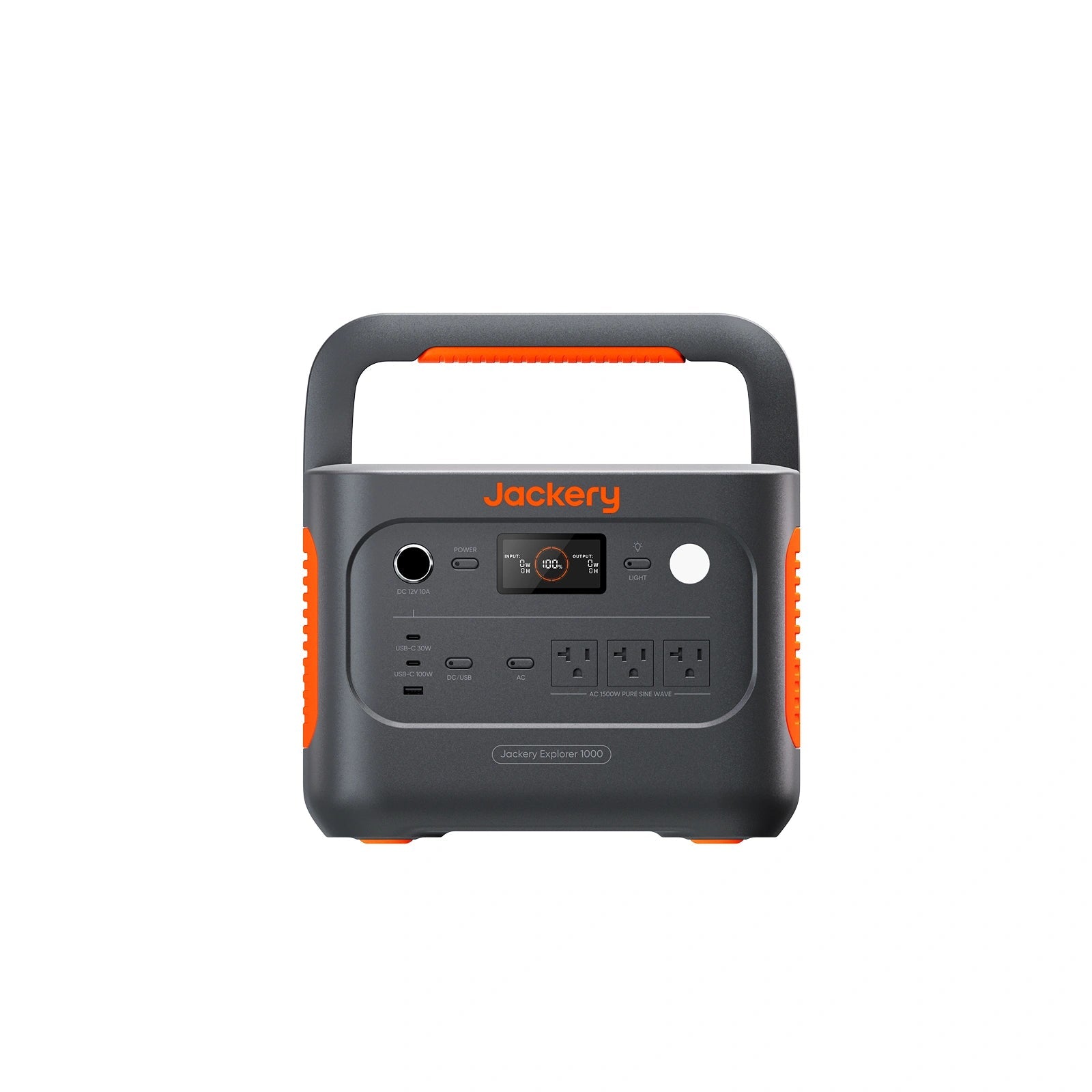
1,070Wh in the lightest case of the kilowatt-hour group at 23.8 pounds, which is what keeps it camping gear rather than home-backup gear. The 1,500W inverter covers a kettle or a camp induction hob, Jackery times a wall recharge at 1.58 hours, and the DC input takes up to 400W of solar. Two things to weigh against the Anker units at the same price: the base warranty is three years rather than five, with two more added if you register, and the fastest USB-C port is 100W where the Anker Gen 2 does 140W. | $499source | 1,070source | 1,500source | 23.8source | 400source | 3source |
The newer C1000: the same kilowatt-hour class at 1,024Wh but a 2,000W inverter, the strongest in this table, plus two 140W USB-C ports for laptops that would otherwise need their own bricks. It takes 600W of solar and weighs 24.9 pounds, a few pounds less than the original C1000 it replaces. The one thing it gives up is expandability: Anker says it does not include an expansion feature, so if you might want more capacity later, the first-generation C1000 is the one to buy. | $499.99source | 1,024source | 2,000source | 24.9source | 600source | 5source |
The most connected unit here: 1,024Wh behind an 1,800W inverter spread across six outlets, thirteen output ports in total, and five ways to refill it including a 500W solar input and a 1,500W wall charge EcoFlow times at 56 minutes. It also chains to extra batteries up to 5kWh, which nothing else in this table matches. At 27.6 pounds it is car-camping gear, and most of those thirteen ports will sit unused at a tent, so the reason to pick it over the cheaper Anker is recharge speed and room to grow. | $629source | 1,024source | 1,800source | 27.6source | 500source | 5source |
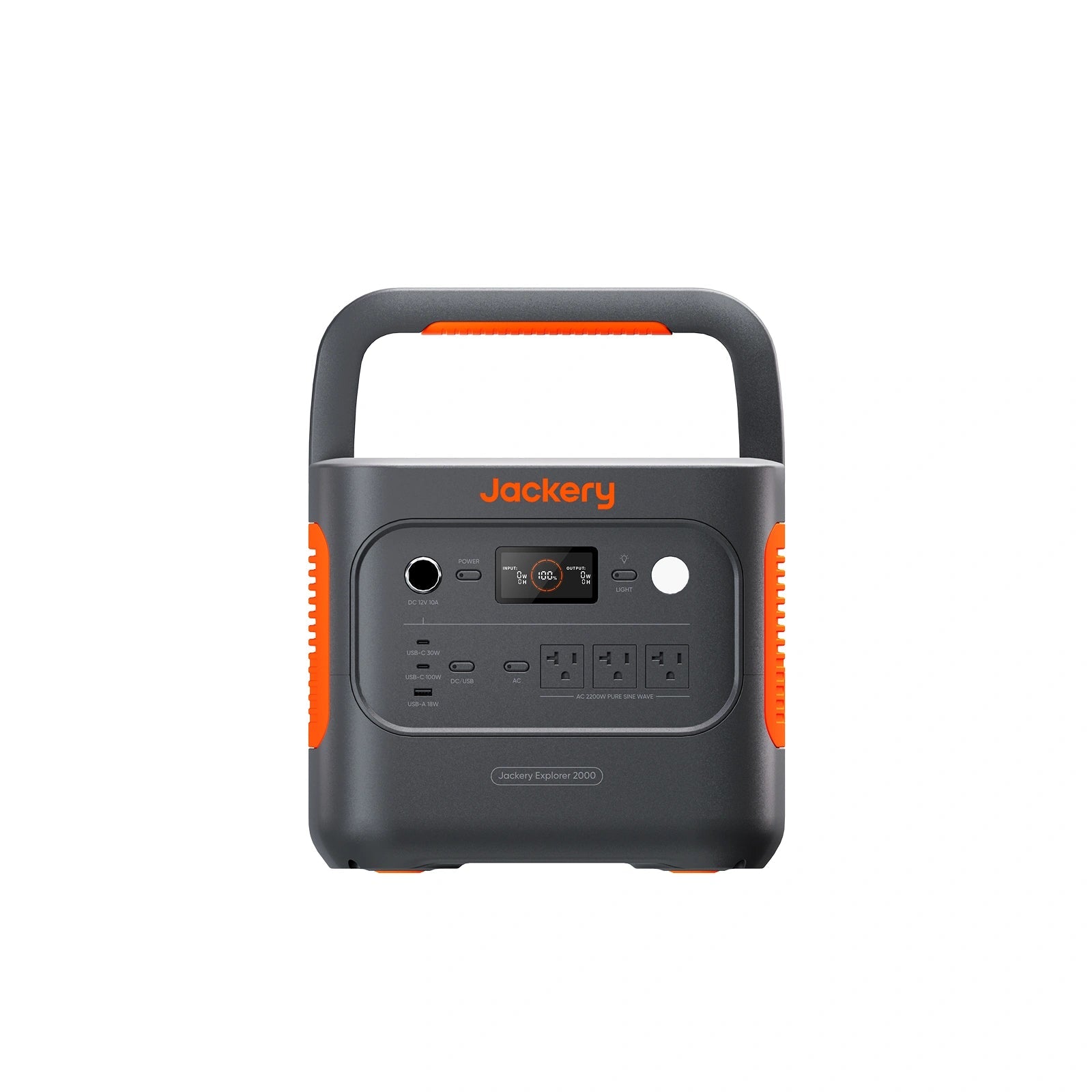
The big one: 2,042Wh and a 2,200W inverter, enough to run a camp kitchen or the essentials in a small RV rather than just chargers and lights. Jackery times a wall recharge at 1.75 hours and the DC input takes 400W of solar, the same as the 1000 v2. At 39.5 pounds it is firmly a load-it-into-the-car unit, and it is worth being honest about whether you need twice the battery of the 1000 v2 for roughly four hundred dollars more, or whether that money is better spent on panels. | $899source | 2,042source | 2,200source | 39.5source | 400source | 3source |