Best ecommerce platforms for small business
Updated .
| Option | Starting Price | Transaction Fee | Free Trial | Platform Type | Sells In Person |
|---|---|---|---|---|---|
Shopify is the default answer for a small business that wants one system for an online store, a market stall and social channels, and it is the platform most apps, themes and freelancers are built around. Its own pricing page pitches the entry plan at solo entrepreneurs, and hosting, checkout and a card reader all come from the same account. The catch is that the sticker price is only part of the bill: a paid theme or a handful of apps is normal, and taking payments through an outside gateway instead of Shopify Payments adds a percentage to every order. | $29source | 2%source | 3source | Hosted all-in-one storesource | Built-in point of salesource |
BigCommerce is a hosted platform aimed at stores with bigger catalogs and more complicated products than a starter shop, with more built in rather than bought as apps. Its plans are tied to how much you sell: each tier has a trailing-twelve-month sales cap and the account moves up automatically once you pass it, which is worth understanding before you sign up. It has no register of its own and instead lets you pick a point-of-sale partner, and its 2026 pricing adds a percentage fee on orders processed through payment providers outside its embedded list. | $29source | 2%source | 15source | Hosted all-in-one storesource | Through integrationssource |
WooCommerce turns a WordPress site into a store, which is why it suits anyone who already runs WordPress or wants to own the whole stack. The software itself is free and there is no revenue share, but that is not the real cost: you pay for hosting, and most stores end up buying extensions for shipping, subscriptions or bookings. It expects you to be comfortable keeping a site updated and secure, and in-person selling comes from a partner rather than from Woo itself. | Freesource | 0%source | 0source | WordPress pluginsource | Through integrationssource |
Squarespace is a website builder first, so it fits a business whose site is mostly brand, photography and services with a shop attached. Selling works on every paid plan, but the cheapest tier takes a cut of each order, so a store that is actually moving product usually ends up one plan higher. In-person selling runs through the Squarespace app paired with a Square card reader, which is handy if you already use Square, and the templates are the reason most people choose it in the first place. | $19source | 2%source | 14source | Website builder with a storesource | Built-in point of salesource |
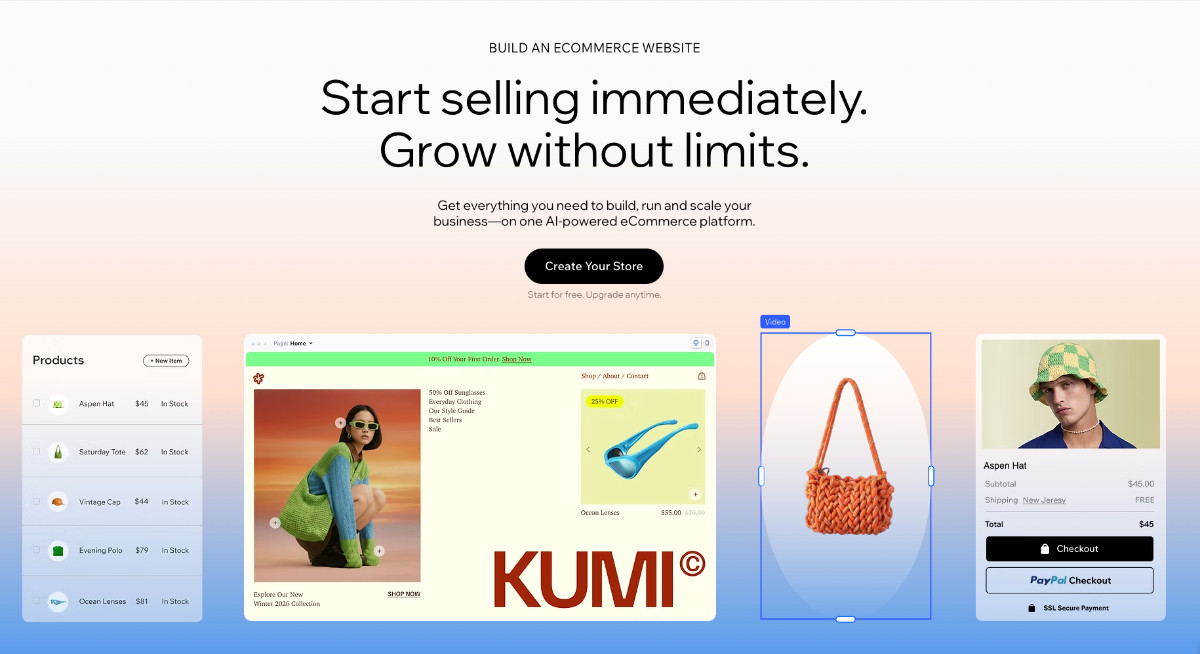
Wix is the other big website builder, with a drag-and-drop editor, a huge template library and, more recently, a full commerce and point-of-sale stack behind it. You can build the entire site for nothing and only pay when you want to start accepting payments, which makes it a low-risk way to see whether the shop idea works. There is no free trial on the paid plans, only a money-back window, and a heavily customized Wix site can be more work to keep tidy than a purpose-built store. | $29source | 0%source | 0source | Website builder with a storesource | Built-in point of salesource |
Square Online, which Square now simply calls websites, is the free way to put a shop next to a Square register, and it is the obvious pick for a cafe, a market stall or any business already taking payments with Square. The free plan has no monthly fee at all, just the card processing charge, and in-store and online inventory stay in sync without any setup. The builder is plainer than Squarespace's or Wix's, so think of it as a companion to a Square account rather than a place to build a brand site. | Freesource | 0%source | 0source | Website builder with a storesource | Built-in point of salesource |
Ecwid works differently from the rest: rather than replacing your website, it drops a store into the site you already have, whether that is WordPress, Wix, Squarespace or something hand-built. That makes it the cheapest way to start selling without rebuilding anything, and it takes nothing on top of your sales. The cheapest plan is tightly capped on products, the SEO tools only appear on higher tiers, and there is no free trial, so you are paying from the first day. | $5source | 0%source | 0source | Store add-on for an existing sitesource | Through integrationssource |
Big Cartel is built for artists, makers and indie brands rather than general retail, and the whole product reflects that: small setup, cheap plans and a genuinely free tier you can launch a shop on. It never takes a cut of your sales, and its phone app doubles as a register for craft fairs and pop-ups, although in-person selling requires a paid plan. The trade-off is scope, with product limits on the lower plans and far fewer apps and themes than the bigger platforms offer. | Freesource | 0%source | 7source | Hosted all-in-one storesource | Built-in point of salesource |
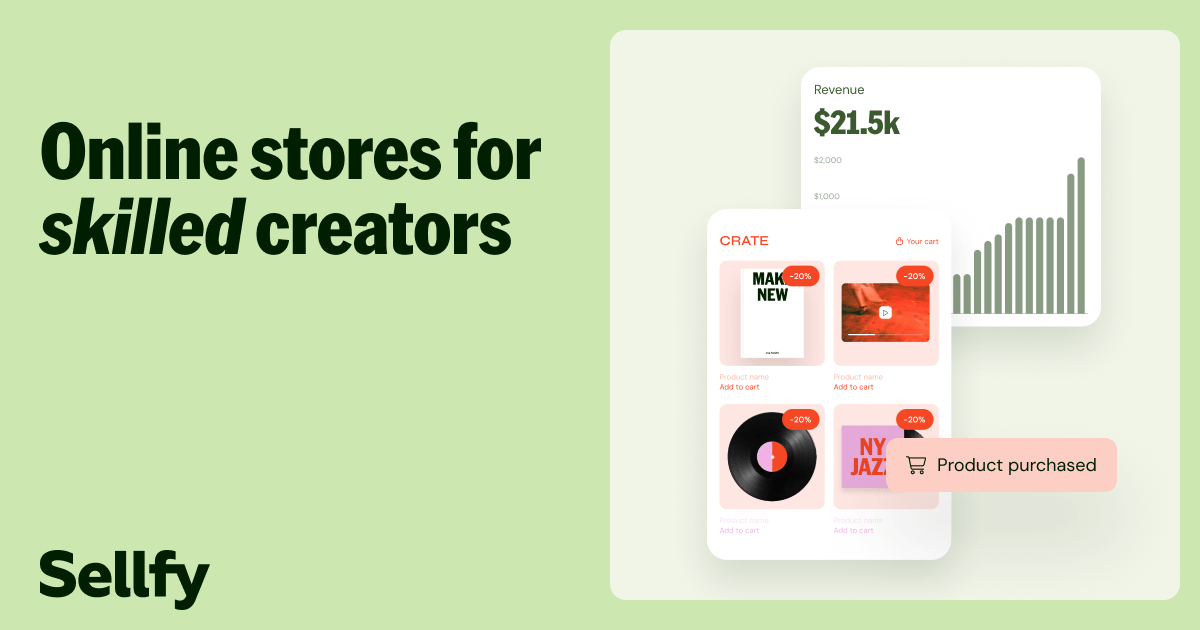
Sellfy is a storefront for creators selling digital downloads, subscriptions and print-on-demand merch, so it is aimed at an audience rather than a shopping catalog. It takes no cut of your sales on any tier and bundles in email marketing and upsells, which for a creator replaces a couple of separate subscriptions. Its plans are capped by annual sales volume rather than by features alone, and it is not the right tool for a shop with real physical inventory to manage. | $22source | 0%source | 14source | Hosted all-in-one storesource | |
PrestaShop is open-source software you download and run on your own hosting, and it is widely used by European small businesses and the agencies that build for them. Nobody takes a commission on your sales and there is no monthly platform fee, but hosting, a domain and most of the useful modules are yours to buy and maintain. It asks for more technical confidence than any hosted option here, so it makes sense mainly if owning the code and the data matters to you. PrestaShop also sells a managed Hosted plan if you want the same software without running the server. | Freesource | 0%source | 0source | Open-source self-hostedsource |