Best Portable Power Stations
16 power stations, from the 288Wh Bluetti Elite 30 V2 to the 3,840Wh Anker SOLIX F3800 Plus, compared on price, output, weight and solar input. Read our take
At a glance








Our take
For most buyers the answer is a station of about 1kWh: the Bluetti Elite 100 V2 holds 1,024Wh for $499, takes 1,000W of solar and weighs 25 pounds, and the Anker SOLIX C1000 Gen 2 costs $529.99 for the same capacity with a 2,000W inverter, the strongest at that size alongside the larger Jackery Explorer 1000 Plus. Either runs a fridge, a coffee maker or a microwave through a short outage and still goes in the car for a weekend away.
The real split in this table is size, and price and weight climb with it. The two 288Wh units, the Bluetti Elite 30 V2 and the Anker SOLIX C300, weigh under 10 pounds and handle phones, lights and a laptop, and the 768Wh EcoFlow RIVER 2 Pro sits between them and the 1kWh group at 18.2 pounds. The 2kWh group, from the Jackery Explorer 2000 v2 to the EcoFlow DELTA 3 Max Plus, runs $899 to $1,149 and weighs 39.5 pounds and up. Past 3,000Wh, the Jackery HomePower 3000, the EcoFlow DELTA 3 Ultra Plus and the Anker SOLIX F3800 Plus are home backup machines that weigh 59.52 to 136.7 pounds.
Our picks
- Cheapest, with the most output for its size: Bluetti Elite 30 V2. $289.99 for 288Wh and 600W of AC output, twice the Anker SOLIX C300's 300W at the same capacity, at 9.48 pounds.
- Best value at 1kWh: Bluetti Elite 100 V2. 1,024Wh for $499 at 25 pounds, with 1,000W of solar input, the most of any 1kWh unit here.
- Lightest 1kWh station: Anker SOLIX C1000 Gen 2. 24.9 pounds with a 2,000W inverter and 600W of solar input for $529.99, though Anker listed it as a pre-order in November 2026.
- Lightest 2kWh station: Jackery Explorer 2000 v2. 2,042Wh and a 2,200W inverter at 39.5 pounds, about 14 pounds less than the Bluetti Elite 200 V2.
- Home backup that can grow: EcoFlow DELTA 3 Ultra Plus. 3,072Wh and 3,600W for $1,599, with 1,600W of solar input and extra batteries that take it to 11kWh.
How much capacity you actually need
Capacity in this table runs from 288Wh to 3,840Wh, and price mostly follows it: the Bluetti Elite 30 V2 is $289.99, the 768Wh EcoFlow RIVER 2 Pro is $369, the stations from 1,024Wh to the Jackery Explorer 1000 Plus's 1,264.64Wh run $499 to $619, and the Anker SOLIX F3800 Plus is $2,399.99. A 288Wh unit is for phones, lights and a laptop over a weekend. Around 1,000Wh, the Bluetti AC180, EcoFlow DELTA 3 and Anker SOLIX C1000 Gen 2 can keep a refrigerator going for several hours; Goal Zero puts its 677Wh Yeti 700 at up to eight.
Output matters as much as capacity. The AC Output column is what the outlets can run at once: the Anker SOLIX C300's 300W rules out a kettle, while the Anker SOLIX F3800 Plus's 6,000W at 120V and 240V can feed a home panel. If one appliance is the reason you are buying, check its wattage against that column first.
Solar input decides how fast panels refill it
Two stations of the same size can refill from panels at very different speeds. The Jackery Explorer 2000 v2 and the Bluetti Elite 200 V2 both hold about 2kWh, but the Jackery accepts 400W of solar and the Bluetti 1,000W. At the small end, the Anker SOLIX C300 takes 100W, the Bluetti Elite 30 V2 200W, and the larger EcoFlow RIVER 2 Pro only 220W. If you plan to live off panels for days rather than fill up at home, sort by Max Solar Input before anything else.
Reading the warranty and cycle life columns
The Warranty column shows the base term. Jackery's units list 3+2 years, with the extra two when bought from Jackery, and EcoFlow's DELTA 3 Max Plus and DELTA 3 Ultra Plus get two more years once registered in EcoFlow's app; Anker, Bluetti, Goal Zero and EcoFlow's DELTA 3 and RIVER 2 Pro state five years outright.
Cycle life is not quite like for like either. Most makers rate cycles to 80% of original capacity, where the Bluetti Elite 200 V2 leads at 6,000, but Jackery rates its 4,000 cycles to 70%, a more forgiving test.
Prices and stock move week to week
Every price here is the maker's own store in early November 2026, and several were holiday sale prices: the Bluetti Elite 200 V2 was $899, the EcoFlow DELTA 3 showed $579 against a $699 list price, the EcoFlow RIVER 2 Pro was $160 off its $529 list price, and Popular Science lists the Elite 200 V2 at $1,699. Stock was uneven too. The Anker SOLIX F3800 Plus was sold out, the Anker SOLIX C1000 Gen 2 was on pre-order, and the EcoFlow DELTA 3 Ultra Plus was due to ship in mid-December. Check the current price and availability before you buy.
The options in detail
Bluetti Elite 30 V2
The cheapest unit here and one of the two lightest, a 288Wh box that weighs under ten pounds and still runs 600W from its outlets, double what the Anker SOLIX C300 manages at the same capacity. Bluetti rates it for 1,500W of lifting power for heat-only devices like a kettle, which its smaller inverter would otherwise refuse. It takes 200W of solar, so a single folding panel refills it in an afternoon. At this size it is for phones, lights, a laptop and a fan, not a fridge for a week.
Anker SOLIX C300
A 288Wh station built around USB-C rather than its outlets: two 140W ports can charge a laptop as fast as its own wall charger, and the ports work both ways, so a USB-C wall brick can refill it. The 300W inverter is the smallest here, enough for a fan, lights or a CPAP but not a kettle. Solar input tops out at 100W, the lowest in the table, so it is better topped up from the wall or the car than from panels.
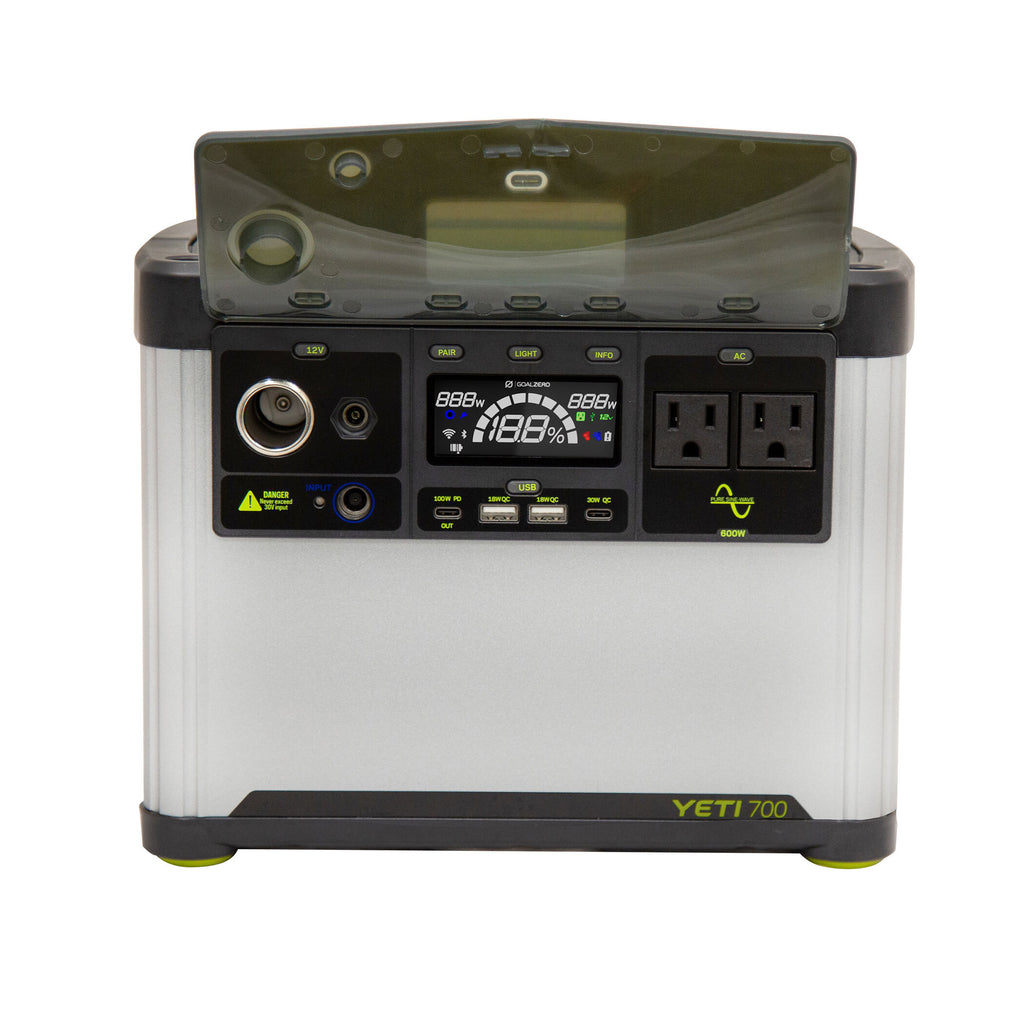
Goal Zero Yeti 700
A rugged mid-size unit from the brand that started the category, with an IPX4 rating for splashes and a rated working range down to -4 degrees F. Goal Zero says it can keep a full-size refrigerator going for up to eight hours in an outage. The trade-off is value: it costs more than several 1kWh units here while holding 677Wh and running a 600W inverter, and its 200W solar limit means a slow refill from panels.
Bluetti Elite 100 V2
The fastest-refilling 1kWh unit in the table: it accepts 1,000W of solar, and Bluetti says that is a full charge in about 70 minutes, while the wall gets it to 80% in 45. At 25 pounds it is light for its size, and Bluetti puts its running noise at 30dB under a 600W load. Its 1,800W inverter covers a coffee maker or a microwave, though not the biggest space heaters.
Anker SOLIX C1000 Gen 2
The lightest station in the 1kWh group, and its 2,000W inverter, matched only by the larger Jackery Explorer 1000 Plus at that size, covers most kitchen appliances. It recharges from the wall at up to 1,600W and takes 600W of solar, which Anker times at 1.8 hours for a full charge. Anker left out battery expansion to keep it small, so 1,024Wh is the ceiling; the older C1000 is the one to get if you want to add a battery later. Anker listed it as a pre-order on its own store when we checked.
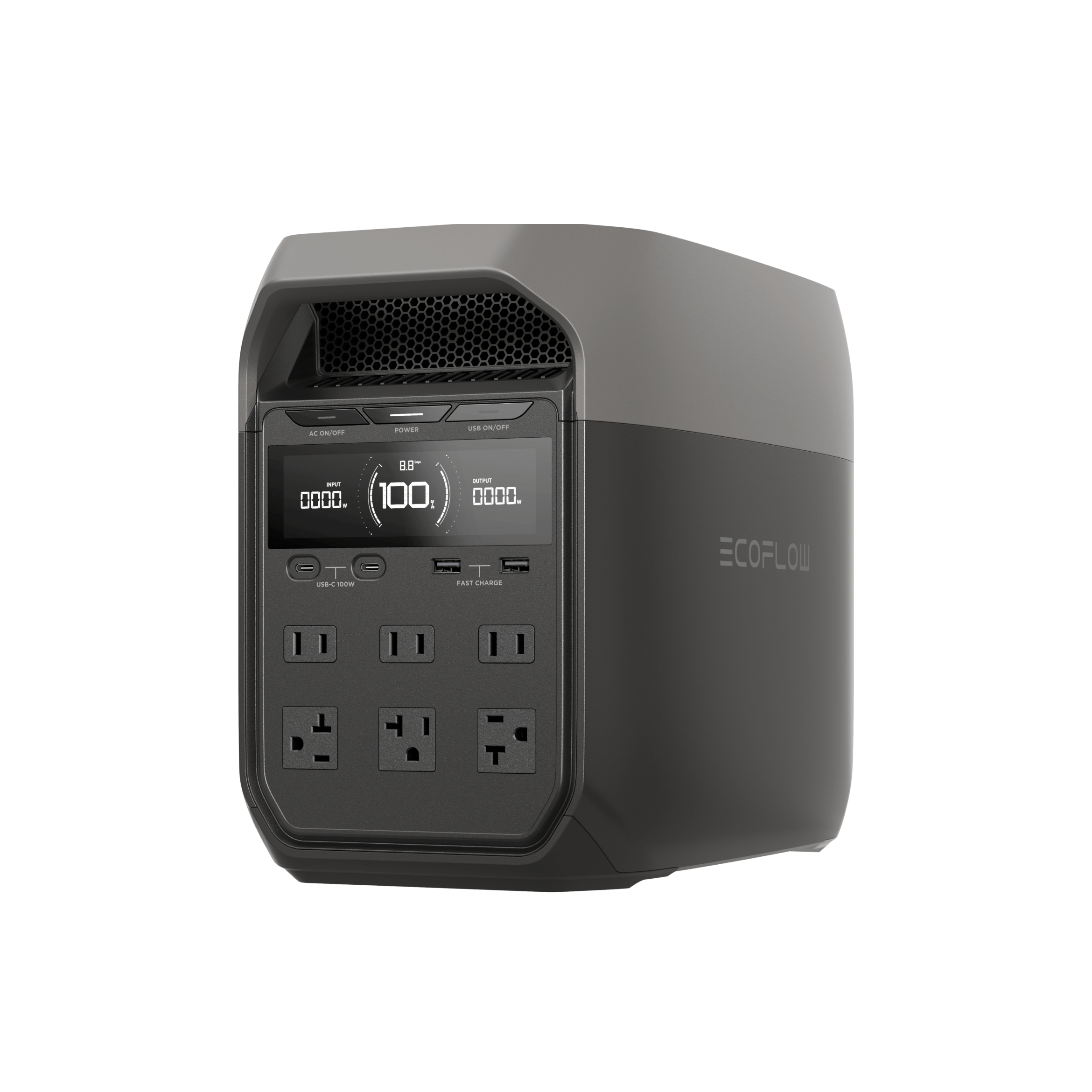
EcoFlow DELTA 3
A 1kWh unit that can grow: EcoFlow sells extra batteries that take it to as much as 5kWh, so it suits someone who wants a camping battery now and a fridge-and-router outage kit later. Six AC outlets share 1,800W, and it takes 500W of solar. At 27.6 pounds it is a few pounds heavier than the Anker SOLIX C1000 Gen 2 and Bluetti Elite 100 V2, and lighter than the Jackery Explorer 1000 Plus and Bluetti AC180.
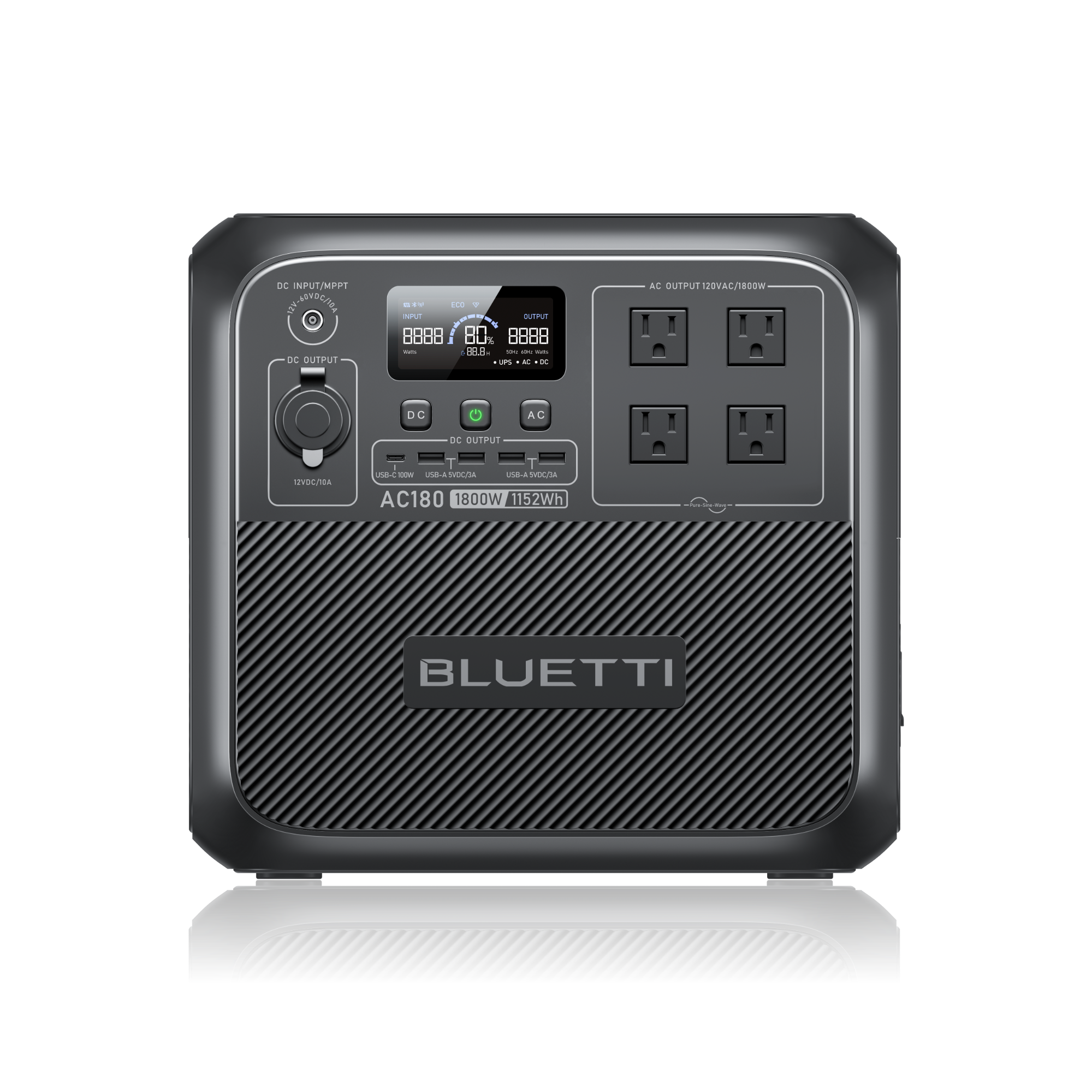
Bluetti AC180
An older Bluetti design that is still widely sold, with a little more capacity (1,152Wh) than the 1kWh units at the same price. It is the heaviest of that group at about 35 pounds, and its 500W solar input is half what the newer Elite 100 V2 accepts. Its 1,800W inverter has a 2,700W lifting mode for resistive loads such as a hair dryer.
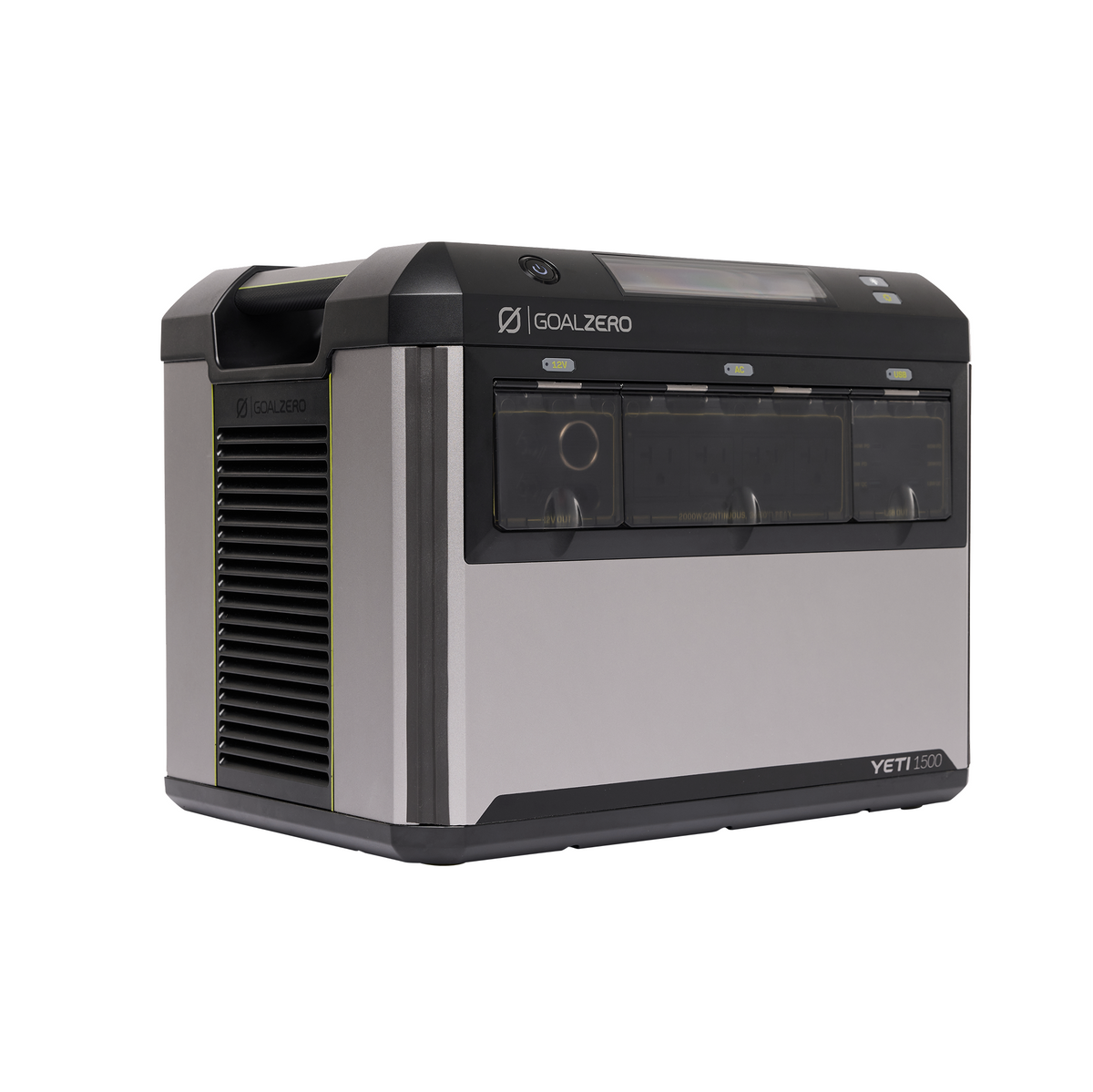
Goal Zero Yeti 1500
Goal Zero's new 2026 Yeti 1500, a 1.5kWh unit with a 2,000W inverter, IPX4 weather sealing and two solar inputs that together take 900W. The wall gets it to 80% in under an hour. At about a dollar per watt-hour it costs roughly twice what the 1kWh Bluetti, Anker and EcoFlow units do, and at 52.75 pounds it is as heavy as some 2kWh stations here, so its case is ruggedness rather than value.
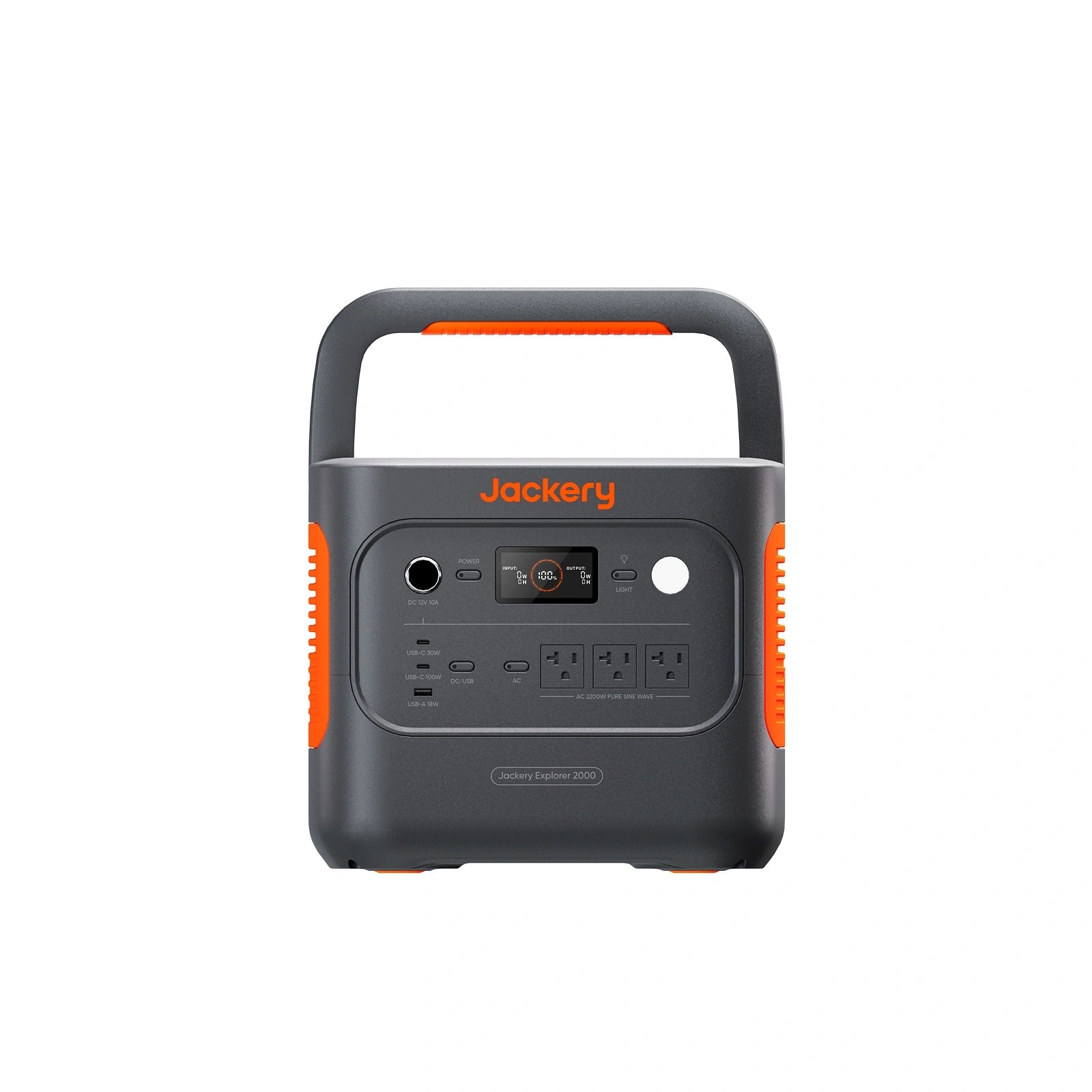
Jackery Explorer 2000 v2
The lightest 2kWh station in the table at 39.5 pounds, with a 2,200W inverter and a 1.7-hour recharge from the wall. Jackery caps solar input at 400W, the lowest of the 2kWh group, so it is a battery you fill at home and carry out rather than one you live on from panels. The warranty is three years plus two more when bought from Jackery directly.
Bluetti Elite 200 V2
Popular Science's best-overall pick: a 2kWh unit with a 2,600W inverter, 1,000W of solar input and the longest rated battery life in the table at 6,000 cycles. Bluetti's own FAQ explains why it weighs 53.4 pounds, more than the Jackery 2000 v2 of similar capacity: an aluminum shell and automotive-grade cells. It has a single DC input, so it cannot take solar and car charging at once.
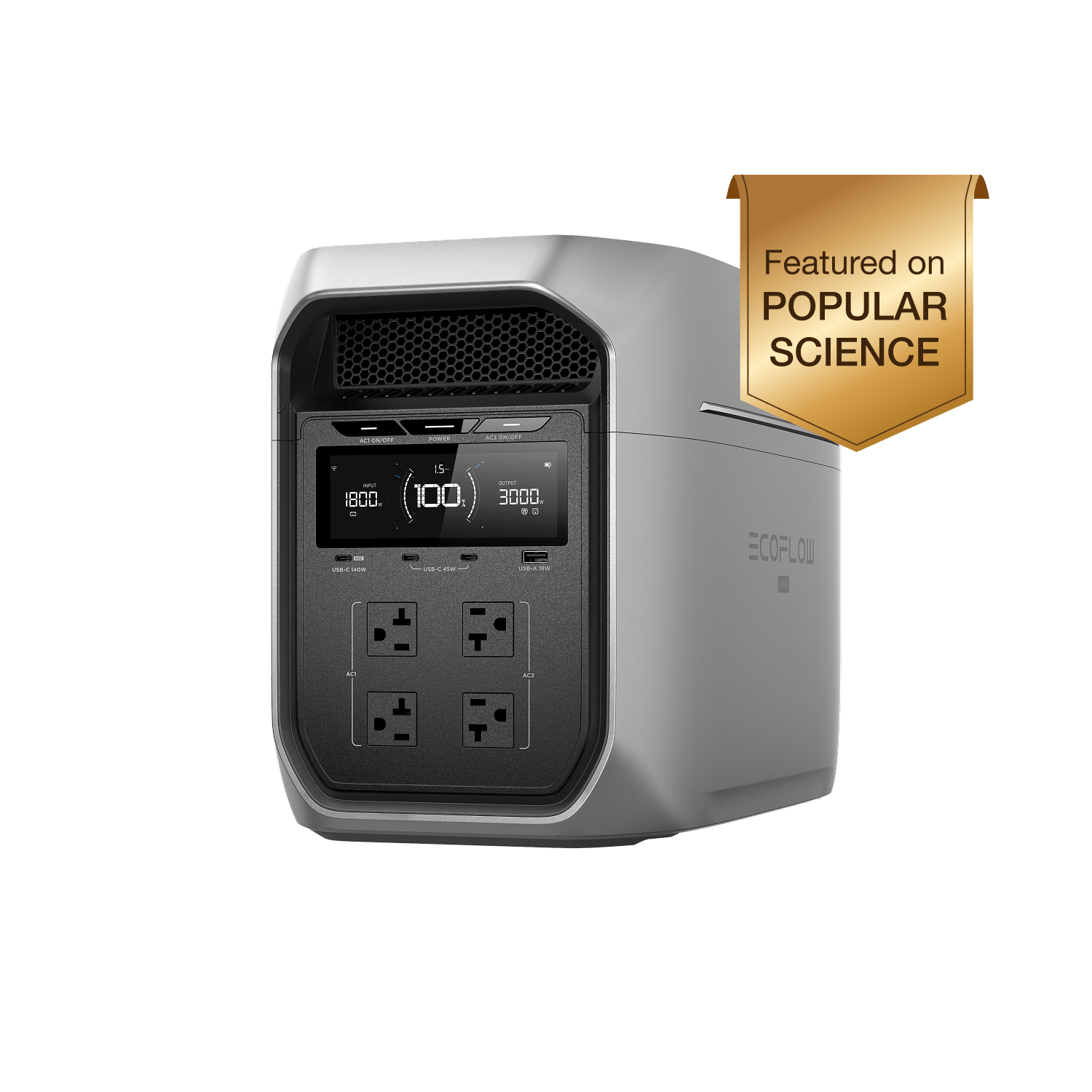
EcoFlow DELTA 3 Max Plus
The strongest 2kWh unit here, with a 3,000W inverter and a 3,800W X-Boost mode, and 1,000W of solar input. EcoFlow says the wall charger gets it ready in 43 minutes. At 48.7 pounds it is about nine pounds heavier than the Jackery Explorer 2000 v2. The warranty is three years standard, with two more once the unit is registered in EcoFlow's app.
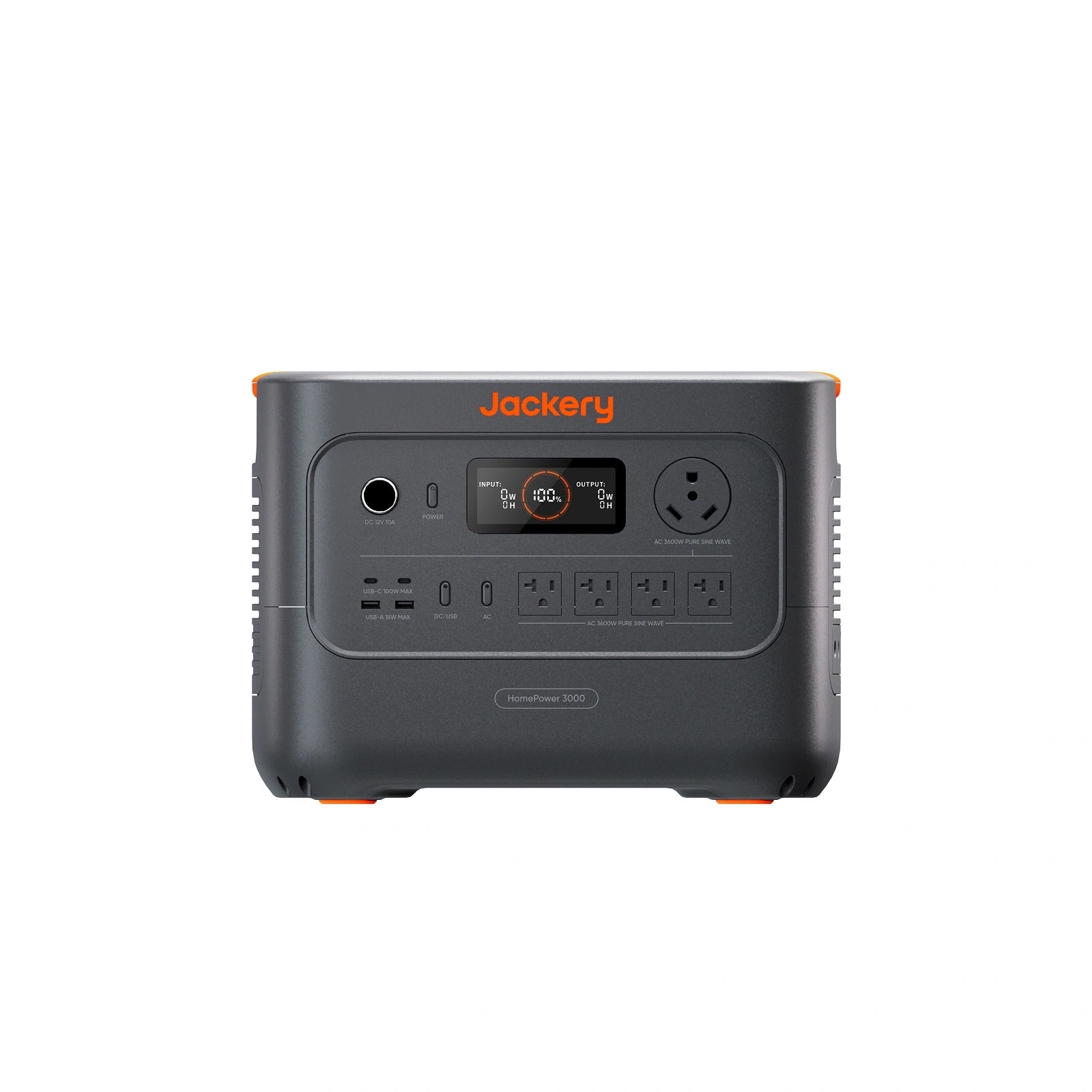
Jackery HomePower 3000
Jackery's plug-and-play home backup unit: 3kWh, a 3,600W inverter and a 30A outlet, at 59.52 pounds. It takes up to 1,000W of solar across two inputs. Jackery rates its cycle life to 70% of capacity rather than the 80% most others use, so its 4,000 cycles is not a like-for-like figure.
EcoFlow DELTA 3 Ultra Plus
A wheeled 3kWh unit that expands to 11kWh with EcoFlow's extra batteries, with a 3,600W inverter and the second-highest solar input here at 1,600W. Popular Science lists it at 74.2 pounds, so it rolls rather than carries. EcoFlow listed the base unit as shipping in mid-December when we checked.
Anker SOLIX F3800 Plus
The whole-home end of the category: 3,840Wh, 6,000W of output at both 120V and 240V, a built-in NEMA L14-30 port, and expansion to 26.88kWh with extra batteries. It takes 3,200W of solar across two high-voltage inputs. At 136.7 pounds on wheels it is portable only in the sense of rolling across a garage, and it was sold out on Anker's own store when we checked.
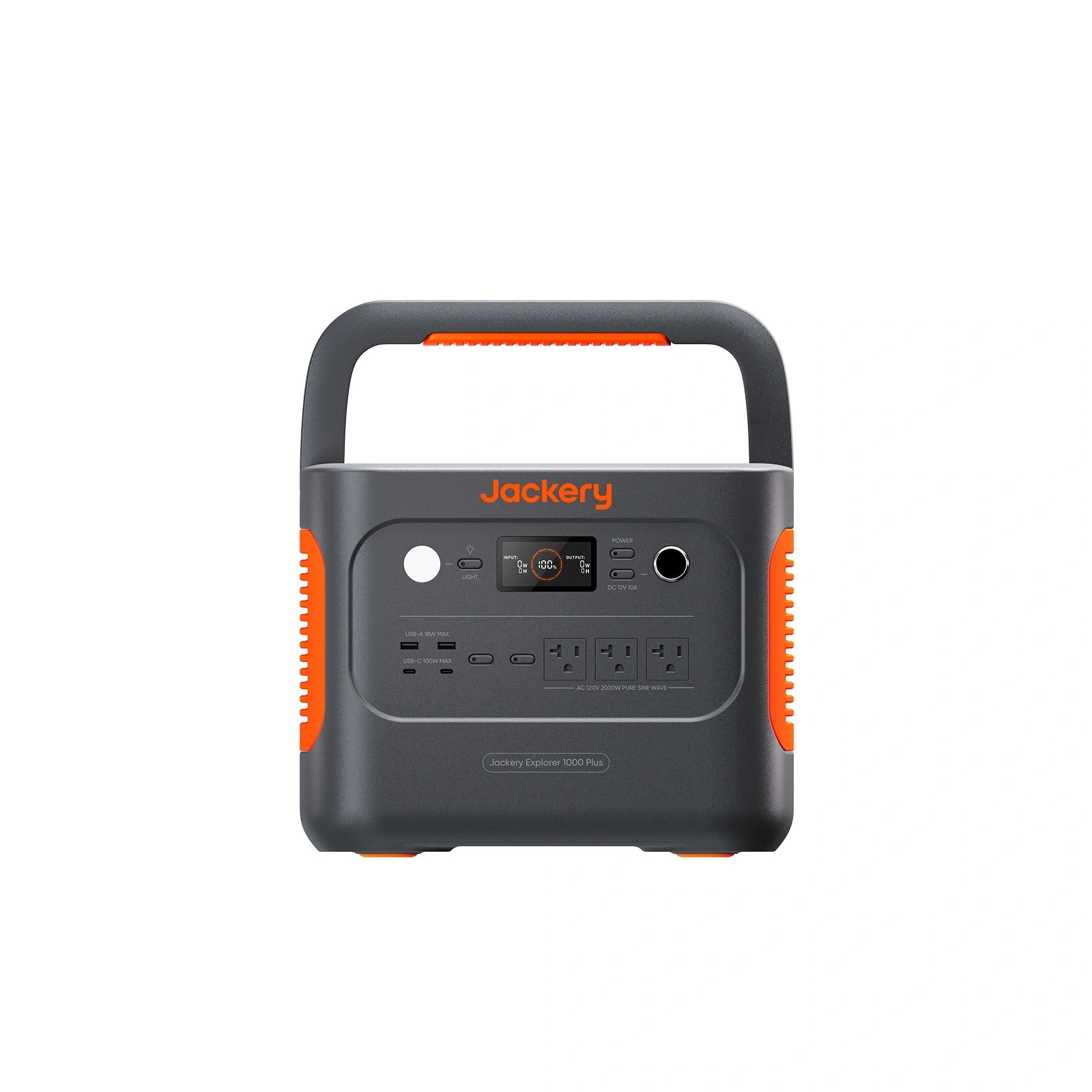
Jackery Explorer 1000 Plus
Jackery's mid-size station: about 1.26kWh behind a 2,000W inverter, two solar inputs that together take 800W, and app control over WiFi or Bluetooth. Jackery once sold it as expandable to 5kWh, but its own page now says the Battery Pack 1000 Plus add-on has been discontinued, so treat it as a standalone unit. One owner review on the page warns that its EPS backup mode keeps a fan running and did not work as a true always-on UPS for them. Like the other Jackery rows, its cycle rating is to 70% of capacity, not the 80% most makers use.
EcoFlow RIVER 2 Pro
The only EcoFlow RIVER model in this table, a 768Wh box that sits between the 288Wh units and the 1kWh group, and EcoFlow was selling it at $160 off its $529 list price in November 2026. EcoFlow says the wall takes it from empty to full in about 70 minutes, and its X-Boost mode lets it run a hair dryer, microwave or kettle at up to 1,600W even though the inverter is rated 800W. Solar input tops out at 220W, low for its size, so it suits topping up from one panel rather than living off solar.
How we researched this
We read each maker's own product page and spec sheet for the price, capacity, AC output, weight, solar input, cycle life and warranty, and recorded each value with the line it came from. Two weights come from elsewhere because EcoFlow lists them only in kilograms: the EcoFlow DELTA 3 Ultra Plus's from Popular Science's review and the EcoFlow DELTA 3 Max Plus's from the spec table of Outbound Power, a retailer. The set was drawn from the models that Popular Science and Outdoor Life review and from each brand's current line-up, spread from the smallest to the largest sizes.
Some well-known models are not here because their maker's own store no longer sells them or would not show their specs: the Jackery Explorer 300 v2 and Explorer 1000 v2 were sold out, the EcoFlow RIVER 3 Plus and Anker SOLIX C800 Plus no longer appear on the US stores, the Anker SOLIX C2000 Gen 2 page states no weight or solar input, the Jackery Explorer 1500 v2 page states no solar input or warranty, and DJI's store would not load. A blank cell means the maker does not state that figure: EcoFlow states no cycle life for the DELTA 3 Max Plus or DELTA 3 Ultra Plus.