Best Stargazing Spots Near North Richland Hills
The darkest sky within reach of North Richland Hills is at Copper Breaks State Park near Quanah: Texas Parks and Wildlife rates it a 2 on the Bortle scale, it is an International Dark Sky Park, and entry is $3, but it is three and a half hours away. For a single evening, Lake Mineral Wells State Park rates 4.5 at about forty-five minutes west of Fort Worth, and Meridian and Possum Kingdom reach a 4 at roughly ninety minutes and an hour and three-quarters.
Closer in, the sky is too bright for much beyond the Moon and planets (Cedar Hill, the nearest state park, rates a 7), so the metroplex options are about borrowing a telescope: free club star parties at Tandy Hills in Fort Worth and Frisco Commons, and $6 public nights at UNT's Rafes Urban Astronomy Center in Denton. Farther out, the question becomes the clock, since most of these parks lock the gate at 10 p.m. and camping is the way to stay later.
Our picks
- Seeing the Milky Way overhead: Copper Breaks State Park. Bortle 2, an International Dark Sky Park, $3 entry, and ranger star parties monthly from April through November.
- Best trade of drive time for darkness: Lake Mineral Wells State Park & Trailway. About forty-five minutes west of Fort Worth with a 4.5 Bortle rating, two and a half steps darker than Cedar Hill, for $7.
- The darkest sky within ninety minutes: Meridian State Park. Rated Bortle 4 with nothing sizeable nearby to light the horizon, $5 entry, and cabins or screened shelters for staying past the 10 p.m. gate.
- A first look through a serious telescope: UNT Rafes Urban Astronomy Center. Public star parties on the first and third Saturday of each month for $6, with sixteen Celestron C8s and two domed refractors.
- Free and open until 10 close to home: Murrell Park, Grapevine Lake. No entry fee, open 6 a.m. to 10 p.m., about twenty-five minutes away, with open shoreline facing north over Grapevine Lake.
At a glance
| Option | Cost to Visit | Address | Site Type | Park Hours | Camping | Bortle Sky Rating | Nearest Town |
|---|---|---|---|---|---|---|---|
| Freesource | 3325 View Street, Fort Worth, TX 76103source | Natural areasource | Sunrise to sunset, year-roundsource | Fort Worthsource | |||
| Freesource | 880 Simmons Rd, Flower Mound, TX 75022source | Corps of Engineers parksource | 6 a.m. to 10 p.m.source | Tent camping onlysource | Flower Moundsource | ||
| Freesource | 8000 McKinney Road, Frisco, TX 75033source | City parksource | Opens 30 minutes before sunrise, closes 30 minutes after sunsetsource | Friscosource | |||
| $6source | 2350 Tom Cole Road, Denton, TX 76207source | Astronomy centersource | Open to the public on the first and third Saturday of each monthsource | Dentonsource | |||
| 1400 US Highway 81/287, Decatur, TX 76234source | National grasslandsource | Developed campsitessource | Decatursource | ||||
| $7source | 1570 West FM 1382, Cedar Hill, TX 75104source | State parksource | 6 a.m. to 10 p.m.source | Developed campsitessource | 7source | Cedar Hillsource | |
| $7source | 100 PW 4137, Pilot Point, TX 76258source | State parksource | 6 a.m. to 10 p.m.source | Developed campsitessource | 5source | Pilot Pointsource | |
| $7source | 100 Park Road 71, Mineral Wells, TX 76067source | State parksource | 6 a.m. to 10 p.m.source | Developed campsitessource | 4.5source | Mineral Wellssource | |
| $6source | 5800 Park Road 21, Cleburne, TX 76033source | State parksource | 7 a.m. to 10 p.m.source | Developed campsitessource | 4.5source | Cleburnesource | |
| $8source | 1629 Park Road 59, Glen Rose, TX 76043source | State parksource | 6 a.m. to 10 p.m.source | Developed campsitessource | 4.5source | Glen Rosesource | |
| $4source | 228 State Park Road 61, Jacksboro, TX 76458source | State parksource | Open dailysource | Developed campsitessource | 4.5source | Jacksborosource | |
| $5source | 433 FM 1244, Whitney, TX 76692source | State parksource | 6 a.m. to 10 p.m.source | Developed campsitessource | 4.5source | Whitneysource | |
| $5source | 173 Park Road 7, Meridian, TX 76665source | State parksource | 6 a.m. to 10 p.m.source | Developed campsitessource | 4source | Meridiansource | |
| $4source | 3901 State Park Road 33, Caddo, TX 76429source | State parksource | Developed campsitessource | 4source | Caddosource | ||
| $7source | 100 Park Road 77, Strawn, TX 76475source | State parksource | 8 a.m. to 10 p.m.source | Developed campsitessource | Strawnsource | ||
| $3source | 777 Park Road 62, Quanah, TX 79252source | State parksource | 7 a.m. to 10 p.m.source | Developed campsitessource | 2source | Quanahsource |




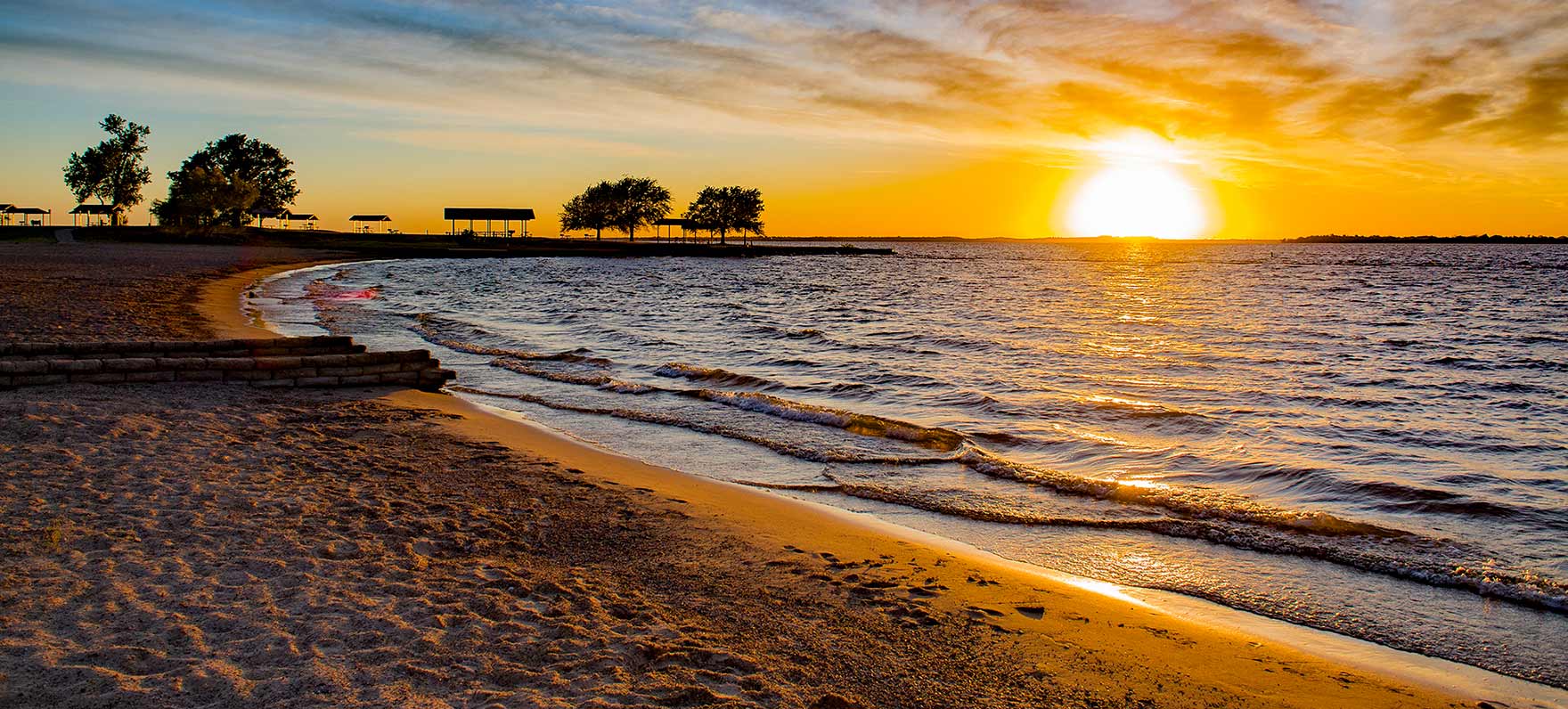
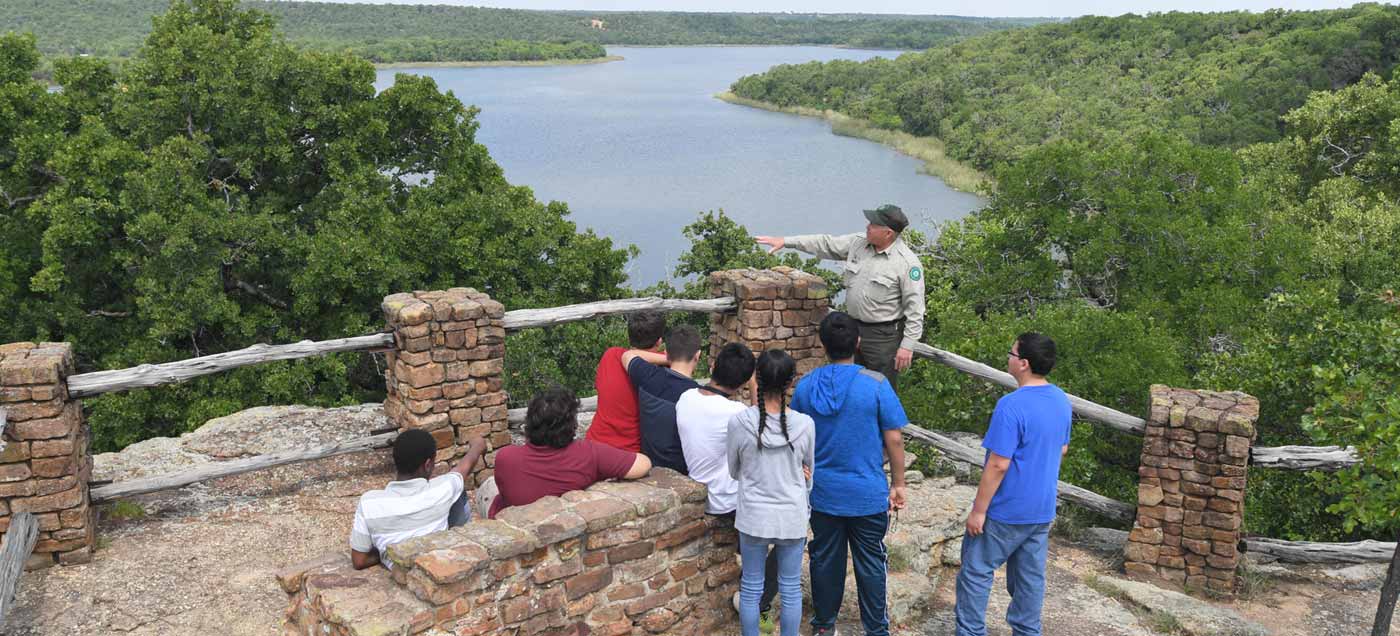
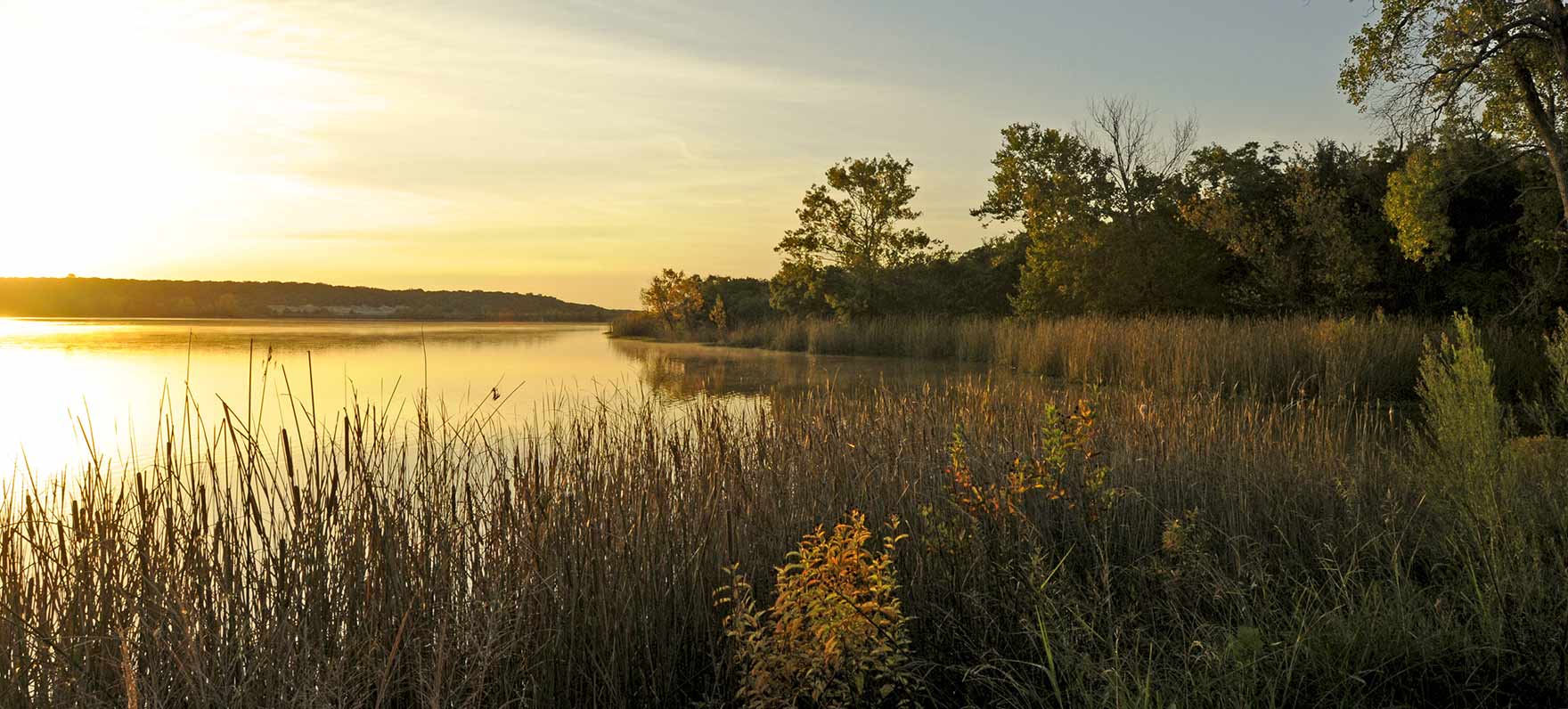




How dark each park is for the drive
Distance and darkness do not line up neatly here. Cedar Hill State Park is the closest state park at about forty-five minutes, but it sits on the southwest edge of the metroplex and rates a 7. Ray Roberts Lake, an hour north, rates a 5 and puts the city glow behind you with a wide northern horizon over the water.
Five parks cluster at 4.5: Lake Mineral Wells, Cleburne, Dinosaur Valley, Fort Richardson and Lake Whitney. Meridian and Possum Kingdom are the only two rated 4, and Copper Breaks at 2 is in a class of its own. Palo Pinto Mountains, the newest state park, has no rating yet, though its own description names the night skies as a reason to visit.
The 10 p.m. gate, and when to book a campsite
Most of the state parks here publish 6 a.m. to 10 p.m. hours, Cleburne and Copper Breaks open at 7 a.m., and Palo Pinto Mountains at 8 a.m., all with the same 10 p.m. close. Stargazing past that means staying the night, and every state park on the list has developed campsites, with cabins at Cleburne, Meridian, Fort Richardson and Possum Kingdom for anyone who would rather not pitch a tent. Murrell Park offers eleven walk-in tent sites through recreation.gov.
Two parks do not publish gate hours at all: Fort Richardson lists only that it is open daily, and Possum Kingdom gives headquarters and store hours instead, so call either before planning a late arrival or departure. The LBJ National Grassland has no gate and no closing time, but its dark units are ten to fifteen miles past the ranger office on county and forest roads, so scout it in daylight first.
Star parties in Fort Worth, Frisco and Denton
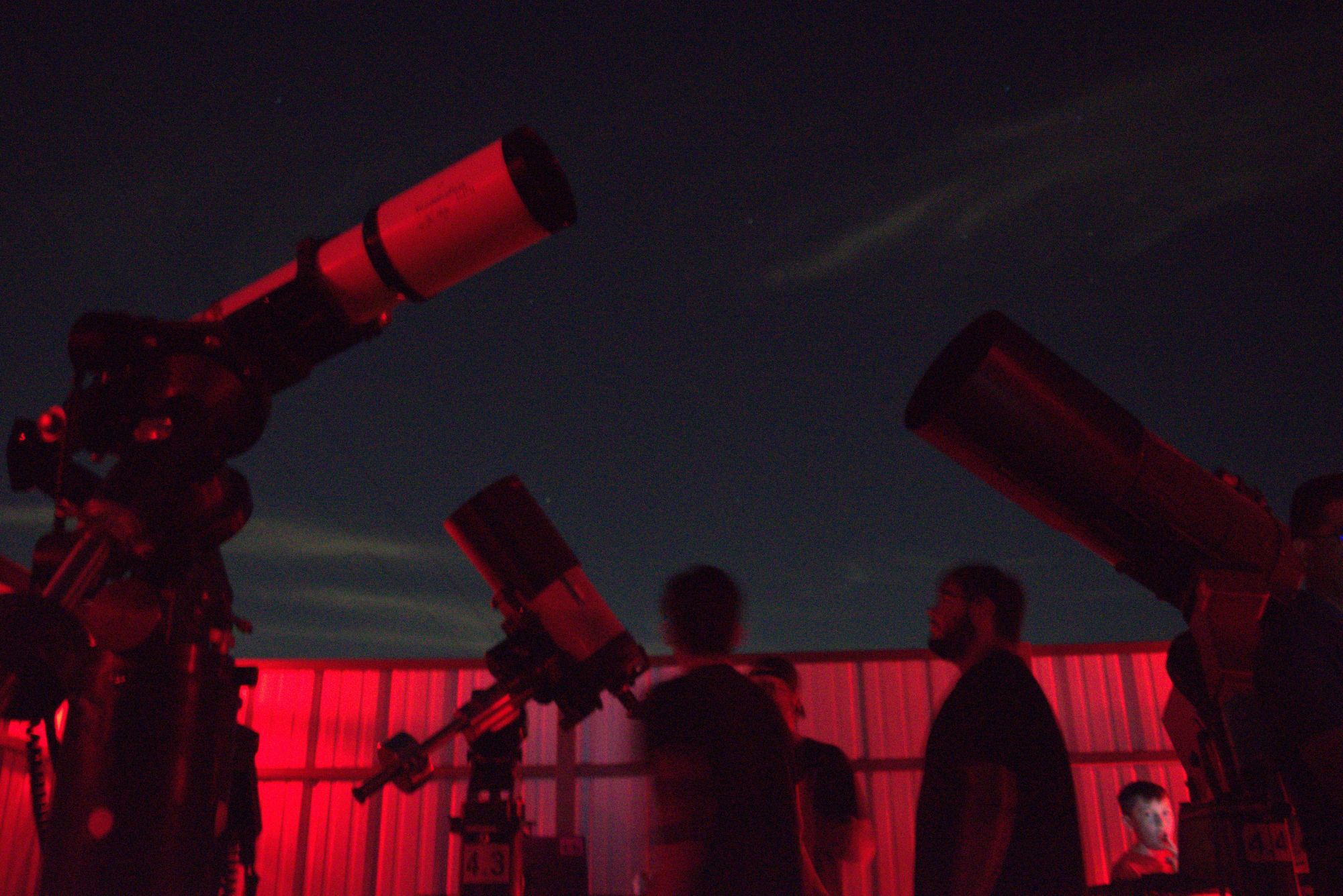
Tandy Hills Natural Area closes at sunset, so the Fort Worth Astronomical Society's star parties on selected Saturdays are the way to be on the hill after dark; they start an hour before dark, cost nothing, and are cancelled if it clouds over. Frisco Starfest at Frisco Commons Park runs on the second Saturday of most months from 6 p.m. to 10:30 p.m., skips December, and has a weather hotline to call before you drive. Both sit under bright city or suburban sky, which suits a first look at the Moon and planets. UNT's Rafes center charges $6 and sells tickets online; wear closed-toed shoes and bring a red flashlight.
The options in detail
Tandy Hills Natural Area
A 220-acre remnant of native prairie in east Fort Worth, about twenty minutes from North Richland Hills and the closest thing on this list to a local star party. The Fort Worth Astronomical Society, founded in 1949 and one of the largest amateur clubs in the country, moved its long-running monthly public star parties here from the Fort Worth Museum of Science and History, and members set up several telescopes on selected Saturdays starting an hour before dark. City sky glow means you come here to look through someone else's telescope at the Moon and planets, not to see the Milky Way. The trails themselves are posted sunrise to sunset, so the star party is the sanctioned way to be on the hill after dark; events are cancelled if it clouds over, and dogs are not allowed.
Murrell Park, Grapevine Lake
The one park the Army Corps of Engineers still runs itself on Grapevine Lake, roughly twenty-five minutes from North Richland Hills, with two day-use areas, two lighted boat ramps and long stretches of open shoreline facing north over the water. What makes it worth knowing is the combination of free entry and a 10 p.m. closing this close to the metroplex: you can stay out well past sunset without a permit or a scheduled event. Eleven walk-in tent sites take reservations through recreation.gov for a nightly fee, though facilities are thin, one pit restroom and a water spigot with no showers. The limit here is light, not access: Flower Mound, Grapevine and the airport all glow on the horizon.
Frisco Commons Park
A 63-acre city park on the north side of Frisco where the Texas Astronomical Society of Dallas runs Frisco Starfest, a free public star party on the second Saturday of most months from 6 p.m. to 10:30 p.m., with club telescopes set out for anyone to look through. Observing begins half an hour after sunset, there is a weather hotline to call before you drive out, and the event skips December. Outside that evening the park closes thirty minutes after sunset, so this is a date on the calendar rather than somewhere to turn up at midnight. Suburban Collin County sky puts the Moon, the planets and the brighter clusters within reach and little else, which is exactly what a first look through a telescope should be.
UNT Rafes Urban Astronomy Center
The University of North Texas built this observatory on donated land west of Denton in 2006, after light pollution overtook its old site on a decommissioned Nike missile base north of town. It now holds four telescope huts with sixteen Celestron C8s between them, two domes housing an 8-inch and a 6-inch Unitron refractor, and an open-air amphitheater where staff give the sky talk before observing starts. Public star parties run the first and third Saturday of every month, tickets are sold online, and the start time moves with sunset. It is about a forty-five minute drive from North Richland Hills and the closest place here where someone will point a serious telescope at something for you; wear closed-toed shoes, since parking is in a grass field, and bring a red flashlight rather than a white one.
Lyndon B. Johnson National Grassland
Public land broken into scattered units north and west of Decatur, roughly fifty minutes from North Richland Hills and the nearest genuinely rural ground in that direction: grazing country, small flood-control lakes and forest roads rather than a park with a gate. Campgrounds at Black Creek Lake and the TADRA Point horse trailhead are the usual bases, and because there is no closing time you can observe as late as you like. The catch is that nothing is set up for a casual visit. The address here is the ranger district office on US 81/287 in town, not a viewing spot, and the dark units are another ten to fifteen miles out on county and forest roads; the Forest Service charges day-use fees at the developed lake sites, payable on site by cash or check, so go in daylight the first time.
Cedar Hill State Park
The closest state park to North Richland Hills, about forty-five minutes southwest on the shore of Joe Pool Lake, with 350 developed campsites, a swimming beach and the 1,200-acre DORBA mountain bike trail through limestone hills. It is the easiest overnight on this list and the worst sky on it: sitting on the southwest edge of the metroplex, Texas Parks and Wildlife rates it a 7 on the Bortle scale, which is suburban-bright and will show you the Moon, the planets and not much else. Come here when the point is a family camping night with a bit of sky watching attached, and drive further west when the point is the sky. The park often reaches capacity, so reserve a pass before you go.
Ray Roberts Lake State Park (Isle du Bois Unit)
An hour north of North Richland Hills on the south shore of 29,000-acre Ray Roberts Lake, which is the reason to come: the water gives you a wide, unobstructed northern horizon, and the metroplex glow is behind you rather than in front. Texas Parks and Wildlife rates the sky here a 5, a real step darker than the parks south of Fort Worth. Isle du Bois is the developed unit, with campsites, an interpretive centre, swim beach and paved multiuse trails, and there are rooms at Lone Star Lodge across the lake at the Jordan unit if you would rather not camp. It fills up on weekends, so reserve the day pass in advance.
Lake Mineral Wells State Park & Trailway
The park's own description puts it forty-five minutes west of Fort Worth, which makes it the best trade between drive time and dark sky on this list: cattle country rather than suburbs, and a 4.5 Bortle rating that is a full two steps better than Cedar Hill. There is a 640-acre lake with six fishing piers, 12.8 miles of park trails, a 20-mile rail trail between two towns, and Penitentiary Hollow, one of the few natural rock climbing spots in North Texas. Astronomy turns up in the regular ranger programme alongside wilderness survival and wildflower walks, and the Fort Worth Astronomical Society has held its North Texas Star Party here. Campsites, screened shelters and equestrian sites all take reservations.
Cleburne State Park
A small, quiet Civilian Conservation Corps park wrapped around spring-fed, 116-acre Cedar Lake at the northern edge of the Hill Country, about an hour from North Richland Hills. Every campsite has water and electricity and some have sewer hookups, and there are screened shelters and cabins if you would rather not pitch a tent, which matters because the gate closes at 10 p.m. and staying the night is the only way to keep observing. The sky is rated 4.5, the same as Mineral Wells and Dinosaur Valley, with Cleburne and Fort Worth glowing to the north. Thirteen miles of trails and a hand-carved CCC spillway fill the daylight hours.
Dinosaur Valley State Park
Glen Rose is about an hour and a quarter southwest of North Richland Hills, and the draw is the Paluxy riverbed, where sauropod and theropod tracks are pressed into the limestone and the wide, flat, open river channel doubles as one of the better places in the park to set up after sunset. Rangers run programmes on the tracks and on the stars, and there are 36 electric campsites plus walk-in and hike-in primitive sites across the river. At $8 it is the most expensive day pass here, and the gate shuts at 10 p.m. unless you are camping. The sky rates 4.5, held back by Glen Rose and the Comanche Peak plant to the east rather than by the metroplex.
Fort Richardson State Park
An 1860s frontier army post at Jacksboro, about an hour and a quarter northwest, where several original buildings including the post hospital still stand and the surrounding country is thin enough on towns to keep the sky at 4.5. A $4 day pass is the cheapest entry to any of the state parks within reach, and there are cabins and campsites with showers, plus a north unit on Lake Jacksboro with a swim beach and kayak launch. One practical wrinkle: the park page publishes no gate hours at all, only that it is open daily, so call ahead if you are planning to arrive or leave late. Reservations are recommended, as the park often reaches capacity.
Lake Whitney State Park
Ninety minutes south on the shore of 23,500-acre Lake Whitney, and one of the few Texas Parks and Wildlife park pages that lists seeing the stars among the things to do, alongside fishing, swimming and geocaching. The park sits on open prairie with oak mottes and a bluff viewpoint, so horizons are long in most directions. Campsites run from water-only up to full hookups and there are screened shelters with lake views, which is the way to use a 10 p.m. gate. The sky rates 4.5; Waco is far enough south to be a low glow rather than a wall.
Meridian State Park
A small Civilian Conservation Corps park tucked among limestone bluffs at the top of the Hill Country, about ninety minutes south of North Richland Hills and fifty miles northwest of Waco. At a Bortle 4 it has the darkest published sky of anything within a ninety-minute drive, which is what earns a park this modest a place on the list; there is nothing sizeable nearby to light the horizon. Camping runs from primitive sites up to full hookups, with screened shelters and three cabins, and five miles of trail circle 72-acre Lake Meridian past limestone outcrops and overlooks. Endangered golden-cheeked warblers nest here from March to July.
Possum Kingdom State Park
An hour and three-quarters west on the clear water of Possum Kingdom Lake, high enough at 925 feet and far enough out that the sky rates a 4, tied with Meridian for the darkest inside two hours. Camping choices run from water-and-electric sites to primitive walk-ins, and there are air-conditioned cabins if you would rather not sleep outside. The park store sells supplies and rents boats and kayaks. Note that Texas Parks and Wildlife publishes no gate hours for this park, only headquarters and store hours, so confirm access with the park before planning a late night.
Palo Pinto Mountains State Park
The newest Texas state park, 4,871 acres of former ranchland about seventy-five miles west of the metroplex, and one of the few whose official description names the night skies as a reason to come. Sixteen miles of trail run out to remote parts of the park with wide vistas, and 90-acre Tucker Lake allows no motorboats, so evenings stay quiet. Camping runs from water and electric sites down to hike-in primitive ones. It has not been rated on Texas Parks and Wildlife's Bortle list yet, which is only because the park opened recently; the nearest rated parks in this direction, Possum Kingdom and Lake Mineral Wells, sit at 4 and 4.5.
Copper Breaks State Park
This is the destination rather than the evening out: three and a half hours northwest of North Richland Hills, near Quanah, on the red-rock breaks of the Pease River. The International Dark Sky Association has designated it an International Dark Sky Park, and Texas Parks and Wildlife rates its sky a 2 on the Bortle scale, the darkest of any park within reach of the metroplex and dark enough that the Milky Way is plainly overhead from your campsite with no telescope at all. Rangers run monthly star parties from April through November plus other night sky programmes, though you do not need an event to use the sky. Entry is $3, the cheapest here, and the equestrian campsites at Big Pond are open to all campers and have the best open horizon.
How we researched this
The sky column is Texas Parks and Wildlife's own Bortle list, the only per-site darkness figure we found published in citable form, so it covers state parks only and is blank for the natural area, city park, Corps park, grassland and astronomy center, as well as for Palo Pinto Mountains, which is too new to be listed. Close-in sites needed either after-dark hours or public star parties to qualify. That ruled out Bob Jones Nature Center, whose trails close at 8 p.m., along with Fort Worth Nature Center & Refuge, Eagle Mountain Park and LLELA, which close by sunset with no night events. Lake Tawakoni, Purtis Creek and Cooper Lake state parks are dark but lie east of Dallas, farther from North Richland Hills than better options in the same time band.
Cost to Visit is a per-adult day-use fee for the parks and the event price for the three star-party sites. The LBJ Grassland's cost and hours are blank because it has no gate and no general entry fee, and its map pin is the ranger office in Decatur. A blank camping cell means no source said either way. Several of these parks often reach capacity, so reserve the day pass ahead, and check the club's page on the day of a star party, since clouds cancel them.