lightweight car seats for air travel
Updated .
| Option | Price | Weight | Seat Type | FAA Approved | Child Weight Range | Max Child Height |
|---|---|---|---|---|---|---|
The cheapest infant seat here and one of the lightest, at just under 6 lb for the carrier, which Evenflo calls the lightest in its class. The low 4 to 22 lb range makes it a true newborn seat that most babies outgrow faster than a 30 or 35 lb carrier, so it suits one big trip in the first year rather than three. A good pick if you are flying with a small baby and would rather not spend much on gear you will retire quickly. Evenflo does not state aircraft certification on the product page, so check the label on the seat itself before you fly. | $74.99source | 6source | Infant carriersource | Yessource | 4-22source | 29source |
The lightest infant carrier in this table at 6.2 lb without the canopy and inserts, and the only one whose maker spells out that it is certified for aircraft use with or without its base. That distinction matters in practice, because you install an infant seat on a plane using the aircraft belt, with the base left at home or checked. This is the premium end of the market and the price says so. Nuna sells it bundled with the PIPA RELX base, and its own site showed colourways out of stock while this table was being built. | $650source | 6.2source | Infant carriersource | Yessource | 4-30source | 30source |
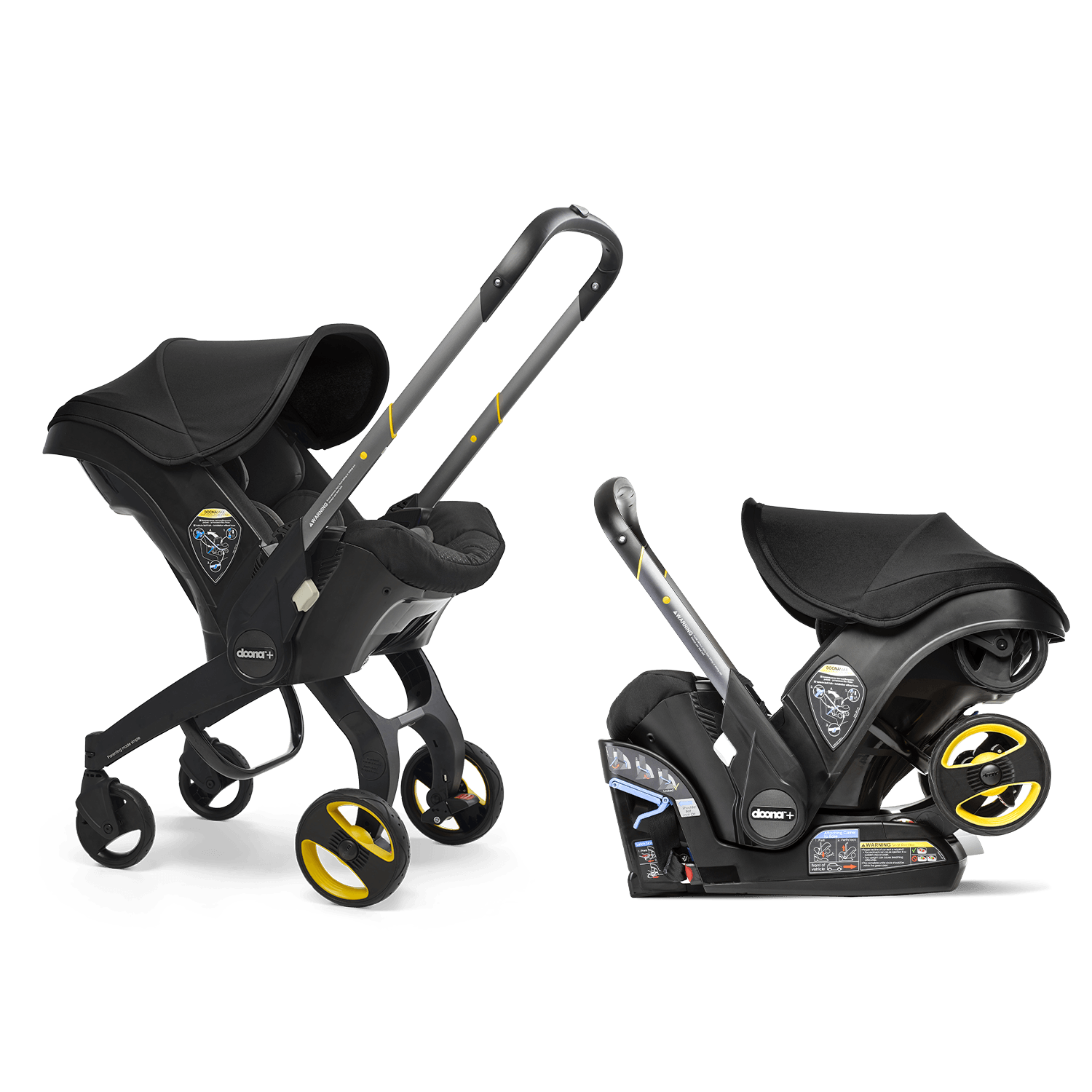
An infant car seat whose wheels fold out into a stroller, which is why parents fly with it in spite of the weight: you roll it through the terminal, down the jet bridge and straight into the aircraft seat with no separate stroller to gate check. At 17.2 lb it is by far the heaviest thing in this table, and carrying it up an aisle or a flight of stairs is the compromise you are making. It is rated only to 30 lb and 32 inches, so it is a first-year purchase. FAA approved for use on the aircraft. | $550source | 17.2source | Infant carriersource | Yessource | 4-30source | 32source |
The default budget travel car seat, and at 6.8 lb the lightest convertible in this table. It is 17 inches wide, which is the reason it fits airline seats that wider convertibles fight with, and it is cheap enough that plenty of families buy one purely for trips and leave their good seat at home. Certified for use on an aircraft. The trade-off is that it is bare bones: thin padding, a 40 lb harness limit, and a fit most children outgrow rear facing somewhere around age three. | $59source | 6.8source | Convertiblesource | Yessource | 5-40source | 43source |
A 9.4 lb convertible that Evenflo markets straight at families who fly, and the closest thing here to a Scenera NEXT with a little more comfort. It rear faces from 5 lb and forward faces to 40 lb, so it covers roughly the same span of childhood for about forty dollars more, with thicker padding and a removable head pillow. It is also narrow enough that owners report fitting three across a back seat. Evenflo does not publish aircraft certification on this product page, so check the label on the seat before you fly with it. | $99.99source | 9.4source | Convertiblesource | Yessource | 5-40source | 40source |
The only seat here designed from scratch for travel: 8 lb, an aluminium frame and mesh instead of moulded plastic, and a fold that fits an overhead bin rather than a checked bag. It is forward facing only and starts at 26.5 lb, so it is a toddler and preschooler seat, not something to fly with a baby in. FAA approved, and light enough that carrying it through a terminal on top of everything else is genuinely easy. The price is several times any other harnessed seat in this table, which is the whole argument against it. | $499source | 8source | Forward-facing harnesssource | Yessource | 26.5-50source | 45source |
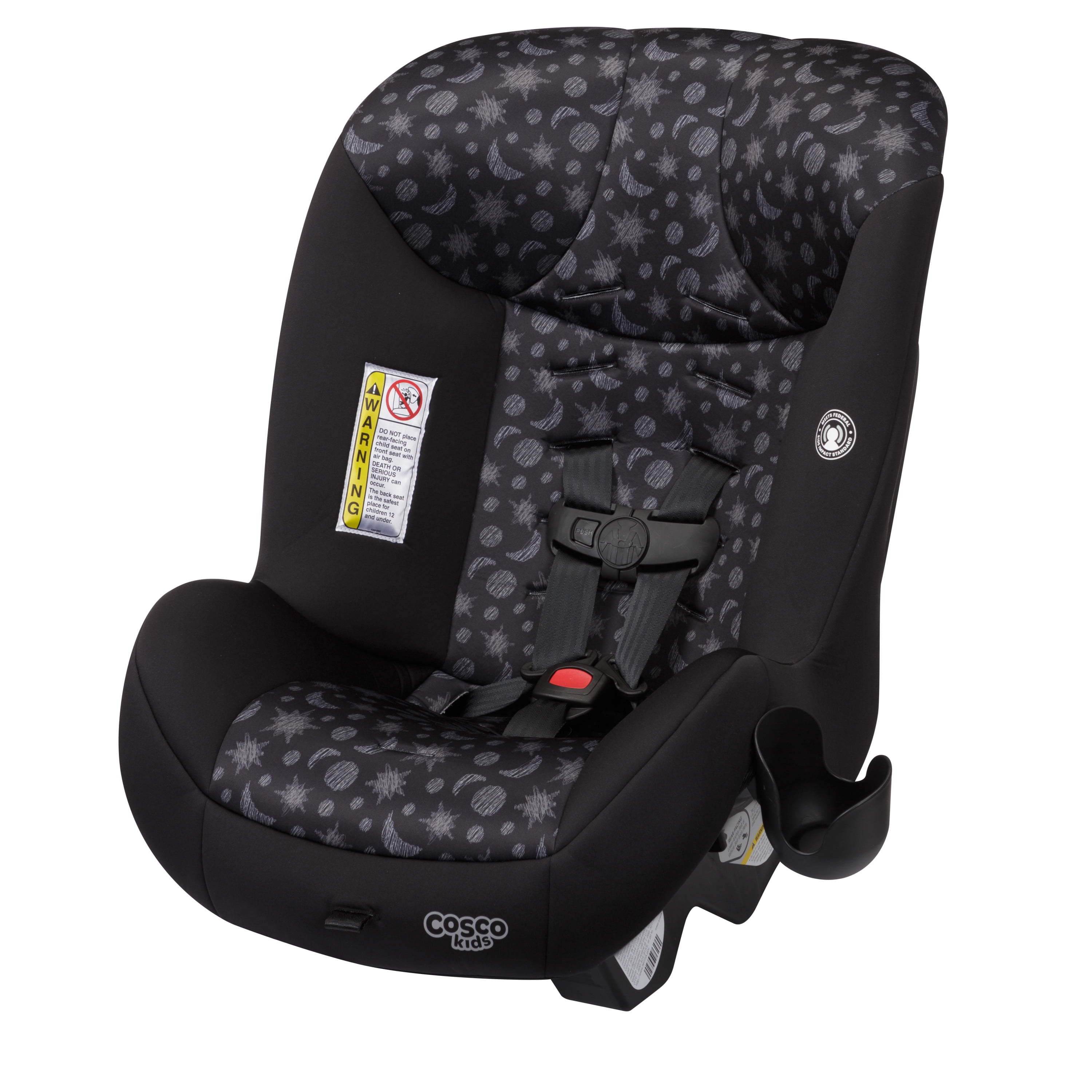
Eight pounds, under fifty dollars, and it harnesses a child to 65 lb before converting into a high back booster good to 100 lb, which is a lot of travelling life for the money. Only the harness mode is approved for the aircraft, because planes have lap belts and a booster needs a shoulder belt to work: fly it harnessed, then convert it at the destination. It is bare bones in the way the rest of the Cosco line is, and car seat technicians describe the booster conversion as fiddly rather than seamless. | $49.97source | 8source | Forward-facing harnesssource | Harness mode onlysource | 30-65source | 49source |
A backless booster that folds to about the size of a large paperback and weighs 1.75 lb, so it lives in a backpack or a glovebox instead of taking up a checked bag. It is destination gear rather than plane gear: boosters are not certified for use on an aircraft, so this rides in your carry-on and comes out at the rental car counter. Best for an older child who already sits well and only needs the adult belt lifted into the right place across the hips and shoulder. | $74.99source | 1.75source | Backless boostersource | Nosource | 40-100source | 59source |
An inflatable backless booster that weighs about a pound and deflates to roll up into nothing, which makes it the easiest thing in this table to pack. Like every booster it cannot be used on the plane, so treat it as gear for the taxi, the rental car and the friend picking you up. Its narrow profile is the other reason families buy it: three of them fit across most back seats, which matters when a rental car has to hold several children. | $40source | 1.1source | Backless boostersource | Nosource | 40-100source | 59source |
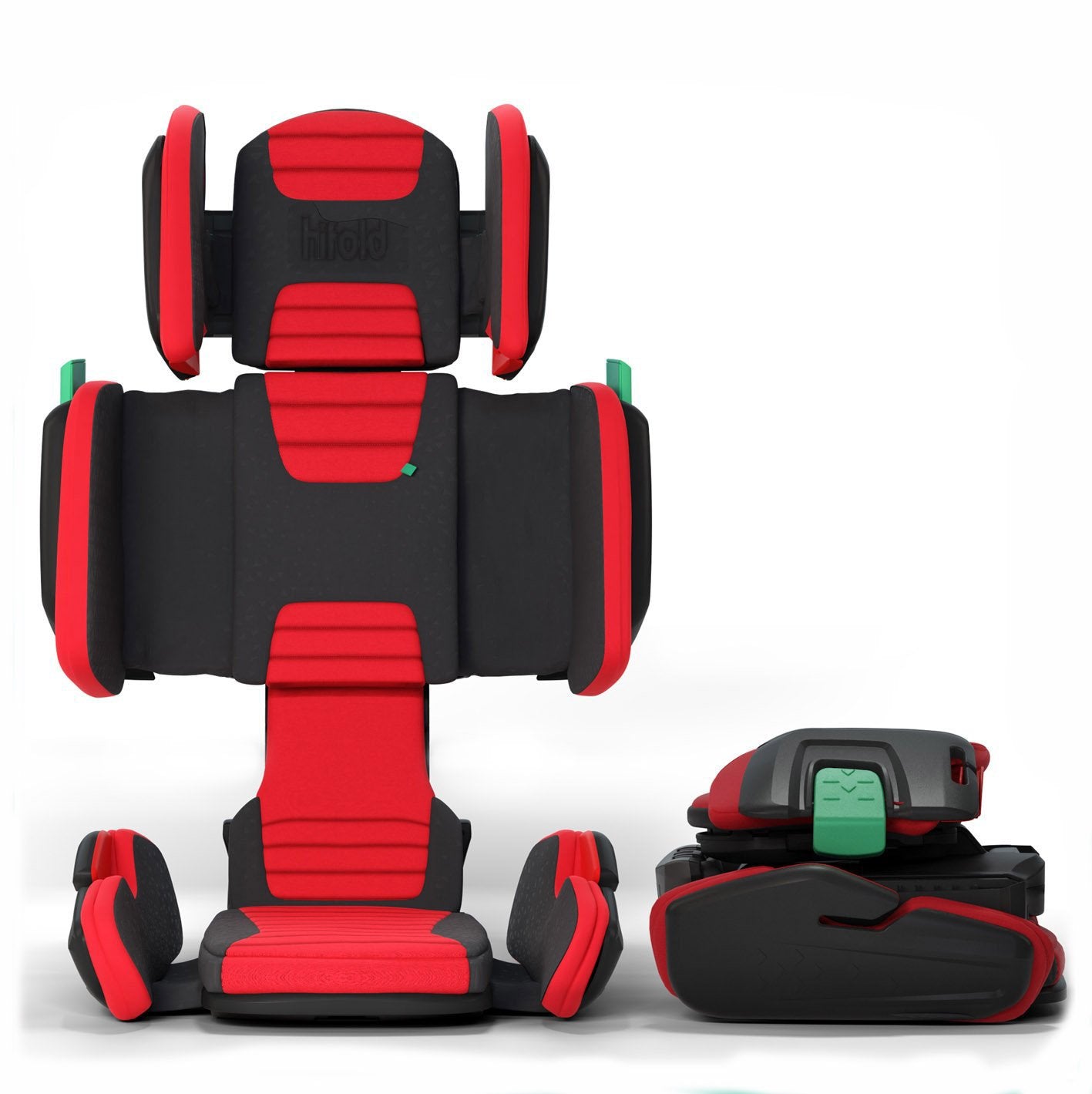
A full high back booster that folds down small enough to go inside a carry-on, giving a child the head and torso support a backless booster cannot. At 10 lb it is heavier than every other booster here and heavier than all but one of the car seats, so choosing it is a decision about comfort and side protection rather than about packing light. It cannot be used on the aircraft, and its 243 adjustment settings are the reason to pick it over a cheaper booster for a long trip. | $219.99source | 10source | High-back boostersource | Nosource | 40-100source | 59source |