Lightweight wooden kayak kits for woodworkers
Updated .
| Option | Kit Price | Maker | Finished Weight | Length | Construction | Max Load | Build Time |
|---|---|---|---|---|---|---|---|
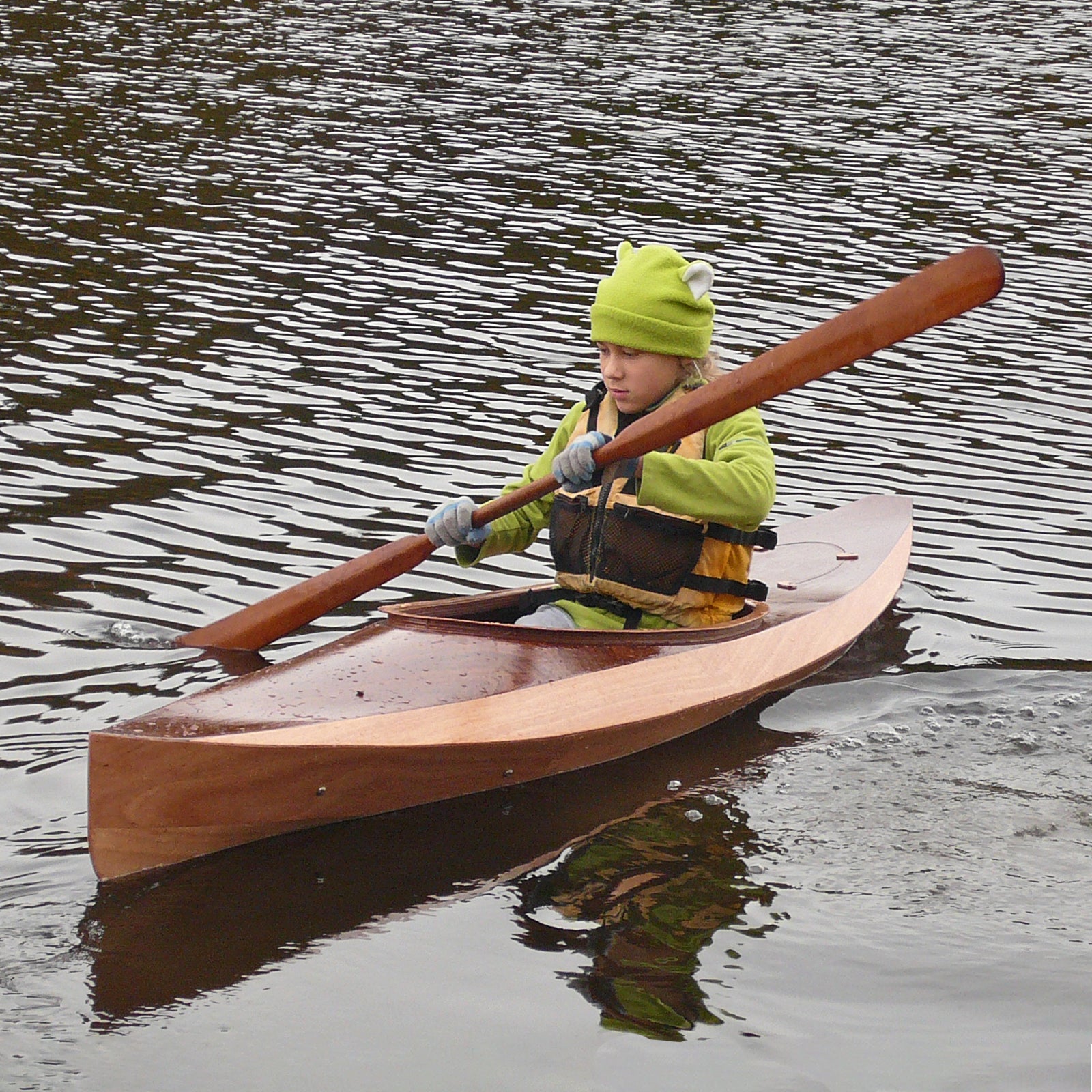
The smallest boat here and the only one drawn for a child: CLC rates it for paddlers between 35 and 100 pounds, and the finished hull weighs about as much as the kid paddling it. It is a real kayak rather than a toy, built from the same computer-cut plywood panels and copper-wire stitching as CLC's adult boats, and it is the cheapest and fastest build on this list at an estimated 70 hours. The obvious catch is that a child outgrows it, though CLC's own pitch is that it becomes a hand-me-down. | $885source | Chesapeake Light Craftsource | 22source | 8' 0"source | Stitch-and-glue plywoodsource | 100source | 70source |
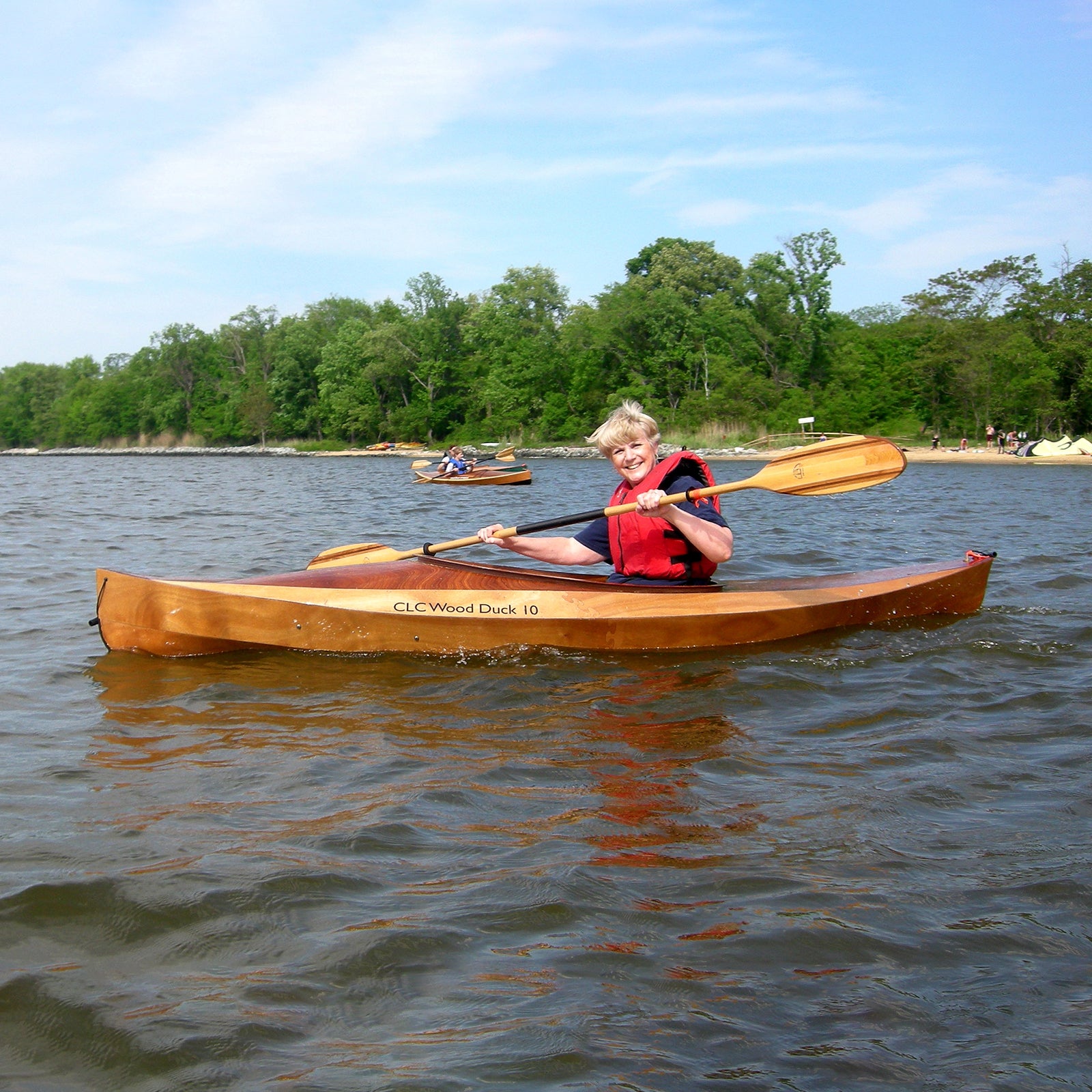
CLC's best-known beginner build and the one most first-time boatbuilders start with. It is short, wide and forgiving, with a big open cockpit that is easy to climb in and out of, and CLC rates the design for paddlers up to 200 pounds. The kit is engineered around first-time epoxy work: puzzle-jointed panels, pre-drilled stitch holes, and a manual written for people who have never glassed anything. At 10 feet it is a pond, lake and slow-river boat, not a sea kayak. | $1,298source | Chesapeake Light Craftsource | 36source | 10' 0"source | Stitch-and-glue plywoodsource | 250source | 80source |
CLC calls this the most versatile all-around boat in its catalog, and it is the one to look at if several people in a household will share one kayak: it takes a wide range of paddler sizes and is still rated a beginner build at about 80 hours. At 14'6" it tracks and carries far better than the Wood Ducks while staying stable enough for a first-timer. A dark sapele deck is standard, and the same hull is sold as a hybrid with a cedar-strip deck if you want the extra woodwork. | $1,498source | Chesapeake Light Craftsource | 42source | 14' 6"source | Stitch-and-glue plywoodsource | 300source | 80source |
The plywood Wood Duck 12 hull with a cedar-strip deck laid over it, which is the usual first step for a woodworker who wants to try strip-planking without committing to a full strip build. CLC moves the skill level to intermediate and the estimate to 120 hours for that deck, and asks for some prior epoxy and fiberglass experience. It carries the highest load rating on this list at 350 pounds, and it looks like a far harder build than it actually is. | $1,598source | Chesapeake Light Craftsource | 40source | 12' 0"source | Hybrid plywood and stripsource | 350source | 120source |
Nick Schade's Night Heron redrawn for plywood: an 18-foot, low-volume sea kayak with a hard-chined, sporty hull that CLC points at skilled paddlers rather than beginners. It gives you a boat that looks strip-built for a stitch-and-glue build of about 100 hours. At 20 inches of beam it is the narrowest plywood boat here and the least forgiving on the water: CLC rates its stability 2 out of 5, and its listed paddler range starts at 150 pounds. | $1,699source | Chesapeake Light Craftsource | 41source | 18' 0"source | Stitch-and-glue plywoodsource | 300source | 100source |
The showpiece of this list and an advanced build: bead-and-cove Western Red and Alaskan Yellow cedar strips over CNC-cut forms, with the reverse-curve sheer that is the reason people build it. CLC expects a table saw, a bandsaw, a working knowledge of epoxy and fiberglass, and a couple of stitch-and-glue boats behind you, and budgets 180 hours. At 38 pounds it is the lightest 15-foot-plus boat here, which is much of the appeal of strip-planking. | $1,969source | Chesapeake Light Craftsource | 38source | 15' 6"source | Cedar strip-builtsource | 259source | 180source |
Nick Schade's original strip-planked sea kayak, and probably the most-built wooden kayak design in North America. It is an all-rounder: a 17-footer that is stable in rough water, quick, and easy to lean into a turn, which is why it keeps showing up in club fleets. CLC rates it intermediate at about 150 hours, the middle ground between a stitch-and-glue project and something like the microBootlegger. Being a strip kit, expect far more fairing and sanding than a plywood build. | $1,975source | Chesapeake Light Craftsource | 41source | 17' 0"source | Cedar strip-builtsource | 300source | 150source |
A child's kayak from the Alberta shop that now carries the old Waters Dancing designs, built from two hull panels and two deck panels so it goes together fast: the shop quotes a 40-hour assembly, the shortest here. It is the cheapest kit on this list and, at roughly 26 pounds, light enough for a child to carry to the water alone, which is most of the point. Capacity is only 150 pounds, so it is genuinely a kid's boat rather than a small adult's. | $888source | Timber BoatWorkssource | 26.5source | 11' 10"source | Stitch-and-glue plywoodsource | 150source | 40source |
The workhorse of the Solace line: a 16-foot touring boat rated for 275 pounds, with a cockpit the shop will move or resize for tall and large paddlers on a custom build. The kit ships genuinely complete, down to varnish, rollers and gloves, with a 170-page manual, and Timber BoatWorks estimates 95 to 110 hours. The listed price is for the base configuration; a rudder or knee braces push it up several hundred dollars. | $1,258source | Timber BoatWorkssource | 36source | 16' 0"source | Stitch-and-glue plywoodsource | 275source | 95-110source |
Timber BoatWorks' revival of founder Jim Moore's hard-chine Waters Dancing designs, rebuilt around modern stitch-and-glue construction. The hard chines make it predictable on edge, and its 360-pound carry capacity is the largest of the plywood boats here, which makes it the pick for a heavier paddler or a loaded overnight trip. The shop does not publish a build estimate for this one, so plan on something like the Solace at roughly 100 hours. | $1,258source | Timber BoatWorkssource | 40source | 15.9'source | Stitch-and-glue plywoodsource | 360source | |
A Greenland-style plywood kit, low-decked and narrow at 22 inches, aimed at paddlers who want a hard-chine boat for edging and rolling rather than for hauling gear. It is the most expensive plywood kit on this list. It is also the least documented: Timber BoatWorks publishes dimensions, a 1.5-inch rocker figure and an approximate 40-pound finished weight, but no capacity and no build-time estimate. | $1,628source | Timber BoatWorkssource | 40source | 16' 0"source | Stitch-and-glue plywoodsource | ||
The lightest boat on this list by a wide margin: 20 pounds for the 12-foot version, which is the whole argument for building a child a strip boat instead of buying a plastic one. Redfish fits it with removable sponsons that make it very stable while a child is learning, then come off as their balance improves. It is a cedar-strip kit, so it is a great deal more work than a plywood kid's boat, and Redfish also draws it in a 14-foot version at 22 pounds and 110 pounds of capacity. | $1,395source | Redfish Kayakssource | 20source | 12' 0"source | Cedar strip-builtsource | 90source | |
Drawn for a customer who asked for a narrow 16-to-17-foot boat with a lower deck than Redfish's Spring Run, and it became the boat the shop points smaller-statured paddlers at. Rocker forward keeps it maneuverable while a deeper keel line aft means it tracks without a rudder. Redfish is a small custom shop in Port Townsend, Washington: the kit is a flat price plus shipping, and they publish dimensions and weight but no build-time or capacity figures. | $1,795source | Redfish Kayakssource | 36source | 16' 9"source | Cedar strip-builtsource | ||
The big boat in the Redfish line: 17'9" with enough volume aft to carry gear for an extended trip, and a lowered rear coaming Redfish calls the Roller's Recess so you can lay back into a roll. They aim it at intermediate and advanced paddlers but reckon a beginner adapts to it within a few hours on the water. Like all their kits it comes with full-length Western Red Cedar strips and a pre-built strongback, and at 38 pounds it is light for a boat this long. | $1,795source | Redfish Kayakssource | 38source | 17' 9"source | Cedar strip-builtsource |