Tide Pools Near Delray Beach
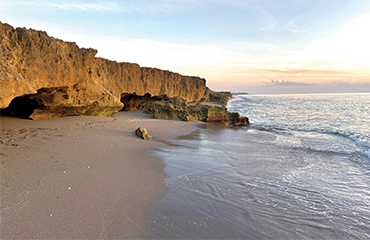
Delray Beach has no tide pools of its own. The nearest exposed rock is at Gulfstream Park, a few minutes up A1A in Gulf Stream: free, open sunrise to sunset, with limestone outcrops running 0.4 miles along the shore just south of the park.
Past that, you are trading distance for drama. South Beach Park in Boca Raton is the other nearby stop, but parking there costs $35 on weekdays and $50 on weekends without a permit. The bigger rock sits far to the north: Blowing Rocks Preserve in Hobe Sound holds the largest Anastasia limestone shoreline on the Atlantic coast, and the outcrop at the House of Refuge in Stuart runs two miles, roughly 50 and 60 miles up the coast.
Our picks
- A quick low-tide stop from Delray: Gulfstream Park. Free, a few minutes up A1A, with lifeguards on duty and 0.4 miles of outcrop a walk south down the beach.
- The most dramatic rock: Blowing Rocks Preserve. The largest Anastasia limestone shoreline on the Atlantic coast, where rough high tides throw spray up to fifty feet and low tide leaves pools in the crevices.
- Calm water for small children: Bathtub Reef Beach. A worm-built reef just offshore breaks the swell into a calm, shallow lagoon, with lifeguards daily and free parking.
- Free tide pooling near West Palm Beach: Ocean Reef Park. No charge, with a beach outcrop, an offshore reef exposed at low tide, and solution holes that hold water as the tide drops.
- Two miles of rock and a wreck: House of Refuge at Gilbert's Bar. Two miles of outcrop with cliffs up to fifteen feet, free to walk, and a shipwreck about 100 yards offshore that can be snorkeled from the rocks.
At a glance
| Option | Address | Cost | Entry fee | Hours | Lifeguard | Rocky shoreline |
|---|---|---|---|---|---|---|
| 4489 N. Ocean Boulevard, Gulfstream, Florida 33483source | Freesource | Freesource | Sunrise - Sunsetsource | Lifeguards on dutysource | Outcrops south of the park run 0.4 miles along the shoresource | |
| 400 N Ocean Blvd, Boca Raton, FL 33432source | Paid parkingsource | $35 on weekdays and $50 on weekends per vehicle without a permitsource | 8am - Sunsetsource | Lifeguards on dutysource | The outcrop runs 0.3 miles south from the parking areasource | |
| 3860 North Ocean Drive, Riviera Beach, Florida 33404source | Freesource | Freesource | Sunrise - Sunsetsource | Lifeguards on dutysource | A beach outcrop plus an offshore reef exposed at low tide, with low cliffs for 0.4 milessource | |
| 10900 Jack Nicklaus Drive, North Palm Beach, FL 33408source | Paid park entrysource | $5.00 per vehicle, limit 2-8 people per vehiclesource | 8 a.m. until sunset, 365 days a yearsource | No lifeguardssource | Reef and rock outcroppings in shallow water near the beachsource | |
| 1600 Beach Road, Tequesta, Florida 33469source | Freesource | Freesource | Sunrise - Sunsetsource | Lifeguards on dutysource | A small outcrop extending south from the boardwalksource | |
| 574 S Beach Rd, Hobe Sound, FLsource | Free with suggested donationsource | An optional $2 per person donationsource | 9:00 a.m. to 4:30 p.m., seven days a weeksource | No lifeguardssource | The largest Anastasia limestone shoreline on the Atlantic coastsource | |
| 1585 SE MacArthur Boulevard, Stuart, FL 34996source | Freesource | Free parkingsource | Lifeguards on dutysource | A worm-built reef system located just offshoresource | ||
| 301 SE MacArthur Blvd., Stuart, FL 34996source | Freesource | $12 for adults to tour the museumsource | Museum open 10 a.m. to 4 p.m. Monday to Saturday; 1 to 4 p.m. Sundaysource | The outcrop starts just north of Bathtub Reef and runs two miles along the shoresource |



Matching low tide to park hours
The pools only show at low tide, so hold a tide chart against the Hours column before you drive. The county parks, Gulfstream, Ocean Reef and Coral Cove, run sunrise to sunset, and John D. MacArthur Beach State Park and South Beach Park open at 8am. Blowing Rocks Preserve is the tight one: 9:00 a.m. to 4:30 p.m., gates locked at closing, so an evening low tide is out of reach there.
Blowing Rocks also has limited free parking that is often full by late morning on weekends and holidays, with the nearest overflow a mile south at Coral Cove Park. Coral Cove is worth the stop on its own, a smaller outcrop with a double sea arch that locals call Little Blowing Rocks.
What it costs to reach the rocks
Five of the eight cost nothing to see the rock: Gulfstream, Ocean Reef, Coral Cove, Bathtub Reef Beach and the House of Refuge, where the $12 adult ticket buys only the museum inside. Blowing Rocks asks an optional $2 per person donation and MacArthur charges $5 per vehicle.
South Beach Park is the outlier, and it is the second-closest site to Delray. Its $35 weekday and $50 weekend parking rate for non-permit holders is charged per vehicle, so on a Saturday it costs ten times what a carload pays at MacArthur.
Lifeguards and slippery limestone
Wet limestone is slippery and currents run through the gaps, so the Lifeguard column matters more here than at a sand beach. MacArthur and Blowing Rocks, two of the most interesting sites, have no lifeguards at all, and at the guarded parks the rock and the guarded water are often different places. Coral Cove opens only 600 feet of oceanfront for swimming precisely because of its rock formations.
Two sites ask you to watch your feet. Coral Cove has living worm reefs on parts of its rock face, so walk on sand rather than on the rock, and Ocean Reef Park has collapsed cliff blocks sitting in the surf, where shoes you do not mind soaking are the sensible choice.
The options in detail
Gulfstream Park
The closest exposed rock to Delray Beach, a few minutes up A1A in the town of Gulf Stream. Florida Atlantic University's geologists map the Anastasia limestone here running about four tenths of a mile along the shore, with a notched cliff face, sea caves that have since filled with cement, and burrowed rock surfaces. Otherwise it is an ordinary county beach park with a playground, picnic grills, restrooms and outdoor showers, so it works as a quick low-tide stop rather than a day out. The outcrops sit south of the park itself, so you walk down the beach to reach them.
South Beach Park
Boca Raton's southernmost beach park, where the Anastasia outcrop runs about three tenths of a mile south from the parking area with smaller ledges sitting out in the surf zone. FAU's geologists record solution pits and heavy burrowing in the rock here, the same formation that surfaces up and down this stretch of coast. The catch is the price: Boca charges non-permit holders a flat daily rate to park, which on a weekend makes this by far the most expensive stop on this list. Lifeguards are on duty year round, which is not true of most of the rocky beaches further north.
Ocean Reef Park
A Singer Island county park and probably the best free tide pooling in the West Palm Beach area. FAU's geologists describe both a beach outcrop and an offshore reef that is exposed at low tide, with low cliffs running about four tenths of a mile and solution holes that hold water as the tide drops. The park has a playground, grills, restrooms, outdoor showers and a beach surf wheelchair you can arrange through the lifeguards. Rock masses that have collapsed from the cliffs sit in the surf zone, so bring shoes you do not mind soaking.
John D. MacArthur Beach State Park
The only state park in Palm Beach County, reached by a 1,600 foot boardwalk across an estuary. Reef and rock outcroppings lie in shallow water right off the beach, and snorkelers there regularly see reef squid, tropical fish and schools of tarpon and snook. There are no lifeguards and a small per-vehicle entrance fee, so it suits confident swimmers and families who plan to stay in the shallows. A nature center, kayak and paddleboard rentals and a tram from the parking lot make this the easiest one on the list to turn into a full day.
Coral Cove Park
Known locally as Little Blowing Rocks, and it earns the name: a compact Anastasia limestone outcrop runs south from the boardwalk with notched cliffs, small caves, a double sea arch and pools left in the rock as the tide drops. Only 600 feet of the oceanfront is open for swimming, and that is precisely because of the rock formations, so the guarded stretch and the interesting stretch are different places. Entry and parking are free and there is a playground, restrooms and outdoor showers. Living worm reefs grow on parts of the rock face, so walk on sand rather than on the rock itself.
Blowing Rocks Preserve
The dramatic one. The Nature Conservancy protects the largest Anastasia limestone shoreline on the Atlantic coast here, and when the sea is rough at high tide the blowholes throw spray up to fifty feet. At low tide the same solution pipes and crevices become the pools, and shorebirds work the exposed rock for food. It keeps short hours, locks its gates at 4:30, has no lifeguard, and asks an optional two dollar donation. Parking is free but limited and often full by late morning on weekends and holidays, with the nearest overflow a mile south at Coral Cove Park.
Bathtub Reef Beach
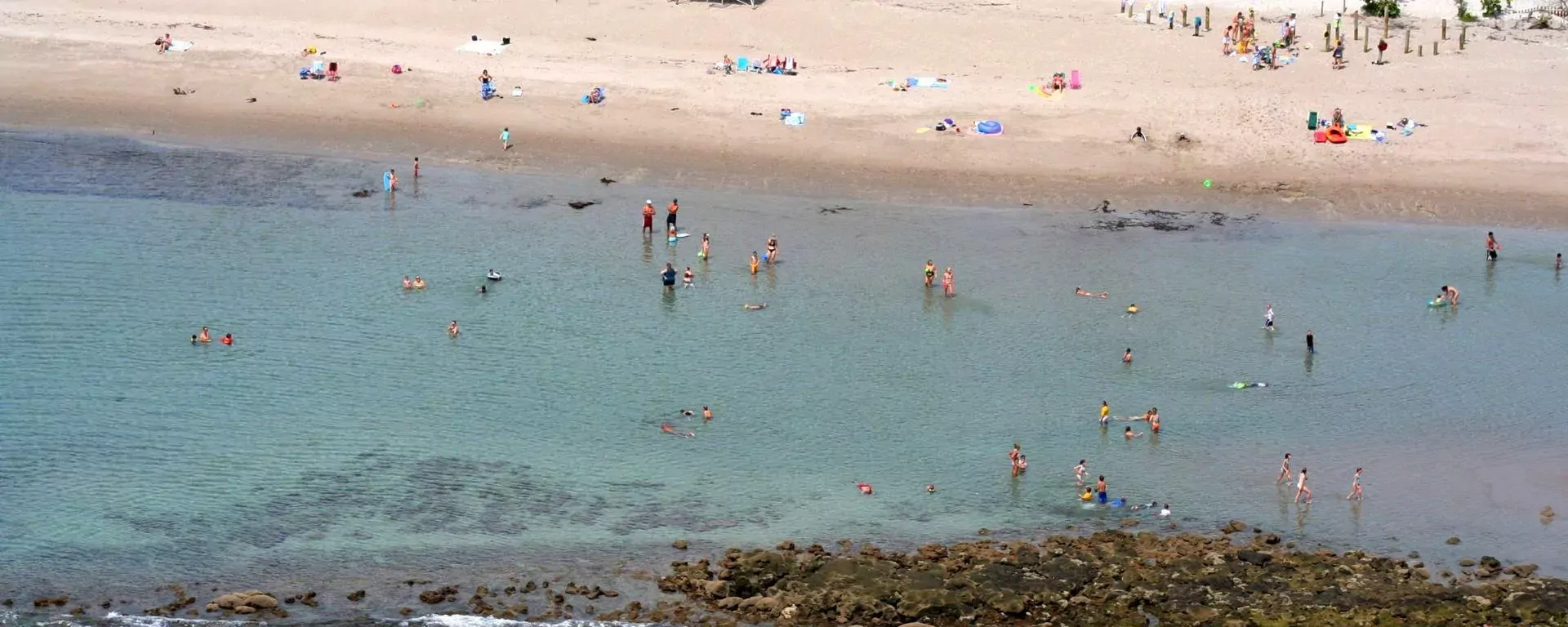
A different kind of rock. Instead of limestone, a reef built by tiny tube-building Sabellariid worms sits just offshore and breaks the swell, leaving the calm shallow lagoon that gives the beach its name. That makes it the gentlest of these for small children and one of the most popular snorkeling spots on the Treasure Coast. The reef is fragile and the beach erodes badly in winter storms and hurricanes, so Martin County closes and renourishes it periodically; check conditions before making the drive. Lifeguards are on duty daily and parking is free.
House of Refuge at Gilbert's Bar
The rock is the headline here. FAU's geologists trace the Anastasia outcrop two miles along the shore from just north of Bathtub Reef, with cliffs up to fifteen feet, notches, caves and abrasion platforms along the cliff bases that are covered in sand except at low tide. Above it stands the last surviving House of Refuge in Florida, the oldest building in Martin County, recently reopened after an extensive restoration. The rocks, the beach and the view from outside cost nothing and there is limited free parking, so the ticket price only matters if you want to go inside. The Georges Valentine shipwreck lies about 100 yards offshore in shallow water and can be snorkeled from the rocks.
How we researched this
Which beaches count as tide pool beaches leaned on Florida Atlantic University's Anastasia Formation field-trip series, the geologists' inventory of exposed rock on this coast, and six of the Rocky shoreline descriptions are theirs. That inventory is why Red Reef Park, which listicles often name, is missing: the city describes an artificial reef snorkel trail and a jetty there, and FAU's list skips it. Carlin Park in Jupiter had only a travel blog behind it. Phipps Ocean Park has a real outcrop but is closed for construction through at least October 2026, St. Lucie Inlet Preserve is reachable only by boat, and a string of other beaches checked, from DuBois Park to Jensen Beach, turned out to be sand or seawall.
Two cells are empty because the owner never says: Martin County publishes lifeguard hours for Bathtub Reef Beach but no park hours, and the House of Refuge is missing from the county's guarded-beach list without any page saying it is unguarded. The museum's $12 price comes from the historical society's own ticket page; an older travel site quotes $20, which is another museum's rate. Of the eight, Bathtub Reef Beach is the one most likely to be shut when you arrive, since Martin County closes it after storms to rebuild the sand.