Best Ladders for Big Families
Updated .
| Option | Price | Ladder Type | Max Reach Height | Duty Rating | Material | Ladder Weight | Folded Depth |
|---|---|---|---|---|---|---|---|
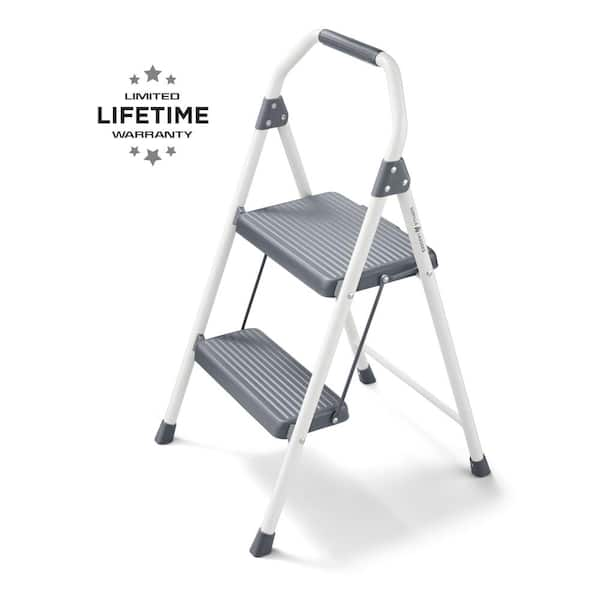
The cheap, thin steel stool that ends the standing-on-a-kitchen-chair habit. It folds to about two inches deep, so it can live behind a pantry door or in the gap beside the fridge instead of taking up garage wall, and at eight pounds anyone in the house can carry it one-handed. The trade-offs are the lowest load rating in this table at 225 pounds and only two steps, so it is a cabinets-and-closets tool, not a ceiling one. | $26.97source | Step stoolsource | 7.92source | Type II (225 lb)source | Steelsource | 8source | 2.3source |
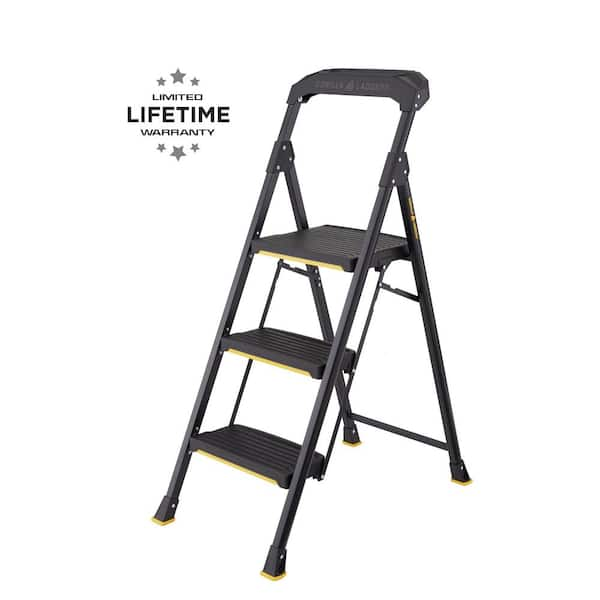
A sturdier take on the same idea: three oversized steps, a 300-pound rating, and a built-in project top that holds hardware while you work, which is the difference between one trip up and four. The extra step buys about a foot of reach over the compact two-step, and the wider treads are noticeably steadier for someone who is not keen on ladders. It weighs twice as much and folds nearly twice as thick, so it lives in a hall closet rather than behind a door. | $79.97source | Step stoolsource | 8.92source | Type IA (300 lb)source | Steelsource | 16.3source | 3.8source |
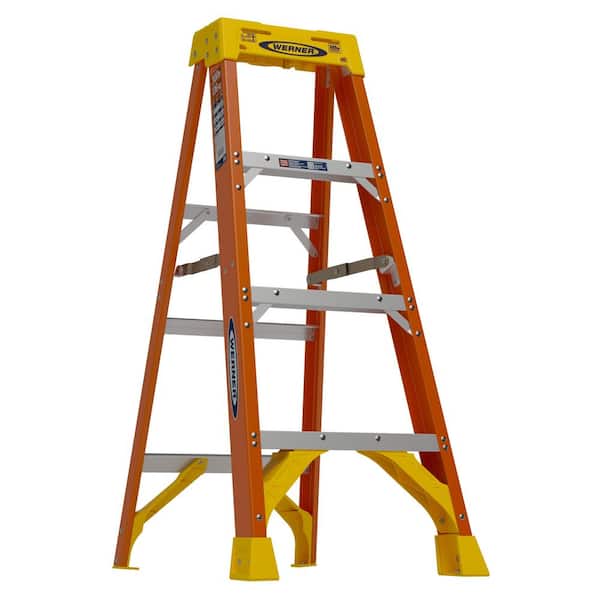
The smallest ladder in Werner's fiberglass household line, and the right size when the tall jobs are all indoors and the ceilings are standard. Fiberglass rails do not conduct electricity, which matters the first time someone changes a light fixture or opens a ceiling box, and the LockTop holds tools and lets you tether them so nothing lands on whoever is footing the ladder. At 21.5 pounds it is heavier than an aluminum ladder of the same size, and it reaches two feet lower than the six-foot model for more money, so it only makes sense where space is tight. | $129source | Step laddersource | 8source | Type IA (300 lb)source | Fiberglasssource | 21.5source | 7source |
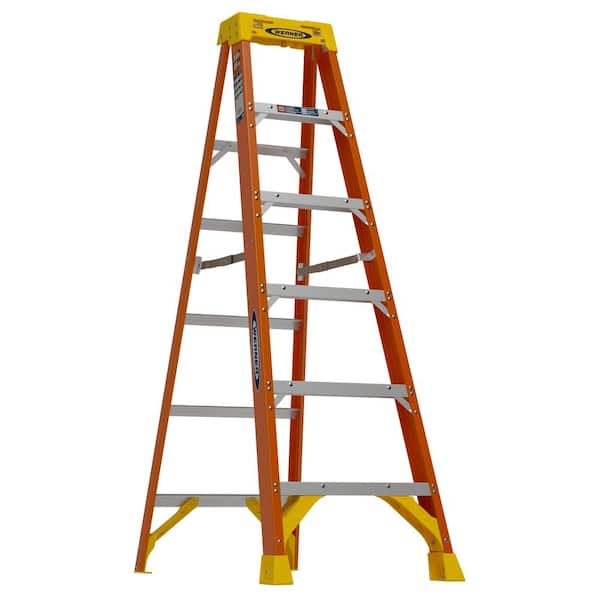
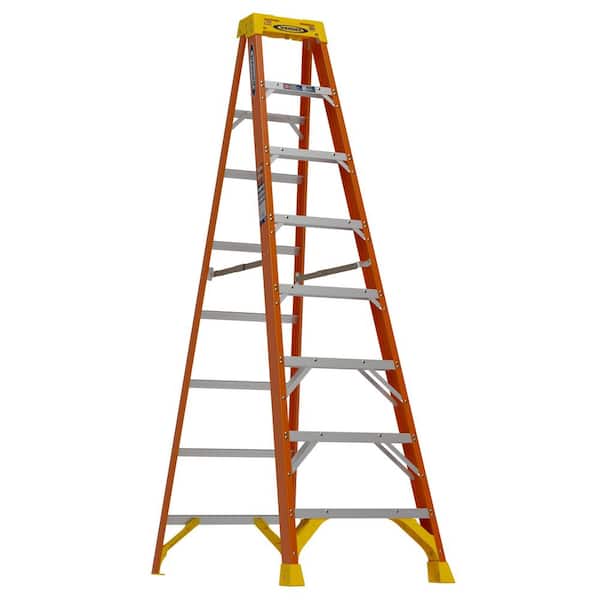
If a household is only going to own one proper ladder, this is usually it: six feet of ladder, ten feet of reach, enough for eight-foot ceilings, smoke detectors, ceiling fans and the top shelf of a closet. It is the same non-conductive fiberglass build and tool-holding top as the four-foot version but reaches two feet higher, and at the moment it costs less. It stores seven inches deep and is six feet long folded, so it needs a garage wall or a basement corner, not a coat closet. | $119source | Step laddersource | 10source | Type IA (300 lb)source | Fiberglasssource | 22source | 7source |
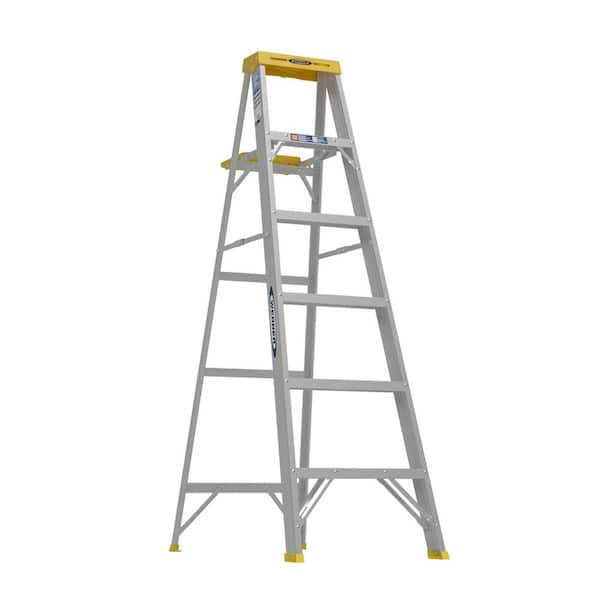
The lightest six-footer here at 14.5 pounds and the cheapest way to get ten feet of reach, which is why it is the one that actually gets carried upstairs instead of left in the garage. The top tray takes a paint can and a roller tray, which covers most of what families use a ladder for. Two caveats keep it out of the top spot: it is rated 250 pounds rather than 300, and aluminum conducts electricity, so it is the wrong ladder for anything involving wiring or overhead lines. | $84.97source | Step laddersource | 10source | Type I (250 lb)source | Aluminumsource | 14.5source | 6source |
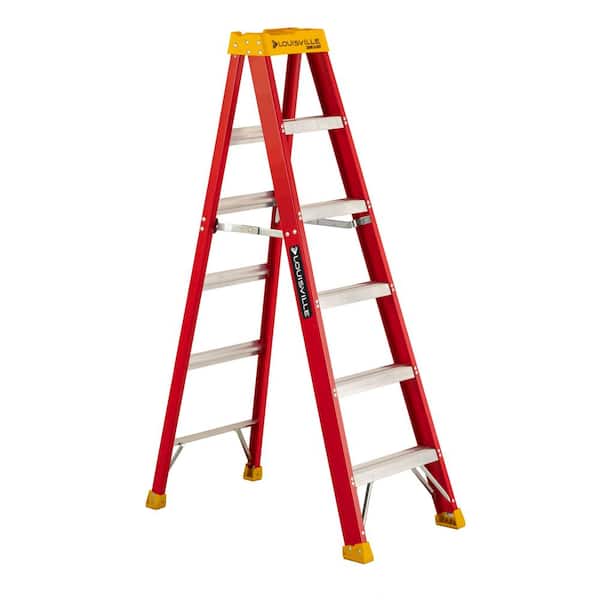
Louisville's answer to the Werner six-footer, with the same 300-pound rating, slightly more reach on paper and two pounds less to carry. Its argument is durability: a molded top with tool, drill and paint-can slots, and the Shox bracing the company says is there to survive being dropped and knocked about, which is a fair description of any ladder shared by a whole household. It is the most expensive plain six-foot step ladder in this table, so buy it for the build rather than the value. | $166.84source | Step laddersource | 10.4source | Type IA (300 lb)source | Fiberglasssource | 20source | 7source |
Where you go when six feet stops being enough: stairwell light fixtures, two-story entryways, the high shelf in a garage. Twelve feet of reach covers nearly everything inside a house, the rails are non-conductive, and the top is built to hold a dozen tools so you are not climbing down for a screwdriver. The cost is bulk: 30 pounds and eight feet long folded, which is a two-hands-and-a-clear-hallway ladder and will not go in a car. | $179source | Step laddersource | 12source | Type IA (300 lb)source | Fiberglasssource | 30source | 7source |
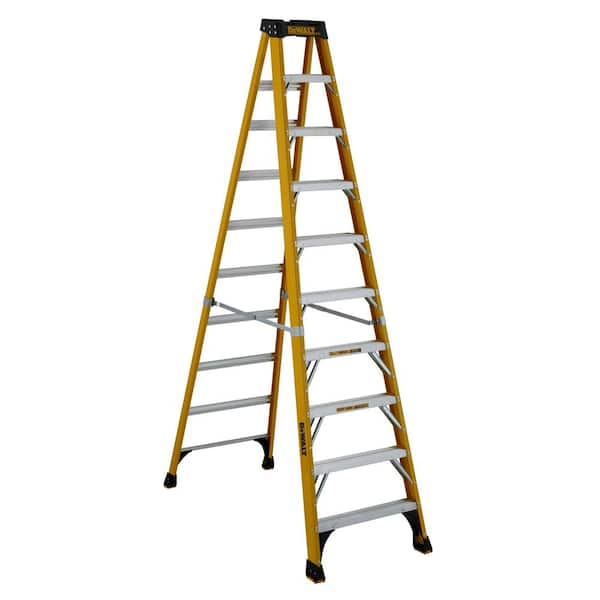
The heavy-duty outlier: ten feet of ladder, fourteen feet of reach, and the only 375-pound rating among the step ladders here, which is the one to look at if the tallest adult in the house also goes up carrying tools. DEWALT widened the steps by about a quarter over the industry standard, so standing on it through a long paint job is far less punishing on the feet. It is also the most expensive item in this table and weighs 45 pounds, which is a lot of ladder to move around a busy house. | $482.99source | Step laddersource | 14.17source | Type IAA (375 lb)source | Fiberglasssource | 45source | 6.66source |
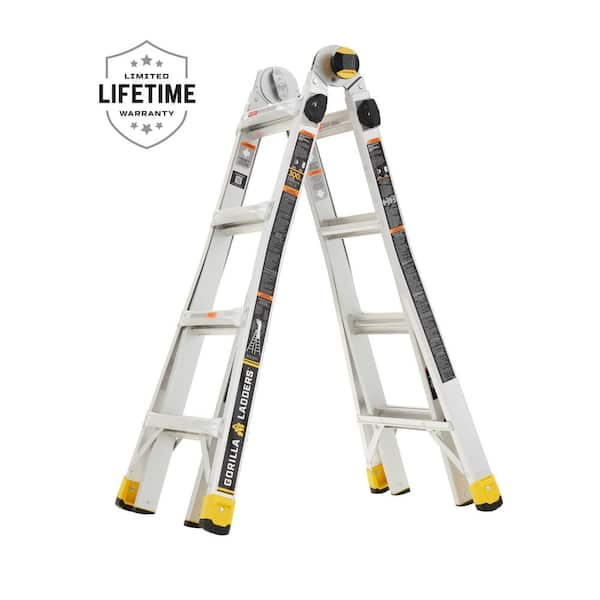
The one-ladder answer for a family that does not want three ladders competing for garage wall. It locks into a twin step ladder, a stairway ladder, a 90-degree wall ladder and an 18-foot extension ladder, so the same tool handles the stairwell light and the gutters, and there are hangers on the feet and hinges to park tools while you climb. Read the 18 feet as the leaning reach: folded into an A-frame it reaches about 11 feet, which is still more than any step ladder here under $180. It folds under nine inches deep and weighs about 31 pounds, though multi-position ladders take more setting up than a plain A-frame. | $239source | Multi-positionsource | 18source | Type IA (300 lb)source | Aluminumsource | 30.88source | 8.6source |
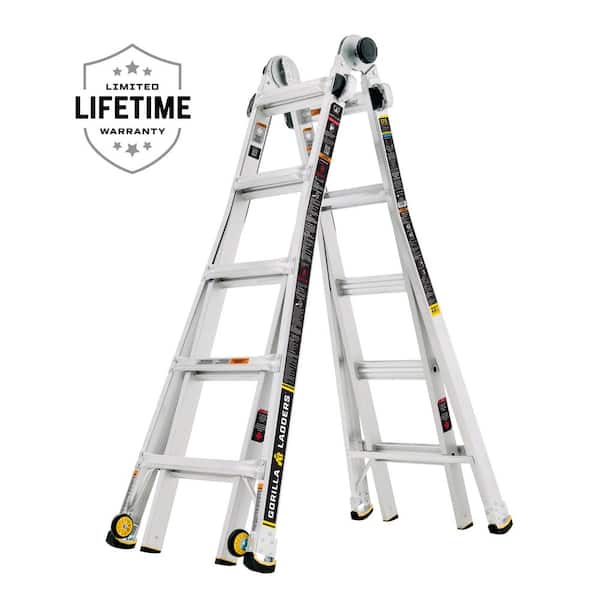
The bigger sibling, and the best all-rounder here for a two-story house: 22 feet of reach leaning against the wall, a 375-pound rating, and built-in wheels so one person can tip it and roll it rather than carry it. Those wheels are the reason to pay the extra over the 18-foot model, because what stops a heavy ladder getting used is moving it. Folded into an A-frame it reaches about 13 feet, so it also covers stairwells and high ceilings indoors. It weighs nearly 42 pounds and folds over nine inches deep, and like every aluminum ladder it belongs nowhere near overhead power lines. | $329source | Multi-positionsource | 22source | Type IAA (375 lb)source | Aluminumsource | 41.93source | 9.25source |
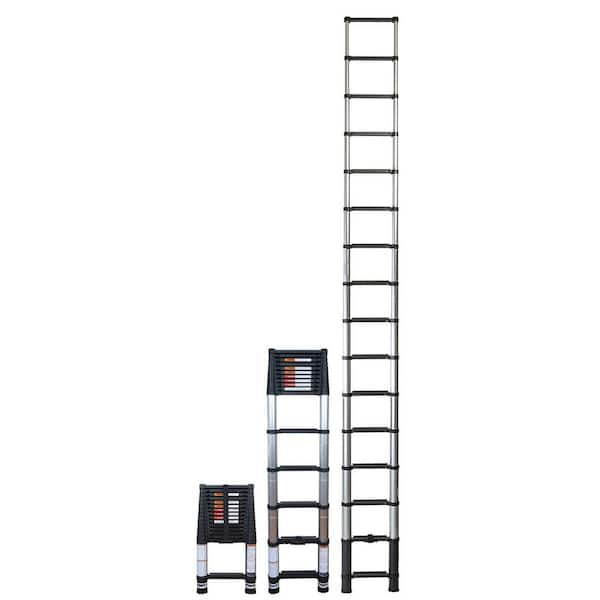
The pick for a household with no garage. It extends to 15.5 feet, retracts to about three feet in seconds, and stores in a closet or the back of a car, which nothing else here with that reach can do. It adjusts a foot at a time, so you can set it exactly at the gutter line instead of settling for the nearest rung. The price is what you pay for the trick: it costs more than either 24-foot extension ladder in this table while reaching several feet less, and it only leans, with no A-frame position for open-floor work. | $497source | Telescopingsource | 19.5source | Type IA (300 lb)source | Aluminumsource | 40source | 4.57source |
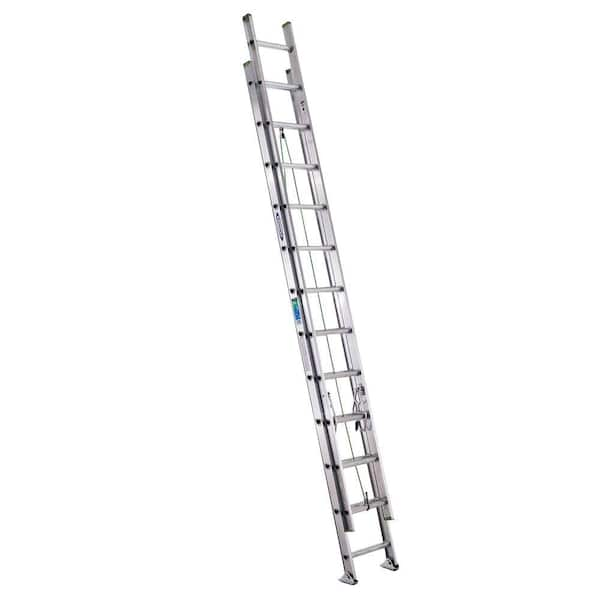
The classic gutters-and-roofline ladder, and the lightest way here to get 23 feet of reach at 33.5 pounds, which matters a lot when one person has to walk it around the house and raise it. Werner is explicit that the 225-pound rating is meant for light household use, and that is worth reading twice if the person going up is a larger adult carrying a bag of tools. It is aluminum, so it has to stay clear of the service drop and any overhead wiring. | $389source | Extensionsource | 23source | Type II (225 lb)source | Aluminumsource | 33.5source | 5.4source |
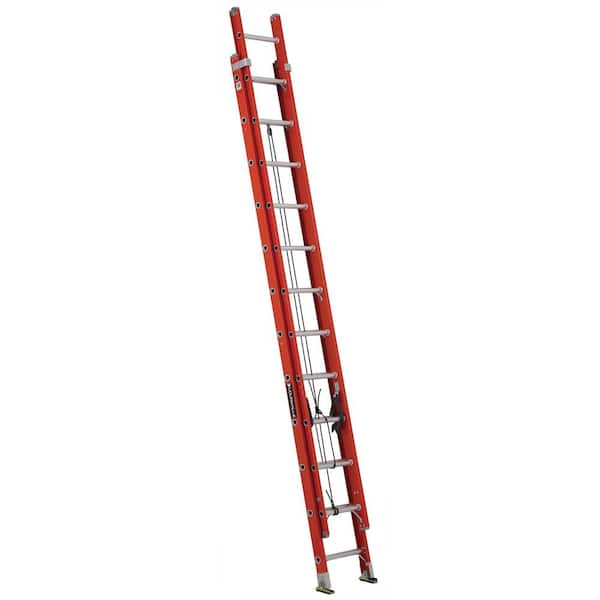
The extension ladder to buy if anyone in the house will be working near the power drop, since fiberglass rails do not conduct. It also carries a 300-pound rating instead of the Werner's 225 and currently costs less, with swivel safety shoes that grip on lawn as well as driveway. The catch is weight: at 51 pounds it is the heaviest thing in this table, and for most people raising it safely is genuinely a two-person job. | $294.14source | Extensionsource | 23.8source | Type IA (300 lb)source | Fiberglasssource | 51source | 7.25source |