Best shop vacs for woodworking
Updated .
| Option | Price | Type | Filtration | Tank Capacity | Airflow | Hose Length | Weight |
|---|---|---|---|---|---|---|---|
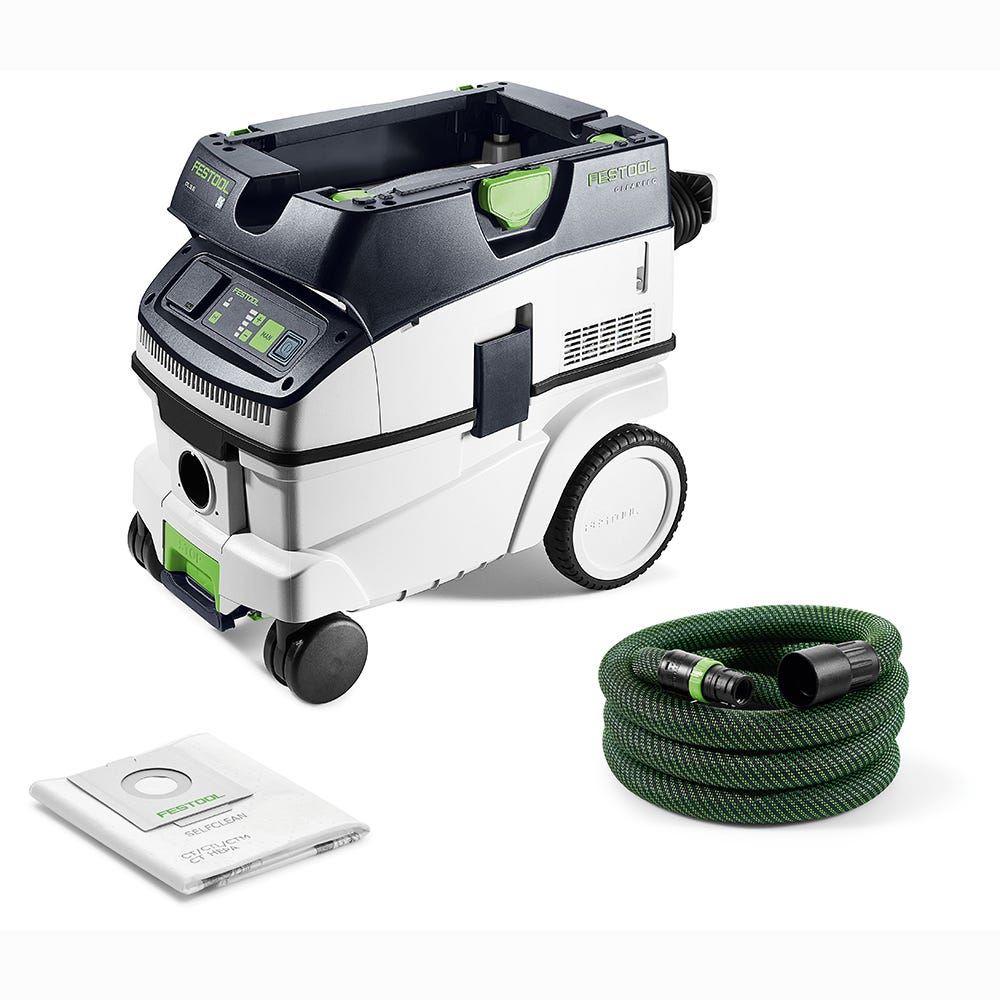
The workshop-sized member of Festool's CLEANTEC line, and the machine a lot of woodworkers treat as the end of the road: full-unit HEPA certification, a tool-triggered outlet that starts the vac with your sander or track saw, five-step variable suction, and a Bluetooth link so a cordless tool can switch it on. The nearly 7-gallon container and 138 CFM turbine handle a full day of sanding without a filter change, and the smooth anti-static hose does not snag on workpiece edges. It is also the most expensive machine here by a wide margin, and the Systainer-based accessory ecosystem is part of why: hoses, bags and filters are all Festool-priced. | $899source | Dust Extractorsource | HEPAsource | 6.9source | 138source | 30.64source | |
The compact CT: the same HEPA filtration, tool-triggered start and Bluetooth control as the CT 26, in a 4-gallon body that weighs about six pounds less and takes up noticeably less floor space. For a one-person shop or a garage where the vac gets rolled out of the way between sessions, this is the Festool most people should actually buy. The trade-off is real though: a 4-gallon container fills fast under a planer or a big sanding session, and 130 CFM is slightly below the CT 26. | $719source | Dust Extractorsource | HEPAsource | 4source | 130source | 24.91source | |
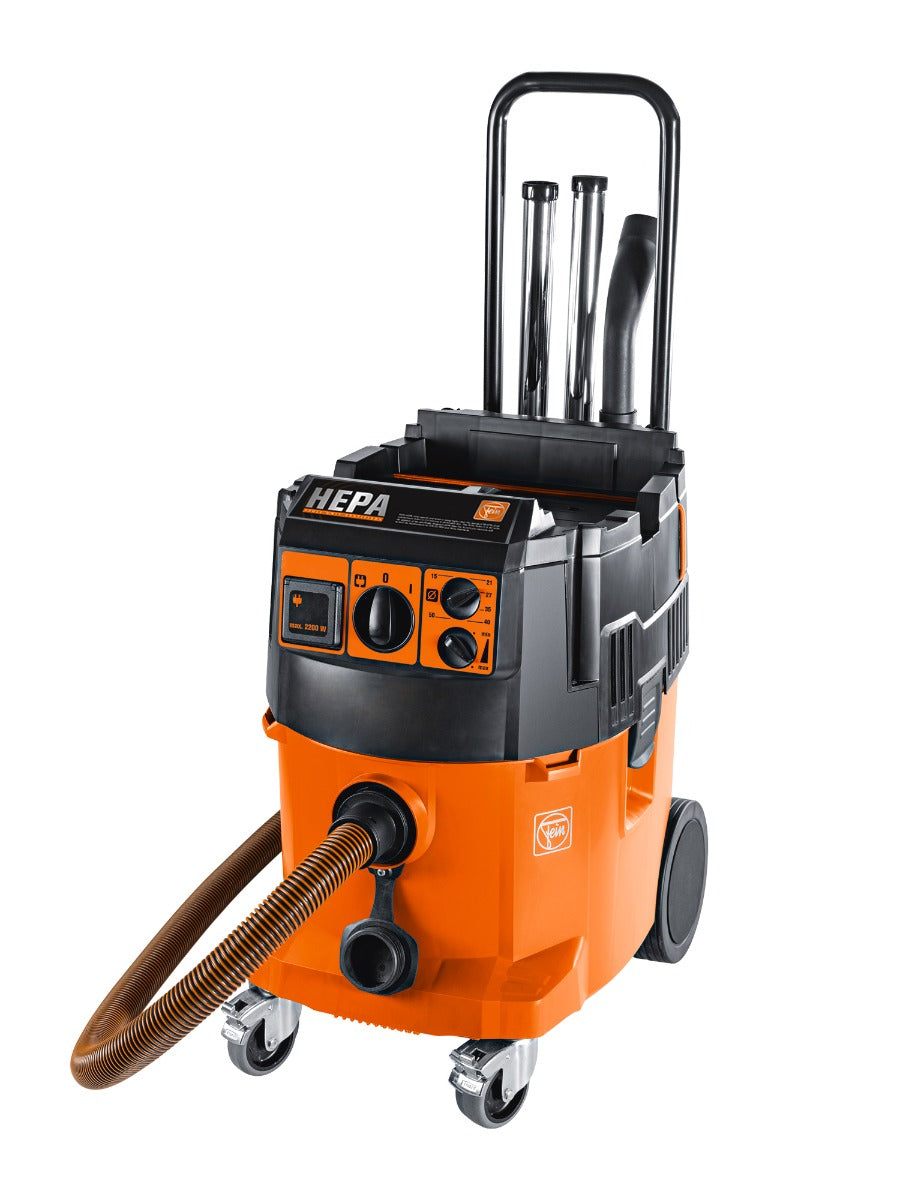
Fein's top HEPA extractor, and the one that competes with Festool on suction rather than on price. It pairs the highest airflow of the corded extractors here with fully automatic filter cleaning, an autostart outlet with a power-on delay so the motor does not spike when the tool kicks in, and a 9.2-gallon tank. Reviewers consistently single out how quiet it is for the output. It is tall and narrow rather than squat, which suits a shop corner better than a truck bed, and at over 31 pounds it is not a machine you carry up a ladder. | $799.95source | Dust Extractorsource | HEPAsource | 9.2source | 153source | 13source | 31.09source |
A jobsite-bred HEPA extractor that woodworkers adopted because it does the important things well for well under Festool money: 150 CFM, 97 inches of water lift, and an automatic filter clean that pulses every 15 seconds so suction does not sag halfway through a sanding session. It has the tool-triggered outlet and variable speed you want for connecting to a random-orbit sander. The included hose is under 10 feet, which is the shortest of the corded extractors here, so budget for a longer one if the vac lives across the shop from the bench. | $679source | Dust Extractorsource | HEPAsource | 9source | 150source | 9.85source | 28source |
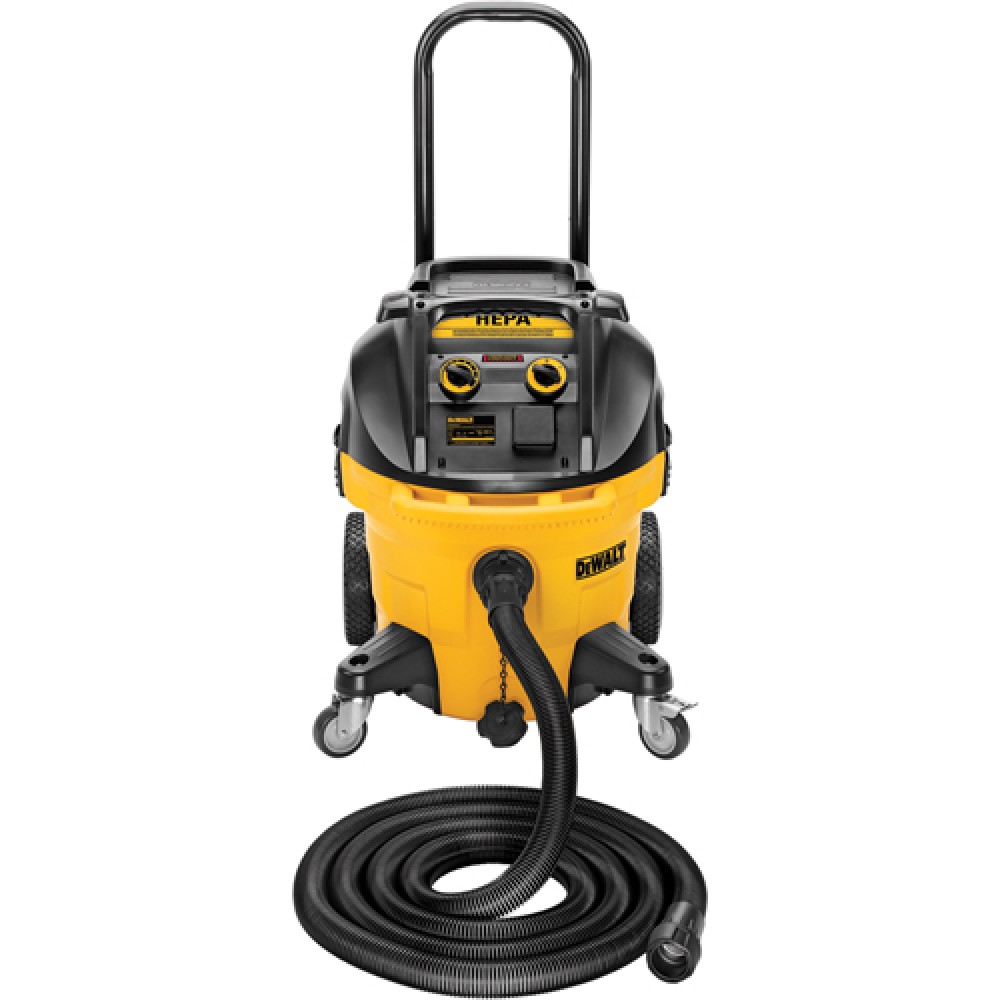
DeWalt's full-size HEPA extractor, built around a 15-amp motor and an automatic filter clean that pulses every 30 seconds so you never stop to knock out the filter. Power tool actuation and a variable-suction dial cover the woodworking basics, and the 15-foot hose is the longest of the corded extractors short of the Hercules. Two HEPA filters ship in the box. The trade-off is bulk and noise: at 33.5 pounds and 73 dBA it is heavier and louder than the Milwaukee or the Fein, and the 1-1/4 inch hose is narrow for chip-heavy work like a planer. | $629source | Dust Extractorsource | HEPAsource | 10source | 140source | 15source | 33.5source |
The quietest corded extractor in this group at 69 dB, which matters more than it sounds like it does when the vac runs continuously beside you through a long sanding session. It pairs a two-stage HEPA system with automatic filter cleaning and a tool-activated plug, and the 13-foot anti-static hose is a sensible length for moving between a bench and a table saw. Milwaukee built it for OSHA silica compliance on jobsites, so the tank is squat and stable rather than tall. At 36 pounds it is mid-pack for weight, and it is priced like a premium tool without the Festool accessory ecosystem. | $649source | Dust Extractorsource | HEPAsource | 8source | 148source | 13source | 36source |
Harbor Freight's answer to a $600 dust extractor, and the value pick in this group by a wide margin. It has the features that actually matter for woodworking: dual HEPA filters, a selectable power-tool outlet that starts the vac with your tool and keeps running ten seconds afterward to clear the hose, and the highest airflow and longest hose of any extractor here. The catch is the same one that applies to most Harbor Freight tools: the fit and finish and the long-term motor life are unproven next to Fein or Festool, and at 37 pounds with a 17-foot hose it is a shop machine rather than a portable one. | $369.99source | Dust Extractorsource | HEPAsource | 12source | 155source | 17source | 37source |
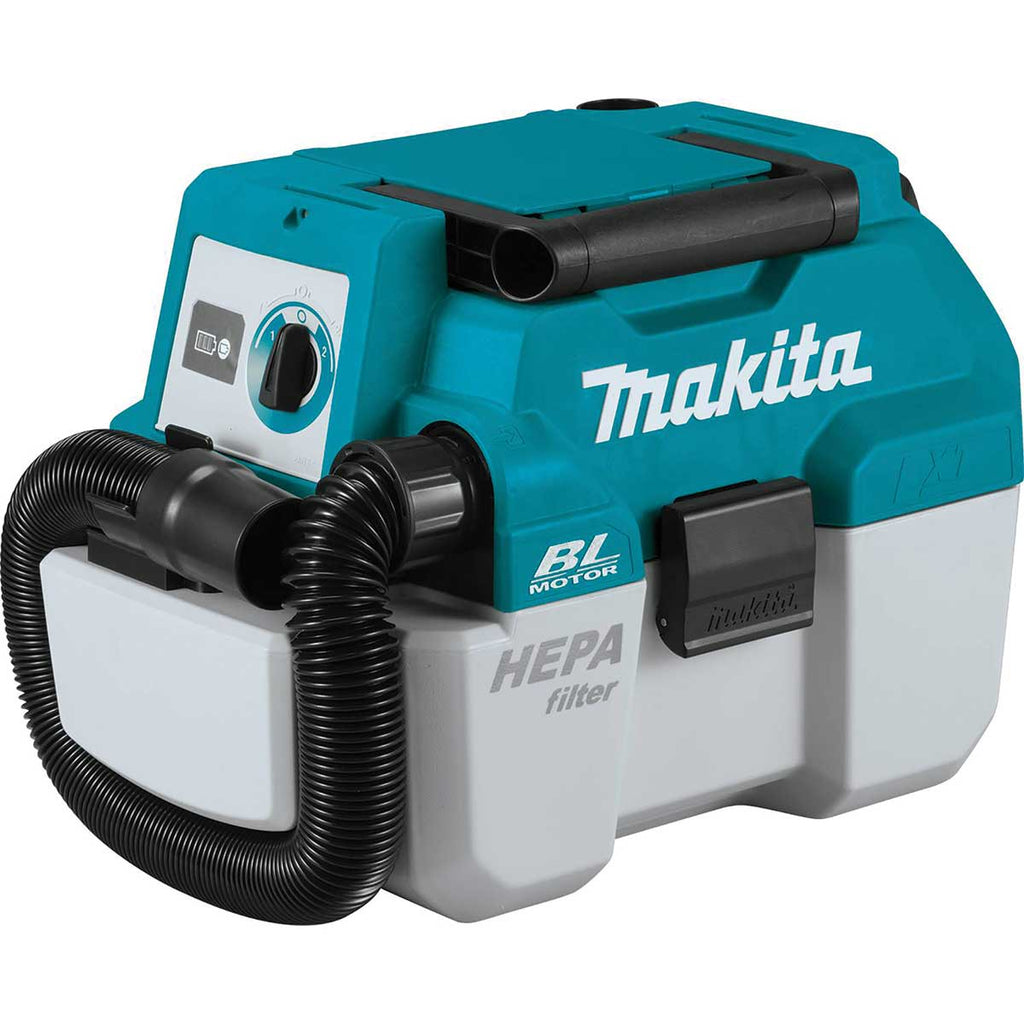
A cordless HEPA extractor sized for the tool, not the shop: at 10 pounds with a battery it can hang off a shoulder strap while you sand trim or clean out a dovetail jig. The brushless motor gives about an hour of runtime on a 5.0Ah pack and it has a filter-cleaning system to keep suction up. Judge it as a spot-cleanup and finish-work vac rather than a primary dust collector: 57 CFM and a 2-gallon canister are a fraction of what the corded machines here move, the 6.5-foot hose is short, and owners in Makita forums regularly mention wanting more suction. | $249source | Cordless Vacuumsource | HEPAsource | 2source | 57source | 6.5source | 10.1source |
A full-size cordless shop vac: two M18 batteries drive a 9-gallon tank that Milwaukee rates against 4.25 peak HP corded vacs, with roughly 34 to 49 minutes of runtime depending on mode. For a garage shop with no convenient outlet, or for hauling to a job, it removes the cord entirely, and the motor head, tank and cart are interchangeable across Milwaukee's NEXUS system. It is a general cleanup machine rather than a dust extractor though: the filter is high-efficiency but not HEPA-certified, there is no tool-triggered outlet for a corded sander, and Milwaukee does not publish a CFM figure for it. | $329source | Cordless Vacuumsource | Fine Dustsource | 9source | 9source | 35source | |
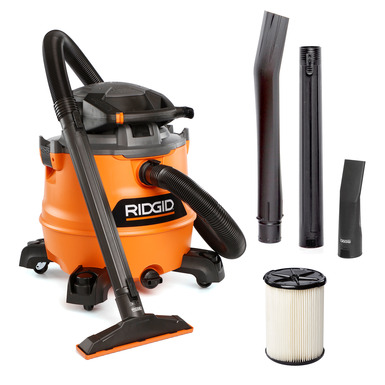
The default garage shop vac, and the one most woodworkers already own. It moves the most air of anything in this group and holds the most, it doubles as a blower, and it costs a fraction of a dust extractor. What it does not do is the dust-extractor job: the stock filter is a general-debris cartridge, there is no tool-triggered outlet, and the 2-1/2 inch hose is sized for shavings rather than for a sander port. Buy a fine-dust filter and a dust bag for it and it becomes a decent chip collector for a table saw or planer, but it will not protect your lungs from the fine stuff on its own. | Wet/Dry Shop Vacsource | Standard Cartridgesource | 16source | 161source | 7source | 24.5source | |
The budget shop vac that comes closest to being useful for fine dust out of the box: it ships with a high-efficiency cartridge filter and a dust bag rated down to one micron, which is a real step up from a general-debris filter at nearly the same price as the Ridgid. It is also the lightest full-size vac here at under 20 pounds, thanks to a flat power-head design that doubles as a tool shelf. It still has no tool-triggered outlet and no HEPA certification, and its 64 inches of water lift is the lowest of the corded machines, so it pulls chips well but struggles on a long or restrictive hose run. | $179.99source | Wet/Dry Shop Vacsource | Fine Dustsource | 16source | 145source | 7source | 19.49source |