Best Open Source Survey Tools for Solopreneurs
For a one-person business that wants a survey live this afternoon, OpnForm is the most generous open source pick: its free hosted plan takes unlimited responses, and because it is AGPL-3.0 with a Docker install, you can move it to your own server later without switching tools. If your questions belong inside a product rather than in an emailed link, Formbricks does in-app feedback and hosts a couple of hundred responses a month for free.
The rest of the list splits two ways. One is who runs the server: OpnForm, Formbricks, Typebot and LimeSurvey give you something free on their own hosting, HeyForm and Form.io only offer trials, and SurveyJS, Nextcloud Forms and ODK Central host nothing free. The other is the job itself, because general forms, chat-style forms, embedded libraries and offline field collection are different tools here, and the Best for column sorts them apart.
Our picks
- Free hosting with no response cap: OpnForm. Unlimited forms and submissions at no cost, with conditional logic and webhooks; the $29 monthly plan adds branding removal and custom domains, not more responses.
- Asking your own users in-app: Formbricks. Link, email and in-app pop-up surveys aimed at a chosen slice of users, free hosted for a couple of hundred responses a month.
- Forms inside an app you are building: SurveyJS. MIT-licensed JavaScript libraries that send answers straight to your database, with the commercial add-ons licensed from $589 once per developer, not by subscription.
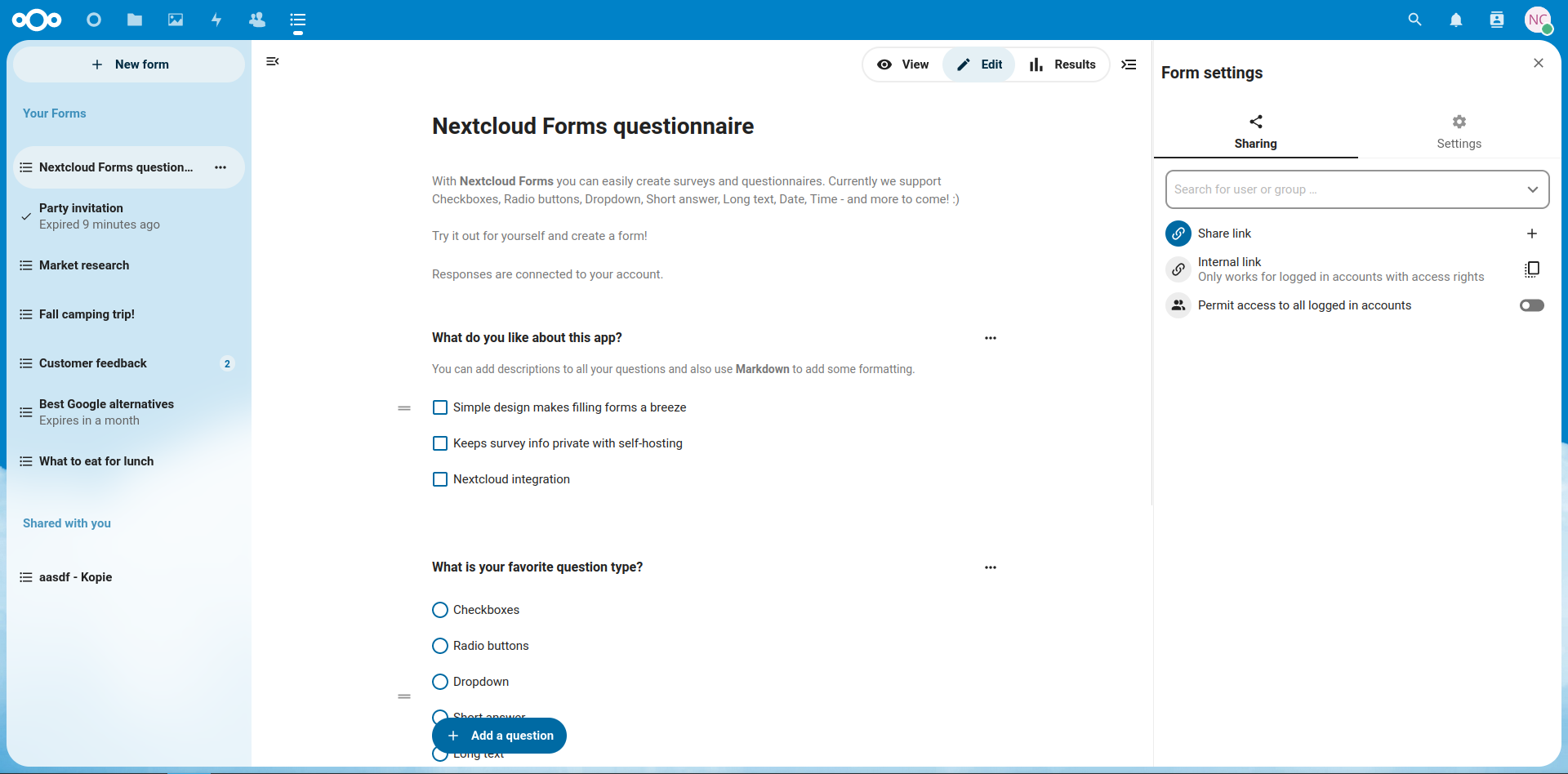
- Already running Nextcloud: Nextcloud Forms. A free app you switch on from app management, with answers that never leave your instance and CSV export in the Google Forms format.
- Offline data collection on your own server: ODK Central. Apache-2.0 from the phone app to the server, and the makers say a technical user can self-host and self-support it for nothing.
At a glance
| Option | Free hosted plan | Cheapest paid plan | License | Best for | Self-hosting |
|---|---|---|---|---|---|
| Under 100 responses a monthsource | $39 / month (Basic, billed monthly)source | GPL-2.0 or latersource | General surveys and formssource | PHP web hostingsource | |
| 100-999 responses a monthsource | $74 / Month (Pro)source | AGPL-3.0source | In-app product feedbacksource | Dockersource | |
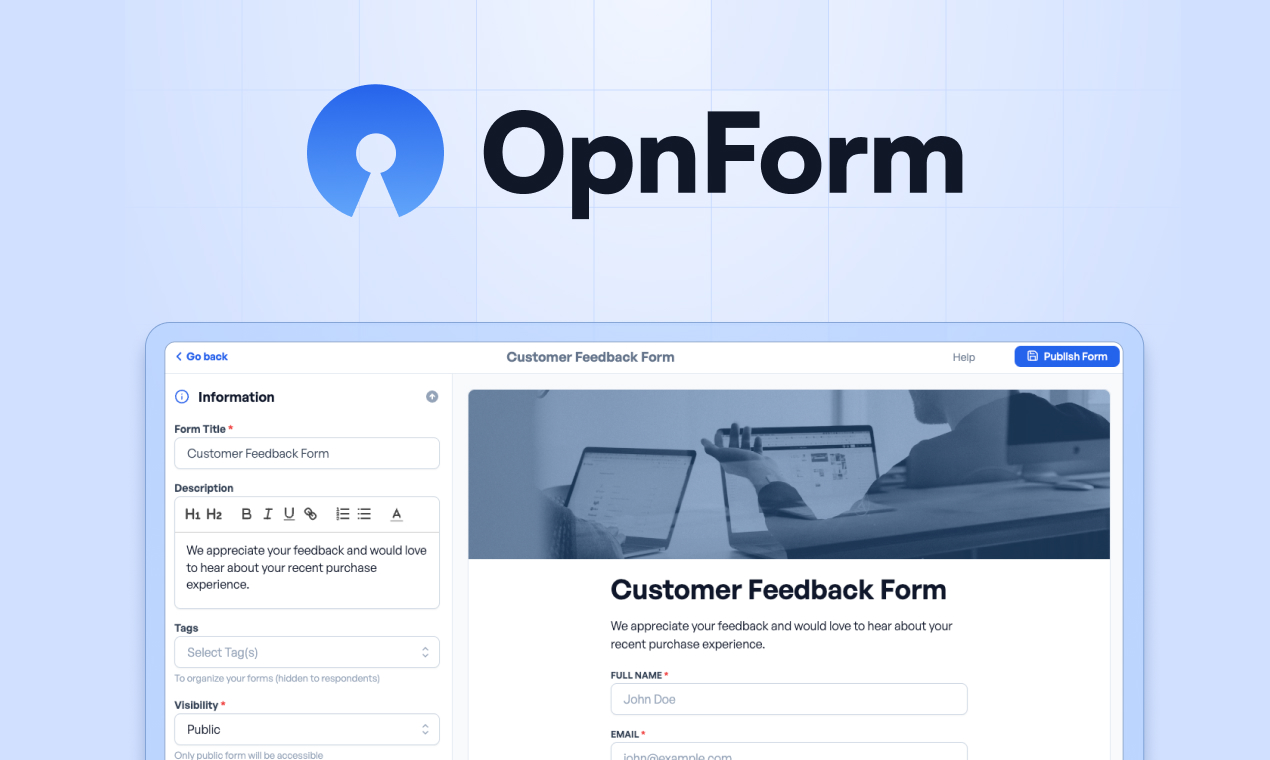
| Unlimited responsessource | $25 /mo billed yearly ($29 monthly)source | AGPL-3.0source | General surveys and formssource | Dockersource | |
| Free trial onlysource | $15 USD per month billed annually (Basic)source | AGPL-3.0source | General surveys and formssource | Dockersource | |
| 100-999 responses a monthsource | $39 /month (Starter)source | Source-available (not OSI)source | Conversational chat formssource | Dockersource | |
| No free hosted plansource | $589 once per developer (Basic license)source | MITsource | Embedding in your own appsource | npm package in your appsource | |
| Free trial onlysource | $300 per month (Form.io SaaS)source | OSL-3.0source | Embedding in your own appsource | Node.js and MongoDBsource | |
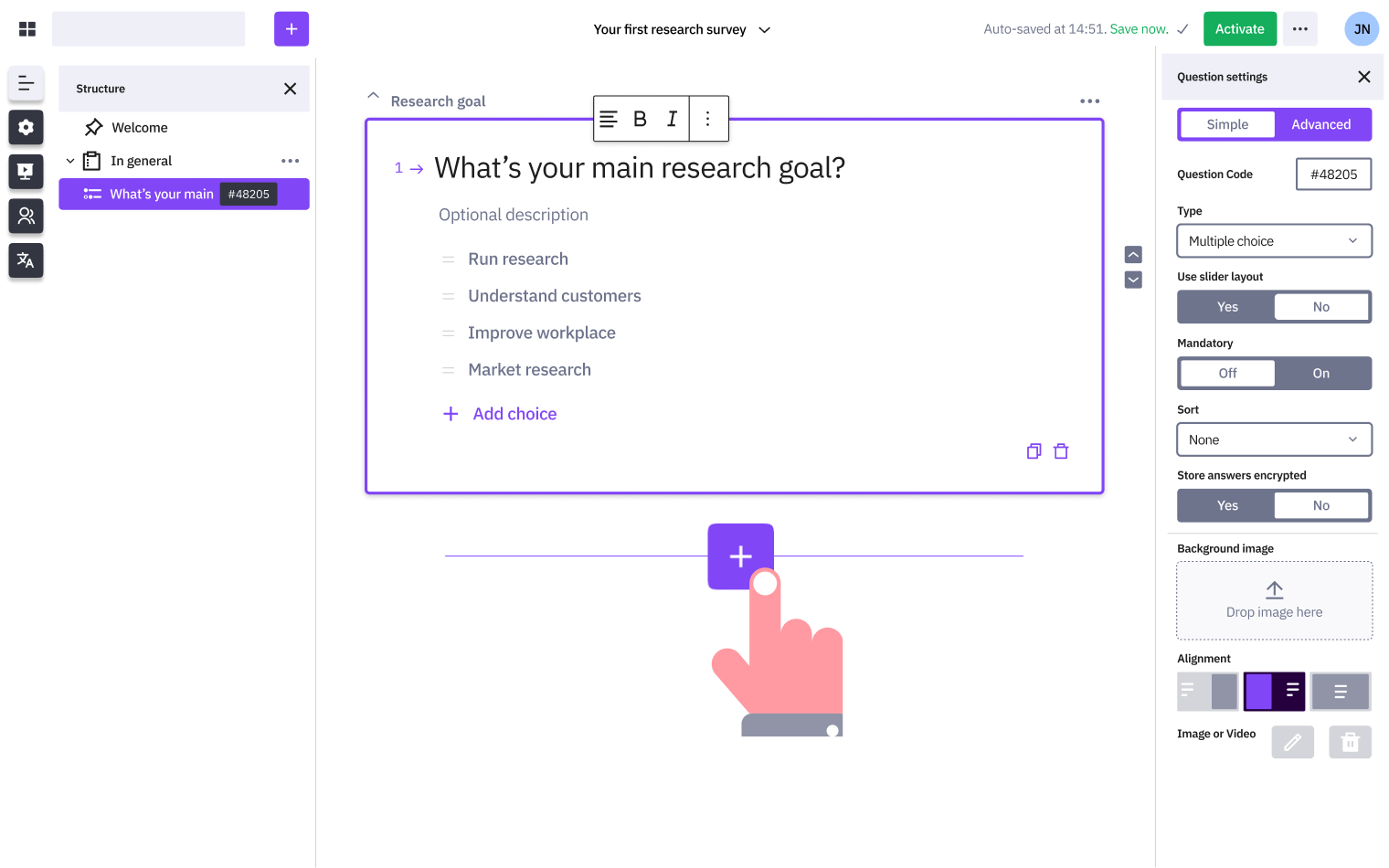
| No free hosted plansource | AGPL-3.0source | General surveys and formssource | Nextcloud appsource | ||
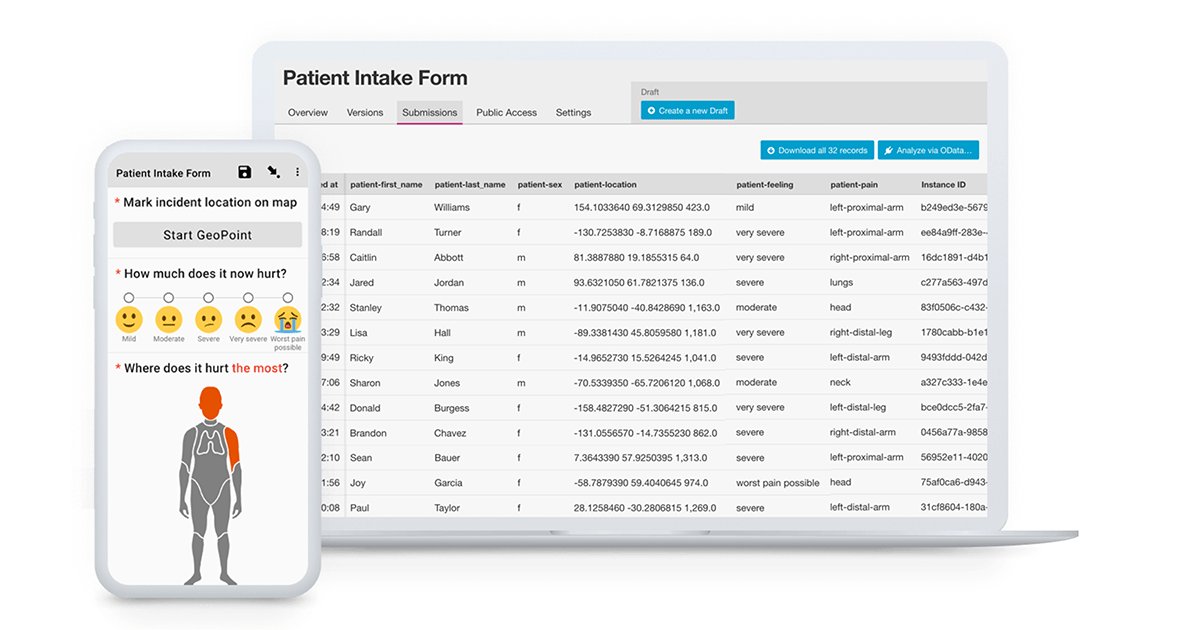
| Free only for nonprofitssource | $25 per month (Starter, non-nonprofit rate)source | AGPL-3.0source | Offline field data collectionsource | Dockersource | |
| No free hosted plansource | $199 /mo (Standard, paid yearly; $249 monthly)source | Apache-2.0source | Offline field data collectionsource | Dockersource |
Free hosted survey tiers, from unlimited to none
OpnForm stands alone with unlimited responses. Formbricks and Typebot both land in the 100 to 999 a month band, and LimeSurvey's cloud gives under 100, deliberately tiny next to its Community Edition. KoboToolbox's free Community plan is for nonprofits, government and schools, so a private business starts at $25 a month on Starter.
The first paid step varies more than the free tiers do. Formbricks jumps straight to $74 a month for Pro, the steepest on the page, and LimeSurvey's Basic plan is $39 billed monthly even though its higher Expert plan works out cheaper per month when paid yearly. HeyForm has no free tier at all, just a 7-day trial and a Basic plan of $15 a month billed annually, which is why it makes more sense on your own server.
Which survey tool licenses are really open source
SurveyJS (MIT) and ODK Central (Apache-2.0) are the two permissive licenses, which let you do almost anything with the code. Formbricks, OpnForm, HeyForm, Nextcloud Forms and KoboToolbox are AGPL-3.0, LimeSurvey is GPL-2.0 or later and Form.io is OSL-3.0, all of which require you to publish changes you distribute or host for others.
Typebot is the exception. Its README still shows an AGPL badge, but its license file is the Functional Source License: you may self-host it and do client work on it, you may not resell hosting, and each release only becomes Apache 2.0 two years later. It is the only chat-style builder on the page, just not open source in the usual sense.
What self-hosting each one takes
Six of the ten run in Docker. LimeSurvey is the one that drops onto ordinary PHP web hosting, the cheap shared kind, with no containers involved. Form.io needs Node.js with MongoDB, Nextcloud Forms needs a Nextcloud server, and SurveyJS is an npm package you compile into your own app, so neither of the last two is a standalone survey site.
The options in detail
LimeSurvey
The veteran of this list: a survey platform in continuous development since 2003, still the default in universities and research teams, with 30+ question types, branching logic and translations built in. You can run the Community Edition on ordinary PHP hosting for nothing, or pay for LimeSurvey Cloud, whose free tier is deliberately tiny and whose entry plan is the most expensive starting price among the hosted tools here. Two things to know before choosing it: the editor feels dated next to the newer builders on this page, and the cloud ladder is confusing, because the Expert plan works out cheaper per month than the entry Basic plan if you pay a year up front.
Formbricks
Built for asking questions inside a product rather than mailing out a questionnaire: link surveys, email surveys and in-app pop-ups aimed at a chosen slice of your users, all managed from one place. The core app is AGPLv3 and self-hosts with Docker, and the hosted Hobby tier is free for a couple of hundred responses a month, which covers a solo founder running periodic satisfaction checks. The catch is the jump to the first paid tier, which is the steepest on this page, so plan on self-hosting if your volume grows.
OpnForm
The most generous free hosted plan here by some distance: unlimited forms and unlimited submissions, with conditional logic, computed fields, webhooks and API access, at no cost. It is a Laravel and Nuxt app under AGPLv3, so you can move the whole thing onto your own Docker host later without changing tools. Paying buys branding removal, custom domains and analytics rather than a higher response allowance, which is an unusually honest split for a form builder and the reason it suits someone whose volume is unpredictable.
HeyForm
A polished one-question-at-a-time builder in the Typeform mould, with conditional logic, payments, file uploads and signatures, released under AGPLv3 and documented for Docker self-hosting. Its hosted service is the odd one out on this page: there is no free tier at all, only a 7-day trial, and the cheapest plan is billed annually. That makes HeyForm a tool you pick because you intend to run it on your own server, where it is free and unmetered, rather than for its cloud.
Typebot
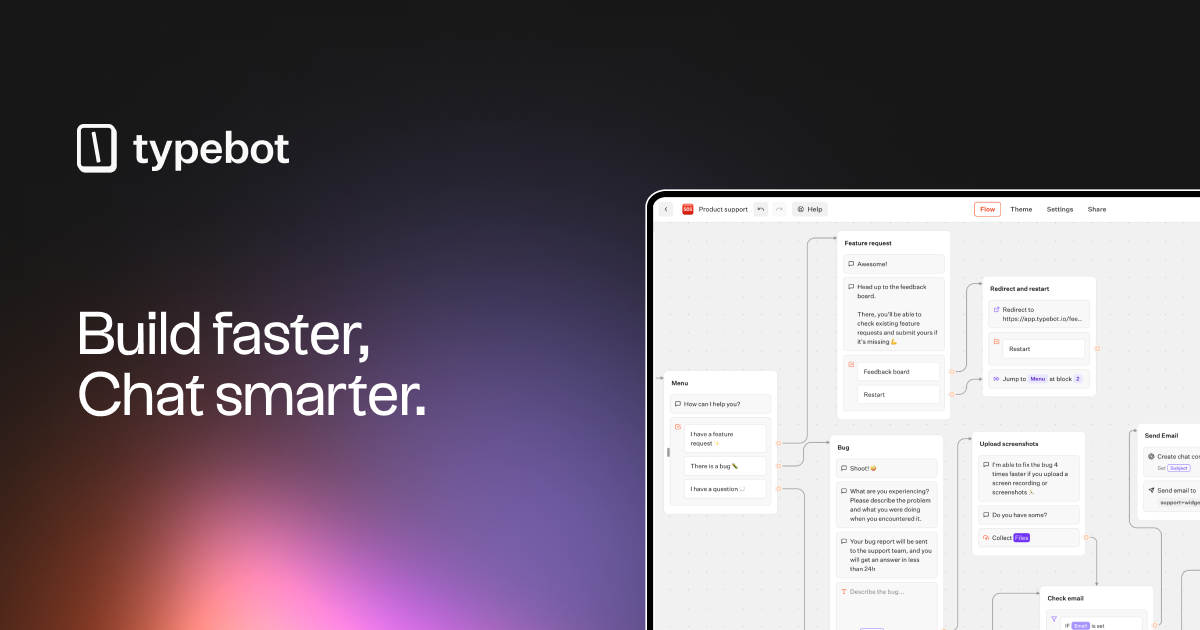
Typebot turns a survey into a conversation: a visual builder of 45+ blocks, branching paths, payment inputs, and deployment as a chat bubble, popup, embedded container or WhatsApp bot. Read the license before you commit, because this is the one row on this page that is not open source in the usual sense: it ships under the Functional Source License, which the project itself calls fair source, and each release only becomes Apache 2.0 two years later. In practice you may self-host it and build client work on it, but you may not resell hosting or embed the editor in a competing product.
SurveyJS
Not a service at all, but a set of MIT-licensed JavaScript form libraries you drop into your own React, Angular, Vue or plain-JS app, with the answers going straight to your database. Nothing is metered and nothing is hosted for you, which is exactly the appeal for a solo developer who is building a product and wants forms inside it rather than a survey link to send out. The free part is the renderer: the drag-and-drop Survey Creator, the analytics dashboard and the PDF generator are commercial, sold once per developer rather than by subscription.
Form.io
A developer platform rather than a survey app: you build a form in the drag-and-drop editor and Form.io generates the API and data store behind it, then you embed the renderer in your own Angular or React front end. The engine is open source under OSL-3.0 and installs on Node.js with MongoDB. Its hosted platform is priced for companies, not individuals, with a 30-day trial and then a monthly figure well beyond the rest of this page, so treat Form.io as a self-host-or-skip option unless you are building an application that needs form-driven APIs.
Nextcloud Forms
If you already run a Nextcloud server, Forms is a free app you switch on from the app management screen, and the questions and answers never leave your own instance. It is deliberately small: a modest set of question types, results you can view in the browser or export as CSV in the same format Google Forms uses, and no vendor cloud or paid tier of its own. Pointless if you do not run Nextcloud, and close to the obvious answer if you do.
KoboToolbox
Built for field research rather than website feedback: forms that keep working offline on a phone, GPS and media capture, and analysis and reporting on top, used across humanitarian and monitoring work in more than 200 countries. The software is AGPLv3 and self-hosts with Docker. Read the pricing carefully before assuming it is free: the free Community plan is for nonprofits, government agencies and educational institutions, and a private company or personal account pays from the Starter plan up. That makes it a poor default for most solopreneurs and an excellent one if your work is collecting data in the field.
ODK Central
The other serious offline data-collection stack, and the only fully permissive one here: Apache 2.0 from the mobile Collect app through to the Central server you install yourself. The makers say plainly that a technical user can self-host and self-support it for nothing, and sell a managed ODK Cloud aimed at organizations with per-project submission limits. Choose it over KoboToolbox when you want a permissive license and a simpler server, and Kobo when you want the analysis and reporting layer that ODK leaves to you.
How we researched this
The License column was read from each project's own license file, not its README or the roundups that repeat it, which is how Typebot's fair-source terms surfaced. Several tools often billed as open source alternatives, Tally, Fillout, Youform and Zoho Survey, are not open source and are not here. OhMyForm and Tellform were archived years ago; Yakforms, TDuck and SurveyKing document mainly in French or Chinese; Grist and Budibase have form features but are not survey tools; and Survey Solutions and CommCare are institutional, with licensing that stayed unclear.
Cheapest paid plan is printed the way each maker prints it, because the bases do not line up: monthly, monthly billed yearly, or $589 once per developer. Read the wording before comparing two rows. Nextcloud Forms has nothing in that column because the app has no paid tier, and Nextcloud's server subscriptions are a separate product. OpnForm and ODK's pricing pages open on the yearly rate and KoboToolbox's on its nonprofit column, so the toggle decides which number you see, and the license that binds you is the one shipped in the release you actually install.