best sleeping pads for side sleepers
Updated .
| Option | Price | Thickness | R-Value | Weight | Width | Pad Type | Best For |
|---|---|---|---|---|---|---|---|
The thickest backpacking pad here by a wide margin, and the one built specifically so a hip bone never reaches the ground. A stretch-knit top conforms around your shoulder and hip instead of pushing back, and raised side rails cradle you toward the middle so you do not slide off when you roll. The trade is weight and bulk: at over a pound and a half it is roughly double an ultralight pad, and testers note it takes real effort to pack down. If comfort is why you are shopping and you can carry the extra ounces, this is the pick. | $250source | 4.6source | 4.7source | 25source | 22source | Air padsource | Backpackingsource |
Sea to Summit builds this one out of dozens of small independent air cells rather than long baffles, which is why it feels closer to a mattress than to a pool float and why a shoulder can sink without the whole pad shifting. At nearly four inches it is one of the deepest backpacking pads made, and the pump sack built into the stuff sack means you are not lightheaded before bed. Reviewers rate it highly for durability. It is not the warmest pad here, so pair it with something else for shoulder-season cold. | $200source | 3.9source | 4.1source | 16.6source | 22source | Air padsource | Backpackingsource |
The all-round pick: three and a half inches of cushion, a genuinely four-season warmth rating, and a weight that still belongs in an ultralight kit. NEMO's internal fabric trusses hold the surface flat instead of letting it bulge, so it supports a hip without the wobbly waterbed feel some air pads have. It is also the quietest insulated pad most testers have used, because the reflective film inside floats rather than crinkling against the shell. Testers who slept on it for 150 nights still rank it first. | $220source | 3.5source | 5.4source | 14.1source | 20source | Air padsource | Ultralight backpackingsource |
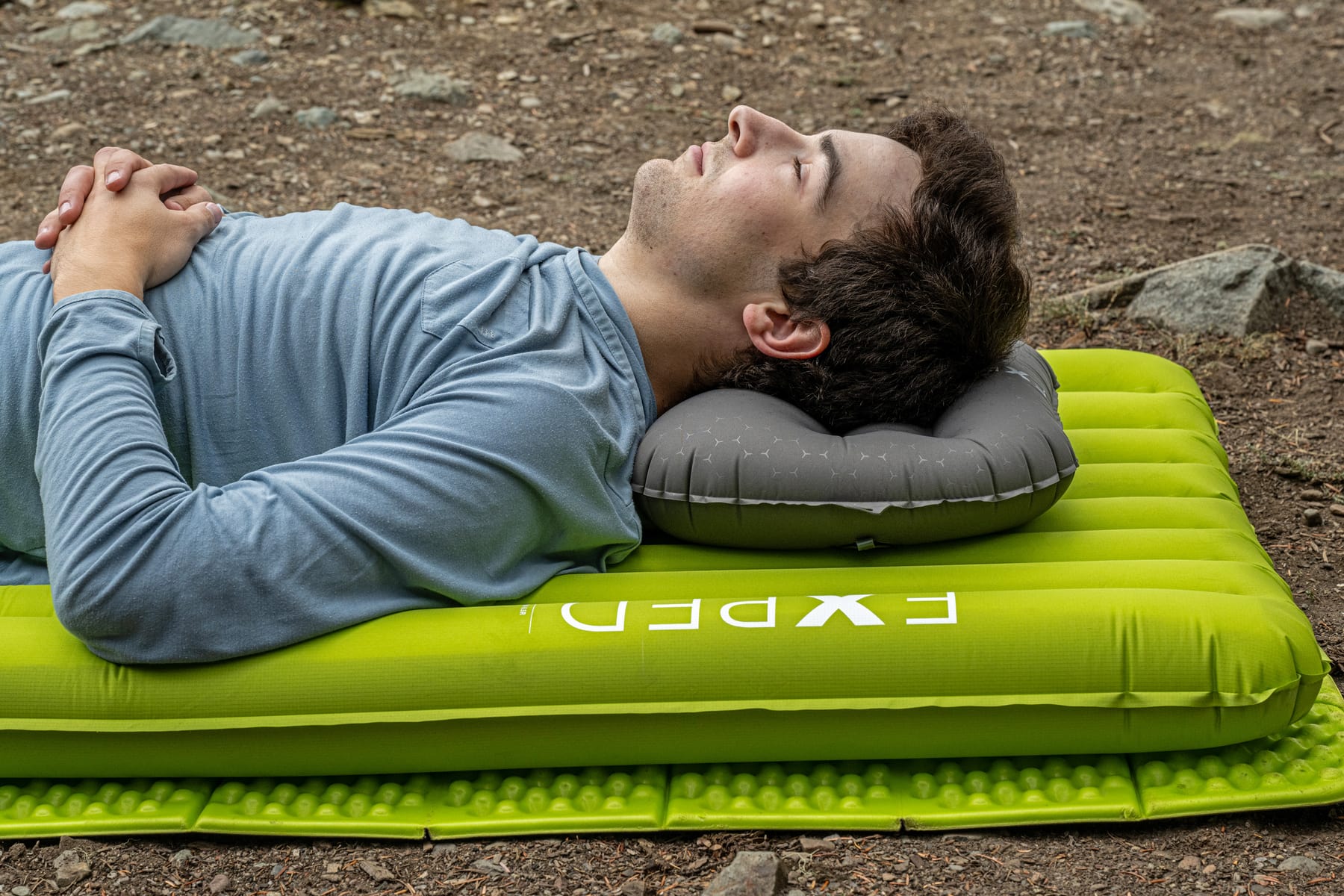
Exped runs its baffles lengthwise rather than across, which gives the surface a cradling, slightly hammock-like feel that testers single out as especially good for side sleepers. The warmth is the headline: a 6.9 R-value is winter territory, more insulation than most people need for three seasons, and a useful margin on cold damp ground. The 20-denier shell keeps it reasonably light but is on the delicate side, so a foam pad underneath is worth the extra ounces. The underside valve placement takes some getting used to. | $200source | 3.5source | 6.9source | 16.2source | Air padsource | Backpackingsource | |
The value pick of the thick pads. Big Agnes makes the outer chambers taller than the middle ones, so the pad has built-in side rails that keep you centred instead of sliding off at 2am, and offset I-beam construction gives support in more than one direction. Two layers of reflective film push the warmth rating to 4.8, which is more than most three-season pads at this price. It is heavier than an ultralight pad and the finish is less refined than the premium options, but for the money it is hard to fault. | $170source | 3.5source | 4.8source | 20source | Air padsource | Backpackingsource | |
The thinnest pad that still made this list, and it earns the spot because of how the thickness is distributed: the side rails are taller than the middle, so you get a channel that holds you in place and extra depth exactly where a shoulder or hip presses. Testers call it one of the thicker ultralight pads and note you can run it softer without bottoming out. It is also notably quiet. Three inches and a quarter is the floor for side sleeping, so heavier sleepers may want more. | $200source | 3.25source | 4.3source | 14source | 20source | Air padsource | Ultralight backpackingsource |
The long-standing default for people counting grams, and at three inches it clears the bar for side sleeping without carrying the weight of a plusher pad. Thirteen ounces with a 4.5 R-value is a combination almost nothing else matches, and the NXT update cut the crinkling noise the older XLite was notorious for by most of the way. Three inches is the minimum, though, so heavier sleepers or anyone who wants a soft pad will bottom out sooner here than on a thicker option. Durability complaints and slow leaks come up in owner reviews. | $210source | 3source | 4.5source | 13source | 20source | Air padsource | Ultralight backpackingsource |
The warm one. A 7.3 R-value is genuine winter and mountaineering insulation, and it carries it at 15.5 ounces, which is lighter than most three-season pads. For a side sleeper the thickness is the same three inches as the XLite, so you are buying warmth rather than extra cushion, but the 70-denier bottom fabric makes it the more durable of the two. Worth it if you camp on snow or frozen ground; overkill and heavier than you need if you only go out in summer. | $230source | 3source | 7.3source | 15.5source | 20source | Air padsource | Backpackingsource |
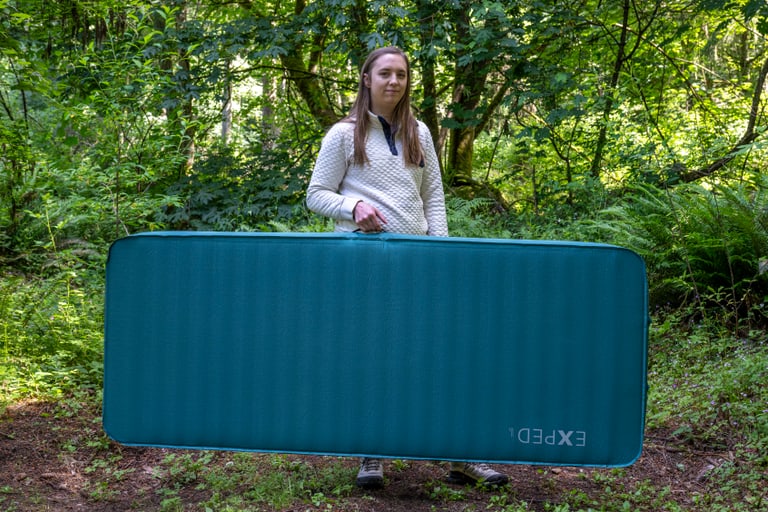
The thickest thing on this list at five inches, and a self-inflating foam core rather than pure air, which is the combination that stops a hip from ever finding the ground. A stretch fabric cover and vertical sidewalls make it feel closer to a guest bed than to camping gear, and the 8-plus R-value means cold ground is a non-issue. It is heavy and bulky enough that it only makes sense if you are driving to the site. Reviewers have named it a best guest-room mattress, which tells you the shape of the trade. | $280source | 5source | 8.3source | 30source | Self-inflatingsource | Car campingsource | |
A long-running car-camping mattress that self-inflates to well over four inches of foam, which is more than enough depth that a side sleeper never feels the ground through it. The XXL is a genuinely large sleeping surface at thirty inches wide, and the 7 R-value handles cold nights without a second thought. The catch reviewers keep mentioning is packing it away: it usually takes two rounds of rolling before it fits back in its sack. Fine at a campsite, a nuisance anywhere you have to be quick. | $290source | 4.25source | 7source | 88source | 30source | Self-inflatingsource | Car campingsource |
The mattress campers have defaulted to for two decades, and the reason is simple: four inches of open-cell foam that self-inflates into something close to a home mattress, with an 8.1 R-value that makes cold ground irrelevant. Because the foam is the structure rather than air pressure, it does not push back against a shoulder the way a firm air pad does. It is heavy, bulky and expensive, all of which matter not at all once it is in the back of a car and a great deal if you ever thought about carrying it. | $280source | 4source | 8.1source | 30.3source | Self-inflatingsource | Car campingsource | |
The softest of the self-inflating camp mattresses tested, built on a stretch-knit top that conforms around your body specifically to remove pressure points, which is exactly the failure mode side sleepers are trying to avoid. Air Frame construction keeps it stable rather than sloshy when you turn over, and a 7.7 R-value covers four-season use. It packs smaller and weighs less than the older version, though at over four pounds it is still firmly a car-camping item. | $319source | 3.9source | 7.7source | 84.3source | 29source | Self-inflatingsource | Car campingsource |
Not an air pad at all: two layers of memory foam that you unroll and lie on, no valve and no pump involved. For a side sleeper that removes the whole problem of firmness tuning, because the foam gives at the hip and shoulder the way a bed does rather than resisting at a set pressure. It rated highest of any camping mattress tested and has the warmest insulation here. It is also the heaviest and most expensive thing on this list by a distance, and it does not pack down, so it is a van or truck-bed item. | $379source | 4source | 8.8source | 208source | 30source | Memory foamsource | Car campingsource |