best solar chargers for backpacking
Updated .
| Option | Price | Rated Solar Output | Weight | Folded Size | Charge Ports | Water Resistance |
|---|---|---|---|---|---|---|
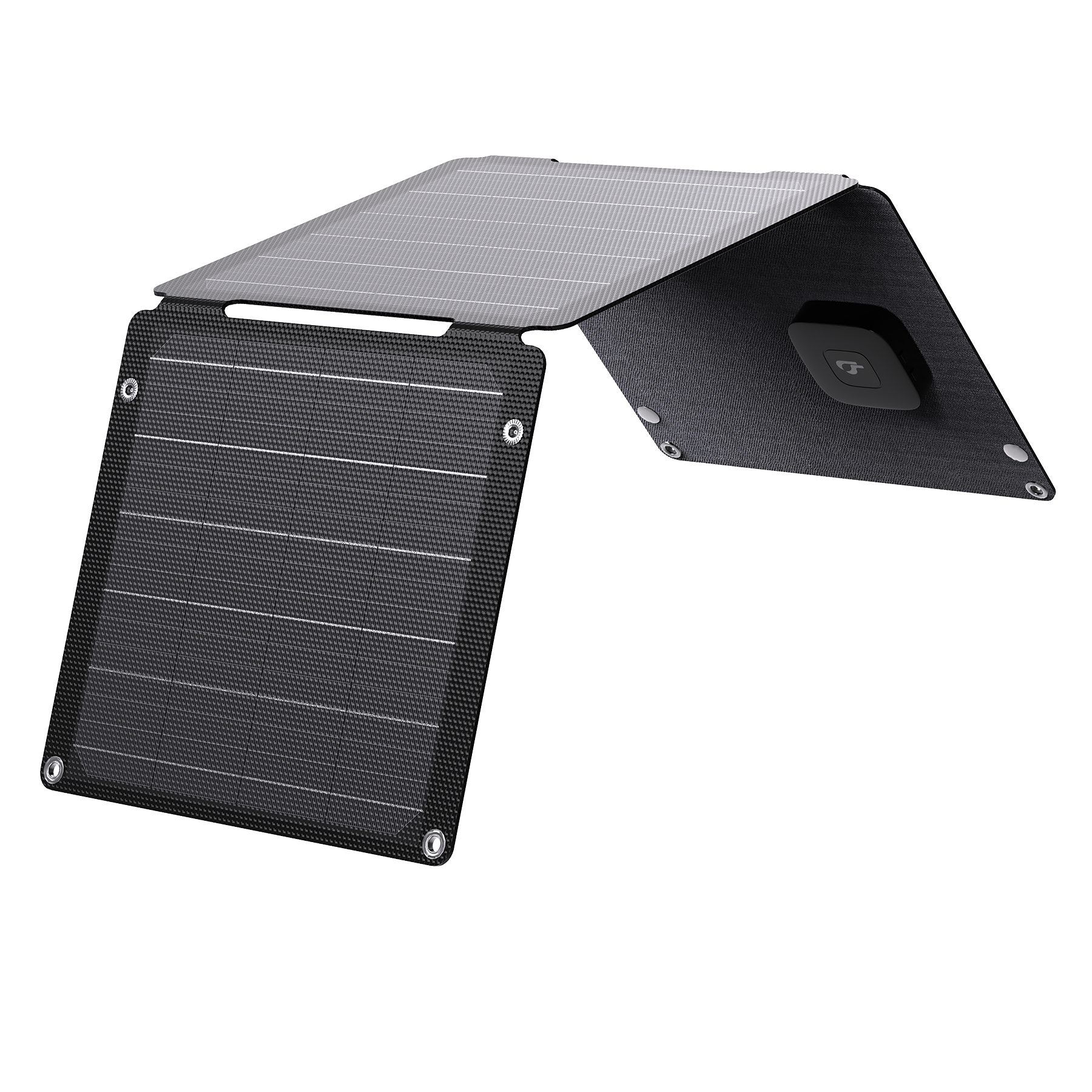
The smallest real panel in this table: three small folds that pack to roughly the footprint of a paperback and clip to a pack lid with the carabiners in the box. Ten watts through a single USB-A port is enough to top up a phone or a headlamp over a long lunch stop, not to refill a big battery pack. FlexSolar rates the panel IP67 but says outright that the junction box is not waterproof, so the port end wants shelter in a downpour. It is the cheapest way into solar that a weight-conscious hiker would actually carry. | $32.99source | 10source | 9.12source | 6.3 x 4.8 x 1 insource | USB-A onlysource | IP67source |
BigBlue's small SunPower panel folds to about 5.7 by 5.5 inches, roughly a paperback, and puts 14 watts through a single USB-A output. It is the pack-weight sweet spot in BigBlue's line: about half the weight of the SolarPowa 28 for half the wattage. The trade-off is the port, since with no USB-C a modern phone only ever charges at 5V speeds. BigBlue publishes no ingress rating for this one, which is the main reason to stow it before sustained rain. | $53source | 14source | 12.64source | 5.7 x 5.5 x 0.98 insource | USB-A onlysource | |
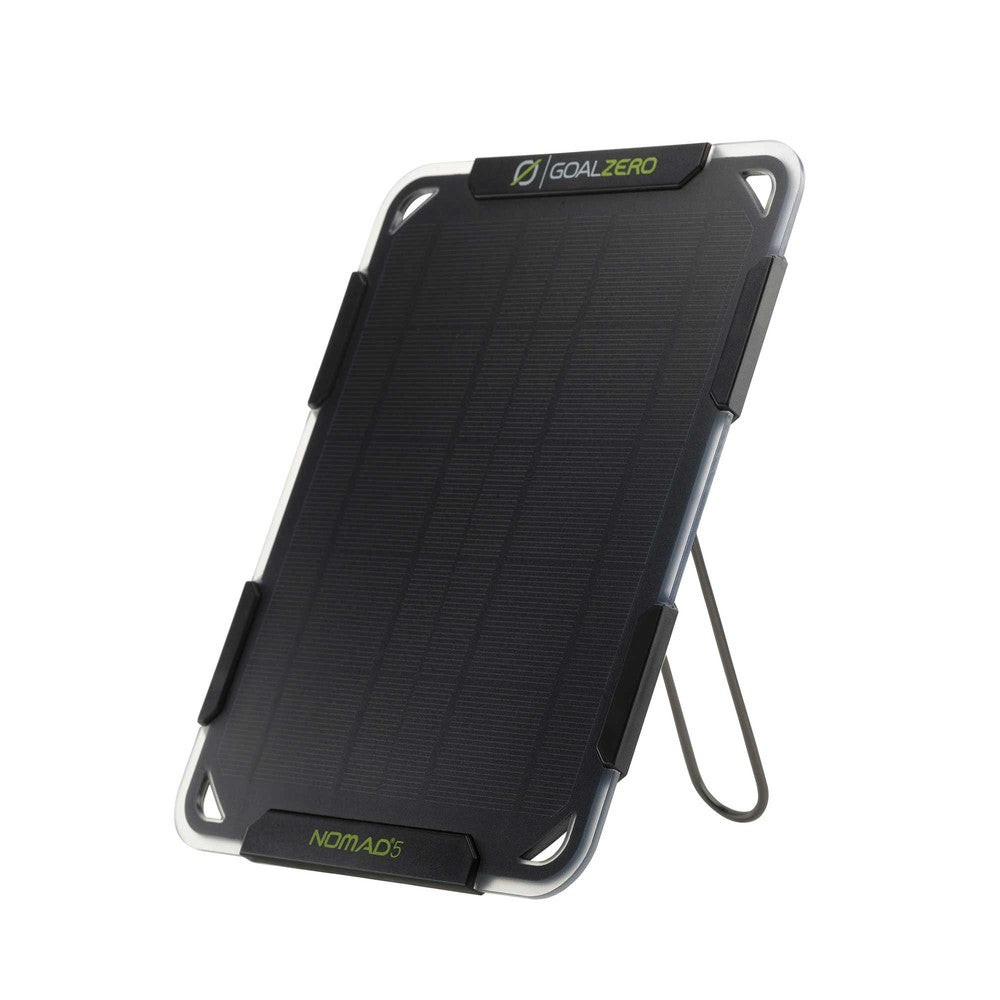
A single rigid panel in a rugged case with a kickstand, built so a Goal Zero Flip power bank docks on the back and charges from the sun while you walk. Five watts is the least power in this table, and Goal Zero is explicit that the panel stores nothing itself, so without a Flip or another bank it only charges while the sun is actually on it. What the money buys is build quality and a battery ecosystem rather than speed. It does not fold, so its packed footprint is the whole panel. | $59.95source | 5source | 12.7source | 9.5 x 7 x 0.8 insource | USB-A onlysource | |
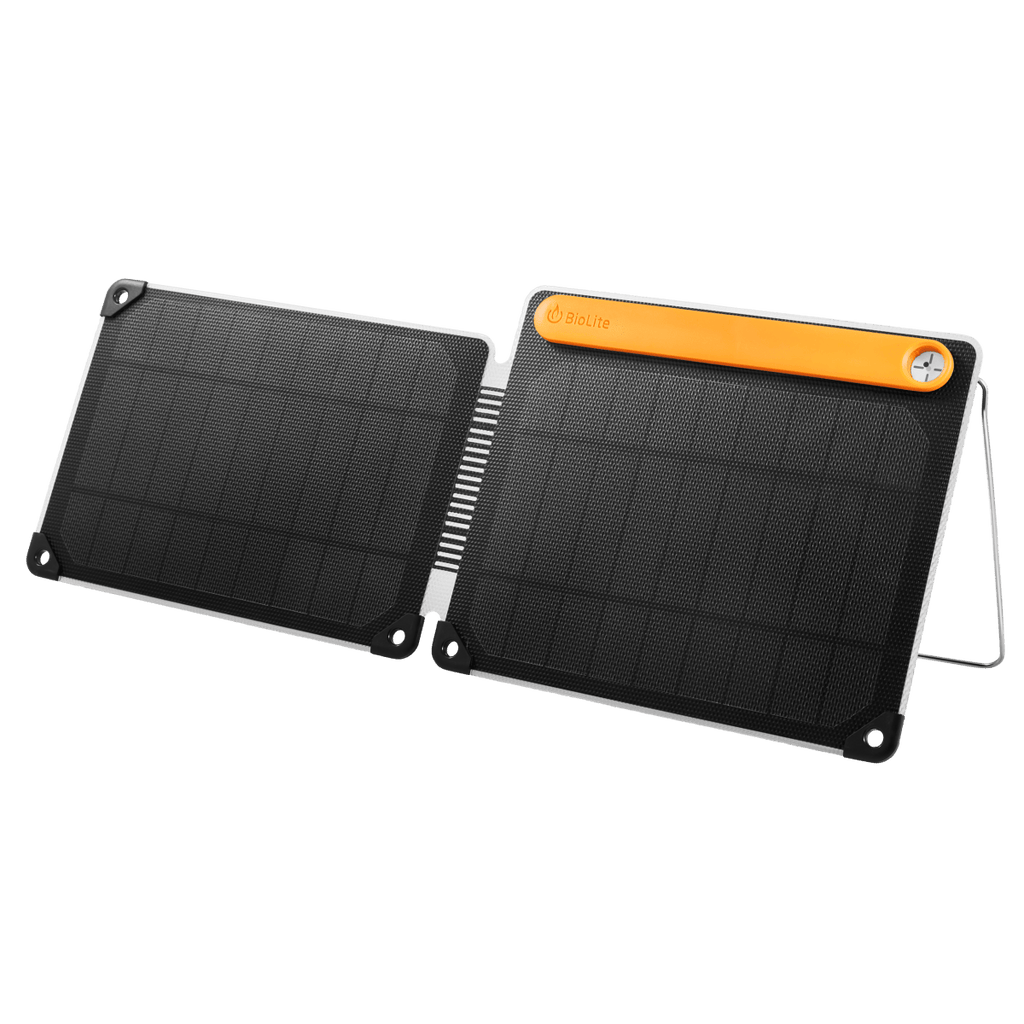
The only small panel here that carries its own battery: a 3,200 mAh cell in the body means sun collected at camp can be spent after dark without a second device. BioLite's integrated sundial and 360-degree kickstand make aiming it genuinely easy, which matters more than nameplate watts on a panel this small. Five watts and a 3,200 mAh reservoir is roughly two-thirds of a phone charge held in reserve, so treat it as a trickle topper rather than a generator. It is expensive per watt, and its IPX4 rating covers splashes and rain, not a soaking. | $99.95source | 5source | 13.76source | 10.12 x 8.19 x 0.94 insource | USB-A onlysource | IPX4source |
Twenty watts with both USB-A and USB-C for the price of a much smaller panel is the outlier in this table on paper. Three folds pack it to about 8.7 by 8.5 inches, and the ETFE face is laminated in one piece rather than stitched to fabric, which FlexSolar argues outlasts sewn panels. It is also the least-established brand here, so the durability is less proven than BigBlue's or Goal Zero's. If you are optimising watts per dollar and per ounce, this is where the table points. | $33.99source | 20source | 14source | 8.7 x 8.5 x 1.2 insource | USB-A and USB-Csource | IP67source |
The folding sibling of the Nomad 5, with the same Flip power-bank dock and a kickstand that locks at several angles. Its USB port maxes out at 7.5 watts even though the panel is rated for 10, so a power bank is a better target than a phone if you want the panel working at full tilt. Goal Zero also notes the Nomad 5 and 10 cannot be chained together for more power. It is the priciest 10 watts in this table, and you are paying for build and the ecosystem. | $99.95source | 10source | 17.92source | 9.5 x 7.2 x 1.25 insource | USB-A onlysource | |
The 5+'s bigger sibling: the same 3,200 mAh onboard battery and sundial, with twice the panel and a folding body the smaller one lacks. The battery is the reason to pay for it, since you can leave it aimed at the sky all afternoon with nothing plugged in and collect the power later. It is the most expensive charger in this table by a wide margin. IPX4 again, so rain is fine and immersion is not. | $149.95source | 10source | 19.36source | 10.12 x 8.19 x 0.94 insource | USB-A onlysource | IPX4source |
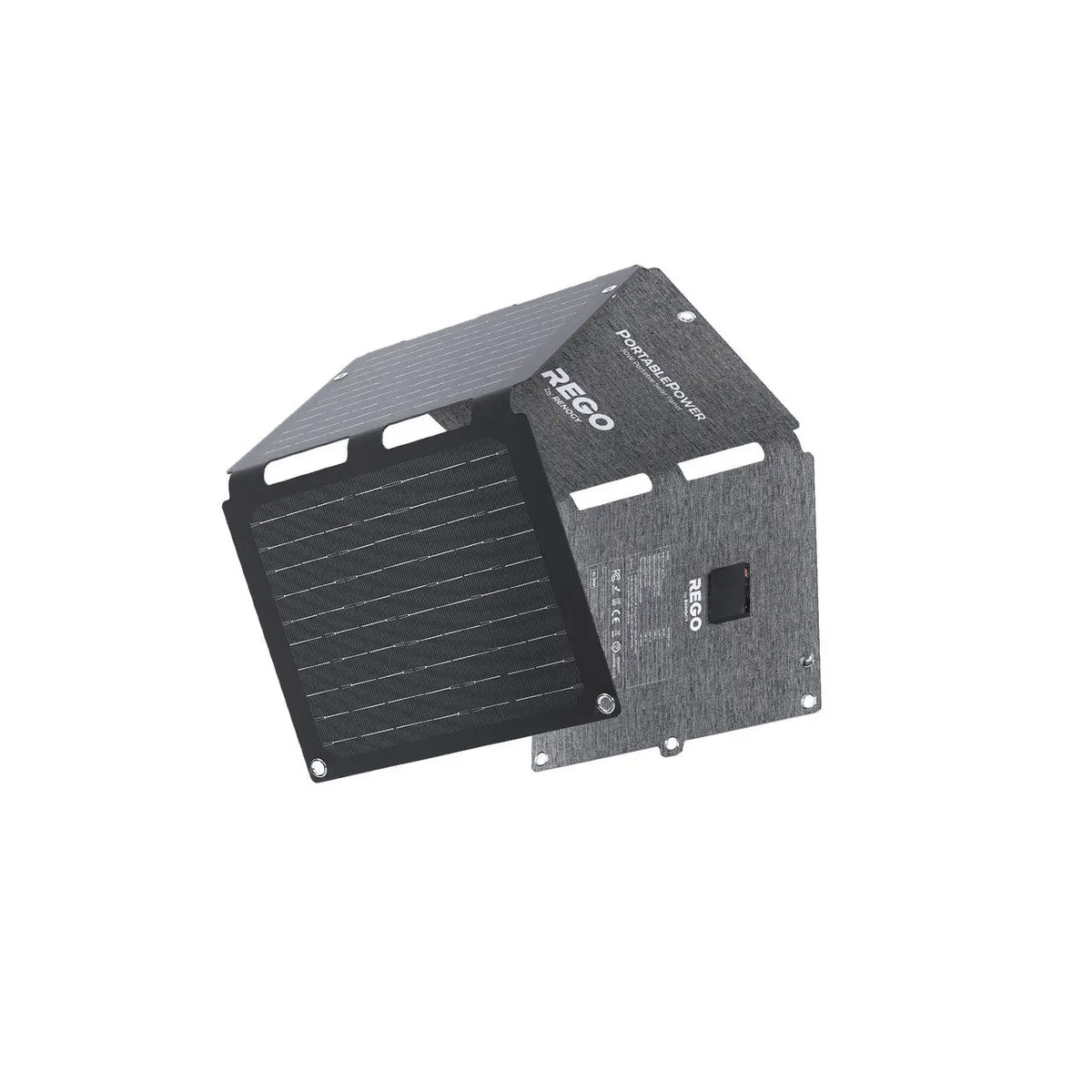
The best watts-per-ounce in this table by a clear margin: 30 rated watts in a panel under 20 ounces that folds to about 10.5 by 8.9 inches. Renogy rates the whole panel IP67 and fits six metal hanging holes plus four carabiners, so strapping it to a pack lid is the intended use rather than an afterthought. The USB-C port carries PD 3.0 at up to 20W, the fastest phone charging in this table, and a DC output sits alongside it for a small power station. It was backordered on Renogy's own store when this page was researched. | $73.99source | 30source | 19.68source | 10.55 x 8.86 x 0.71 insource | USB-A and USB-Csource | IP67source |
BigBlue's newer TOPCon cells rate this one at 22 watts despite the 20 in its name, and it is the only charger here with an IP68 rating on the panel itself, with the junction box excluded. One USB-A and one USB-C, each good for up to 5V/3A, share about 4.2 amps between them. Three folds bring it down to roughly 8.1 by 8.8 inches packed. Pound for pound and dollar for dollar it is the most weather-tolerant panel in the table. | $45.99source | 22source | 21.12source | 8.1 x 8.82 x 1.02 insource | USB-A and USB-Csource | IP68source |
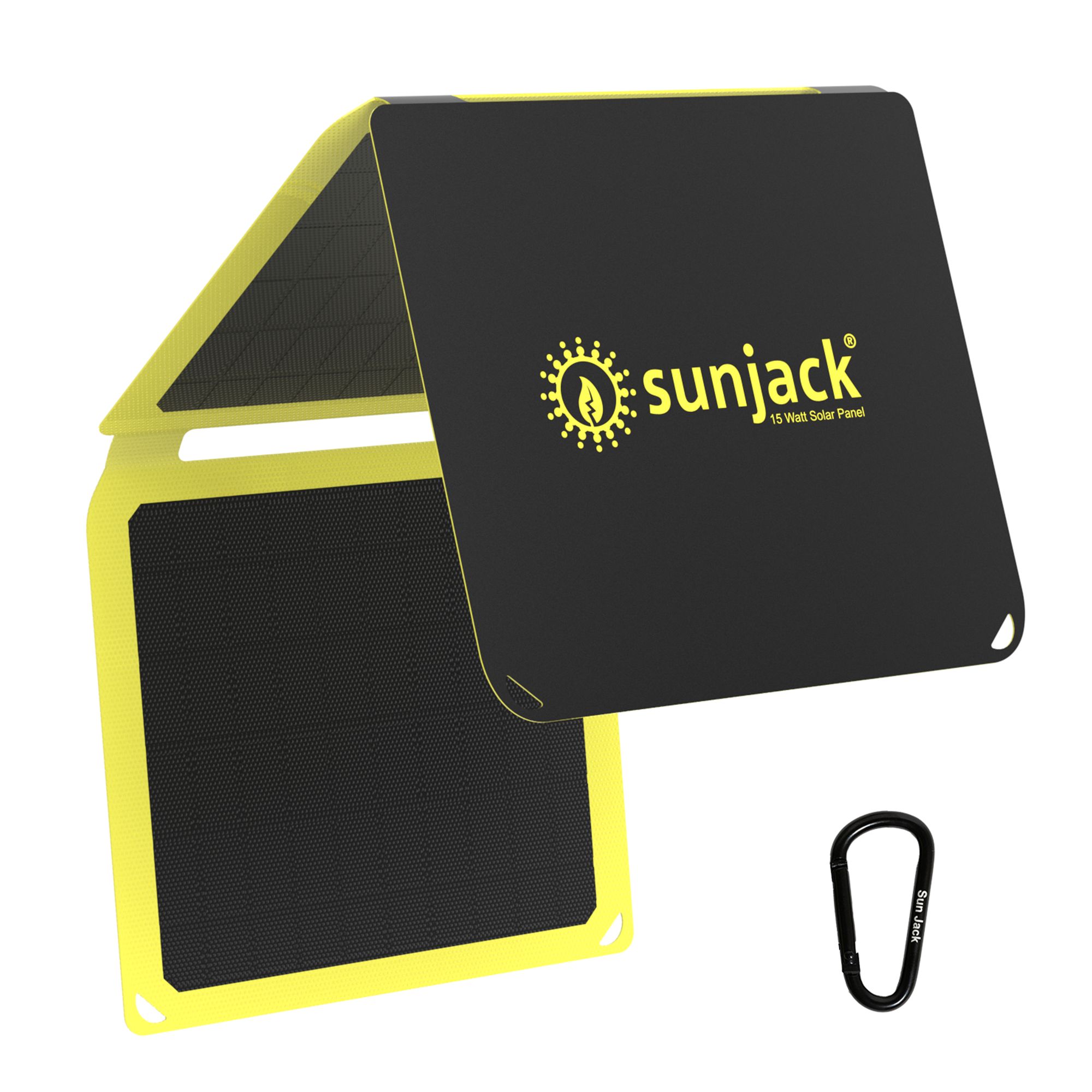
SunJack builds in ETFE with a magnetic closure and seals the USB ports inside an IP67-rated, silicone-bonded junction box, which is a real answer to the problem most of these panels share: the panel is weatherproof but the ports are not. Fifteen watts across a USB-C and a USB-A port, each rated 5V/3A. At 1.4 pounds for 15 watts it is heavy for what it produces, and SunJack's own 25W version costs about $20 more for only 5 ounces more. Buy this one for the sealing, not the output. | $59.99source | 15source | 22.4source | 7.8 x 8.82 x 1 insource | USB-A and USB-Csource | IP67source |
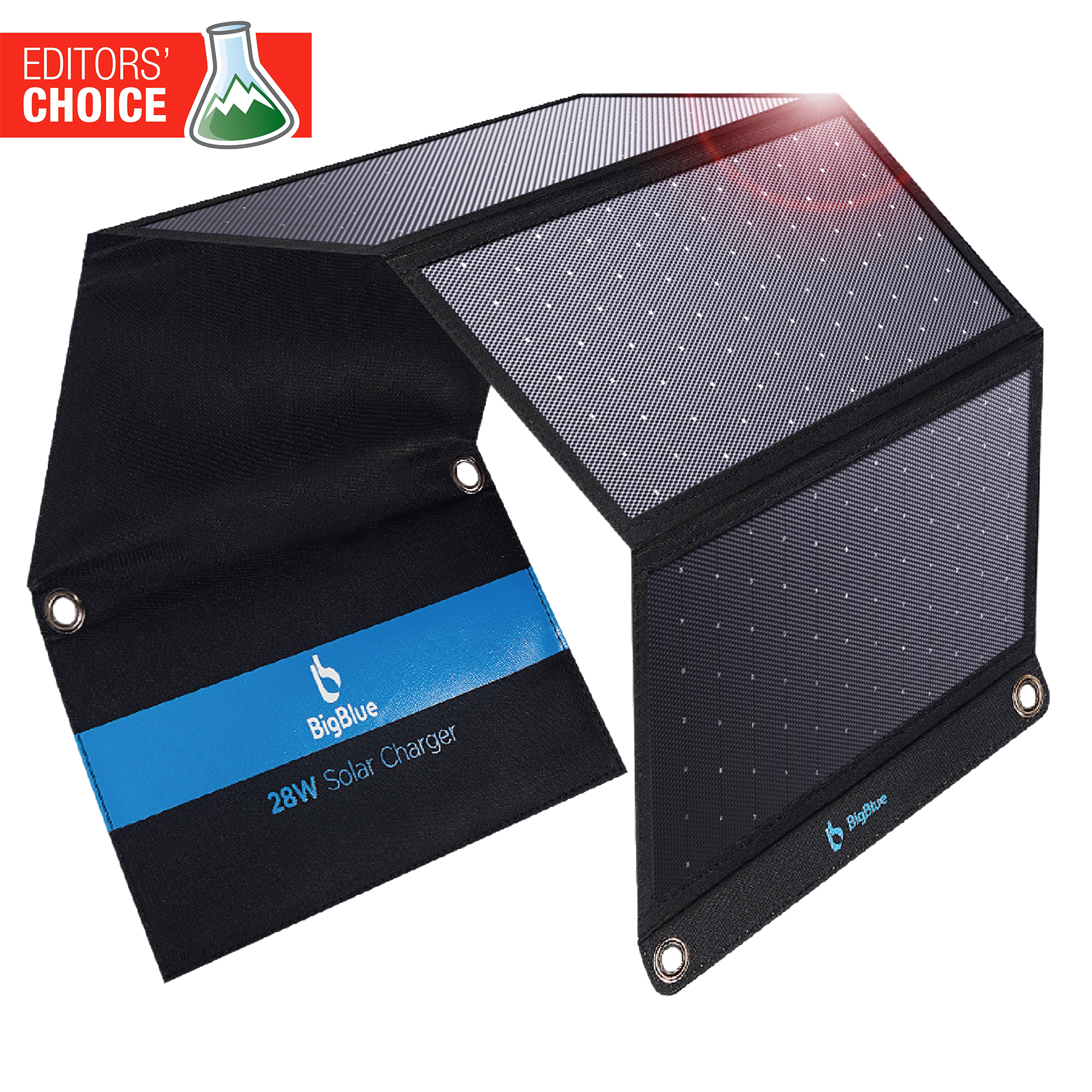
The panel the backpacking forums keep naming: 28 watts, three ports, reinforced grommets and carabiners meant to hang off a pack, and a velcro pocket that keeps cable ends out of the weather. BigBlue rates the cells at up to 25.4% conversion and quotes 24 watts of working output rather than leaning on the 28-watt nameplate, which is unusually candid. It was sold out on BigBlue's own store when this page was researched, though it is widely stocked elsewhere. BigBlue publishes no ingress rating for it. | $69.99source | 28source | 24source | 11.1 x 6.3 x 1.4 insource | USB-A and USB-Csource | |
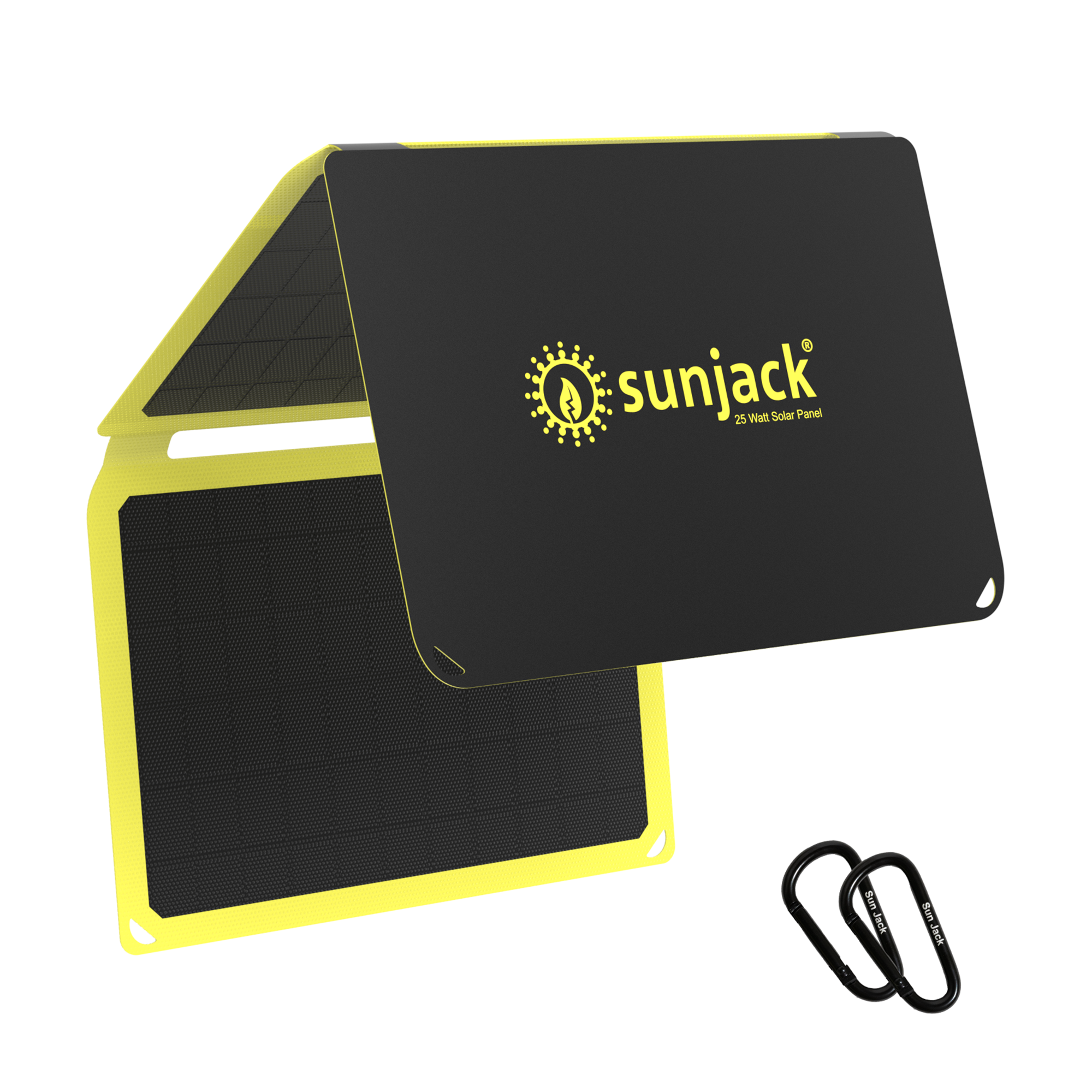
The heaviest charger here at 1.7 pounds, and the one to carry if you are charging for a group rather than a person: 25 watts split across a USB-C and a USB-A port, each good for up to 3 amps. As on the 15W, the ports are IP67-rated with a silicone-bonded junction box behind an ETFE face, which SunJack argues holds up to UV far better than the PET most cheap panels use. It is more panel than a solo hiker needs and it will show on the scale. | $79.99source | 25source | 27.2source | 7.8 x 11 x 1 insource | USB-A and USB-Csource | IP67source |