Best cloud storage for agencies under $10 a month
Updated .
| Option | Price per user | Cheapest team plan | Billed per | Storage | Encryption | Try before you pay | What you get for the price |
|---|---|---|---|---|---|---|---|
Zoho WorkDrive is the cheapest real team drive here, and the only one at this price that also hands you a full office suite for writing, spreadsheets and slide decks. Files live in shared Team Folders rather than in one person's account, which is the right shape for an agency where work outlives whoever started it, and admins get granular sharing controls, expiring external links and watermarking on every tier. The catch is that the Starter plan's storage is pooled for the whole team rather than allotted per person, so a couple of video projects can eat it, and the 10 GB per-file upload ceiling is tight for large master files. It is also a Zoho product first, so it works best when you are willing to live in Zoho's tools rather than bolt it onto Google or Microsoft. | $2.5source | Starter: US$2.50 per user/month, billed annually, minimum 3 userssource | Per usersource | Shared across the teamsource | Encrypted in transit and at restsource | Free trialsource | Storage plus document editingsource |
Box built its business on sending files to people outside your company, which is most of what an agency does with storage, and the Business Starter plan puts that on a small team's budget. Sharing controls, folder-level permissions and native e-signature requests are all there without an upgrade, and Box plugs into both Microsoft 365 and Google Workspace so it can sit alongside whatever your clients use. The limits are what make it cheap: the plan caps out at ten people, the storage is a single shared pot rather than a per-person allowance, and the 2 GB per-file upload limit rules out big video masters. Box also does not publish an encryption statement anywhere a non-browser can read it, which is worth knowing if procurement will ask. | $5source | Business Starter: $5 per user/month billed annually ($7 monthly), minimum of 3 userssource | Per usersource | Shared across the teamsource | Free trialsource | Storage and file sharingsource | |
Sync.com is the pick when client confidentiality is the deciding factor: everything is end-to-end encrypted by default, so Sync itself cannot read what you store, and the company keeps its data in Canada rather than the United States. For a team it behaves like an ordinary shared drive, with per-folder permissions, custom-branded share links on the larger plans, and no cap on how much you can send to people outside the team. The trade-off with zero-knowledge storage is that there is no web-based document editor and no real-time co-editing, so you will still need Google Docs or Office alongside it. The advertised rate also carries a heavy first-year discount, so budget for the standard price at renewal. | $6source | Teams 1TB: $6 per user, per month, billed annually, 3 user minimum (discounted to $3 for the first year)source | Per usersource | 1 TB per usersource | End-to-end encryptedsource | Money-back guaranteesource | Storage and file sharingsource |
Microsoft no longer sells OneDrive for Business as a standalone seat, so the cheapest way in is Business Basic, which bundles a terabyte per person with company email, Teams and the browser versions of Word, Excel and PowerPoint. For an agency already sending client work as Office files that is a lot of tooling for the money, and SharePoint underneath gives you proper shared libraries with retention and sharing policies rather than a pile of personal folders. The compromise is that Business Basic gives you web and mobile apps only: nobody gets the installed desktop Office suite unless you move up a tier. Expect the admin centre to be heavier going than anything else on this list. | $7source | Microsoft 365 Business Basic: $7.00 user/month, paid yearly (annual subscription)source | Per usersource | 1 TB per usersource | Encrypted in transit and at restsource | Free trialsource | Storage plus email and office appssource |
Google Workspace is the default for small agencies for good reason: shared drives that survive staff turnover, real-time co-editing that clients can join without an account, and company email in the same bill. What people miss is how little storage the entry plan actually includes. Business Starter allows 30 GB per person pooled across the organisation, which a single shoot or a couple of large design files will exhaust, and the next tier up doubles the price. Treat it as the plan you buy for the collaboration and the email, not for the space, and budget for stepping up to Business Standard once real project files start landing. | $7source | Business Starter: $7.00 USD per user / month on a 1-year commitment (a 20% introductory discount runs to Dec 22, 2026)source | Per usersource | Under 1 TB per usersource | Encrypted in transit and at restsource | Free trialsource | Storage plus email and office appssource |
Proton sells the Swiss privacy pitch, and Drive Professional is the version of it you can buy without also buying the mail and VPN bundle. Every file is end-to-end encrypted, sharing links can carry passwords and expiry dates, and there are collaborative documents and spreadsheets built in, which is unusual for a zero-knowledge service. That encryption is also the limitation: search and previews are weaker than on the big suites, integrations with the tools agencies already run are thin, and the free tier is far too small to trial with real project files. Best suited to studios handling work that genuinely must not be readable by the provider. | $7.99source | Drive Professional: $7.99 per user per month on the yearly plansource | Per usersource | 1 TB per usersource | End-to-end encryptedsource | Free trialsource | Storage plus document editingsource |
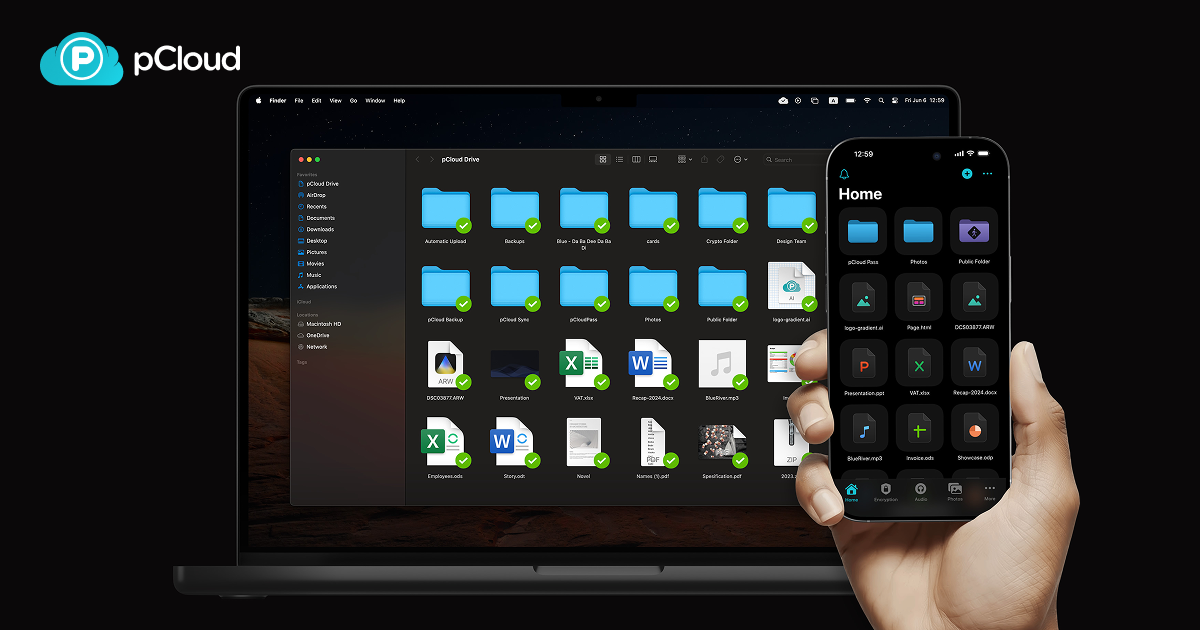
pCloud gives each person a full terabyte and keeps 180 days of file versions, which matters more than it sounds when a client asks for the version you sent three months ago. Client-side encryption is included on the business plan rather than sold as an extra, files sit in an EU data centre, and branded share links let you send work under your own logo. Two things to check before committing: pCloud quotes this plan in euros, so the dollar figure moves with the exchange rate, and the plan starts at three seats whether or not you need three. The desktop drive is genuinely good at streaming files without filling a laptop, which is the feature agencies with big media libraries notice first. | Business: 7.99 EUR per user, per month, billed annually (287.64 EUR a year for 3 users and 3 TB)source | Per usersource | 1 TB per usersource | End-to-end encryptedsource | Free trialsource | Storage and file sharingsource | |
Jottacloud is a Norwegian service that charges for the team rather than the seat, which makes it the cheapest option here for a two-person studio and the reason it is worth a look at all. It is backup-first: it will keep every machine in the office copied to the cloud, and file sharing has no size limit, so sending a finished cut to a client is a link rather than a transfer service. Storage is a single pool for the whole account, not an allowance per person, and the entry plan's terabyte is modest for anyone working in video. Editing is handled by a Microsoft Office Online integration rather than anything Jottacloud built. | Business Small: USD 12.99 / month (USD 155.88 / year) for 2 users and 1 TBsource | Flat rate for the whole teamsource | Shared across the teamsource | Encrypted in transit and at restsource | Free trialsource | Storage and file sharingsource | |
Backblaze B2 is not a shared drive and does not pretend to be one: it is S3-compatible object storage that you point an app at. Agencies use it for the archive layer, parking finished campaigns and raw footage that nobody needs open in a Finder window but everyone would panic about losing. Because you pay by the terabyte and not by the head, a five-person studio storing two terabytes pays less than any per-seat plan on this list, and downloads up to three times your stored volume each month cost nothing. The trade is that you supply the interface, whether that is a sync tool like Cyberduck or Mountain Duck, a backup app, or your own scripts. | Pay-as-you-go: $6.95 per TB per 30-day month, with the first 10 GB freesource | Per terabyte storedsource | As much as you pay forsource | Free plansource | Raw storage for apps and backupssource | ||
Wasabi is the other pay-by-the-terabyte option, and its selling point is a bill you can predict: one flat capacity rate with no charges for downloads or API calls, which is what stings people on Amazon S3 when a client suddenly wants everything back. Object lock and a hidden-copy feature make it a credible ransomware backstop for an agency's archive. Like Backblaze it gives you no drive, no share links and no collaboration, so it belongs behind a backup tool or a media asset manager rather than in front of your team. Note the minimum billable amounts on its pay-as-you-go plan if you only have a few hundred gigabytes to park. | Pay as You Go: from $7.99 per TB/month, with no egress or API request feessource | Per terabyte storedsource | As much as you pay forsource | Encrypted in transit and at restsource | Free trialsource | Raw storage for apps and backupssource | |
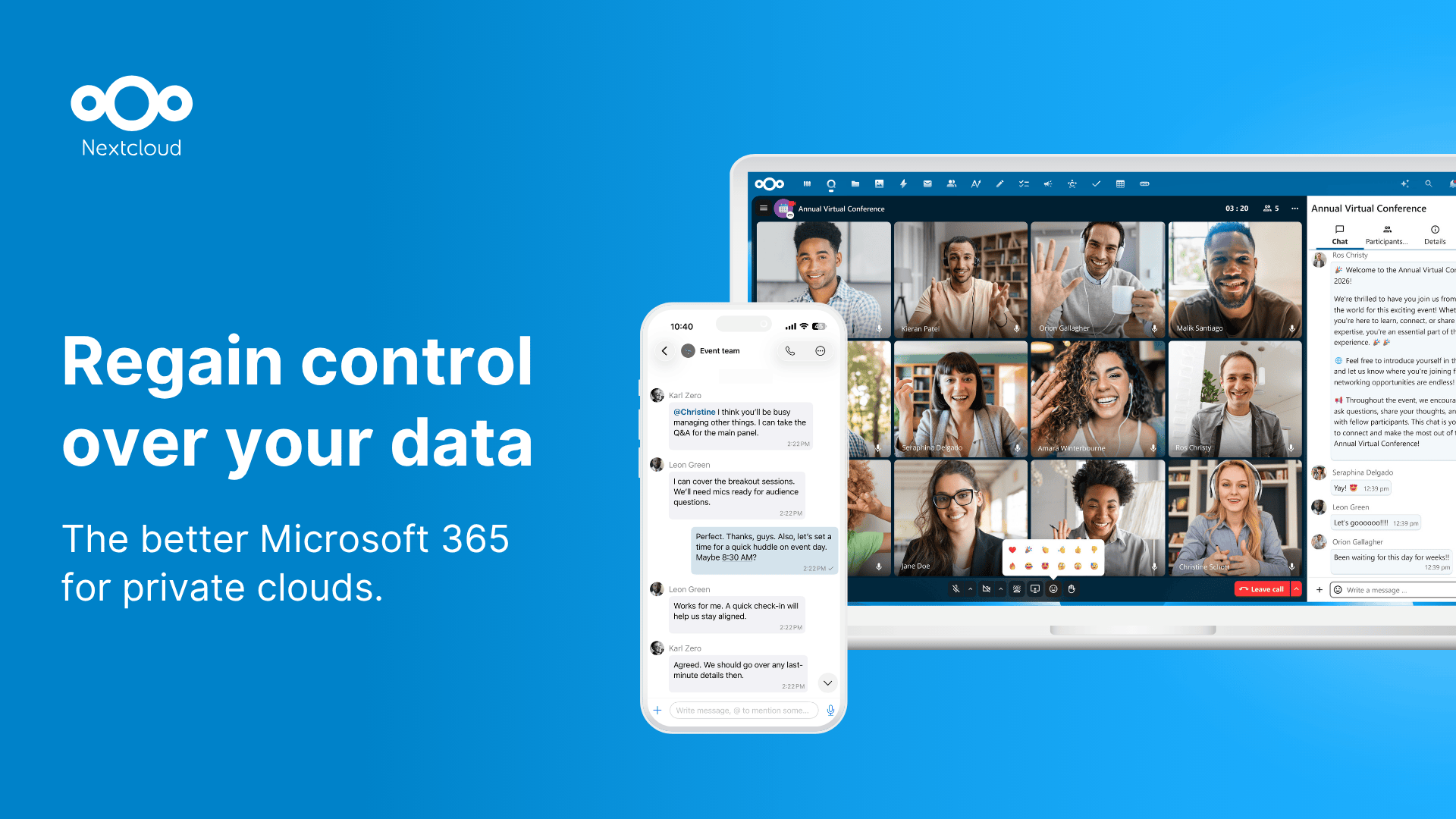
Nextcloud is the answer for an agency that would rather own its storage than rent seats: the software is free and open source, you run it on a server you rent or a NAS in the studio, and adding your eleventh person costs nothing. It is a genuine competitor on features rather than a hobby project, with desktop and mobile sync clients, share links with passwords and expiry, an office suite you can bolt on, and optional end-to-end encryption on the folders you choose. The cost simply moves: someone has to keep the server patched, backed up and reachable, and that person is you or a managed host. Worth it if you already have technical hands, a false economy if you do not. | Free and open source; you supply the server or a hosting providersource | Free, you host itsource | End-to-end encryption you turn onsource | Free plansource | Open-source software you hostsource |