best cloud storage for small business
Updated .
| Option | Price per user | Storage included | Minimum users | File version history | Encryption |
|---|---|---|---|---|---|
Google's business bundle pairs 2 TB of Drive storage per user with Gmail on your own domain and the Docs, Sheets and Slides editors most small teams already know. Storage is pooled across the organization rather than locked to each person, so a heavy user can spill into a colleague's unused space. There is a 14-day free trial, and Google sells these plans to companies of up to 300 users. The trade-off is privacy: Google holds the keys, and version history stops at 30 days or 100 versions, whichever comes first. | $14source | 2 TBsource | 30 dayssource | In transit and at restsource | |
The pick for a team that lives in Word, Excel and Outlook: 1 TB of OneDrive per user comes bundled with the desktop Office apps and business email. It is the most familiar option for staff who used Office at a previous job, and it plugs into Teams and SharePoint with no extra work. Microsoft no longer prints a per-user price on the product page itself, so the figure here is cited to a review that tracks it. Files are encrypted in transit and at rest, but Microsoft holds the keys, and reviewers call its file versioning the weakest part of the package. | $12.5source | 1 TBsource | In transit and at restsource | ||
Dropbox is the easiest of these to hand to a non-technical team: sync just works, sharing is one click, and the desktop folder behaves like any other folder. Standard starts at 3 TB shared across the whole team rather than per person, and it is the only plan here you can buy for a single seat, which matters for a solo owner who expects to hire later. Deleted files and earlier versions stay recoverable for 180 days, and there is a 30-day trial. There is no zero-knowledge option, so Dropbox can read what you store. | $15source | 3 TBsource | 1source | 180 dayssource | In transit and at restsource |
Box is built around permissions, retention and audit trails rather than personal file sync, which is why it turns up in regulated small businesses and in firms that exchange files with clients all day. Business is the cheapest Box tier with unlimited storage, and it is sold in blocks of at least three seats. Box shows prices only after you switch the page to annual billing, so the figure here is cited to a review that tracks it. There is a 14-day trial, and files are encrypted at rest and in transit with Box holding the keys. | $15source | Unlimitedsource | 3source | In transit and at restsource | |
Sync is the cheapest way on this list to get storage the provider itself cannot read, which is the point if you hold client records. Each seat gets 1 TB, file history runs 180 days, and the data sits in Canada with HIPAA, GDPR and PIPEDA compliance built in. The encryption cuts out some conveniences: there is no built-in document editing, and reviewers consistently describe the transfer speeds as slow. Sync sells team plans in blocks of three seats or more. | $6source | 1 TBsource | 3source | 180 dayssource | End-to-end (zero-knowledge)source |
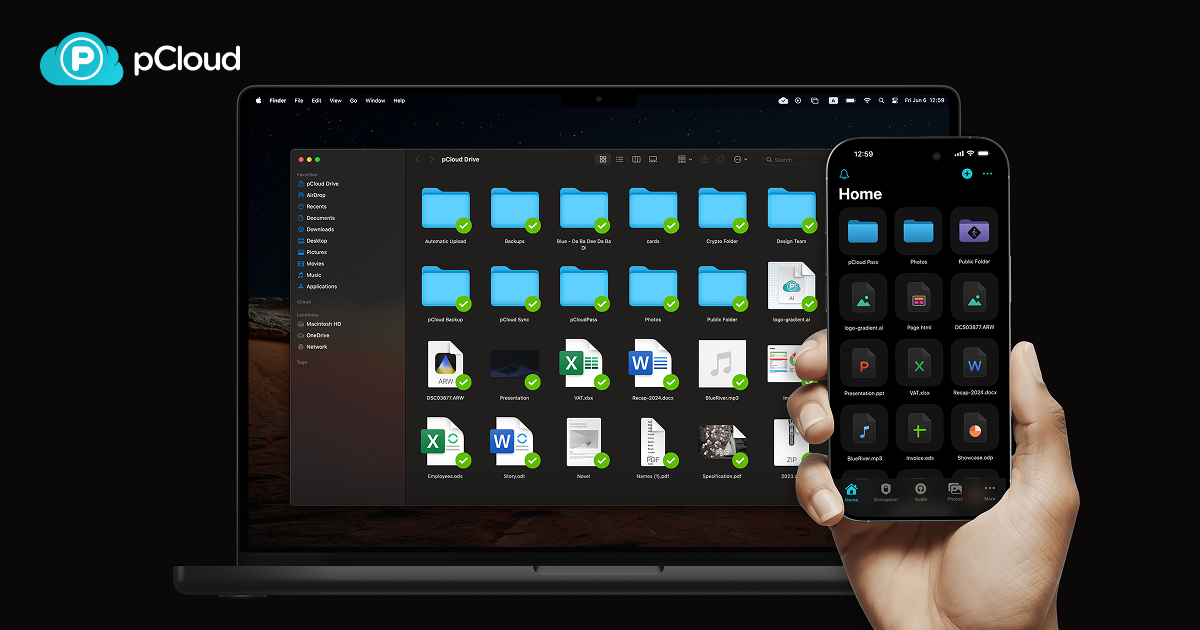
pCloud gives each seat 1 TB, a 180-day file history and a virtual drive that streams files on demand instead of filling up laptops, all served from EU data centers. Zero-knowledge encryption is available but sold as a paid add-on rather than switched on by default, so budget for it if privacy is the reason you are looking. Business is sold in blocks of at least three users and comes with a 30-day free trial. There is no built-in document editing, so most teams keep Google or Microsoft alongside it. | $7.99source | 1 TBsource | 3source | 180 dayssource | End-to-end (zero-knowledge)source |
Tresorit is the most security-first option here: everything is end-to-end encrypted, the company is Swiss, and admins get data residency choices and file-level controls that suit legal, finance and healthcare work. The Business plan starts at three users and pools at least 6 TB across them, and it keeps 100 versions of every file. Tresorit does not print a per-user price on its pricing page, and the published figure we could find describes an older plan shape, so that cell is left blank rather than guessed. Expect to pay well above the mainstream options. | 6 TBsource | 3source | 100 versionssource | End-to-end (zero-knowledge)source | |
The best value on this list if you can work outside the Google and Microsoft ecosystems: the Team plan costs a few dollars a seat and includes Zoho's own word processor, spreadsheet and presentation tools. Storage is 3 TB shared across the team rather than allocated per person, which suits a small group with one or two heavy users. It keeps unlimited file versions, runs a 15-day trial and sells in blocks of three seats. Files are encrypted with Zoho holding the keys, so it is not the choice if you need storage the provider cannot read. | $4.5source | 3 TBsource | 3source | Unlimitedsource | In transit and at restsource |
Proton brings the same end-to-end encryption as its mail product to file storage, with 1 TB per user and a two-seat minimum, the lowest of the encrypted options here. Paid Drive accounts keep up to 200 versions of a file for as long as ten years, which is more generous than anything else on this list. Proton is Swiss and publishes its apps as open source, and there is a 14-day trial on the business plans. The document editing is newer and thinner than Google's or Microsoft's, so it suits teams that mostly store and share rather than co-author all day. | $7.99source | 1 TBsource | 2source | 200 versionssource | End-to-end (zero-knowledge)source |