Best Open Source Help Desk Software
Updated .
| Option | License | Built with | Database | Focus | Hosted plan (from) |
|---|---|---|---|---|---|
Zammad is the most polished option in this group: a Rails application from a German company that sells a hosted version alongside the free self-hosted one, with email, web forms and SMS landing in the same queue. It is the one teams reach for when data residency matters, since the hosted plans run on servers in Germany. The trade-off is weight: it expects a PostgreSQL server of its own, so it is more to operate than a PHP app you drop on shared hosting. | AGPL-3.0source | Rubysource | PostgreSQLsource | Customer supportsource | €7 per agent/month (billed annually)source |
osTicket is the classic of the category: a PHP and MySQL ticketing system that has been running on cheap shared hosting for years, and the reference point most of the others get compared against. Everything is in the free download, with no paid feature matrix held back, and there is an official cloud edition if you would rather not run it yourself. The interface is dated next to the newer tools here, and it is a ticket queue rather than a modern omnichannel inbox. | GPL-2.0source | PHPsource | MySQL / MariaDBsource | Customer supportsource | $12 per agent/monthsource |
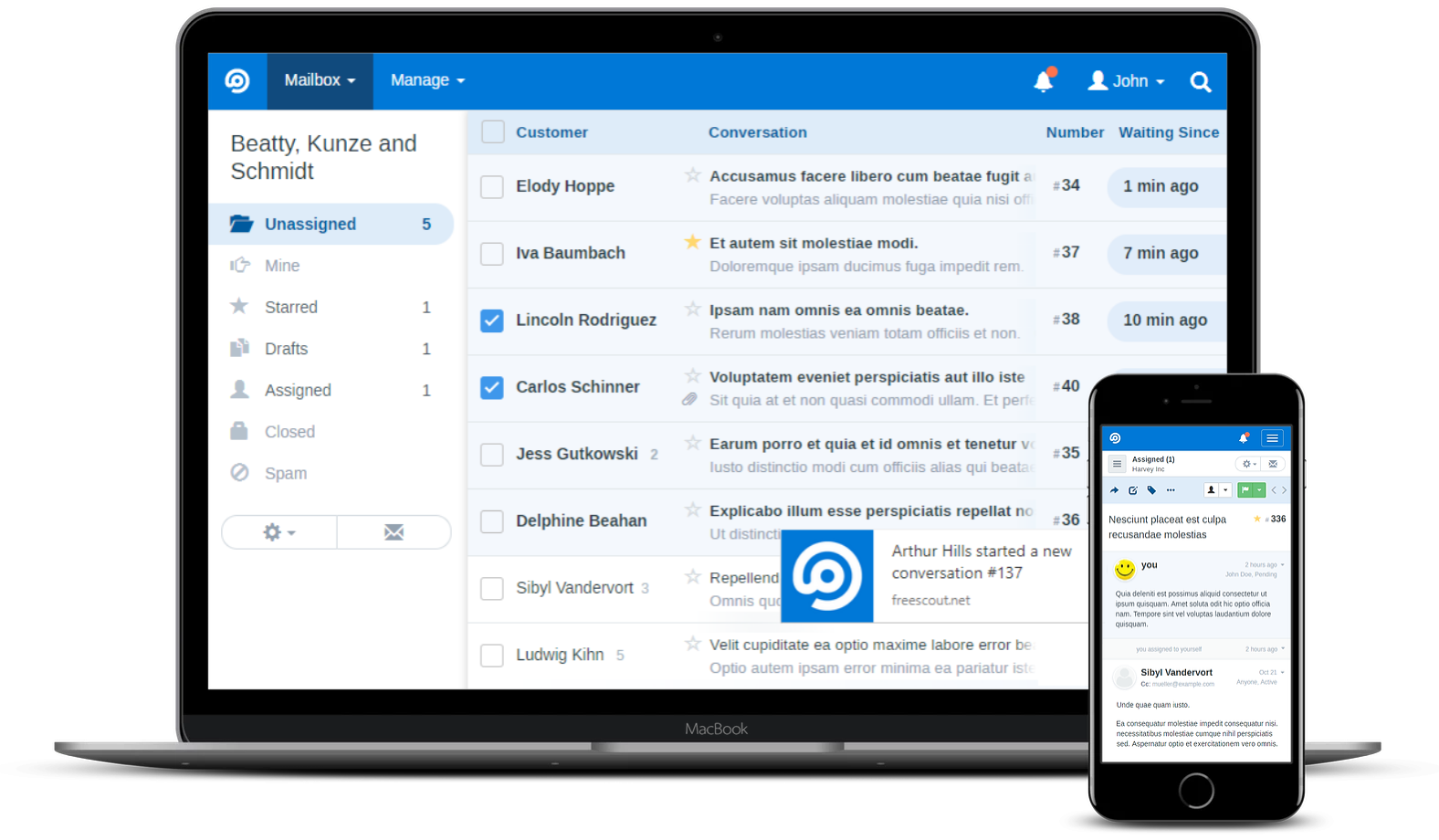
FreeScout is a shared-inbox help desk, closer to Help Scout than to a classic ticket queue: conversations land in mailboxes the whole team works out of together. It is a plain PHP and MySQL application, which is why people get it running on inexpensive shared hosting in under an hour, and the core is genuinely free. There is no first-party cloud, and a fair amount of what other tools bundle is sold here as separate paid modules from its marketplace. | AGPL-3.0source | PHPsource | MySQL or PostgreSQLsource | Customer supportsource | |
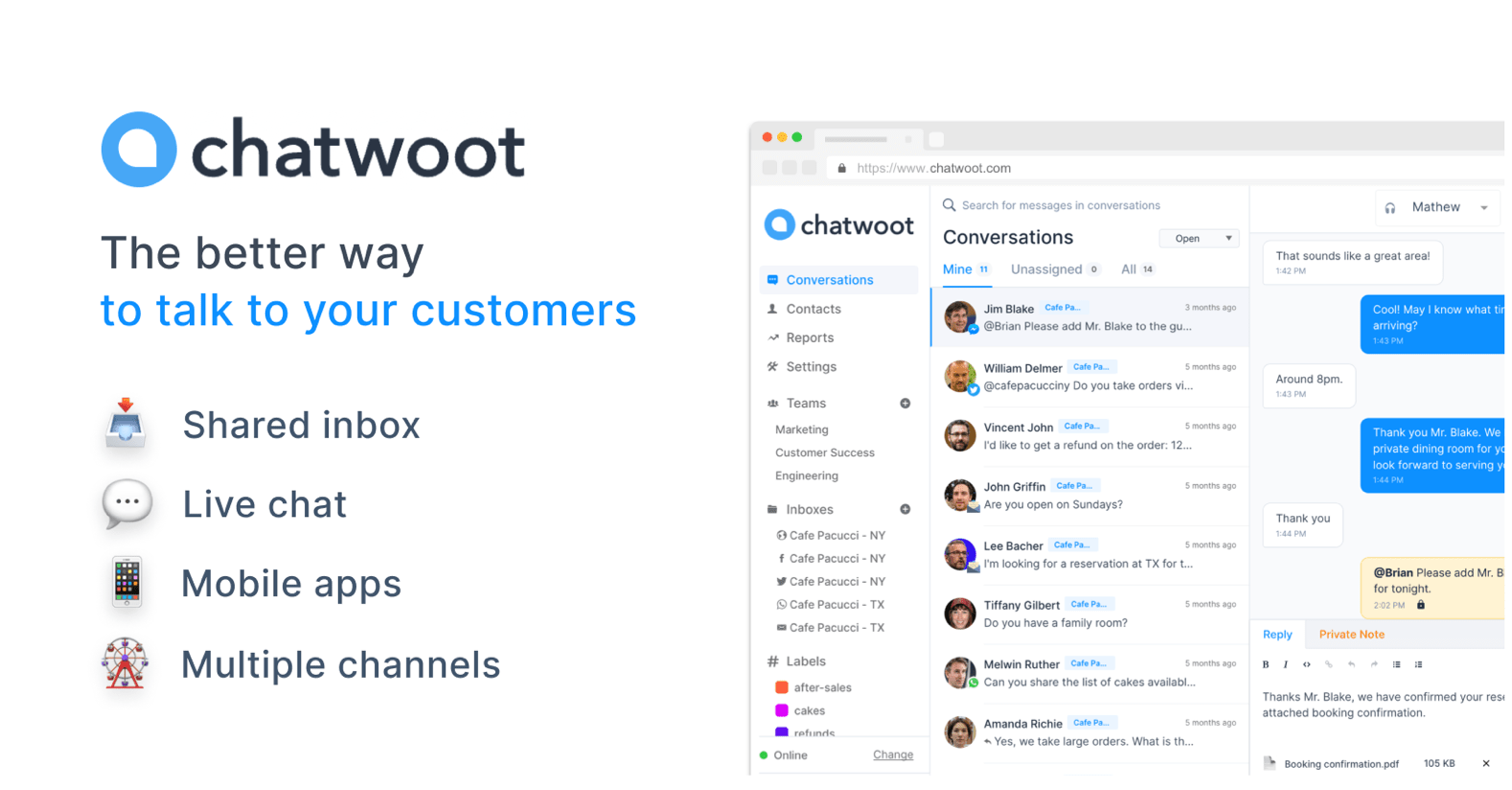
Chatwoot is the live-chat-first option and by far the largest community here, built as an open alternative to Intercom and Zendesk: a website chat widget, email, social and messaging channels all feed one shared inbox. It is a Rails application, and the hosted side has a free tier for very small teams before the paid plans start. Worth reading the plan comparison first: things like SSO and audit logs sit on the top paid tier rather than coming with every plan. | MITsource | Rubysource | PostgreSQLsource | Customer supportsource | $19 per agent/month (billed annually)source |
UVdesk is aimed squarely at online sellers: the free community edition is a Symfony application, and the paid plans add the marketplace and storefront integrations that matter when most of your tickets are about orders rather than IT. If your support volume is order-related, that focus saves real custom work. It is a smaller project than Chatwoot or Zammad, so expect a thinner ecosystem outside its e-commerce niche. | OSL-3.0source | PHPsource | MySQL / MariaDBsource | Customer supportsource | $8 per agent/month (billed annually)source |
Faveo sells two products off one Laravel codebase: a help desk for customer support and a service desk for internal IT, each available self-hosted or on Faveo's own cloud. The open-source community edition is free, and the paid tiers layer on SLA management, workflow automation and extra channels such as WhatsApp. Its pricing is the most complicated here, with separate recurring and perpetual licences for each of the two products, so read the tables carefully before committing. | OSL-3.0source | PHPsource | MySQL / MariaDBsource | Bothsource | $9 per agent/monthsource |
GLPI is an IT service desk bolted onto a full asset and inventory database, and that pairing is the whole point: a ticket is linked to the machine, licence or contract it concerns. That makes it the natural pick for an internal IT team that also has to answer what the company owns and when it expires. It is more to learn than a plain ticket queue, and it is the wrong tool if your job is answering customers rather than colleagues. | GPL-3.0source | PHPsource | MySQL / MariaDBsource | IT service desksource | €19 per user/month (excl. VAT)source |
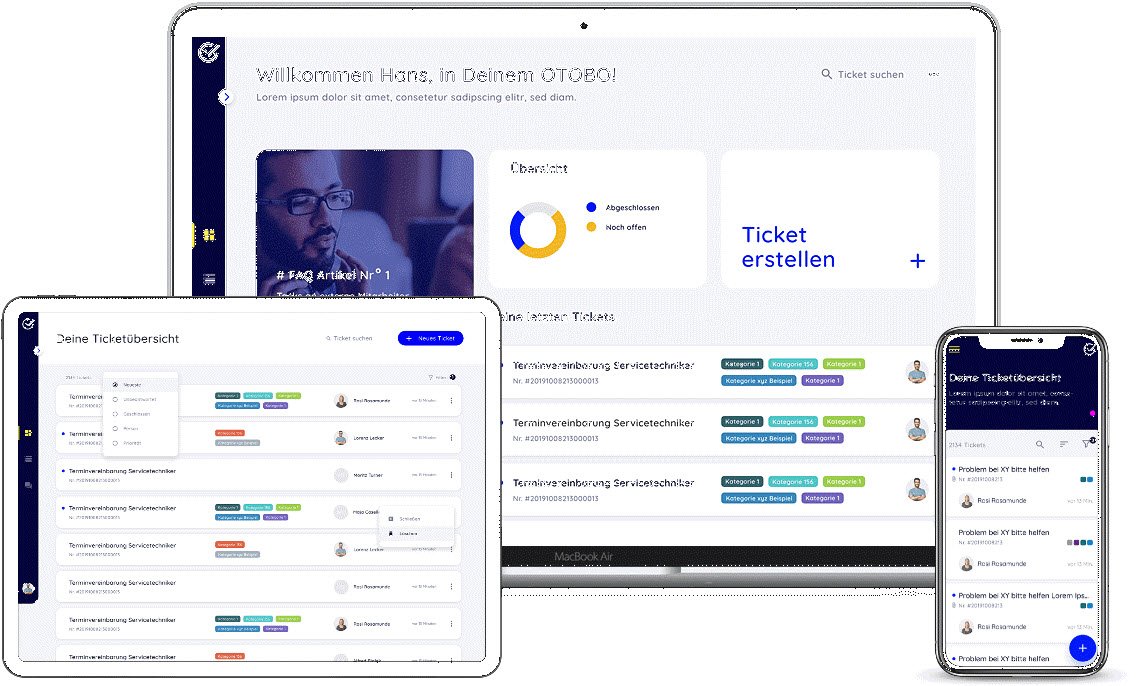
OTOBO is an actively developed fork of the old OTRS Community Edition, restarted in 2019 to keep a fully free version of that lineage alive. It carries the ITIL-flavoured feature set people know from OTRS, process tickets, SLAs and a customer portal, behind a modernised interface. Perl is the price of admission: the stack is unusual enough now that finding people who will cheerfully maintain it takes effort, and the vendor quotes its managed hosting rather than listing a price. | GPL-3.0source | Perlsource | MySQL or PostgreSQLsource | Bothsource | Managed hosting, price on requestsource |
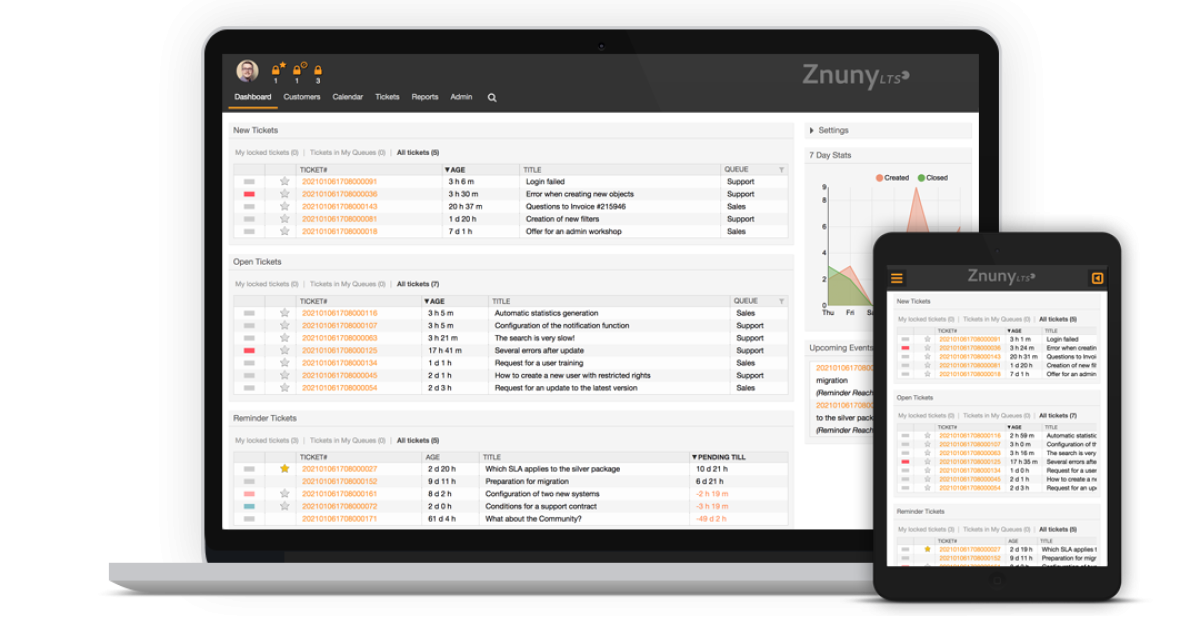
Znuny is the other OTRS Community Edition fork, and the conservative one: its stated purpose is long-term support, with bug and security fixes for the old 6.0 line running alongside a newer feature branch. If you already run OTRS and want continuity rather than a redesign, this is the low-risk path, and both branches are still getting releases. It is a small team with no hosted offering of its own, and the interface is unapologetically the one you already know. | GPL-3.0source | Perlsource | MySQL or PostgreSQLsource | Bothsource | Hosting offered, price on requestsource |
Request Tracker has been running help desks, university IT and security response teams for more than twenty years, and it shows in the best way: it is extraordinarily configurable, scriptable and email-driven, and it does not buckle at volume. Best Practical, the company behind it, sells hosted plans and support on top. It is also the least fashionable option here, with a Perl stack and an interface built for people who live in it all day rather than for a first-time admin. | GPL-2.0source | Perlsource | MySQL or PostgreSQLsource | Bothsource | $15 per user/month (billed annually)source |
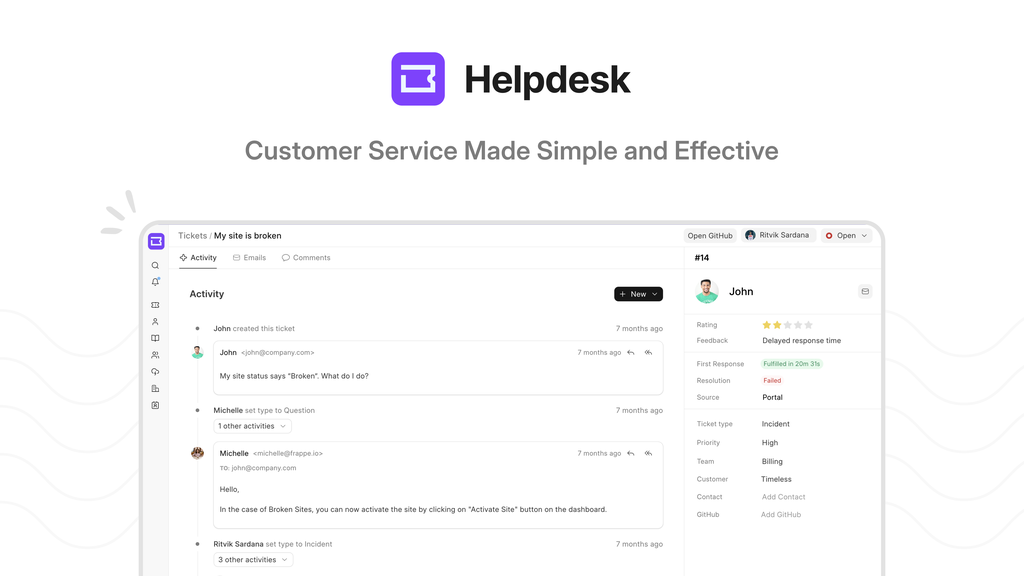
Frappe Helpdesk is the newest-feeling of the mature options: a clean, fast ticket interface built on the Frappe framework, the same Python stack behind ERPNext. That lineage is the reason to pick it or to skip it, because if you already run Frappe or ERPNext this drops in beside them and shares your customer records. Its hosted pricing is charged per site rather than per agent, which is unusually good value for a large support team and beside the point for a two-person one. | AGPL-3.0source | Pythonsource | MySQL / MariaDBsource | Customer supportsource | $5 per site/month (not per agent)source |
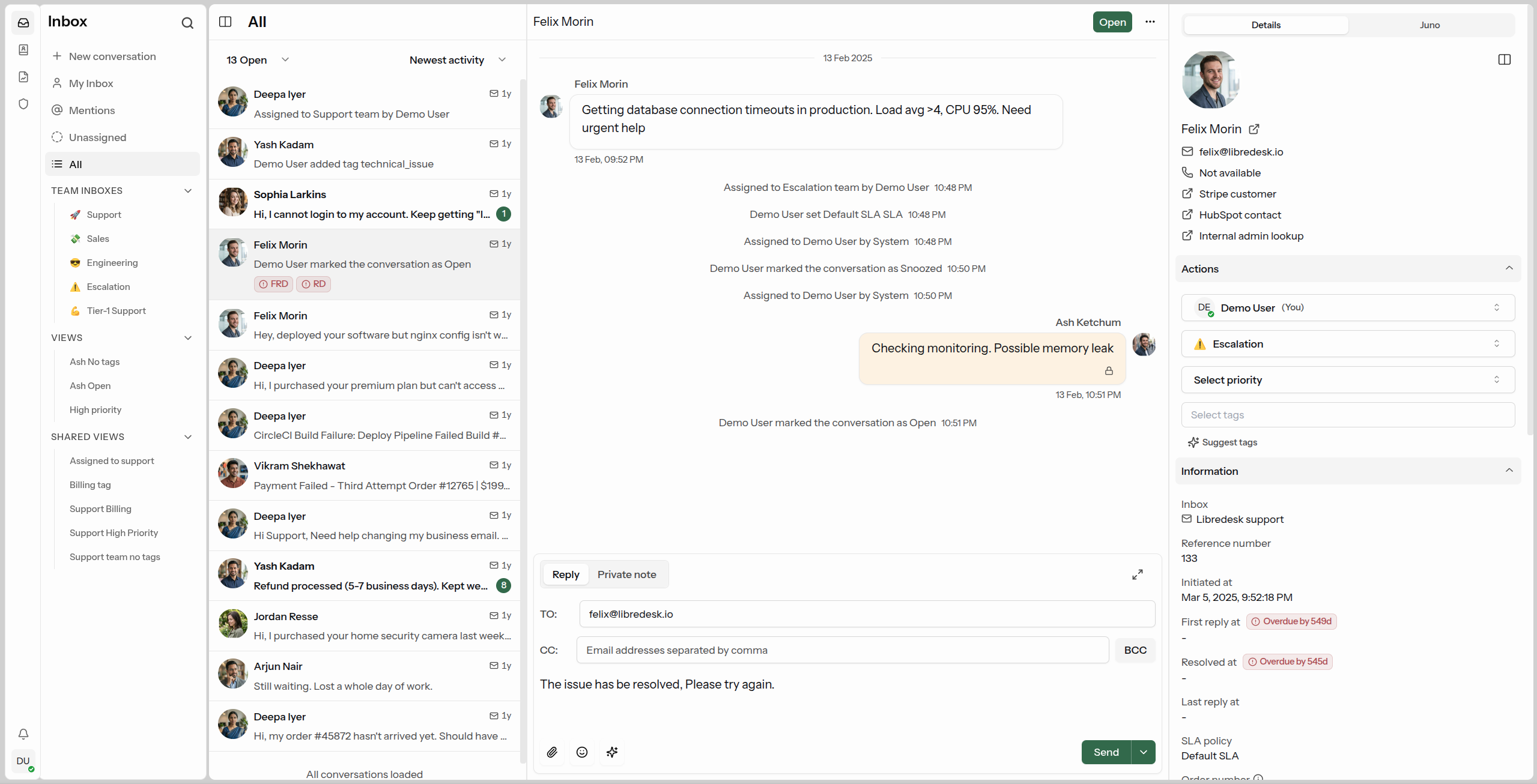
Libredesk is the minimal option: one Go binary alongside Postgres and Redis, and you have live chat, email and WhatsApp arriving in a shared inbox. For a small team that wants something modern without a Ruby or PHP deployment to babysit, it is the easiest thing on this list to stand up. It is also the youngest and smallest project here, with no hosted plan and a much shorter track record than anything else in the table. | AGPL-3.0source | Gosource | PostgreSQLsource | Customer supportsource |