Best Stargazing Spots Near Concord, CA
Ten stargazing spots near Concord, CA compared on cost, after-dark access and star parties, from Mount Diablo to Pinnacles National Park. Read our take
At a glance
| Option | Cost of a stargazing visit | Kind of site | Hours | After-dark access | Public stargazing programs | Address | Drive time from Concord |
|---|---|---|---|---|---|---|---|
| $10source | State parksource | Gates open 8:00am and close at sunsetsource | Closes around sunsetsource | Free star partiessource | 1300 North Gate Road, Walnut Creek, CA 94598source | 28 | |
| Observatory or science centersource | Telescope viewings Fri–Sat 7:30 PM–10:30 PM; museum Wed–Sun 10:00 AM–5:00 PMsource | Open into the eveningsource | Free star partiessource | 10000 Skyline Blvd, Oakland, CA 94619source | 28 | ||
| Freesource | Regional parksource | November–February 7am–6pm; March–October 7am–10pmsource | Open into the eveningsource | 6800 Skyline Blvd, Oakland, CA 94611source | 28 | ||
| $5source | Regional parksource | Gates 7am–6pm in winter, 6am–9pm May to Labor Day; park curfew 10pm–5amsource | Open into the eveningsource | Ranger-led programssource | 7000 Del Valle Road, Livermore, CA 94550source | 74 | |
| $75source | Observatory or science centersource | Outdoor areas, parking and Shane Visitor's Gallery 9:00 a.m.–5:00 p.m. dailysource | Closes around sunsetsource | Ticketed star partiessource | 7281 Mount Hamilton Rd, Mount Hamilton, CA 95140source | 114 | |
| State parksource | Daily 7:00 a.m. to sunset, year roundsource | Closes around sunsetsource | 3801 Panoramic Highway, Mill Valley, CA 94941source | 79 | |||
| $18source | Observatory or science centersource | Park day use 6 a.m. to 10 p.m.; observatory open on scheduled event nightssource | Open into the eveningsource | Ticketed star partiessource | 2605 Adobe Canyon Road, Kenwood, CA 95452source | 110 | |
| $6source | State parksource | Day use 8am to 30 minutes after sunset; observatory programs on moonless Saturday evenings from 8:00pmsource | Closes around sunsetsource | Free star partiessource | 10700 San Juan Canyon Rd, San Juan Bautista, CA 95045source | 134 | |
| $8source | State parksource | Coe Ranch and Hunting Hollow entrances open 24 hours, 365 days a yearsource | Open all nightsource | 9100 E Dunne Ave, Morgan Hill, CA 95037source | 110 | ||
| $30source | National parksource | East Side: 24-hour access to trails; West Side gate 7:30 am to 8:00 pmsource | Open all nightsource | 5000 East Entrance Road, Paicines, CA 95043source | 176 |


Our take
For a first night under the stars from Concord, start at Mount Diablo State Park: it is a 28-minute drive, entry is $10 a car, and the Mount Diablo Astronomical Society runs free star parties on the mountain. Its gates close at sunset, though, so on any other night the easy picks are Chabot Space & Science Center, where free telescope viewings run Friday and Saturday until 10:30 PM, and Sibley Volcanic Regional Preserve, open until 10pm from March to October with no parking fee.
The real split in this table is between places that let you stay after dark and places that let you in for an event. Henry W. Coe State Park and Pinnacles National Park are the only two open all night, and they sit under the darkest skies here, at the price of a 110-minute and a 176-minute drive. Lick Observatory, Robert Ferguson Observatory and Fremont Peak State Park put you behind big telescopes on scheduled nights only: Fremont Peak's programs are free beyond a $6 parking fee, while Ferguson charges $18 an adult and Lick's Summer Series $75.
Our picks
- Closest star parties to Concord: Mount Diablo State Park. A 28-minute drive and $10 a car, with free star parties run by the Mount Diablo Astronomical Society.
- Best for a last-minute weekend night: Chabot Space & Science Center. Free telescope viewings every Friday and Saturday from 7:30 to 10:30 PM, open into the evening.
- Best for staying out all night: Henry W. Coe State Park. The Coe Ranch and Hunting Hollow entrances are always open, and vehicle day use is $8.
- Biggest telescope for the least money: Fremont Peak State Park. Free star parties at the observatory on moonless Saturdays, for the $6 state park parking fee.
Star party nights or open gates
Four places here close around sunset: Mount Diablo State Park, Mount Tamalpais State Park, Fremont Peak State Park and Lick Observatory. At those, a night of stargazing means a scheduled program or a campsite. Mount Diablo's star parties run monthly from March to October, Fremont Peak's run on moonless Saturday evenings from April into the fall, and Lick's Summer Series runs only in summer.
If you want to pick your own night, the choice narrows to Chabot Space & Science Center and Sibley Volcanic Regional Preserve close to home, Del Valle Regional Park and Robert Ferguson Observatory's park into the evening, and Henry W. Coe State Park and Pinnacles National Park all night. Pinnacles' all-night access is on the east side only, and overnight parking there needs a campground reservation.
What a night costs, and per what
The park prices are per vehicle: nothing at Sibley Volcanic Regional Preserve, $5 at Del Valle Regional Park, $6 at Fremont Peak State Park, $8 at Henry W. Coe State Park, $10 at Mount Diablo State Park and $30 at Pinnacles National Park, where the pass covers up to a week. The observatory prices are per adult: $18 for a Robert Ferguson Observatory star party and $75 for Lick Observatory's Summer Series, so a family of four pays several times the sticker price.
Chabot Space & Science Center advertises its Friday and Saturday telescope viewings as free, and that is separate from its $24 daytime museum ticket. Mount Tamalpais State Park charges for parking at East Peak, Pantoll and Bootjack, but its own page does not give the amount.
Check before you drive
Every program in this table depends on the weather. Fremont Peak's observatory cancels for clouds, rain or high humidity, and Chabot's viewings are weather permitting. Robert Ferguson Observatory opens only on event nights, sells tickets ahead, and has no cell service in the park, so save the ticket before you leave. Lick Observatory's main building is still closed for storm repairs, and its Summer Series tickets go on sale in June.
The options in detail
Mount Diablo State Park
The 3,849-foot mountain on Concord's doorstep, where the Mount Diablo Astronomical Society, a club formed in 1957, runs free public star parties every month from March to October. Its height lifts you above much of the valley haze and fog, though the glow of the whole Bay Area still rings the horizon. The catch is the gate: the park closes at sunset and rangers ask you to be headed out by then, so after-dark viewing means a scheduled star party or a night at Juniper or Live Oak campground.
Chabot Space & Science Center
A science museum in the Oakland hills whose observatory opens its historic telescopes to the public free on Friday and Saturday nights, with no museum ticket needed for the viewing. Volunteers from the East Bay Astronomical Society run the sessions, and the big refractors and the 36-inch reflector make the Moon and planets the stars of the show. The sky here is city-bright, so faint galaxies are out of reach, and viewings depend on clear, dry weather.
Sibley Volcanic Regional Preserve
An East Bay Regional Park District preserve on the ridge above Orinda, built around Round Top, an old volcano rising to 1,763 feet. It is one of the few parks close to Concord that stays open after dark, until 10pm from March through October, and parking is free. It sits right beside Oakland, so expect a bright sky toward the bay; no organized night programs were listed when we checked.
Del Valle Regional Park
A reservoir park in the hills south of Livermore that stargazing guides often name among the better dark spots in the Bay Area. Park naturalists run drop-in stargazing evenings here (a Fall Stargazing program was on the calendar for November 14, 2026), and the park's campground lets you stay out after the day gates close. Those gates close between 6pm and 9pm depending on the season, with a 10pm to 5am curfew.
Lick Observatory
The University of California's research observatory on the summit of Mount Hamilton, 4,213 feet up and 18.5 winding miles from San Jose. By day the grounds and Shane Telescope gallery are free, but the main building remains closed for repairs from winter storm damage. The way to see the sky through its telescopes is the Summer Series, a ticketed evening of four to six hours sold on Eventbrite, which sells out; outside those nights the gates close at 5pm.
Mount Tamalpais State Park
Marin's mountain, whose upper slopes often sit above the summer fog that blankets the coast. The park's Mountain Theater hosts astronomy programs, and the Friends of Mt Tam's 2026 Science Quest Day closed with a star party, but the park itself is open only from 7 a.m. to sunset, so night viewing here means one of those events or a walk-up campsite at Pantoll or Bootjack. Parking at East Peak, Pantoll and Bootjack carries a fee, and the park did not publish the amount on the page we read.
Robert Ferguson Observatory
A volunteer-run public observatory inside Sugarloaf Ridge State Park in the Sonoma Valley, with three telescopes and a 40-inch telescope project meant to be one of the largest dedicated to public viewing. Its monthly public star parties run three hours and are ticketed through SimpleTix, and the observatory opens only on event nights. There is no cell service in the park, so screenshot your ticket before you drive up; the park's own gates stay open until 10 p.m.
Fremont Peak State Park
A 3,169-foot peak above San Juan Bautista where the Fremont Peak Observatory Association opens its 30-inch Challenger Telescope to the public on moonless Saturday evenings, roughly April through October. The programs are free; you pay only the state park's parking fee. The park asks visitors to arrive before sundown, since headlights after dark spoil the astronomers' night vision, and a small campground lets you stay on the mountain.
Henry W. Coe State Park
87,000 acres of Diablo Range ridges east of Morgan Hill, the biggest park on this list and one of the darkest skies within reach of the Bay Area. Its Coe Ranch and Hunting Hollow entrances never close, and 19 drive-in campsites make an easy base for a night under the stars. The Pine Ridge Association hosts the occasional star party, but most nights you bring your own binoculars or telescope, and the drive in is 13 winding miles on East Dunne Avenue.
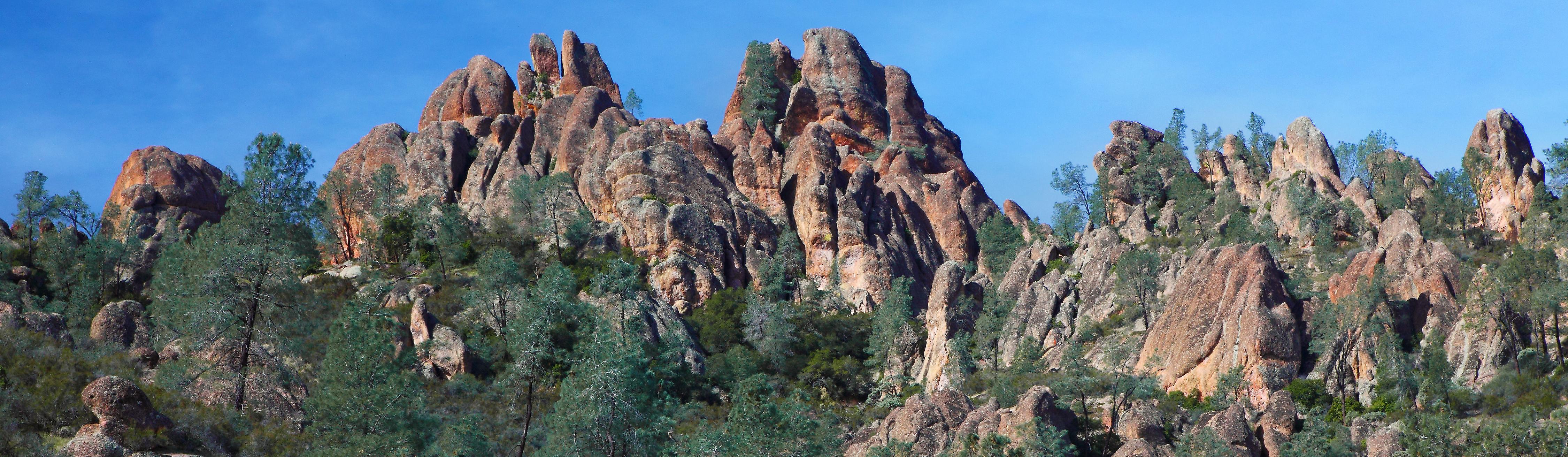
Pinnacles National Park
Volcanic spires and talus caves in the Gabilan Mountains south of Hollister, with the darkest sky on this list and the longest drive from Concord. The east side gives 24-hour access to its trails, but overnight parking needs a campground reservation, while the west entrance is day-use only and its gate closes at 8 p.m. A $30 vehicle pass covers up to a week, and the park takes no cash.
How we researched this
We read each place's own pages: California State Parks, the East Bay Regional Park District, the National Park Service, and the sites of Chabot Space & Science Center, Lick Observatory, the Robert Ferguson Observatory, the Fremont Peak Observatory Association and the Mount Diablo Astronomical Society. Each value in the table is recorded with the sentence it came from, and a blank cell means the source did not state it. Drive times are a computed driving route from Concord, CA, without traffic.
The set covers public places within a long evening's drive of Concord, California, that either run night-sky programs or stay open after dark. We left out Point Reyes National Seashore, whose pages list no park hours or night programs, Briones, Round Valley, Black Diamond Mines and Morgan Territory, whose gates close by early evening with no stargazing programs listed, and Foothill College Observatory, whose terms we could not confirm. Program schedules and fees change each season, so check the source before you go.