Stargazing Near Miami, FL
Stargazing spots near Miami compared on night access, entry fee, hours, size and drive time, from Everglades National Park to the Fox Observatory. Read our take
At a glance
| Option | Entry Fee | Address | Site Type | Night Access | Hours | Park Size | Drive Time from Miami |
|---|---|---|---|---|---|---|---|
| $35source | 40001 State Road 9336, Homestead, FL 33034source | National park or preservesource | Open 24 hourssource | Open 24 hours a day, every day of the yearsource | 1,508,976source | 85 | |
| Freesource | 33000 Tamiami Trail East, Ochopee, FL 34141source | National park or preservesource | Open 24 hourssource | Open 24 hours a day (day use areas close after dark)source | 729,000source | 119 | |
| Freesource | 9700 SW 328th Street, Homestead, FL 33033source | National park or preservesource | Overnight campingsource | Convoy Point closed 5:30 p.m. to 7:00 a.m.source | 172,971source | 61 | |
| $8source | 36850 Overseas Highway, Big Pine Key, FL 33043source | State parksource | Overnight campingsource | 8 a.m. to sunset for day visitorssource | 496source | 167 | |
| $6source | 3400 NE 163rd Street, North Miami Beach, FL 33160source | State parksource | Overnight campingsource | 8 a.m. to sunset for day visitorssource | 1,033source | 40 | |
| $3source | 16001 W State Road 84, Sunrise, FL 33326source | County parksource | Public star partiessource | Saturdays, sunset to 10:30 PM (Nov to Mar) or 11:30 PM (Mar to Nov)source | 669source | 51 | |
| Freesource | 17555 SW 79th Avenue, Palmetto Bay, FL 33157source | County parksource | Public star partiessource | Saturdays, dusk to 10 PMsource | 30source | 43 | |
| 23325 SW 217th Avenue, Homestead, FL 33031source | Observatorysource | Public star partiessource | Saturday closest to each new moon, dusk to 10 PMsource | 60 | |||
| 12451 SW 184th Street, Miami, FL 33177source | County parksource | Overnight campingsource | Campground office 9 a.m. to 5 p.m. dailysource | 270source | 35 | ||
| $10source | 9610 Old Cutler Road, Coral Gables, FL 33156source | County parksource | Closes at sundownsource | Sunrise to sunsetsource | 630source | 38 | |
| $10source | 6747 Crandon Boulevard, Key Biscayne, FL 33149source | County parksource | Closes at sundownsource | Sunrise to sunsetsource | 808source | 19 | |
| $10source | 10216 Lee Road, Boynton Beach, FL 33473source | National wildlife refugesource | Open past sunsetsource | Headquarters area 5 a.m. to 10 p.m. dailysource | 145,188source | 73 |






Our take
For a truly dark sky, Everglades National Park and Big Cypress National Preserve are the answer: both are open 24 hours, and Big Cypress charges nothing to get in while Everglades charges $35 for a 7-day vehicle pass. If you want someone else's telescope instead, the Fox Observatory at Markham Park in Sunrise and Bill Sadowski Park in Palmetto Bay both hold free public viewing every Saturday night.
The column that matters most here is Night Access, because most of the parks local guides recommend close at sunset. Matheson Hammock Park, which local guides call one of the darkest spots in Miami, and Crandon Park, with its open ocean horizon, both close at sundown, so they give you twilight and a bright planet, not a night under the stars. Everything else on this list either stays open, lets you camp or rent a cabin, or runs a scheduled telescope night.
Our picks
- Darkest sky for free: Big Cypress National Preserve. Open 24 hours with no entrance fee, and eight campgrounds give you a legal place to stay all night.
- Best for a whole night out: Everglades National Park. Open 24 hours, 7 days a week, and the $35 vehicle pass covers 7 days if the first night clouds over.
- Best telescope night: Fox Observatory at Markham Park. Free public viewing every Saturday from sunset to 10:30 PM in winter and 11:30 PM in summer.
- Darkest public star party: D'Auria Observatory. Public New Moon Star Parties from dusk to 10 PM on the Saturday closest to each new moon.
- Closest to downtown: Crandon Park. About a 19 minute drive, with an open ocean horizon for a moonrise, though it closes at sunset.
Open all night, camping, or a scheduled star party
Only Everglades National Park and Big Cypress National Preserve are open 24 hours. Arthur R. Marshall Loxahatchee National Wildlife Refuge comes next, with its headquarters area open until 10 p.m. every night, which is long enough for a couple of hours of real darkness without a campsite.
Four places let you stay overnight as a camper or cabin guest: Biscayne National Park (island campgrounds you reach by boat), Bahia Honda State Park, Oleta River State Park and Larry and Penny Thompson Park. Bahia Honda and Oleta River both close to day visitors at sunset, so the night sky there belongs to people with a reservation.
Three club-run sites trade darkness for help: the Fox Observatory and Bill Sadowski Park hold free telescope nights on Saturdays, and the D'Auria Observatory opens to the public once a month around the new moon.
How far you have to drive for a dark sky
Drive time and darkness move together here. Crandon Park, Larry and Penny Thompson Park and Matheson Hammock Park are all under 40 minutes from Miami and all sit under the city's glow. Everglades National Park at 85 minutes and Big Cypress National Preserve at 119 minutes are the first places where the Milky Way shows clearly, and Bahia Honda State Park, at 167 minutes down the Keys, is a weekend trip rather than an evening one.
The D'Auria Observatory, about an hour out in the Redland near Homestead, is the middle ground: darker than anything in the suburbs, closer than the Everglades backcountry, and staffed by club members with telescopes on its public nights.
What the entry fees cover
Fees are per car for the day, using the weekend rate where it is higher. Big Cypress National Preserve, Biscayne National Park and the Bill Sadowski Park star parties cost nothing, Markham Park charges $3 on weekends, and the state parks charge $6 at Oleta River and $8 at Bahia Honda. Matheson Hammock and Crandon Park charge $10 on weekends, which is a lot for a park that closes at sunset. Everglades is the outlier at $35, but that pass is good for 7 days. Camping and cabin fees are separate everywhere.
The options in detail
Everglades National Park
The biggest dark sky within easy reach of Miami, and one of only two places here that never close: the park is open around the clock every day of the year. The darkest ground is deep along the main park road, at Long Pine Key and especially at Flamingo, where drive-in campgrounds let you stay through the night. The vehicle pass covers seven days, so a cloudy first night is not wasted. Summer brings mosquitoes and haze, so local astronomers save it for the dry winter months.
Big Cypress National Preserve
A huge swamp preserve straddling Tamiami Trail west of the Everglades, and a certified International Dark Sky Park, which is why South Florida astronomers point their cars here for the Milky Way. The preserve itself is open around the clock and charges no entrance fee, and with eight campgrounds there is a legal place to spend the whole night under a properly dark sky. The boardwalks and other day use areas, including the Kirby Storter boardwalk, close an hour after sunset, and stargazing there needs prior permission from the preserve. It is the longest drive west on this list, roughly an hour and a half from downtown.
Biscayne National Park
A park that is almost all open water south of Miami, with nothing offshore to light the sky. Entry is free, but the mainland visitor area at Convoy Point closes in the evening and does not reopen until morning, so night viewing here really means the island campgrounds on Elliott Key and Boca Chita Key. Both are reachable only by boat. With a boat, it is the darkest horizon this close to the city; without one, it is a sunset visit rather than a stargazing trip.
Bahia Honda State Park
A Lower Keys park of beaches and the old Flagler railroad bridge, far enough down the Overseas Highway that the mainland glow is long gone and the southern sky opens up over water. Day visitors must leave at sunset, so the night sky belongs to people staying in its campgrounds, which take everything from tents to large RVs and book up well ahead in winter. It is the farthest drive on this list, close to three hours from Miami, which makes it a weekend plan rather than an evening one.
Oleta River State Park
Florida's largest urban park, on Biscayne Bay in North Miami Beach and about half an hour from downtown. Its mangroves and bay frontage make it one of the darker pockets inside the metro, and local guides have pointed to full moon kayak tours as a way to be on the water after dark. Day visitors leave at sunset, so the way to stay for the stars is a night in one of its rustic air conditioned cabins. Expect a city glow on the horizon: this is for the moon, planets and bright stars, not the Milky Way.
Fox Observatory at Markham Park
The South Florida Amateur Astronomers Association runs this observatory inside a big Broward County park at the western edge of Sunrise, and it opens to the public free every Saturday night, weather permitting. Club members set up their own telescopes around the dome, so on a clear night there can be a dozen or more to look through, plus people who know where to point them. The park sits right against the Everglades, which helps a little with the western sky. A small vehicle fee applies at the park gate on weekends.
Bill Sadowski Park and Nature Center
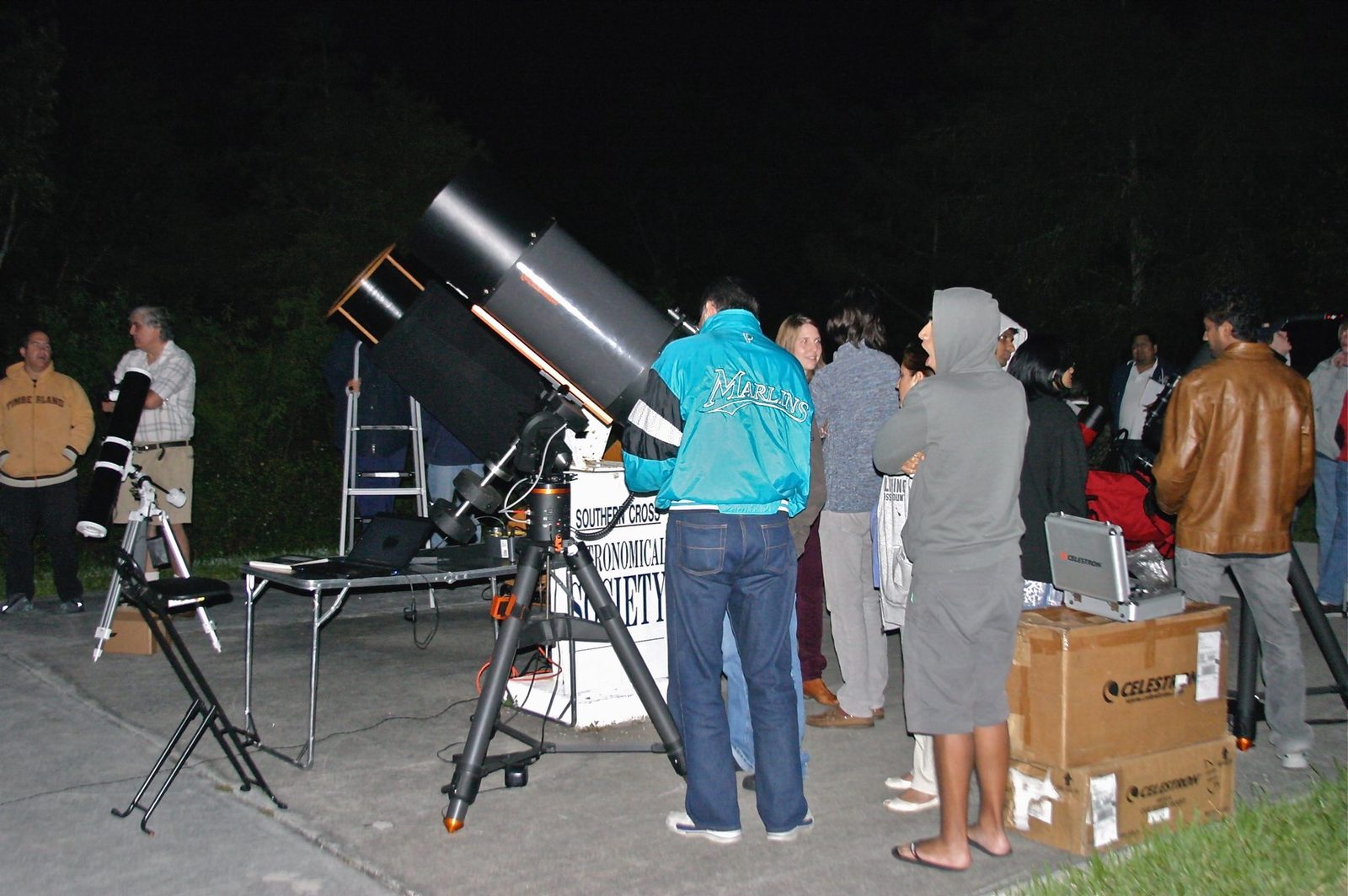
The Southern Cross Astronomical Society has run public star parties on an observation deck in this small Palmetto Bay park since 1986, and they are free every Saturday evening, weather permitting. The club's 18 inch telescope is the largest in Miami-Dade open to the public, and the deck has a light buffer fence to cut the glare from nearby streets. On the Saturday closest to each new moon the club moves to its darker observatory in Homestead instead, so check the calendar before you go. No lasers, lights, alcohol or pets.
D'Auria Observatory
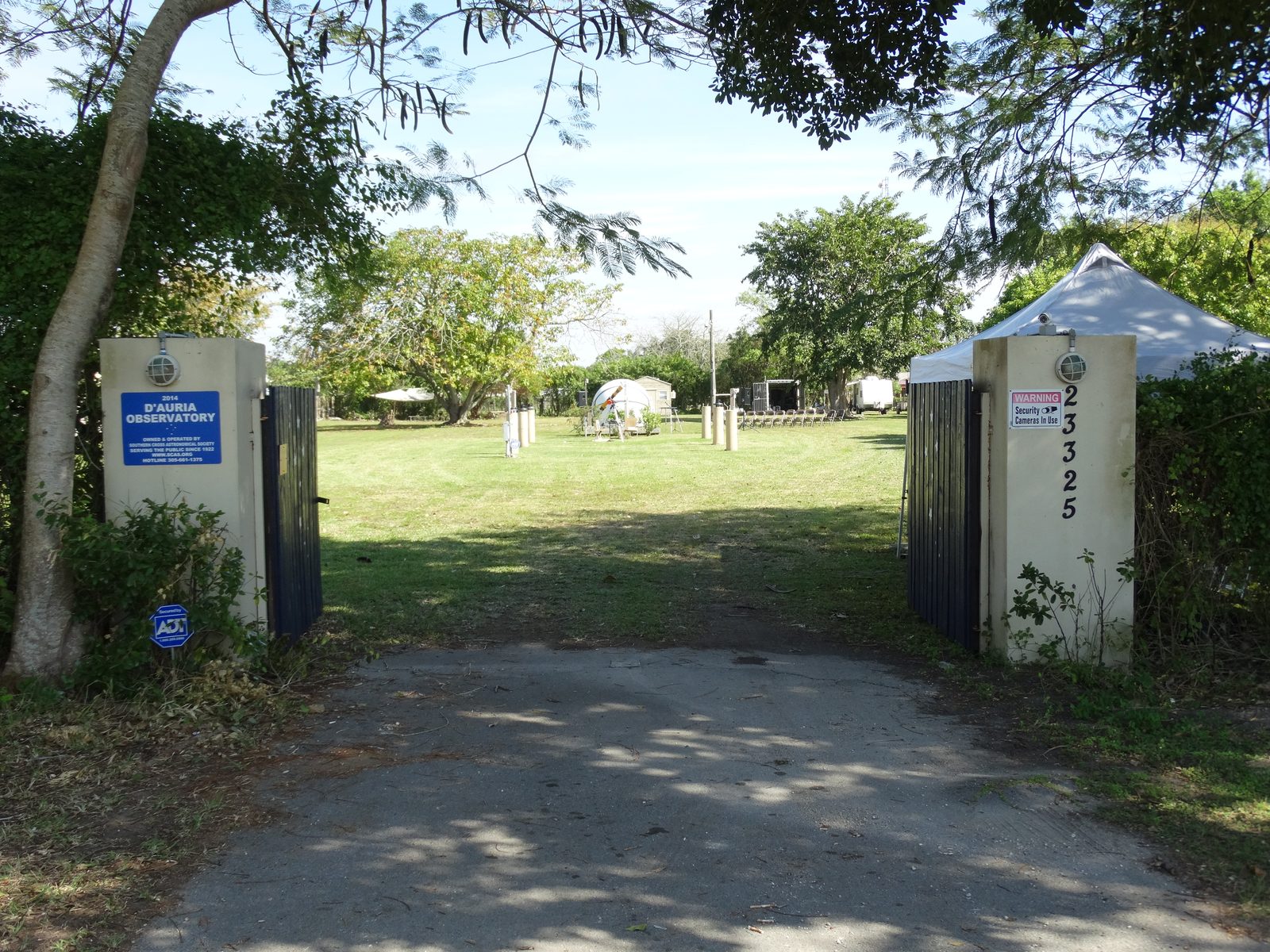
The Southern Cross Astronomical Society's own dark sky site in the farmland of the Redland near Homestead, with a robotic dome, concrete telescope piers and a warm room. The public is welcome at its New Moon Star Parties, held from dusk to 10 p.m. on the Saturday closest to each new moon, when the sky is at its darkest and the club brings its full crew. It is the darkest place on this list you can visit without a campground or a boat, and the best choice for seeing faint objects through someone else's telescope. No lasers, lights, alcohol, pets or weapons.
Larry and Penny Thompson Park and Campground
The one way to stay outdoors all night inside suburban Miami-Dade: a wooded county park next to Zoo Miami with a 240 site RV campground. The campground office keeps daytime hours, so arrive and check in before dark. The sky here is suburban, not dark, and what you are buying is the right to still be outside at 2 a.m. for a meteor shower or an eclipse, without an hour's drive home afterward.
Matheson Hammock Park
Local stargazing guides keep naming this bayfront park on Old Cutler Road as one of the darkest spots inside Miami itself, with Biscayne Bay on one side and Fairchild Tropical Botanic Garden on the other. The catch is the posted hours: it is open sunrise to sunset, so your window is twilight and the first stars rather than the middle of the night. Parking costs more on weekends. Treat it as a sunset and early evening spot, and head south or west for real darkness.
Crandon Park
A large county park across the north end of Key Biscayne with two miles of Atlantic beach, which gives you something rare near Miami: an open eastern horizon with the city behind you instead of in front. The posted hours run from 7 a.m. to sunset, so what it offers is a moonrise, a bright planet or the last of twilight over the ocean rather than a dark sky. Parking costs more Friday through Sunday. Good for a planet or moonrise evening, not for deep sky viewing.
Arthur R. Marshall Loxahatchee National Wildlife Refuge
The northern Everglades in western Palm Beach County, a long drive north of Miami but one of the few refuges whose hours run well past dark: the headquarters area stays open until 10 p.m. every night, and two other access areas are open around the clock. That makes it a legal place to watch the sky without camping. Its marsh and cypress stretch far to the west, away from the coastal light. The trade is the distance, so it suits a planned night out more than a spur of the moment one.
How we researched this
We read each place's own pages (the National Park Service, Florida State Parks, Miami-Dade and Broward County parks, the U.S. Fish and Wildlife Service, and the two local astronomy clubs that run public viewing), plus a few local stargazing guides, and recorded every value with the sentence it came from. The set covers the parks and observatories local guides most often recommend for stargazing within about three hours of Miami, chosen for whether you can legally be there after dark. We left out Shark Valley and Kirby Storter Roadside Park because they sit inside Everglades and Big Cypress, Amelia Earhart Park, which closes at sunset and sits under heavy light, North Beach and Zoo Miami, which are mentioned by one guide with nothing on record about night access, and Buehler Planetarium in Davie, which reopened in 2026 with indoor dome shows and no public telescope nights on its schedule.
A blank cell means no source we read states that detail: D'Auria is an observatory rather than a park, so it has no acreage, and no page states an entry fee for Larry and Penny Thompson Park or a fee for the D'Auria star parties. Drive times are computed from Miami without traffic. Hours and fees change, and club events cancel for weather, so check the source before you go.