Nature Preserves Near Des Moines, Iowa
Sixteen nature preserves near Des Moines compared on size, trail miles, landscape, hours and drive time, from Strasser Woods to Neal Smith. Read our take
At a glance
| Option | Address | Size | Trail Miles | Landscape | Managed By | Hours | Drive Time |
|---|---|---|---|---|---|---|---|
| 465 SE Brown's Woods Drive, West Des Moines, IA 50265source | 486source | 4.4source | Woodlandsource | County conservation boardsource | 6:30 a.m. to 10:30 p.m. (Apr 1 to Oct 31); sunrise to sunset in wintersource | 16 | |
| 1515 P Ave, Madrid, IA 50156source | 1,117source | 4source | River bluffssource | Iowa DNRsource | 4 a.m. to 10:30 p.m. dailysource | 53 | |
| 9981 Pacific St, Prairie City, IA 50228source | 6,000source | Tallgrass prairiesource | U.S. Fish & Wildlife Servicesource | Dawn to dusk dailysource | 44 | ||
| 8700 NE 126th Ave, Maxwell, IA 50161source | 8,388source | Wetlandsource | County conservation boardsource | 6:30 a.m. to 10:30 p.m. (Apr 1 to Oct 31); sunrise to sunset in wintersource | 41 | ||
| 1552 E 36th St, Des Moines, IA 50317source | 40source | 0.5source | Woodlandsource | County conservation boardsource | 6:30 a.m. to 10:30 p.m. (Apr 1 to Oct 31); sunrise to sunset in wintersource | 15 | |
| 3155 Walnut Woods Dr, West Des Moines, IA 50265source | 250source | 2source | Bottomland forestsource | Iowa DNRsource | 4 a.m. to 10:30 p.m. dailysource | 22 | |
| 16510 118th Ave, Indianola, IA 50125source | 770source | 6source | Woodlandsource | Iowa DNRsource | 4 a.m. to 10:30 p.m. dailysource | 41 | |
| 1900 Pammel Park Rd, Winterset, IA 50273source | 350source | 5source | Woodlandsource | County conservation boardsource | 53 | ||
| 15565 118th Ave, Indianola, IA 50125source | 160source | 7source | Woodlandsource | County conservation boardsource | Sunrise to sunsetsource | 40 | |
| 4590 NE 108th St, Mitchellville, IA 50169source | 197source | Woodlandsource | County conservation boardsource | 6:30 a.m. to 10:30 p.m. (Apr 1 to Oct 31); sunrise to sunset in wintersource | 28 | ||
| 6801 SE 32nd Ave, Pleasant Hill, IA 50317source | 576source | River bluffssource | County conservation boardsource | 6:30 a.m. to 10:30 p.m. (Apr 1 to Oct 31); sunrise to sunset in wintersource | 23 | ||
| 12130 NW 128th St, Granger, IA 50109source | 1,661source | 8source | Lakeshoresource | County conservation boardsource | 6:30 a.m. to 10:30 p.m. (Apr 1 to Oct 31); sunrise to sunset in wintersource | 39 | |
| 21040 Xavier Ave, Grimes, IA 50111source | 1,113source | Wetlandsource | County conservation boardsource | 6:30 a.m. to 10:30 p.m. in summer; sunrise to sunset Nov 1 to Mar 31source | 36 | ||
| 580 SE 54th St, Ankeny, IA 50021source | 43source | Wetlandsource | County conservation boardsource | 6:30 a.m. to 10:30 p.m. (Apr 1 to Oct 31); sunrise to sunset in wintersource | 17 | ||
| 32828 Houston Trail, Earlham, IA 50072source | 770source | Tallgrass prairiesource | County conservation boardsource | 30 minutes before sunrise to 10 p.m., year-roundsource | 50 | ||
| 19587 Kirkwood Street, Ackworth, IA 50125source | 340source | Woodlandsource | County conservation boardsource | 6:30 a.m. to 10 p.m.source |






Our take
For a real woods walk without leaving the metro, Brown's Woods is the answer: 486 acres of oak and hickory with 4.4 miles of trail, a 16-minute drive from downtown. For space, the two giants are Chichaqua Bottoms Greenbelt at 8,388 acres of wetland and Neal Smith National Wildlife Refuge at 6,000 acres of tallgrass prairie, both a little over 40 minutes away.
The real split in this table is between close-in pockets and destination sites. Strasser Woods State Preserve (40 acres, half a mile of trail) and Carney Marsh (43 acres) are 15 to 17 minutes out and make an hour's visit. Ledges State Park, Pammel Park and Kuehn Conservation Area sit 50 minutes or more away and reward a full day, with Ledges' river bluffs the most dramatic scenery on the list.
Our picks
- Best close-in forest walk: Brown's Woods. 4.4 miles of trail through 486 acres of oak and hickory, 16 minutes from downtown.
- Best for prairie and bison: Neal Smith National Wildlife Refuge. 6,000 acres of tallgrass prairie run by the U.S. Fish and Wildlife Service, 44 minutes away.
- Best for wetland birding: Chichaqua Bottoms Greenbelt. The largest site here at 8,388 acres of wetlands, prairies and old Skunk River oxbows.
- Most dramatic scenery: Ledges State Park. River bluffs above the Des Moines River with a 4-mile trail system, 53 minutes out.
- Most trail miles: Jester Park. More than 8 miles of trail on 1,661 acres along Saylorville Lake.
County preserves or state parks
Twelve of these sixteen sites are run by county conservation boards, three by the Iowa DNR, and one, Neal Smith, by the federal refuge system. The difference shows up in the hours. Walnut Woods, Lake Ahquabi and Ledges follow the state park rule of 4 a.m. to 10:30 p.m. every day, while the Polk County sites such as Brown's Woods, Yellow Banks Park and Jester Park close at 10:30 p.m. only from April through October and switch to sunrise to sunset for the winter. Neal Smith is open dawn to dusk, and Kuehn Conservation Area opens 30 minutes before sunrise and closes at 10 p.m. year-round, while Woodland Mounds State Preserve keeps 6:30 a.m. to 10 p.m.
The state parks and the larger county parks, Jester Park, Yellow Banks and Thomas Mitchell, also carry campgrounds, playgrounds and ball fields, so they are busier on weekends. Strasser Woods, Carney Marsh, Brenton Slough and Woodland Mounds have little beyond a parking area, which is what keeps them quiet.
Wetlands and birding near Des Moines
Three sites here are wetlands first. Chichaqua Bottoms Greenbelt has a bird blind and a wildlife viewing platform across 8,388 acres. Brenton Slough, 1,113 acres that Polk County Conservation took over in 2025, has no built trails yet, only mowed service paths, and its parking lot does not show up in mapping apps. Carney Marsh is a 43-acre wetland prairie beside the Gay Lea Wilson Trail in Ankeny.
Chichaqua and Brenton Slough both allow seasonal hunting, so check the season before a fall or winter visit and wear bright colors. Jester Park on Saylorville Lake is the other strong birding stop, with pelicans and waterfowl passing through in spring and fall.
How far you have to drive
Three sites are within 17 minutes of downtown: Strasser Woods (15), Brown's Woods (16) and Carney Marsh (17), with Walnut Woods State Park (22) and Yellow Banks Park (23) next. Lake Ahquabi State Park (41) and the Annett Nature Center (40) share 118th Avenue south of Indianola, so one trip covers 13 miles of trail between them, and Woodland Mounds State Preserve, 340 acres of forest east of Indianola around a group of ancient burial mounds, sits close enough to pair with either. Ledges State Park and Pammel Park are the longest drives at 53 minutes each.
The options in detail
Brown's Woods
Polk County calls it Iowa's largest urban forest: a canopy of oak and hickory running from the West Des Moines neighborhoods down to the Raccoon River, about fifteen minutes from downtown. More than four miles of dirt trail roll over hills and small streams, and the county rates them moderate. Bikes and horses are banned to protect the soil, which keeps it quiet, and leashed dogs are welcome. The trade-off is mud: the same erosion-prone trails stay slick for days after rain.
Ledges State Park
The most dramatic landscape within an hour of the city: sandstone walls rising about 100 feet over Pea's Creek near where it meets the Des Moines River, south of Boone. The four-mile trail system is steep in places, with stone steps and bridges the Civilian Conservation Corps built in the 1930s, though an accessible crushed-limestone trail leads to Lost Lake at the south end. It has a reservation-only campground and is the busiest park on this list on a nice weekend. The canyon road fords the creek, so it closes when the water is high.
Neal Smith National Wildlife Refuge
The big-sky option: 6,000 acres of reconstructed tallgrass prairie and oak savanna run by the U.S. Fish and Wildlife Service, about 20 miles east of Des Moines. A 5-mile auto tour passes through a fenced bison and elk enclosure, and short loop trails like the half-mile Overlook and Oak Savanna trails get you out into the grass. It is the one place near the city where the view is horizon rather than tree cover. The visitor center, the Prairie Learning Center, is closed for an extended period after storm damage, so bring what you need.
Chichaqua Bottoms Greenbelt
By far the largest county-run area here: more than 8,000 acres of restored wetland, prairie, woodland and old Skunk River oxbows in the far northeast corner of Polk County, about 40 minutes out. It is the metro's best bet for waterfowl, herons and other marsh birds, with a bird blind and a wildlife viewing platform. Trails are short and spread across the property, so it rewards a map and a slow morning. It is also a popular hunting area with reservable waterfowl blinds, and the county lists its campsites as closed for flood damage as of August 2026.
Strasser Woods State Preserve
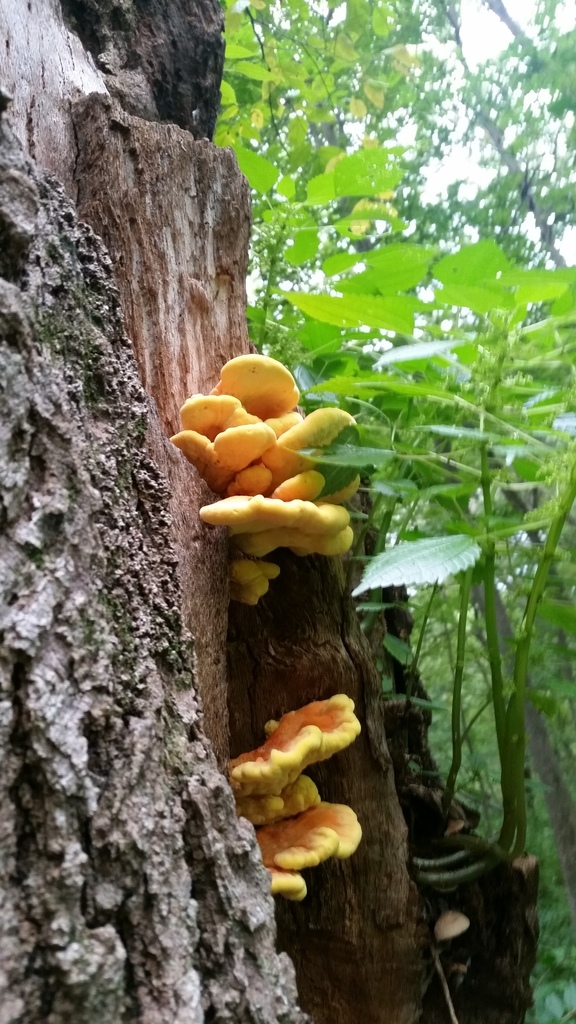
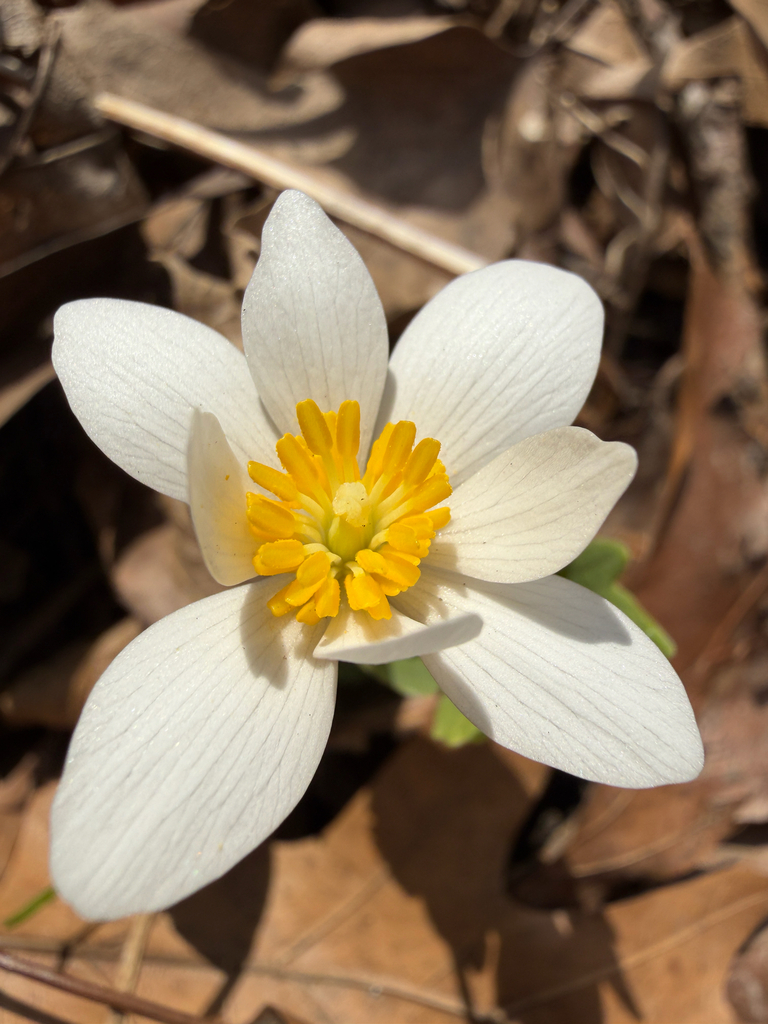
A 40-acre remnant of upland forest inside the Des Moines city limits, donated by the Strasser family and dedicated as a biological state preserve in 1982. A single half-mile trail winds through hilly woods known for spring wildflowers, so this is an after-work walk rather than a day trip. Mushroom hunting is expressly allowed, and the Fourmile Creek Greenway trail runs along its eastern edge. There are no facilities beyond a small parking area at the end of a residential street.
Walnut Woods State Park
A flat, easy bottomland forest along the Raccoon River in West Des Moines, home to Iowa's largest stand of black walnut trees and a 1930s CCC-era lodge. Two-plus miles of level trail, a bird blind, and river access for fishing and canoeing make it the least strenuous state park near the city. It has an all-electric campground, and the Great Western Trail starts three miles away. Being floodplain, the trails flood now and then and stay muddy afterward.
Lake Ahquabi State Park
A wooded state park south of Indianola built around a 115-acre no-wake lake, with more than six miles of trail including a loop around the water. The Civilian Conservation Corps built its dam, lodge and bathhouse in the 1930s, and paddleboats, canoes and kayaks rent at the beach in season. It is more of a recreation park than a pure preserve, with a swim beach and a lakeshore campground. It shares a road with the Annett Nature Center, which makes a two-stop day easy.
Pammel Park
One of Iowa's first state parks, dedicated in 1928 and run by Madison County since 1989, built around a limestone ridge called the backbone that the Middle River wraps around. Nearly five miles of trail in three separate systems work the woodland and river bottom, with some steep climbs back up. The park road runs through the Harmon Tunnel, a passage cut through the ridge, and there is a canoe and kayak access at the river ford. It also has a modern campground and two yurt cabins.
Annett Nature Center and Park
Warren County Conservation's home base: 160 acres of forest, prairie planting, a six-acre pond and a ten-acre wetland south of Indianola, with a seven-mile trail network packed into it. The main trail drops from the nature center through woods and wetland to a 30-foot observation tower. The center has live native animal displays, the pond is open to kayaks and anglers, and 25 geocaches are hidden along the trails. The building keeps weekday office hours, but the park is open sunrise to sunset.
Thomas Mitchell Park
The small, quiet one east of the metro near Mitchellville: 197 acres along Camp Creek, with mature oak-hickory woodland full of wildflowers, mushrooms and deer around a developed core. The three named trails are each well under a mile, so this is an hour's walk rather than an afternoon. It suits a family trip, with a playground, creek access, campsites and a rental cabin. Polk County notes that the primitive campground is closed while campsites are being expanded.
Yellow Banks Park
Named for the 150-foot yellow bluffs over the Des Moines River in southeast Polk County, which is the view you come for. The Savanna Trail passes a rare stand of open oak savanna, and migrating hawks and bald eagles work this wild stretch of river. Native American artifacts and a burial mound have been found in the park. It doubles as a full recreation park with campgrounds, ball fields and boat ramps, and the trails are several short named paths rather than one long loop.
Jester Park
Polk County Conservation's flagship park on the west shore of Saylorville Lake, northwest of the city past Granger. The draw for nature lovers is the bison and elk exhibit, the Jester Park Nature Center, and birding: large flocks of pelicans and waterfowl stop on the lake during spring and fall migration. More than eight miles of trail include the 4.6-mile Lakeshore Trail, shared with horses and snowmobiles. It is also the busiest and most developed park here, with campgrounds, cabins, a golf course and an equestrian center.
Brenton Slough
The newest preserve near the city: 1,113 acres on Polk County's western edge that the county took over in 2025, the largest land purchase in its history, after the Iowa Natural Heritage Foundation raised the money. Its centerpiece is a slow, shallow slough, one of only fifteen mapped in Iowa, surrounded by oak savanna and land slated for prairie and wetland restoration. There are no roads inside and no built trails yet, only mowed service paths, so wear boots. The county warns that mapping apps will not find the parking lot on Y Avenue, and seasonal hunting is allowed.
Carney Marsh
A 43-acre wetland prairie on the south edge of Ankeny, small enough to take in from the edge. It is a seasonal birding stop for herons, yellow-headed and red-winged blackbirds, yellow-throated warblers and waterfowl, and the paved Gay Lea Wilson Trail runs right past it, so many people see it from a bike. There is no trail system of its own; this is a quick look, not an outing.
Kuehn Conservation Area
Dallas County's largest natural area, five miles north of Earlham along the South Raccoon River, west of the metro off Interstate 80. It mixes native and restored prairie with riparian and upland forest, and the trails range from easy ridge strolls to scrambles up and down the Bemis moraine, with a bird blind, two streams and views over floodplain prairie. Primitive hike-in camping and seasonal tipi programs make it the most back-country feeling site on this list. The county warns that GPS can lead you astray, so follow its written directions from the Earlham exit.
Woodland Mounds State Preserve
A wooded ridge above the South River east of Indianola, dedicated as a state preserve for the five conical burial mounds left there by the Late Woodland culture between A.D. 400 and 1100. Warren County Conservation nearly doubled it to about 340 acres of upland and bottomland forest in 2024, making it part of the largest unbroken stand of forest left in the county. A hiking trail follows the ridge top through white and red oak, hickory and basswood to the mounds, which are protected by law. It is a quiet, undeveloped site with no camping, and the whole preserve is open to hunting in season.
How we researched this
We read each site's own page from Polk County Conservation, the Iowa DNR, the U.S. Fish and Wildlife Service, and the Madison, Warren and Dallas county conservation boards, plus the Iowa Geological Survey and Wikipedia where an agency page gives no acreage. Every value is recorded with the sentence it came from. Trail Miles is blank where an agency lists trails one by one without a total, as at Thomas Mitchell Park and Yellow Banks Park, and Pammel Park's page states no hours. Drive times are computed by road from central Des Moines without traffic.
The set covers preserves, refuges and nature-focused parks within about an hour's drive. We left out undeveloped state preserves such as Doolittle Prairie, which have no street address or trails to compare, Engeldinger Marsh, which is part of the Chichaqua complex, and Big Creek State Park, which centers on a swimming beach and boating lake. Hours, closures and campground status change often, so confirm with the managing agency before you go.