Wildlife Viewing in South Florida
Nineteen South Florida wildlife spots compared on admission, hours, habitat and wildlife, from Shark Valley and Corkscrew Swamp to Manatee Lagoon. Read our take
At a glance
| Option | Address | Admission | Managed By | Size | Hours | Habitat | Wildlife Highlights | Ways to Explore |
|---|---|---|---|---|---|---|---|---|
| 36000 SW 8th St, Miami, FL 33194source | Fee requiredsource | National Park Servicesource | Daily, 8:30 a.m. to 6 p.m. (vehicle access)source | Freshwater marshsource | Wading birds, Wood storks, Roseate spoonbillssource | Biking, Walking trail, Tram toursource | ||
| 40001 State Road 9336, Homestead, FL 33034source | Fee requiredsource | National Park Servicesource | Open 24 hours (main entrance)source | Freshwater marshsource | Alligators, Wading birdssource | Walking trailsource | ||
| 815 Oyster Bar Ln, Everglades City, FL 34139source | Fee requiredsource | National Park Servicesource | Visitor center daily, 9 a.m. to 5 p.m.source | Mangrove coastsource | Wading birds, Frigatebirdssource | Boat toursource | ||
| 33100 Tamiami Trail E, Ochopee, FL 34141source | Freesource | National Park Servicesource | 728,379source | Open 24 hourssource | Cypress swampsource | Wood storks, Roseate spoonbillssource | Wildlife drivesource | |
| 137 Coastline Dr, Copeland, FL 34137source | Freesource | Florida State Parkssource | 82,689source | Daily, 8 a.m. to sunsetsource | Cypress swampsource | Wading birds, Bald eagles, Songbirdssource | Boardwalksource | |
| 375 Sanctuary Rd W, Naples, FL 34120source | Fee requiredsource | Nonprofitsource | 13,165source | Entry 8 a.m. to 1 p.m. (May 1 to Dec. 15), 8 a.m. to 3 p.m. (Dec. 16 to April 30)source | Cypress swampsource | Wading birds, Songbirds, Raptorssource | Boardwalksource | |
| 1 Wildlife Dr, Sanibel, FL 33957source | Fee requiredsource | U.S. Fish and Wildlife Servicesource | 6,524source | Daily except Fridays (Wildlife Drive)source | Mangrove coastsource | Wading birds, Wood storks, Roseate spoonbillssource | Wildlife drive, Biking, Walking trailsource | |
| 300 Tower Rd, Naples, FL 34113source | Fee requiredsource | Other state agencysource | 88,554source | Tuesday to Saturday, 9 a.m. to 4 p.m. (learning center)source | Mangrove coastsource | Wading birds, Roseate spoonbillssource | Paddling, Boat tour, Walking trailsource | |
| 20200 Tamiami Trail E, Naples, FL 34114source | Fee requiredsource | Florida State Parkssource | 7,387source | Daily, 8 a.m. to sunsetsource | Mangrove coastsource | Manatees, Alligatorssource | Paddlingsource | |
| 10216 Lee Rd, Boynton Beach, FL 33473source | Fee requiredsource | U.S. Fish and Wildlife Servicesource | 145,188source | Daily, 5 a.m. to 10 p.m. (headquarters area)source | Freshwater marshsource | Limpkins, Roseate spoonbills, Snail kites, Wood storkssource | Boardwalk, Walking trailsource | |
| 13270 Jog Rd, Delray Beach, FL 33446source | Freesource | County or citysource | 82source | Daily, 6 a.m. to 7 p.m.source | Constructed wetlandsource | Roseate spoonbills, Wood storkssource | Boardwalksource | |
| 12800 Hagen Ranch Rd, Boynton Beach, FL 33437source | Freesource | County or citysource | 117source | Daily, 7 a.m. to sunsetsource | Constructed wetlandsource | Roseate spoonbills, Wood storkssource | Boardwalksource | |
| 1801 N Ocean Blvd, Boca Raton, FL 33432source | Freesource | County or citysource | 19source | Trail, boardwalk and tower daily 7 a.m. to sunsetsource | Tropical hammocksource | Sea turtlessource | Walking trail, Boardwalk, Observation towersource | |
| 751 Sheridan St, Hollywood, FL 33019source | Fee requiredsource | County or citysource | 1,570source | Daily, 8 a.m. to 7:30 p.m.source | Mangrove coastsource | Manateessource | Paddling, Boat toursource | |
| 9700 SW 328th St, Homestead, FL 33033source | Freesource | National Park Servicesource | Daily, 7 a.m. to 5:30 p.m.source | Mangrove coastsource | Shorebirds, Frigatebirdssource | Walking trailsource | ||
| 1200 S Crandon Blvd, Key Biscayne, FL 33149source | Fee requiredsource | Florida State Parkssource | 506source | Daily, 8 a.m. to sunsetsource | Beach and dunesource | Frigatebirds, Shorebirdssource | Walking trailsource | |
| 102601 Overseas Hwy, Key Largo, FL 33037source | Fee requiredsource | Florida State Parkssource | 63,919source | Daily, 8 a.m. to sunsetsource | Coral reefsource | Frigatebirdssource | Snorkelingsource | |
| 30587 Overseas Hwy, Big Pine Key, FL 33043source | Freesource | U.S. Fish and Wildlife Servicesource | 13,364source | Daily, sunrise to sunsetsource | Pine rocklandsource | Key deersource | Walking trailsource | |
| 6000 N Flagler Dr, West Palm Beach, FL 33407source | Freesource | 9 a.m. to 4 p.m.; daily Nov. 15 to March 31, closed Mondays April 1 to Nov. 14source | Manateessource |


Our take
For the most wildlife with the least effort, start in the Everglades: the Anhinga Trail is a 0.8-mile round trip through sawgrass marsh where alligators, anhingas and herons are the usual sightings, and Shark Valley's 15-mile loop is covered by tram, bike or on foot. If you would rather not pay, Wakodahatchee Wetlands and Green Cay Wetlands in Palm Beach County are both free and put roseate spoonbills and wood storks just off their boardwalks.
The real split in this table is how you get out among the animals. Six sites are boardwalk walks, short and easy with children, from Gumbo Limbo Nature Center's to Corkscrew Swamp Sanctuary's 2.25-mile loop. The rest ask more of you: Loop Road in Big Cypress National Preserve and the Wildlife Drive at J.N. "Ding" Darling are seen from the car, Collier-Seminole State Park and Rookery Bay are paddling country, and at John Pennekamp Coral Reef State Park most of the wildlife is on the reef, reached by snorkeling trip.
Our picks
- Best free boardwalk: Wakodahatchee Wetlands. Free, open 6 a.m. to 7 p.m., with an elevated boardwalk over a constructed wetland where roseate spoonbills and wood storks feed.
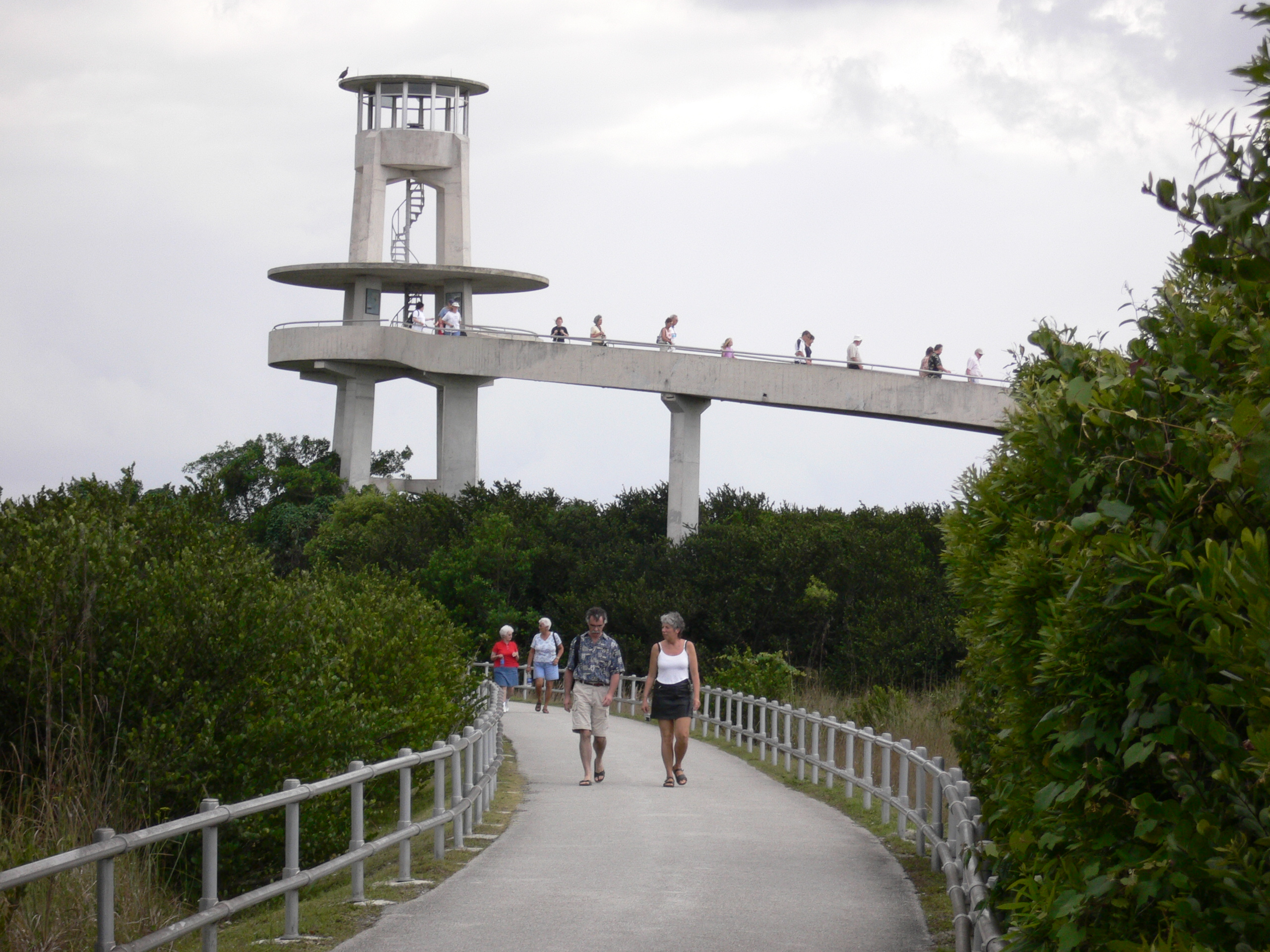
- Classic Everglades outing: Shark Valley (Everglades National Park). A 15-mile loop through freshwater marsh by tram, bike or on foot, open daily 8:30 a.m. to 6 p.m. for vehicles.
- Best at sunrise: Arthur R. Marshall Loxahatchee National Wildlife Refuge. Trails open at 5 a.m., and limpkins, snail kites and wood storks are all on its highlight list.
- Best from the car: J.N. "Ding" Darling National Wildlife Refuge. A 4-mile Wildlife Drive for $10 a vehicle through mangrove estuaries full of storks and spoonbills; closed every Friday.
- Only place for Key deer: National Key Deer Refuge. The one site here where Key deer are the highlight, free to enter and open sunrise to sunset.
Free South Florida wildlife spots versus paid ones
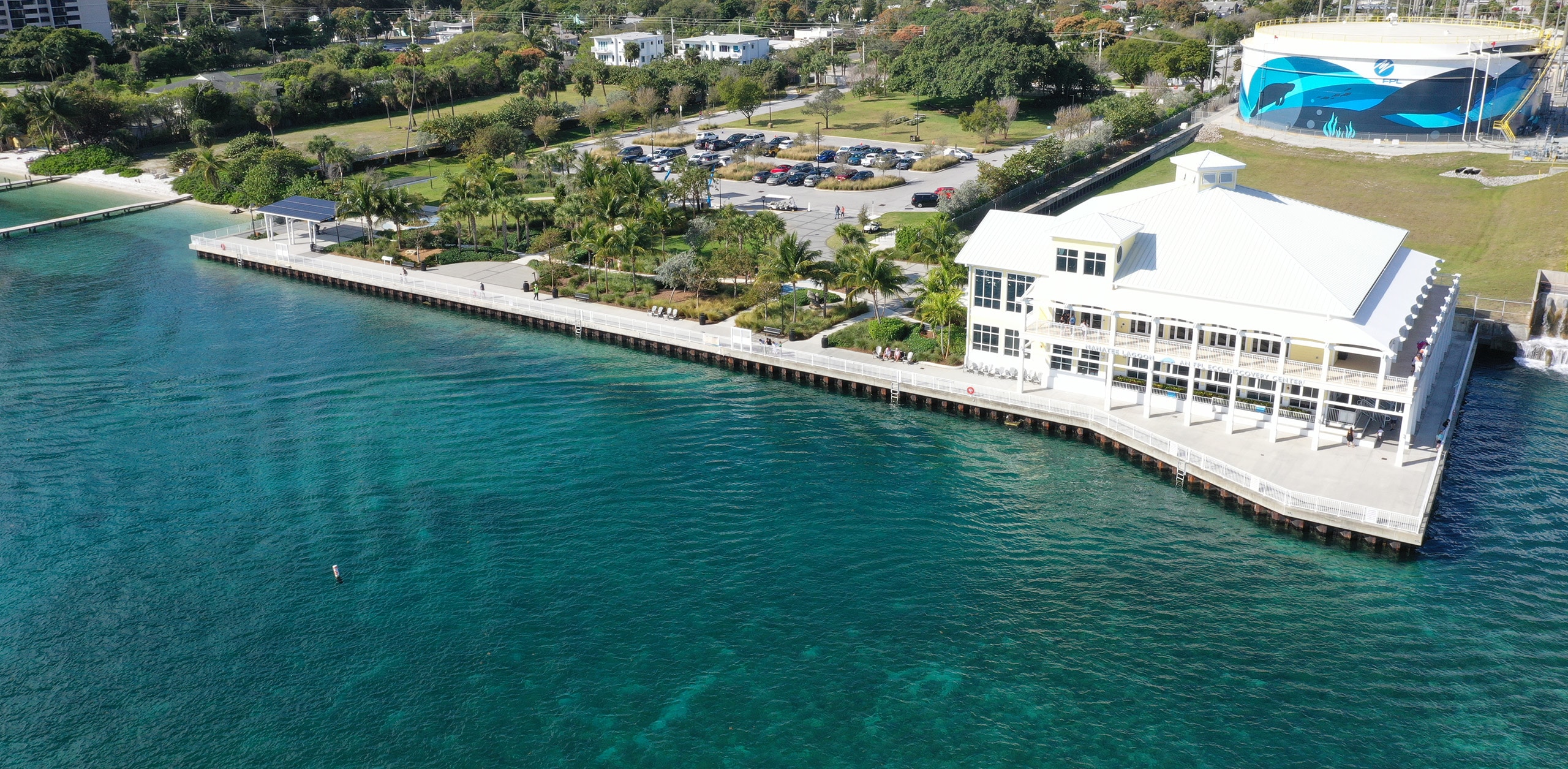
Eight sites here cost nothing to enter: Big Cypress National Preserve, the largest in the table at 728,379 acres, Fakahatchee Strand Preserve State Park, Wakodahatchee Wetlands, Green Cay Wetlands, Gumbo Limbo Nature Center, Biscayne National Park's Convoy Point, the National Key Deer Refuge and Manatee Lagoon. Wakodahatchee and Green Cay are the closest of these to the coastal cities, and Big Cypress and Fakahatchee sit side by side on the Tamiami Trail. Manatee Lagoon in West Palm Beach is the one to choose for manatees: it opens daily from Nov. 15 to March 31, when they gather in a power plant's warm outflow below its observation deck.
The fees are not charged the same way, so compare carefully. Loxahatchee and Ding Darling charge $10 per vehicle, Corkscrew Swamp Sanctuary charges $17 per adult, and one Everglades National Park entrance fee covers Shark Valley, the Anhinga Trail and the Gulf Coast. Loxahatchee requires a pass for every visitor, and its $25 annual vehicle pass pays for itself by the third visit.
Opening hours and closed days to check before you drive
A few schedules catch people out. The Wildlife Drive at Ding Darling is closed every Friday, Rookery Bay's learning center is open only Tuesday to Saturday from 9 a.m. to 4 p.m., and Corkscrew stops admitting visitors at 1 p.m. through Dec. 15 and at 3 p.m. from Dec. 16 to April 30. At the other end, Loxahatchee's trails open at 5 a.m. and Wakodahatchee's boardwalk at 6 a.m., the best hours for birds.
Shark Valley lets cars in from 8:30 a.m. to 6 p.m., and its lot fills quickly on winter mornings. The Gulf Coast visitor center in Everglades City does not sell entrance passes, so buy one online before the boat tour.
Gulf side, Atlantic side or the Keys
Seven of these sites are on the Gulf side or along the Tamiami Trail: Corkscrew Swamp, Ding Darling, Rookery Bay, Collier-Seminole, Fakahatchee, Big Cypress and the Everglades Gulf Coast. They are cypress swamp and mangrove coast, bigger and wilder, and worth a full day. The Atlantic side, from Loxahatchee, Manatee Lagoon and the Palm Beach County wetlands down to Anne Kolb Nature Center and Bill Baggs Cape Florida State Park, is closer to the cities and suits a morning visit.
The two Keys sites are their own trip: John Pennekamp in Key Largo for coral reef, and the National Key Deer Refuge on Big Pine Key for the deer and pine rockland trails.
The options in detail
Shark Valley (Everglades National Park)
The Everglades' northern entrance off the Tamiami Trail, where a 15-mile paved loop runs out across the open sawgrass to a tall observation tower. Cars stop at the parking lot, so you see it by narrated two-hour tram, rented bike or on foot, and sunset at the tower is when wading birds fly in to roost. In the busy winter season the lot fills by mid-morning, and there is almost no shade on the loop, so bring water and arrive early.
Anhinga Trail (Everglades National Park)
A short loop of pavement and boardwalk at the Royal Palm Visitor Center, four miles inside the Everglades' main Homestead entrance, and the park's most reliable spot for close views of alligators, anhingas and herons. It is under a mile round trip and wheelchair accessible, which makes it the easiest Everglades wildlife walk for families. Wildlife is most abundant in winter.
Gulf Coast and Ten Thousand Islands (Everglades National Park)
The Everglades' western door at Everglades City, opening onto the Ten Thousand Islands, a maze of mangrove islands you can only see from the water. Narrated pontoon tours run daily and paddlers can launch kayaks here, with wading birds and frigatebirds the usual sightings. The visitor center was rebuilt after two hurricanes and reopened in 2026; entrance passes are not sold on site, so buy one online first.
Big Cypress National Preserve
A vast cypress swamp and pine preserve along the Tamiami Trail, between Miami and Naples, best seen from the car on the 24-mile Loop Road or the Turner River Road. Short boardwalks at the Oasis Visitor Center, the welcome center, Kirby Storter and H.P. Williams roadside parks give close views of wading birds, and the pinelands hold rare red-cockaded woodpeckers. It costs nothing to enter, and US 41 traffic is fast, so pull fully off the road to look.
Fakahatchee Strand Preserve State Park
Florida's largest strand swamp, known for wild orchids and old-growth bald cypress. The easy way in is the half-mile Big Cypress Bend Boardwalk off US 41, with close looks at wading birds and nesting bald eagles. Panthers and black bears live here but are rarely seen, and the park's gravel scenic drive can be rough, so call ahead before taking it.
Corkscrew Swamp Sanctuary
Audubon's sanctuary northeast of Naples, built around a 2.25-mile boardwalk through the largest old-growth bald cypress forest left in North America, with trees close to 600 years old. Barred owls, wading birds and wintering painted buntings are regulars, and volunteer naturalists at the Blair Visitor Center keep a sightings log. It is the priciest ticket in this table, and last entry is early (1 p.m. in summer and fall).
J.N. "Ding" Darling National Wildlife Refuge
A mangrove refuge on Sanibel Island famous for its four-mile, one-way Wildlife Drive, where you can stop along the shoulder to watch spoonbills, storks, ibises and herons feed in the shallows. You can drive it, bike or walk it, or ride a guided tram run by Tarpon Bay Explorers. The drive is closed every Friday, and shorebirds crowd the impoundments when they are drawn down in spring and fall.
Rookery Bay National Estuarine Research Reserve
A mangrove estuary reserve at the north end of the Ten Thousand Islands, between Naples and Marco Island. Start at the Environmental Learning Center, with its aquarium and a bridge over Henderson Creek to a short trail, then see the reserve itself by boat tour or kayak, since most of it is reachable only by water. Reddish egrets and spoonbills feed in the bays. The center is closed Sundays and Mondays.
Collier-Seminole State Park
A state park south of Naples where pine flatwoods and royal palm hammock meet the mangroves of the Blackwater River. A 13.6-mile canoe trail loops through the estuary, and a short nature trail with boardwalks leads to a marsh overlook where ibises and spoonbills gather. Manatees and alligators both turn up in the river, and there is a campground for an overnight stay.
Arthur R. Marshall Loxahatchee National Wildlife Refuge
The northern remnant of the Everglades, on the western edge of Boynton Beach. A 0.4-mile boardwalk winds through a cypress swamp beside the visitor center, and the Marsh Trail follows levees around impoundments where limpkins, snail kites, wood storks and wintering waterfowl feed. Trails open at 5 a.m., early enough for sunrise, and every visitor needs an entrance pass, sold at the visitor center, at self-pay stations or online.
Wakodahatchee Wetlands
A wetland Palm Beach County built on old utility land in Delray Beach, crossed by a three-quarter-mile boardwalk that puts you within a few feet of nesting birds. Wood storks nest in the pond apple trees from February through April, and purple gallinules, limpkins and alligators are routine. It is free, but the lot fills on winter mornings with no overflow parking; nearby Green Cay is the backup.
Green Cay Wetlands and Nature Center
Wakodahatchee's bigger sibling a few minutes north in Boynton Beach: another constructed wetland, with more than a mile of boardwalk, an indoor nature center and triple the parking. Spoonbills, wood storks, bitterns and whistling ducks feed along the boardwalk, and screech owls return each year from January through May. Entry is free, and loaner binoculars are available at the center.
Gumbo Limbo Nature Center
A small city nature center on the barrier island in Boca Raton, best known for its sea turtle hospital, where you can see patients recovering before release. A boardwalk crosses a coastal hammock and mangroves to the Intracoastal, with an observation tower above the canopy, and outdoor saltwater tanks and a butterfly garden fill out the visit. Good for families with small children rather than for long walks.
Anne Kolb Nature Center at West Lake Park
Broward County's mangrove park on the Intracoastal in Hollywood. Boardwalks run through the mangroves, short trails lead to views of the waterway where shorebirds, gulls and terns gather, and canoe and kayak rentals and guided boat tours go out on the lagoons, where manatees sometimes surface. The nature center's exhibit hall charges a small fee.
Biscayne National Park: Convoy Point
The mainland headquarters of a national park that is almost all water, at the Dante Fascell Visitor Center east of Homestead. On land there is a short waterfront trail and a jetty where shorebirds, night herons and frigatebirds show up; the reefs and offshore keys, good for migrating songbirds, are reachable only by boat. Entry is free.
Bill Baggs Cape Florida State Park
The southern tip of Key Biscayne, where a beach park and the historic Cape Florida Lighthouse sit beside quiet hammock trails. It is a major stopover for migrating songbirds in spring and fall, with more than 260 species on the park list and a run of Caribbean rarities. Weekends bring beach crowds, but the nature trails stay quiet.
John Pennekamp Coral Reef State Park
A Key Largo park where most of the wildlife is underwater: shallow coral reefs reached by snorkeling trips and glass-bottom boat tours. On land, three short walking trails cross mangroves and hammock where Keys birds like the white-crowned pigeon and mangrove cuckoo turn up, and kayaks and canoes rent for 50 miles of mangrove trails.
National Key Deer Refuge
The only place to see the endangered Key deer, a tiny subspecies of white-tailed deer that lives mostly on Big Pine and No Name Keys. Short trails lead to the Blue Hole, an old quarry pond with alligators and wading birds, and through pine rockland to a wetland platform. You are likely to meet deer while driving between trails; feeding them is illegal, and the nature center opens only Wednesday through Saturday.
Manatee Lagoon
A free education center that Florida Power & Light runs beside its Riviera Beach power plant in West Palm Beach, where manatees crowd into the plant's warm-water outflow on cold winter days. You watch them from a waterfront observation deck, and indoors there are hands-on exhibits on manatees and the Lake Worth Lagoon. The best odds are from mid-November through March when the water turns cold, but the center says sightings are never guaranteed, and there is no water access for swimming or fishing.
How we researched this
We read each site's page on the Great Florida Birding and Wildlife Trail, which lists the address, managing agency, acreage, hours and species highlights in the same format for every site, and checked hours, fees and addresses against the site's own page from the National Park Service, the U.S. Fish and Wildlife Service, Audubon, Palm Beach County, Rookery Bay and the City of Boca Raton, using the site's own figure where the two differed. Every value is recorded with the sentence it came from.
The set follows the Birding Trail's South region, so it includes Southwest Florida sites such as Ding Darling and Corkscrew. Dry Tortugas, Crandon Park, the Deering Estate, Bahia Honda and Dagny Johnson Key Largo Hammock were left out as boat-only, beach-first or without a street address. Manatee Lagoon is not on the Trail; it was added from its own pages as the region's dedicated manatee viewing site, and its Managed By, Size, Habitat and Ways to Explore cells are blank because a power company runs it and its pages state none of them. Lee County Manatee Park in Fort Myers was left out because we could not reach a current county page for it. Size is blank for the three Everglades entrances and Convoy Point, where the Trail lists only the entrance area rather than the park. Hours and fees change by season and after storms, so confirm with the site before you go.