Best free photo editing software for dentists
Updated .
| Option | Paid Plan | Free Model | Runs On | Built For | Skill Level |
|---|---|---|---|---|---|
GIMP is the closest free equivalent to Photoshop, and it covers the jobs a practice actually has: cropping an intraoral series to a consistent frame, correcting the color cast that flash and retractors introduce, blurring an identifying feature before a case goes on social media, and stacking a before and an after into one image. Nothing is held back behind a paid tier, and it installs on both Windows and Mac. The cost is the interface, which reviewers describe as intimidating and dated, and Capterra's negative reviews cluster on crashes and sluggishness with large files. It is the strongest free option if someone in the practice will spend real time learning it. | Freesource | Free and open sourcesource | Installed on Windows and Macsource | Photo retouchingsource | Advancedsource |
Photopea is a Photoshop lookalike that runs in a browser tab, with the same layers, masks and selection tools, and nothing to install on a practice computer. The part that matters for patient photos is where the work happens: its own site states there are no uploads and that files never leave your device, which is a different posture from tools that process what you edit on their servers. The free version is ad supported and the paid tier mainly removes ads and adds storage rather than features. Anyone who has never used Photoshop should expect to spend time finding their way around. | $5source | Free tier with paid upgradesource | In a browsersource | Photo retouchingsource | Intermediatesource |
Paint.NET sits between Microsoft Paint and GIMP: layers, a full color wheel, unlimited undo and effects, without the density that makes GIMP hard to pick up. That makes it the practical pick for everyday front desk work, cropping and straightening a photo, drawing an arrow onto a radiograph, or blurring a face before sharing. Two limits matter. It is Windows only, so a Mac practice needs something else, and the download page steers toward a paid Microsoft Store copy, which is the same software sold as a way to support the project rather than an upgrade. | Freesource | Free, no paid tiersource | Windows onlysource | Photo retouchingsource | Intermediatesource |
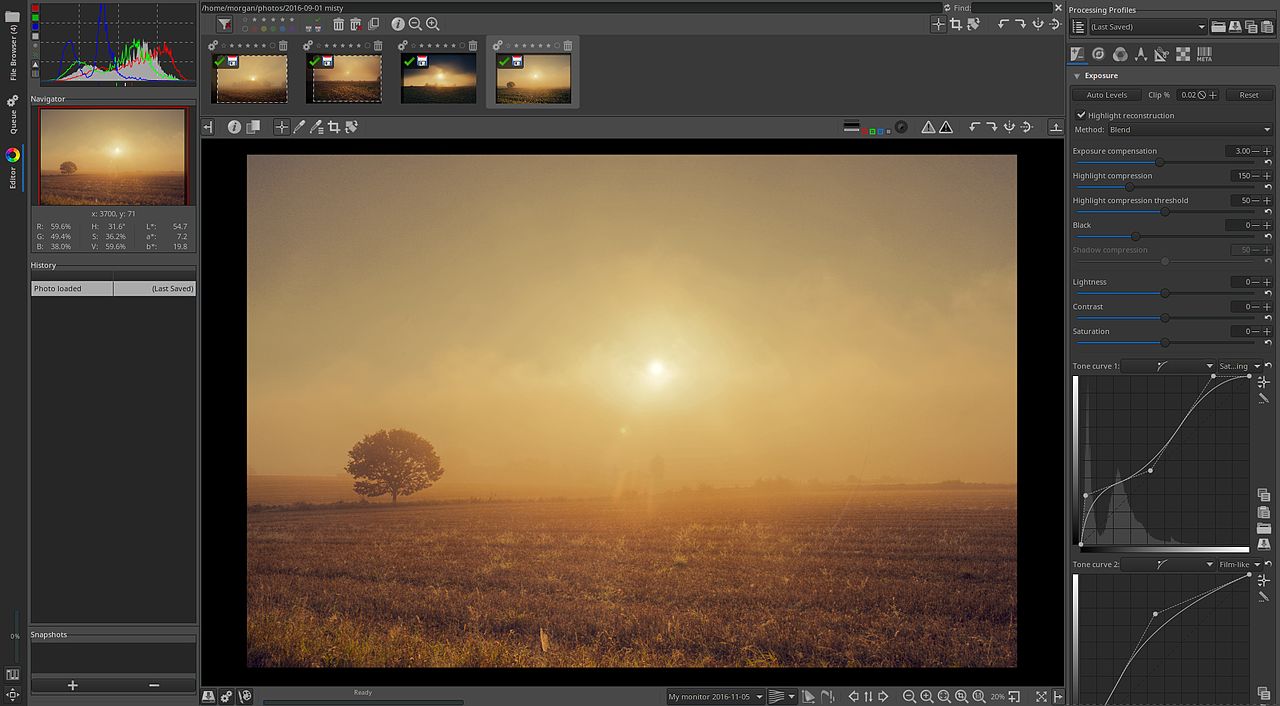
darktable is the free answer to Lightroom, built for photographers who shoot RAW and process a whole session at once. That is the shape of clinical photography: a DSLR and ring flash produce RAW files, and a full photo series needs the same white balance and exposure applied consistently to every frame rather than one image at a time. Edits are non-destructive, so the original capture is never overwritten, which suits a record you may need to keep. It is not a retouching tool, so composites and annotation still need something else, and reviewers agree the modular workflow is overwhelming to start with. | Freesource | Free and open sourcesource | Installed on Windows and Macsource | RAW processingsource | Advancedsource |
RawTherapee is the other serious free RAW processor, and it leans further toward manual control than darktable, with detailed demosaicing, sharpening and color management settings and no presets or guided edits to fall back on. It is the right tool for a practice that wants precise, repeatable color out of its clinical camera and has someone who enjoys that level of control. It does no layer based compositing at all, so before and after collages belong elsewhere, and reviewers are blunt that the interface is overwhelming at first sight. | Freesource | Free and open sourcesource | Installed on Windows and Macsource | RAW processingsource | Advancedsource |
Canva is a design tool rather than a photo editor, and it is the one most practices already use for the marketing side: before and after posts, new patient handouts and recall reminders, built from templates instead of from scratch. Its photo editing is deliberately shallow, covering cropping, filters, background removal and a blur or pixelate effect, which is enough to mask a patient's eyes but not to retouch a clinical image. The free plan is a permanent tier rather than a trial, and premium templates and elements stay watermarked until you pay. Everything you upload goes to Canva's servers, which is worth a thought before patient photos go into it. | $18source | Free tier with paid upgradesource | In a browsersource | Design and templatessource | Beginnersource |
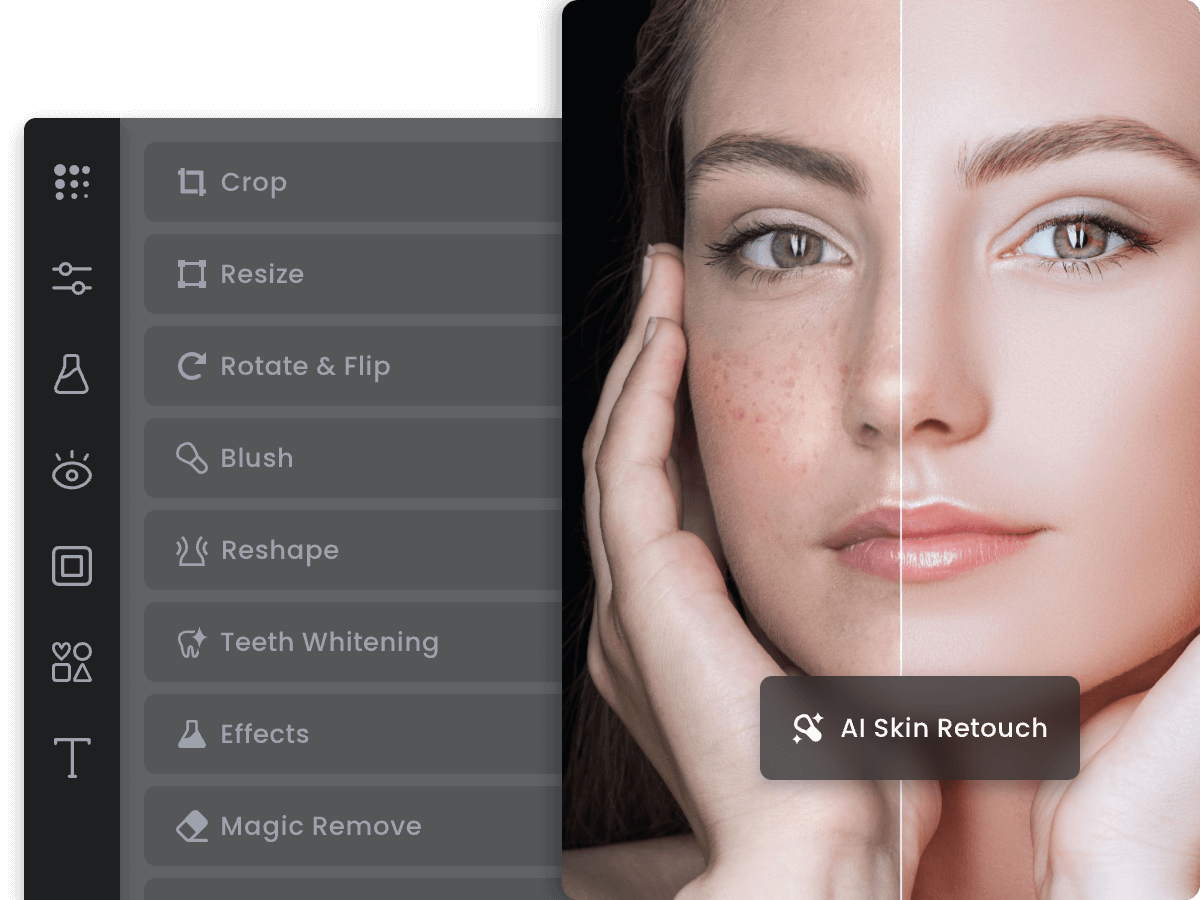
Fotor is aimed squarely at people who want a decent result without learning anything: one click fixes for brightness, background blur and skin smoothing, plus collage layouts and social templates, in a browser or a desktop app. The catch is the one that matters most for a practice. Its own pricing page lists watermarked JPG, PNG and PDF exports under the free plan, so anything you actually publish needs the paid tier. Treat the free version as a place to try the tool rather than a way to produce finished marketing. | $8.99source | Free tier with paid upgradesource | In a browsersource | Design and templatessource | Beginnersource |
Adobe Express is Adobe's template driven design tool, built for people who are not designers, and its free tier is genuinely usable rather than a teaser: a large template library, Adobe Fonts, stock assets, standard photo editing and 5GB of storage, with no card required to start. For a practice it is the closest free alternative to Canva, and it exports cleanly for both social and print. It is not a clinical editing tool, and the generative features Adobe markets hardest are metered by credits on the free plan. | $9.99source | Free tier with paid upgradesource | In a browsersource | Design and templatessource | Beginnersource |
BeFunky earns its place on one feature: the Collage Wizard builds a layout from the photos you upload, which is the shortest path from a pair of clinical shots to a publishable before and after. A photo editor and a template based graphic designer sit alongside it, all in the browser, with a mobile app for phone photos. Free accounts get basic editing and a limited set of collage layouts, and reviewers note that exports on the free plan carry a watermark, so the finished post usually needs the paid tier. | $11.99source | Free tier with paid upgradesource | In a browsersource | Design and templatessource | Beginnersource |
Pixlr splits itself in two, which is useful in a practice with mixed skill levels: Pixlr X for straightforward edits and Pixlr E for layer based work closer to Photoshop, both in the same browser tab. You can start without an account, and the interface scales down to a tablet or a phone, so an assistant can crop a photo on the device that took it. The free tier is ad supported and its AI tools run on a credit allowance, so regular use pushes toward a paid plan. | $2.49source | Free tier with paid upgradesource | In a browsersource | Photo retouchingsource | Beginnersource |
Snapseed is Google's free phone editor, and it is free in the strict sense: no ads, no subscription and no in-app purchases. On a phone it is unusually capable, with selective adjustments, healing to remove a distraction, and perspective correction for a shot taken at an awkward angle, which suits practices that photograph with a phone rather than a clinical camera. Everything happens on the handset. The controls are gesture based, and reviewers are consistent that they are powerful but unintuitive until you have learned them. | Freesource | Free, no paid tiersource | Phone app onlysource | Quick phone editssource | Intermediatesource |