Free photo editing software for Windows
Updated .
| Option | License | Where it runs | Best for | Editing model | Opens camera RAW files | Latest release |
|---|---|---|---|---|---|---|
GIMP is the long-running free alternative people reach for when they want Photoshop-class control without paying for it: layers, masks, channels, curves, scripting, and a large plugin ecosystem. Version 3 modernised the interface and the underlying image engine, and it is still developed in the open by a volunteer team. The trade-off is the learning curve, and raw files need darktable or RawTherapee installed alongside it to open at all. | Open sourcesource | Windows desktop appsource | All-round photo editingsource | Layer-based editingsource | With an add-onsource | 2026source |
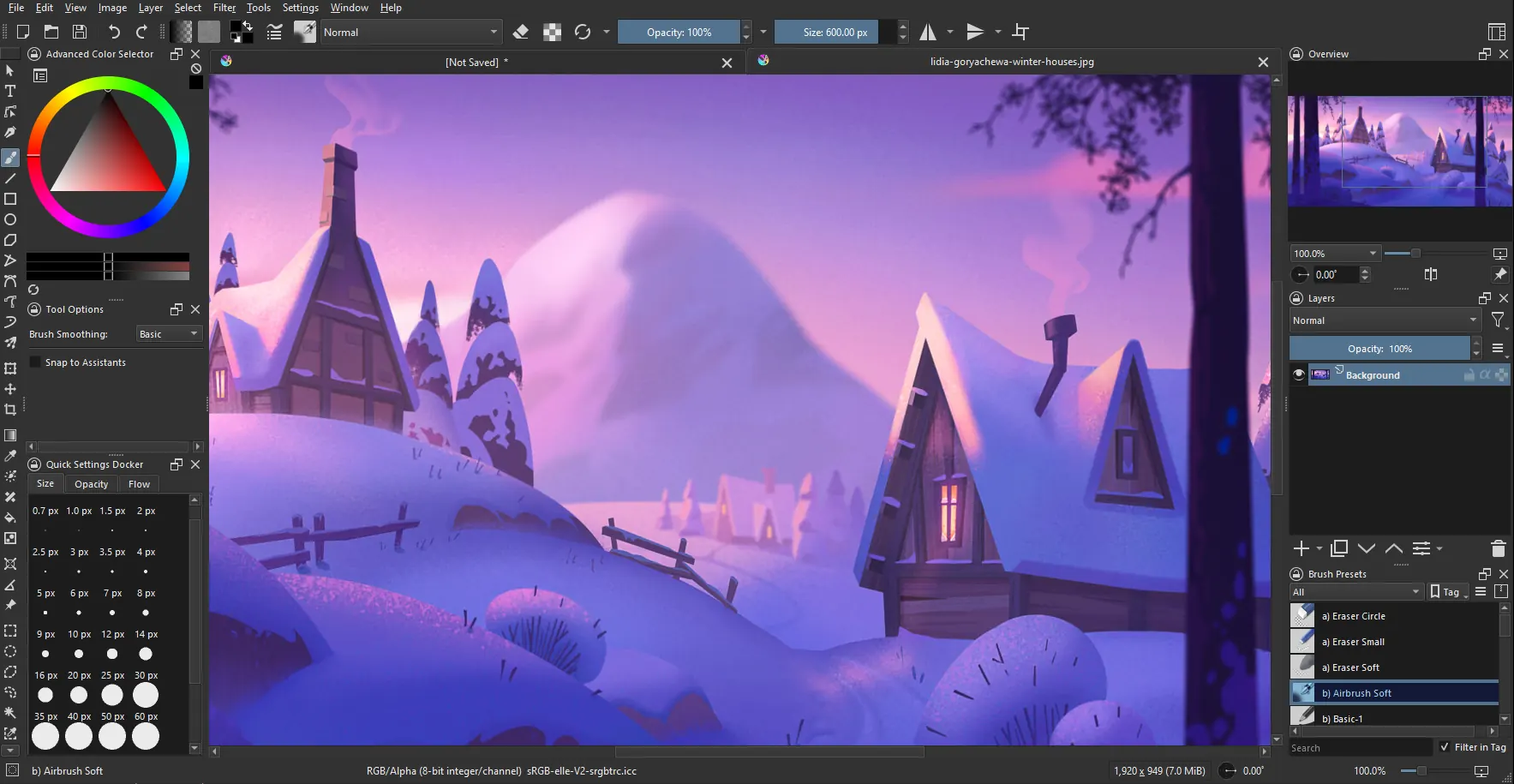
Krita is built for drawing and painting rather than photo correction, and it shows: over a hundred preloaded brushes, nine brush engines, stabilisers for shaky hands, and animation tools. It is a KDE project under the GPL, so there are no trials, accounts or upsells in the desktop build, though paid store versions exist as a way to fund development. If you mainly want to fix exposure on holiday photos this is the wrong tool; if you want to illustrate, it is the strongest free option on Windows. | Open sourcesource | Windows desktop appsource | Digital paintingsource | Layer-based editingsource | 2026source | |
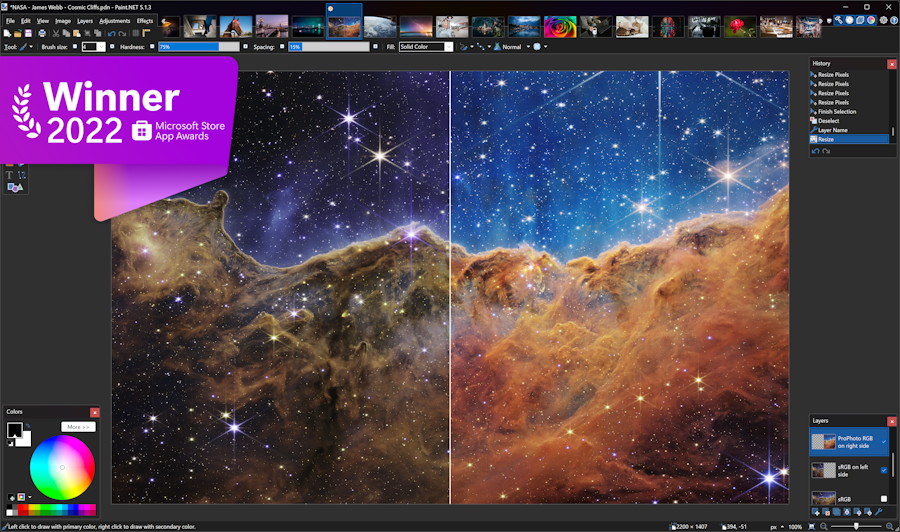
Paint.NET started as a free replacement for Microsoft Paint and grew into the middle ground between Paint and Photoshop: layers, unlimited undo, effects and a plugin community, in an interface most people can use on the first try. It is Windows-only, developed by one maintainer, and updated several times a year. The download from the project site is free; the Microsoft Store listing is a paid way to support development. | Freewaresource | Windows desktop appsource | All-round photo editingsource | Layer-based editingsource | 2026source | |
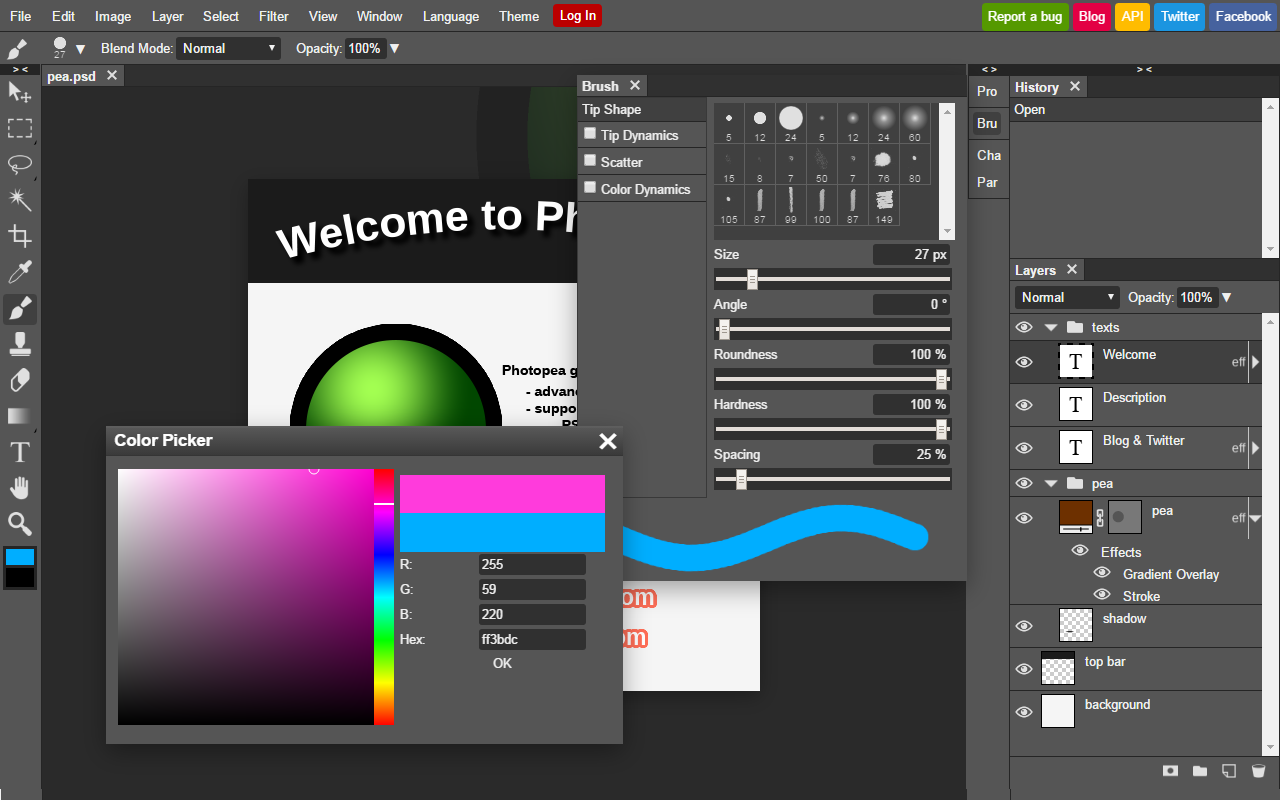
Photopea is a full Photoshop-style editor that runs entirely in a browser tab, and it is the closest thing to Photoshop you can use on a locked-down or low-spec Windows PC. It opens and saves PSD files, handles layers, masks, layer styles and smart objects, and reads camera raw formats. Files are processed on your own machine rather than uploaded, which matters if you are editing anything private. | Freewaresource | Web browsersource | All-round photo editingsource | Layer-based editingsource | Yessource | |
darktable is a raw darkroom rather than a photo editor: you import your camera files into a catalogue, then develop them through a stack of modules that never alter the original. It is the free counterpart to Lightroom, with professional colour management and GPU-accelerated processing, written by photographers for photographers. There are no layers and no compositing tools, and the module-based workflow takes real time to learn. | Open sourcesource | Windows desktop appsource | RAW photo developingsource | Non-destructive raw workflowsource | Yessource | 2026source |
RawTherapee is the other serious free raw converter, and it leans harder into image quality than into cataloguing: multiple demosaicing algorithms you can pick per image, pixel-shift compositing, dark-frame subtraction and 32-bit floating point processing. It rewards people who want to understand what each control does, and its forum and RawPedia documentation are unusually good. It has no photo library, so most people pair it with a separate browser or with digiKam. | Open sourcesource | Windows desktop appsource | RAW photo developingsource | Non-destructive raw workflowsource | Yessource | 2026source |

PhotoDemon is a full layer-based editor that needs no installation and no administrator rights: unzip it, run it from a USB stick, and you have more than 200 tools including content-aware fill, lens correction and a macro recorder. That makes it the practical answer on a work or school PC where you cannot install anything. It is a one-developer BSD-licensed project, so releases come a couple of times a year rather than constantly. | Open sourcesource | Windows desktop appsource | All-round photo editingsource | Layer-based editingsource | Yessource | 2025source |
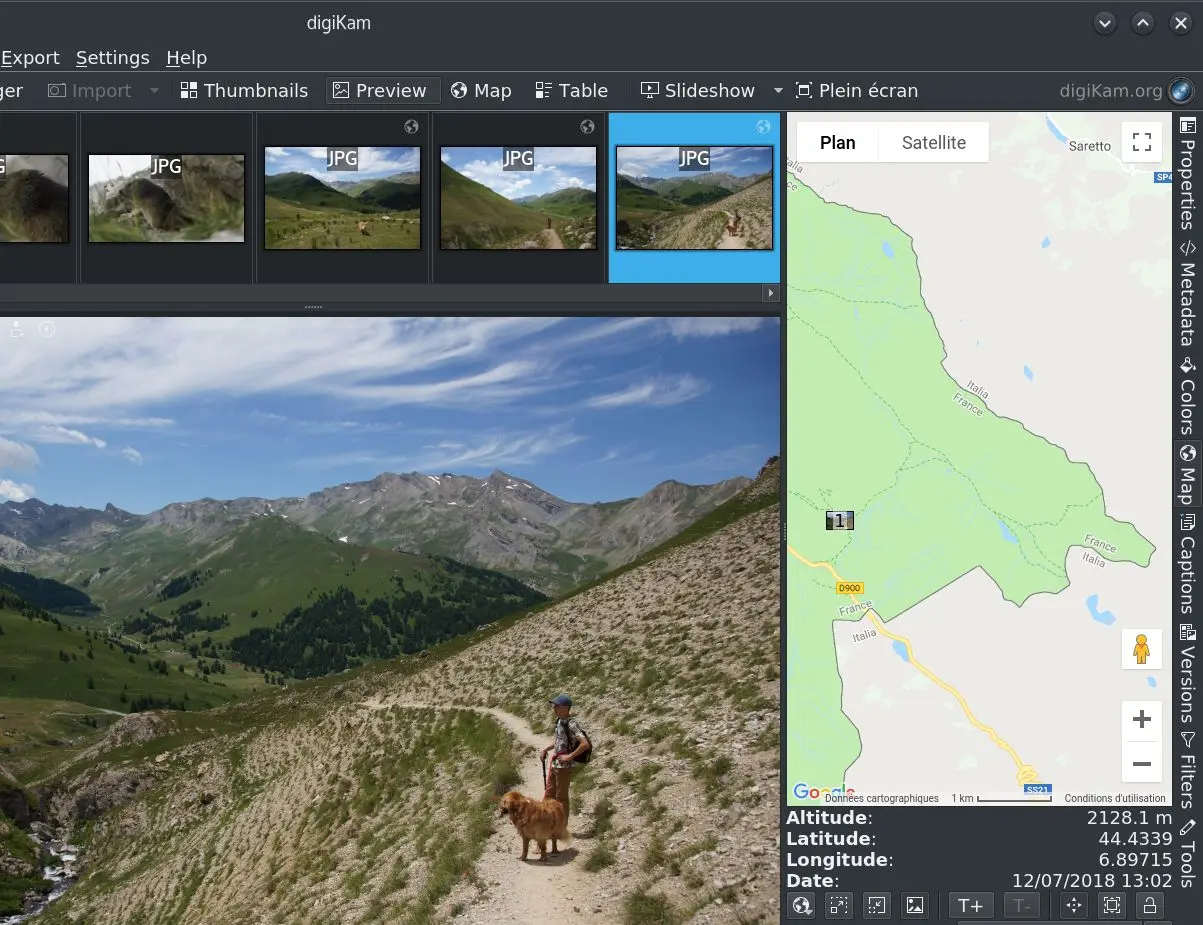
digiKam is aimed at people with a large photo collection rather than a single image to fix: albums, tags, face recognition, geolocation and search across libraries of 100,000 or more pictures, with a competent editor attached. It reads raw files natively through LibRaw and can hand them to darktable or RawTherapee for deeper work. The editing tools are basic next to GIMP, so its real job is being the shelf your photos live on. | Open sourcesource | Windows desktop appsource | Photo library managementsource | One-photo quick editssource | Yessource | 2026source |
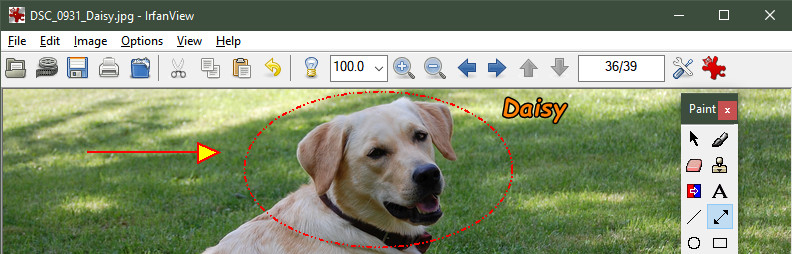
IrfanView is an 8 MB viewer that has been maintained by one person since 1996, and it is what people install when they want to flip through a folder of photos instantly and do a few things to them: crop, resize, straighten, add a watermark, convert hundreds of files at once. It is a viewer first, so there is no layer stack and no serious retouching. It is free for personal use only, and reading camera raw files needs the separate plugin pack. | Freewaresource | Windows desktop appsource | Viewing and batch convertingsource | One-photo quick editssource | With an add-onsource | 2026source |
Pixlr is a browser editor split into a simple express mode and a fuller editor with layers and masks, now heavily built around AI tools: background removal, generative fill, upscaling and image generation. You can do a lot without an account, but the free tier carries ads and limits the AI credits, and the paid plans start at a couple of dollars a month. It suits quick social and marketing edits more than careful photographic work. | Free plan of a paid productsource | Web browsersource | Quick edits and filterssource | Layer-based editingsource | ||
PhotoScape X is the friendly all-in-one: viewer, one-click filters, collage and GIF maker, batch resizer, background cut-out and a screen capture tool, wrapped in an interface aimed at people who do not want to learn a photo editor. It opens raw files and covers most everyday jobs without cost. The catch is that a good number of the filters and tools are reserved for the paid Pro version, and it needs Windows 10 or later. | Free plan of a paid productsource | Windows desktop appsource | All-round photo editingsource | One-photo quick editssource | Yessource | |
Microsoft Photos is already on the machine, which is why it belongs on this list: it is the gallery Windows opens pictures with, and it now carries genuine editing tools including crop, adjustments, background blur and a generative erase powered by Microsoft Designer. It pulls in OneDrive and, on Windows 11, iCloud libraries. There is no layer stack and little manual control, and camera raw files only open once you add the free Raw Image Extension. | Freewaresource | Windows desktop appsource | Photo library managementsource | With an add-onsource | 2026source |