Best Podcast Hosting for Mac
Buzzsprout is the host most often recommended to first-timers: $18 a month for 6 hours of uploads, with a free plan to test on. If you would rather never watch a meter, Castos charges a flat $19 for unlimited podcasts, downloads and episodes. These hosts run in the browser, so being on a Mac changes nothing about the choice; price and plan limits do.
The prices bunch together, 10 of 13 between $12 and $20, and they hide the bigger difference. Buzzsprout, Libsyn and Blubrry charge by the hours you upload, Transistor, Captivate and Simplecast by how often you are downloaded, Podbean by storage, and six hosts cap none of those. A daily talk show and a popular monthly interview show should land on opposite sides of that line.
Our picks
- Cheapest plan with no meter: Fireside. $9 a month for unlimited episodes on one podcast, at the cost of a custom domain and anything beyond basic metrics.
- A free plan you can stay on: RSS.com. Unlimited episodes and audio, a website, analytics and listener donations without paying anything.
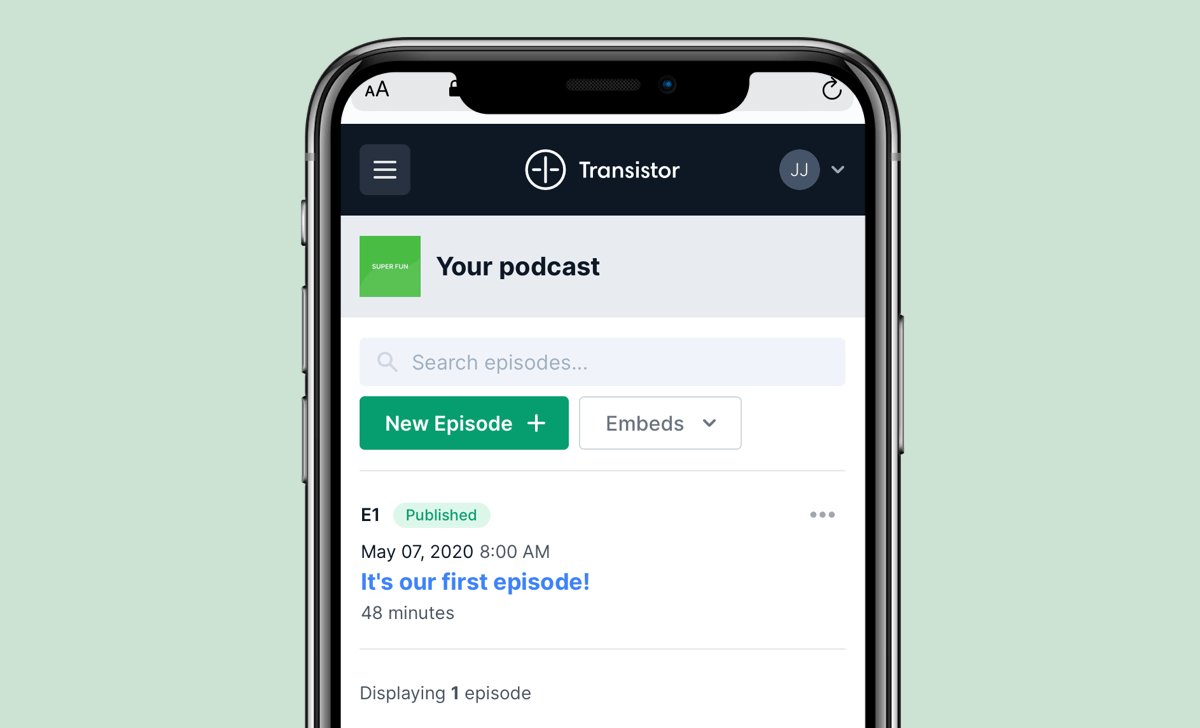
- Several shows on one bill: Transistor. Even the $19 entry plan carries unlimited shows and unlimited collaborators, metered only at 20,000 downloads a month.
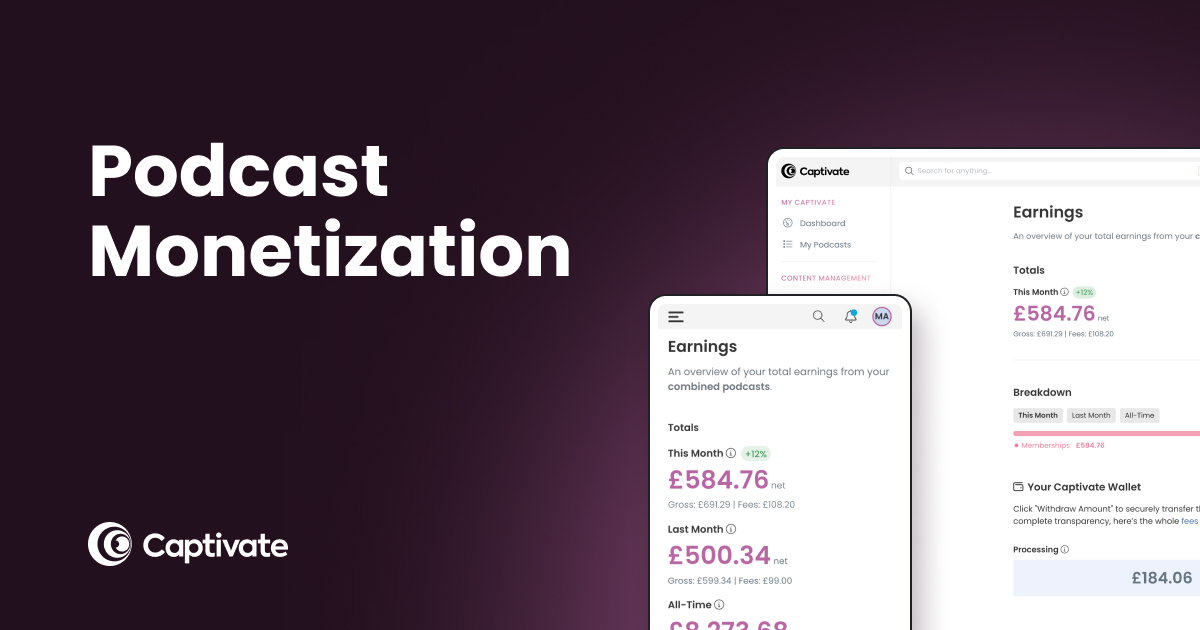
- Most downloads on a metered plan: Captivate. 30,000 downloads a month on the $19 entry plan, plus a 30-day trial long enough to publish a few real episodes.
- Private or members-only feed: Castos. Private feeds are included up to 100 subscribers, and it maintains the Seriously Simple Podcasting plugin for WordPress sites.
At a glance
| Option | Starting price | Free option | Entry plan limit | What's capped | Ways to earn |
|---|---|---|---|---|---|
| $18source | Free plan: 2 hours of uploads a month, episodes kept 90 dayssource | 6 hours of uploads a monthsource | Upload hours per monthsource | Listener supportsource | |
| $19source | 14-day free trialsource | 20,000 downloads a monthsource | Monthly downloadssource | Adssource | |
| $19source | 30-day free trialsource | 30,000 downloads a monthsource | Monthly downloadssource | ||
| $17source | Free account to startsource | 1 GB of uploads a month, about 16 hours of audiosource | Upload storage per monthsource | Adssource | |
| $19.99source | Free plan with unlimited episodessource | Unlimited episodes and audiosource | Unlimited uploads and downloadssource | Ads and listener supportsource | |
| $19source | 14-day free trial, no card requiredsource | Unlimited podcasts, downloads, and episodessource | Unlimited uploads and downloadssource | ||
| $15source | 14-day free trial, no card requiredsource | 20,000 downloads a monthsource | Monthly downloadssource | Adssource | |
| $12source | Free trial, length not statedsource | 3 hours of audio uploads a monthsource | Upload hours per monthsource | Adssource | |
| $20source | Free plan: one podcast, 6 months of statisticssource | Unlimited episodes and podcastssource | Unlimited uploads and downloadssource | Ads and listener supportsource | |
| $14.99source | Free Core plan, plus a 7-day trial of paid planssource | Unlimited hosted podcastssource | Unlimited uploads and downloadssource | Adssource | |
| $7source | 1.5 hours of uploads a monthsource | Upload hours per monthsource | Adssource | ||
| $9source | 14-day free trialsource | One podcast, unlimited episodessource | Unlimited uploads and downloadssource | ||
| $25source | Free Starter plan: 1 show, 5 episodessource | Multiple shows, unlimited episodessource | Unlimited uploads and downloadssource | Adssource |






Upload hours, storage, or downloads: what each plan meters
Upload-metered plans suit a show that records little. Blubrry's $7 plan allows 1.5 hours a month and steps up an hour at a time, Libsyn's $12 plan allows 3 hours, and Buzzsprout's $18 plan allows 6. Podbean meters storage instead, 1 GB a month for $17, which it puts at about 16 hours of audio and which fills fast with music or video.
Download-metered plans flip the math. Simplecast ($15) and Transistor ($19) stop at 20,000 downloads a month and Captivate ($19) at 30,000, however much you record. A fortnightly show with a big following hits those ceilings long before it troubles an upload cap, while a daily show with a small audience would outgrow Libsyn's 3 hours long before it neared 20,000 downloads.
Free podcast plans that last, and trials that end
Six hosts offer a free tier, but they are not equal. RSS.com lets you publish unlimited episodes for free, and Spreaker allows the same on one podcast, with six months of statistics. Acast's free Starter plan stops at five episodes, and Buzzsprout's free plan deletes episodes after 90 days, which makes it a test drive rather than a home.
Transistor, Castos, Simplecast and Fireside give 14 days, Castos and Simplecast without asking for a card, and Captivate stretches its trial to 30. Libsyn offers a trial without saying how long it lasts, and Blubrry states no free terms at all, only a button to start.
Hosts that sell ads for you, and what that costs
Acast is the most expensive entry plan here at $25 a month, and it only makes sense if you plan to sell sponsorships through its marketplace. RedCircle ($14.99) is built around its own ad marketplace: brands send offers you accept or decline at your own rates. Libsyn places ads across your back catalogue once you enroll, with no download minimum, Blubrry's ad program pays from the first episode, and Spreaker offers ads and subscriptions even on its free plan.
Watch which tier the ad tools sit on. Transistor's dynamic ad insertion comes with its $49 Professional plan, and Simplecast's campaign tools sit two tiers above its $15 Basic plan, so the entry price in the table buys hosting, not the monetization those platforms advertise.
The options in detail
Buzzsprout
The host most often recommended to first-timers, and the pricing reflects that: one flat audio plan, a genuinely usable free tier, and an interface built around getting an episode out rather than around dashboards. The catch is the upload ceiling. Six hours a month is plenty for a weekly show and tight for a daily one, and video costs more than audio on a separate plan. Free-plan episodes disappear after 90 days, so it is a trial in practice rather than a permanent home.
Transistor
Transistor prices on downloads instead of upload time, and lets even the cheapest plan carry unlimited shows and unlimited collaborators. That combination is why agencies, studios and anyone running several podcasts on one bill tend to land here. Dynamic ad insertion and auto-posting to YouTube sit on the Professional plan, so the entry tier is hosting and analytics rather than a monetization suite. A show that is downloaded a lot but publishes rarely will hit the 20,000-download ceiling sooner than an upload-metered host would charge.
Captivate
Captivate gives the most download headroom of any entry plan here, 30,000 a month, with unlimited podcasts and unlimited storage underneath it. Its pitch is growth tooling rather than bare hosting, and the 30-day trial is long enough to publish a few real episodes before deciding. Pricing is per download band, so the bill moves with your audience rather than with how much you record.
Podbean
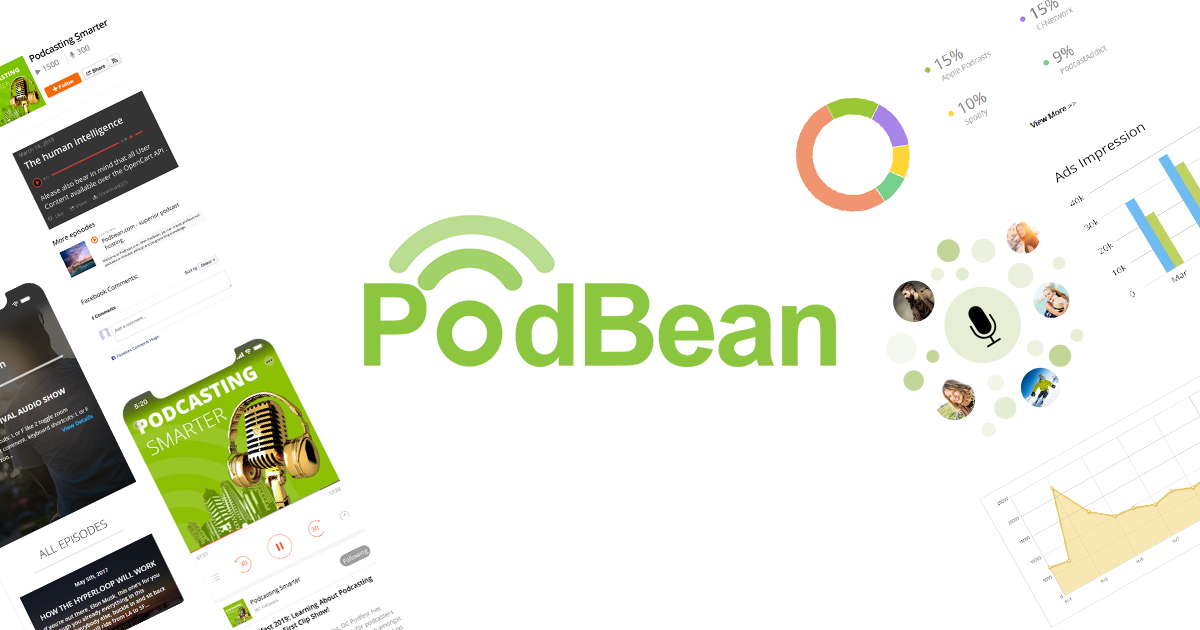
Podbean is the broadest of these platforms: hosting, a listener app with its own audience, an ads marketplace and a patron program in one account. The entry plan meters storage rather than downloads or minutes, which suits a talk show with modest file sizes and pinches a music or video podcast quickly. It is also one of the few here with a free account you can keep using, and paying yearly knocks the monthly rate down noticeably.
RSS.com
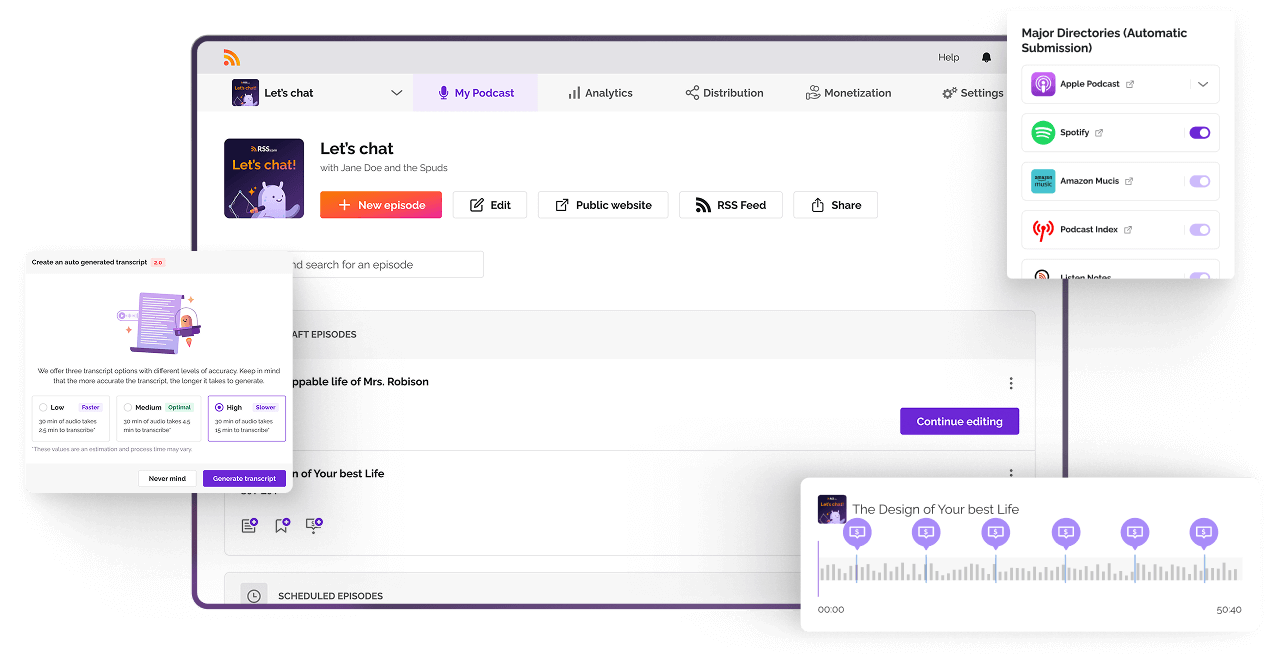
RSS.com's free tier is the most complete one on this page: unlimited episodes, unlimited audio, a website, analytics and listener donations without paying anything. Paying moves you to programmatic ads and Apple Podcasts Subscriptions rather than to more capacity. Note that the pricing page opens on the annual rate, so the headline number is lower than the month-to-month price shown here.
Castos
Castos removes the two ceilings that shape most of this table: the entry plan carries unlimited podcasts, downloads and episodes for a flat $19. It is the natural pick for WordPress publishers, since the company also maintains the Seriously Simple Podcasting plugin, and for private or member-only feeds, which are included up to 100 subscribers. Extras such as transcripts beyond ten a month and larger private audiences are priced as add-ons, so the flat rate is flatter than the final bill.
Simplecast
Simplecast is the cheapest month-to-month plan among the download-metered hosts, and it comes from the professional end of the market: it is now part of AdsWizz, and its analytics and ad tooling are aimed at networks. The Basic plan is deliberately spare, with two team members and 20,000 downloads, and the ad insertion and campaign management that make the platform distinctive sit two tiers up. Every plan starts with a two-week trial that does not ask for a card.
Libsyn
Libsyn is the oldest host on this list and still prices the old way, by how many hours of audio you upload each month, with IAB-verified stats included at every tier. Three hours a month is a real constraint for a long-form show, but video uploads are bundled in at up to 100GB regardless of the audio tier. Its advertising program is the reason many shows stay: ads are placed across your back catalogue automatically once you enroll, with no download minimum.
Spreaker
Spreaker treats monetization as the product rather than an upgrade: ads and subscriptions are offered on the free plan, and the paid tiers mostly buy you more shows, longer statistics and a smaller cut of listener support. The free plan is unusual in allowing unlimited episodes on one podcast indefinitely, which makes it a real starting point rather than a trial. The Broadcaster plan is the most expensive entry tier of the unlimited-upload hosts here.
RedCircle
RedCircle is built around its ad marketplace, where brands send offers you accept or decline at rates you set, with payouts landing in a bank account through Stripe. Hosting is effectively the on-ramp: storage, bandwidth and the number of shows are all unlimited on the paid plan, and there is a free Core plan underneath it. Podcasters who never intend to run ads are paying for a marketplace they will not use.
Blubrry
Blubrry sells hosting in small upload increments, so a fortnightly show can pay $7 a month instead of subsidising capacity it will never use, and step up an hour at a time as it grows. Downloads are unlimited at every tier and a managed WordPress site is included, which fits publishers who want the podcast to live on their own domain, and it makes the PowerPress plugin most WordPress podcasts already use. Its programmatic advertising program pays from the first episode.
Fireside
Fireside is the cheapest paid plan here at $9 a month, with unlimited episodes on one podcast and no upload or download meter to watch. What you give up at that price is spelled out plainly on the plan: no custom domain, no code injection, and basic metrics only, all of which arrive on the $19 tier. It is a fit for a single show that wants steady hosting and a website rather than an ads business.
Acast
Acast is an advertising company that also hosts podcasts, and its plans are shaped that way: a free Starter tier gets a show online with five episodes, and the paid Essential tier opens up multiple shows, unlimited episodes and sponsorship tools. At $25 a month billed monthly it is the most expensive entry plan in this comparison, which only pays off if you intend to sell ads through Acast's marketplace. Committing to a year cuts the rate substantially.
How we researched this
Starting price is the monthly rate for the cheapest paid plan when billed monthly, never the annual discount, because that is the figure you pay while deciding whether to stay. Two hosts land you on the annual number first: Buzzsprout shows $15 and RSS.com shows $15 until you switch their pages to monthly. Libsyn's plans page also carries a stray line about an $8 plan with no plan card behind it, so its row uses the $12 Basic plan the page actually lays out.
The list covers platforms sold as podcast hosting with a public monthly plan. Megaphone has no public pricing, and Descript, Riverside and Podcastle record and edit rather than host, so none of them appear. Spotify for Creators, the biggest free host, is also absent: none of its pages states a price we could point to. The Ways to earn cells for Captivate and Castos are empty because both name monetization only in their site menus, and Fireside advertises none. Hosts shuffle features between tiers, and the plan page on the day you sign up is the only reliable word on what a tier includes.