Best VPN Services for Remote Teams
For an engineering-heavy remote team, Tailscale is the usual first install: a WireGuard mesh that is free for up to six users and $8 per user a month on Standard. If you would rather hand out access one app at a time, Twingate does that for $5 per user on Teams, with a free tier for five.
Under the hood, these nine connect people in four ways. Tailscale and NetBird link devices straight to each other, Twingate and Firezone grant access resource by resource, and GoodAccess, OpenVPN CloudConnexa and Windscribe ScribeForce send traffic through the vendor's own servers, usually from a static IP you can put on an allowlist. NordLayer and Cloudflare Zero Trust wrap network access inside a larger security suite. NordLayer in particular is pitched at a non-technical company that wants one vendor and an office IP it can whitelist.
Our picks
- A team under 50 paying nothing: Cloudflare Zero Trust. The free tier is aimed at teams under 50 users and costs nothing indefinitely; past that it is $7 per user per month, billed monthly.
- Lowest paid price per seat: Firezone. $4.16 per user per month on annual billing ($5 monthly), scaling to 500 users with directory sync and conditional access.
- One fixed IP for a database allowlist: GoodAccess. A cloud gateway with a static IP in about ten minutes, at $7 per user billed annually plus $49 a month for each dedicated gateway.
- Keeping the control plane in-house: NetBird. Open source and fully self-hostable, which removes the per-seat bill; the managed Team plan is listed at 6 EUR per user per month.
At a glance
| Option | Price | Approach | Free Option | Free Plan Users |
|---|---|---|---|---|
| $8source | Mesh VPNsource | Free plansource | 6source | |
| $5source | Zero Trust Network Accesssource | Free plansource | 5source | |
| $8source | SASE platformsource | Money-back guaranteesource | ||
| $7source | Cloud VPN gatewaysource | Free trialsource | ||
| $7source | Cloud VPN gatewaysource | Free plansource | 5source | |
| $4.16source | Zero Trust Network Accesssource | Free plansource | 6source | |
| $7source | SASE platformsource | Free plansource | 50source | |
| Mesh VPNsource | Free plansource | 5source | ||
| $5source | Cloud VPN gatewaysource |



Per-app access or one static IP
The zero trust tools answer the contractor problem. Twingate lets you give an outside developer one internal dashboard and nothing else, with connectors running inside your own network so no public gateway is exposed. Firezone does the same on WireGuard and publishes its whole code on GitHub.
The static IP problem is different: a SaaS admin panel or database that accepts traffic from only one address. GoodAccess solves it with a hosted gateway, and ScribeForce offers an optional shared static IP. Tailscale can do it too, but only once you set up an exit node yourself, because each device otherwise leaves from wherever it happens to be.
The add-ons and minimums behind the seat price
Three of these charge beyond the headline. NordLayer's Core and Premium tiers require a dedicated-IP server at $40 a month, GoodAccess adds $49 a month per gateway, and CloudConnexa counts every connector as a seat, so linking three networks uses three seats before a single person signs in. NordLayer, GoodAccess and ScribeForce all require at least five seats.
Billing terms differ too. The NordLayer, GoodAccess, CloudConnexa and Firezone prices are annual-billing rates, while Tailscale, Twingate, Cloudflare and ScribeForce show a single rate. Twingate takes 15% off for yearly billing, and the device posture and deeper audit logs many buyers expect sit on its $10 Business tier, not Teams.
How big a team each free tier covers
Six of the nine let a small team start free. Cloudflare Zero Trust stretches furthest, to teams under 50. Tailscale and Firezone cover six users (Firezone allows three client devices each), while Twingate, CloudConnexa and NetBird cover five, with NetBird adding 100 machines and CloudConnexa asking for no card. GoodAccess offers a 14-day trial, NordLayer a 14-day money-back guarantee, and ScribeForce no team trial at all, though Windscribe's personal free plan gives 10GB a month to try the apps.
The options in detail
Tailscale
Tailscale builds a private mesh network between your devices with WireGuard, so a laptop talks straight to a server instead of everything hairpinning through one company gateway. It is the default pick for engineering-heavy teams because setup takes minutes and there is nothing to host: you install the client, sign in with Google or Okta, and the machines find each other. The Personal plan stays free forever for up to six users, and paid Standard is $8 per user per month with a 14-day business trial. The trade-off is that traffic leaves each device from wherever that device happens to be, so if a vendor needs to see all your staff arriving from one fixed IP address you have to designate an exit node yourself.
Twingate
Twingate is the zero trust replacement for a company VPN: instead of putting a laptop on the network, it grants access to named resources, so a contractor can reach one internal dashboard and nothing else. Connectors run inside your own network or cloud account, and there is no public gateway to expose. The Starter tier is free for up to five users, Teams is $5 per user per month, and yearly billing takes 15% off. Teams that want device posture rules and deeper audit logging end up on the $10 Business tier, which is where several of the controls buyers assume are standard actually live.
NordLayer
NordLayer is the business arm of the company behind NordVPN, sold as a secure access service edge platform: gateways in dozens of countries, device posture and threat protection, and central billing for the whole team. It suits a non-technical company that wants one vendor for staff privacy, a whitelistable office IP, and compliance paperwork, rather than an engineering team wiring up per-resource access. Entry Lite is $8 per user per month with a five-user minimum, and the Core and Premium tiers add a required dedicated-IP server at $40 a month on top of the per-seat price. There is no free plan; you get a 14-day money-back guarantee instead.
GoodAccess
GoodAccess gives a small company its own cloud gateway with a static IP in about ten minutes, which is the fastest route to the very common requirement that a database or SaaS admin panel only accept traffic from one address. The Essential plan is $7 per user per month billed annually with a five-user minimum, and each dedicated gateway is a further $49 a month, so the true bill for a ten-person team is meaningfully above the per-seat headline. Moving up to Premium buys the zero trust side of the platform: per-resource access cards, segmentation and threat blocking. There is a 14-day trial with no card required, but no ongoing free tier.
OpenVPN CloudConnexa
CloudConnexa is OpenVPN's hosted service, for teams that trust the OpenVPN protocol and their existing configs but do not want to run Access Server themselves. Pricing is per seat at $7 a month on the Essential plan, and a seat is either a person or a connector, so every network you link into the service consumes one alongside your staff. The Starter tier is genuinely free for five seats with no card, which makes it one of the easier ways to pilot a hosted VPN. If you would rather keep the server in your own rack, OpenVPN still sells the self-hosted Access Server separately.
Firezone
Firezone is open source zero trust access built on WireGuard, and the whole product is on GitHub for anyone who wants to self-host it rather than buy seats. The hosted Team plan is the cheapest paid tier in this comparison at $4.16 per user per month on annual billing ($5 monthly), and it scales to 500 users with directory sync and conditional access policies. The free Starter tier covers six users and three client devices each, which is enough to run a small startup on. It is the youngest product here, so the admin console and integrations are thinner than Twingate's or Cloudflare's.
Cloudflare Zero Trust
Cloudflare's Zero Trust plan puts staff access on the same global network that runs its CDN, combining per-application access rules, a device client, DNS filtering and browser isolation. The free tier is by far the most generous here: it is aimed at teams under 50 users and costs nothing indefinitely, which is why so many startups quietly run their internal tools behind it. Past that it is $7 per user per month with no cap, billed monthly. The catch is scope: this is a security platform with a lot of surface area, and configuring tunnels and policies well takes more networking knowledge than a five-minute mesh install.
NetBird
NetBird is the open source answer to Tailscale: a peer-to-peer WireGuard mesh with identity-based access controls, offered both as a managed cloud and as a build you run entirely on your own servers. Self-hosting is the reason most teams choose it, since it removes the per-seat bill and keeps the control plane in-house. The free cloud plan covers five users and 100 machines, and the paid Team plan is listed in euros at 6 EUR per user per month, which is why the price column here is blank rather than guessed. Running it yourself means you also own the upgrades, the identity provider wiring and the debugging.
Windscribe ScribeForce
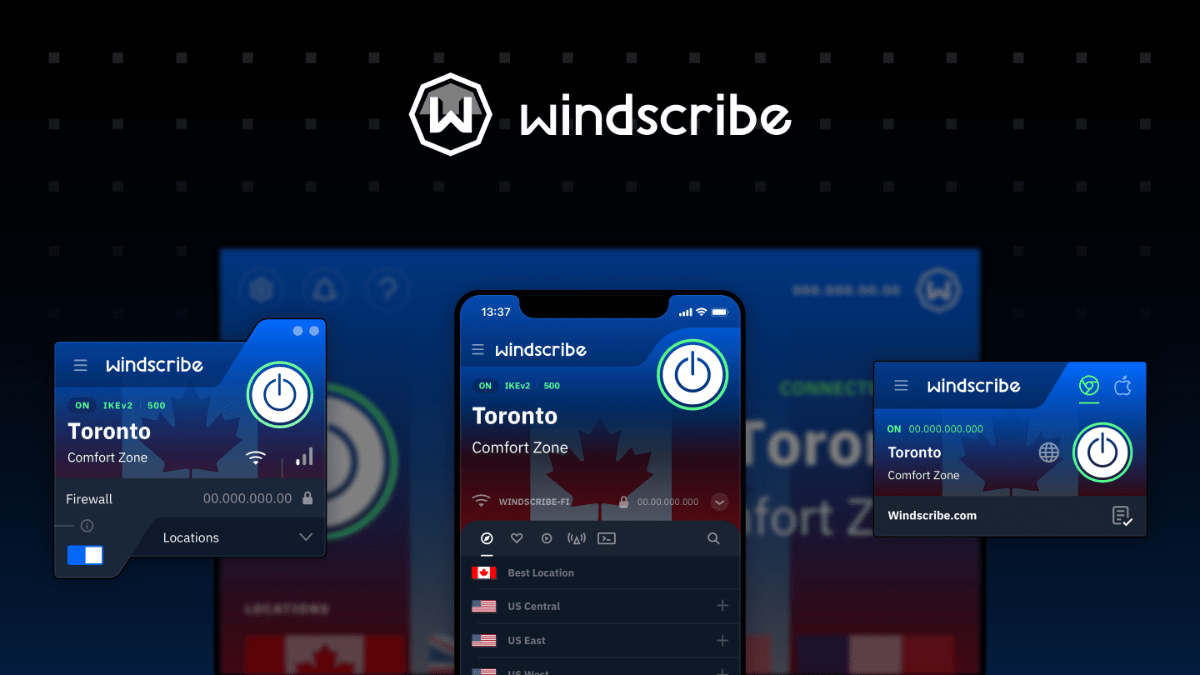
ScribeForce is Windscribe's team wrapper: every seat is an ordinary Windscribe Pro account, but one leader account pays for all of them and can add or remove seats month to month. It answers a different question from the rest of this table. Nobody is granting per-application access here; you are buying staff privacy on hotel and cafe wifi, region-locked site access, and optionally a shared static IP that the whole team can use for whitelisting. Seats are $5 per month with a minimum purchase of five, roughly half Windscribe's consumer price, and there is no free team tier or trial, though the personal free plan gives 10GB a month to test the apps first.
How we researched this
The bar for inclusion was a published number: a per-user price or a free team tier stated on the vendor's own pricing page. Proton VPN for Business and Check Point's Harmony SASE were left out because their pricing pages showed no readable figure. ZeroTier and Netmaker price per device or per connection, which would not sit in a per-user column without an invented conversion. Zscaler, Palo Alto Prisma Access, Cisco and Fortinet publish no per-user pricing and are not what a remote team of 5 to 50 buys.
Approach reflects how each vendor sells its entry plan, not a verdict on the platform: GoodAccess counts as a gateway because its $7 plan is sold as a dedicated cloud VPN with static IP, while its zero trust features belong to the $11 Premium plan. NetBird's price is empty because it is listed only in euros, and the free-plan cells are empty where a vendor offers a trial, a refund window or nothing for teams. The prices reflect each vendor's page as of September 9, 2026, and this market reshuffles tiers and annual discounts often, and the seat minimum and any gateway or IP charge are the two lines worth reading twice on a vendor's current page.