Best VPN services for startups
Updated .
| Option | Cheapest paid plan | Billed per | Free option | What's free | Dedicated IP or gateway |
|---|---|---|---|---|---|
Tailscale builds a private WireGuard network directly between your machines, so laptops, servers and CI runners reach each other without opening firewall ports or standing up a gateway. It is the easiest of these to roll out, and it counts seats rather than machines: user devices are unlimited on every plan, which suits a small team with a lot of infrastructure. The catch for a company is licensing, not price, because the free Personal plan is only for non-commercial use, so a business account starts on a 14-day trial and then $8 per user. It sells no dedicated gateway IP; the only egress add-on on the price list is Mullvad at $5 per month for every 5 devices. | $8 per user, per month (Standard plan)source | Per usersource | Free for personal use onlysource | Personal plan: $0 for up to 6 userssource | |
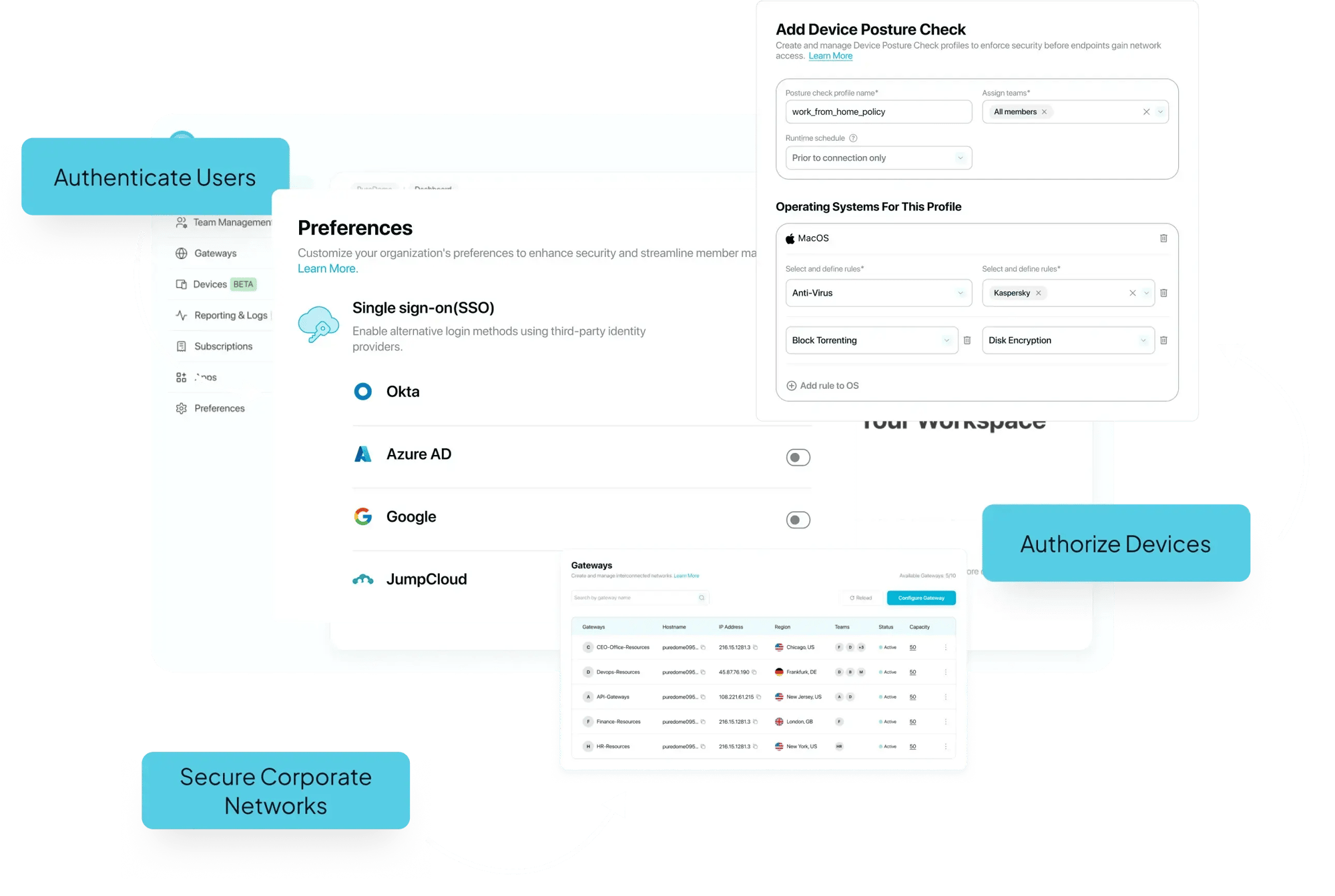
Twingate is the zero-trust option most often picked to retire a legacy VPN: instead of putting people on the network, it grants access to named resources, so a contractor can reach one database and nothing else. The free Starter tier covers up to five users, which is genuinely enough for a founding team, and the $5 Teams plan adds SSO through Google Workspace and stretches to 100 users. Growth costs money in steps: device posture integrations and SSO through Okta or Entra ID sit on the $10 Business plan. Static IPs are held back for Enterprise, so it is a poor fit if your reason for buying is a fixed address to hand a supplier. | $5 per user per month (Teams plan)source | Per usersource | Free plansource | Starter plan: up to 5 userssource | Static IPs are an Enterprise-plan featuresource |
NordLayer is the business arm of the company behind NordVPN, and it is shaped like a traditional business VPN: your team connects through virtual private gateways you configure, with threat protection bundled in. That makes it one of the straightforward answers when the goal is a fixed company IP address to allowlist, though the gateway is a real extra cost at $40 a month on top of seats. Two things bite small teams: there is no free tier at all, only a 14-day money-back window, and every plan carries a five-user minimum, so a three-person startup pays for five. The entry Lite plan is internet security only; network access control starts on the $11 Core plan. | $8 per user/month (Lite plan), five-user minimumsource | Per usersource | Money-back guaranteesource | 14-day money-back guarantee on every plansource | +$40/month for a server with a dedicated IPsource |
GoodAccess sells a dedicated cloud VPN gateway with a static IP, which is the shape most small companies actually want when a client or a payment provider asks them to connect from a known address. Setup is aimed at teams with no network engineer, and the trial is a full-featured 14 days with no card, so you can prove the IP whitelisting works before paying. Budget for the gateway as well as the seats: $49 a month per dedicated gateway on top of $7 per user, and a five-user minimum. Its Premium tier is where the zero-trust segmentation lives, so the entry plan is best read as a gateway product rather than a ZTNA one. | $7 per user / month (Essential, annual billing; $9 monthly)source | Per usersource | Free trialsource | 14-day full-featured trial, no credit card neededsource | +$49/mo per dedicated gatewaysource |
PureDome is PureVPN's business product, and it competes directly with NordLayer and GoodAccess: dedicated gateways, team IPs, and app whitelisting, sold per seat with a five-user minimum. It is the most expensive entry seat in this table, and the gateway add-on is $50 a month, so a five-person team is realistically looking at roughly ninety dollars a month before discounts. There is no free tier or trial, only a 30-day money-back guarantee, which is longer than the usual 14 days and the reason it is still worth testing. Identity provider integrations and device posture checks are held back for the $10 Professional plan. | $8.45 per user/month (Basic), minimum 5 userssource | Per usersource | Money-back guaranteesource | 30-day money-back guarantee on all planssource | +$50 per gateway/monthsource |
Firezone is an open-source zero-trust replacement for a VPN, built on WireGuard, and the company publishes the whole source so you can check what the client does. For a startup the appeal is the shape of the free tier: the Starter plan covers six users with audit logs and OIDC login included rather than paywalled, and no credit card is needed to begin. The $5 Team plan is the cheapest per-seat zero-trust option here and adds full-tunnel routing and conditional access policies up to 500 users. It has no dedicated gateway IP to buy, and directory sync with Google, Entra ID or Okta is an Enterprise feature quoted by sales. | $5 per user/month (Team plan), $4.16 billed annuallysource | Per usersource | Free plansource | Starter plan: up to 6 userssource | |
ScribeForce is Windscribe's team wrapper around its consumer VPN: one bill, a management panel, and every member on the full Pro feature set. It is the cheapest seat in this table and the odd one out in kind, because it encrypts and relocates traffic rather than controlling who can reach which internal system, so it answers privacy, public wifi and geo-restriction problems, not access control. Static IPs are bought as separate purchases and then shared across the team, which is a workable route to an allowlistable address. You can also try the product properly for nothing first: Windscribe's free account gives 10GB of data a month. | $5.00 per seat, per monthsource | Per usersource | Free plansource | 10GB of data every month on the free accountsource | Static IPs are bought separately and shared across the teamsource |
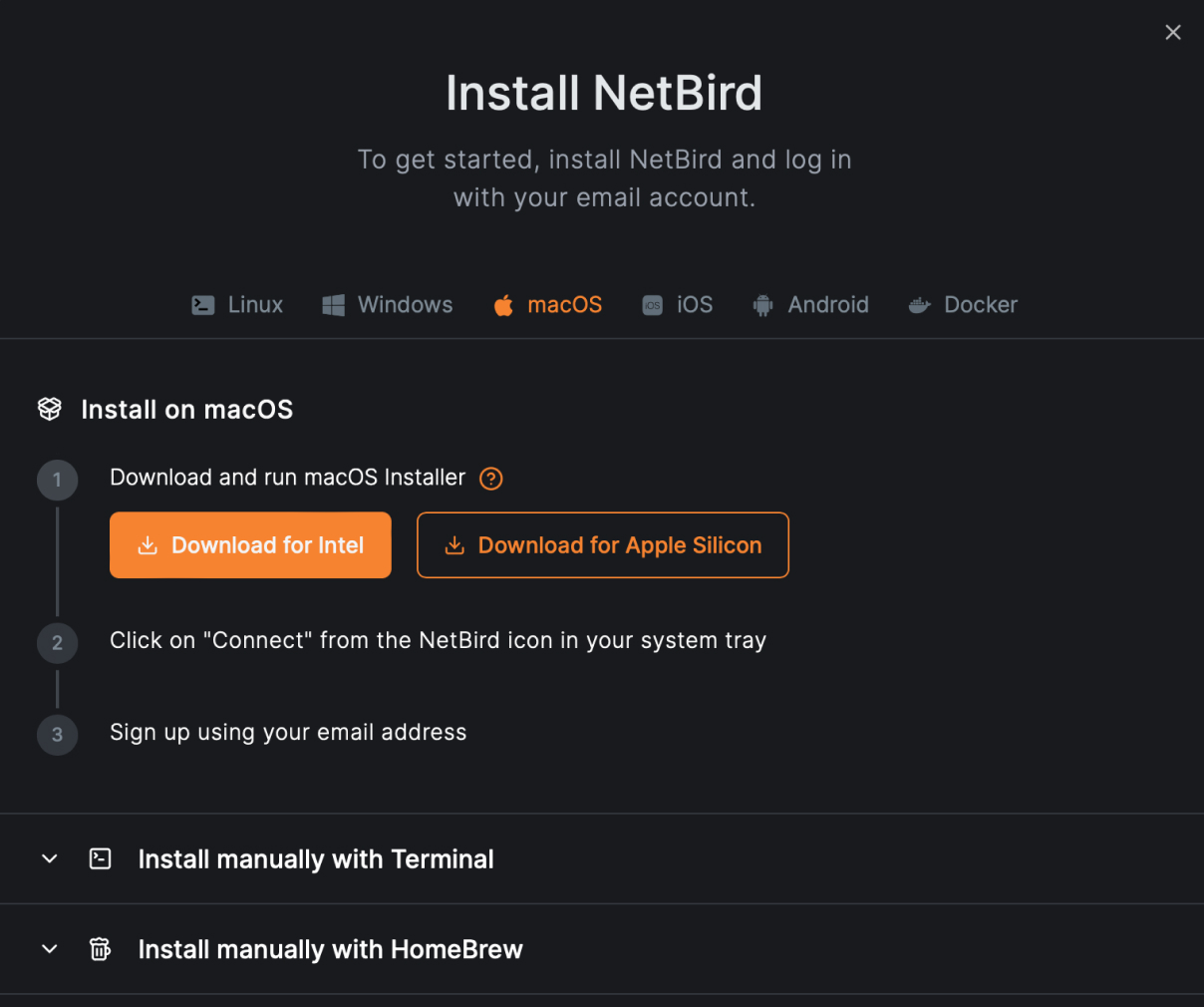
NetBird is an open-source WireGuard mesh in the same family as Tailscale, with one difference that matters to a cost-conscious team: its free tier is licensed for small teams rather than personal use, covering five users and 100 machines. Prices are quoted in euros because the company is European, so a US startup is exposed to the exchange rate. The Team plan bills only for users and machines that actually connected during the period, and enterprise SSO and SCIM provisioning arrive at that first paid tier rather than two tiers up. You can also run the whole thing on your own infrastructure, which is the usual reason teams choose it over Tailscale. | EUR 6 per user / month (Team plan)source | Per usersource | Free plansource | Free plan: up to 5 userssource | |
Access Server is the self-hosted original: you run it on your own cloud instance or hardware, which means the exit IP is whatever your server already has and no vendor sits in the path of your traffic. Pricing is the reason it reads oddly next to the rest, because it charges for simultaneous connections rather than people, so a team where everyone is connected all day pays per person in practice, while occasional users cost less. Two connections are free forever, which is enough for a founder and one server, and there is a 14-day trial above that. The trade is operational: patching, sizing and backing up the server is your job. | $7 per connection / month (Growth plan)source | Per connectionsource | Free plansource | Up to 2 connections, free foreversource | Self-hosted, so the IP is your own server'ssource |
ZeroTier thinks in machines rather than people: it creates a virtual network that devices join, which makes it the natural pick when the thing you need to connect is a fleet of servers, embedded boards or robots rather than a room of laptops. Its billing follows that idea, charging per device, so headcount is irrelevant and a two-person team with fifty machines pays far more than a fifty-person team with two. The free Personal tier is licensed for hobby use and covers ten devices on one network, and the paid Essential plan starts at $18 a month with ten devices included. It is a networking layer rather than an access-control product, so identity features are thinner than the zero-trust tools here. | $2.00 per device per month (Essential plan)source | Per devicesource | Free for personal use onlysource | Personal plan, a free entry to the platformsource | |
Defined Networking is managed Nebula, the open-source overlay network Slack built, sold as a hosted control plane with single sign-on and a web console. It has the most generous free tier here by a distance: up to 100 hosts at no cost, which covers the whole machine estate of most early startups, and the paid step is a flat dollar per host per month for unlimited hosts. Like ZeroTier it counts machines rather than seats, so it is priced for infrastructure rather than headcount. It connects hosts peer-to-peer instead of terminating traffic at a gateway, so there is no fixed company IP address to buy. | $1 per host, per month (Pro plan)source | Per devicesource | Free plansource | Free plan: up to 100 hostssource |