Wildflower Viewing Near New York in March
True wildflowers are scarce near New York in March. The one place on this list built around native wildflowers is Bowman's Hill Wildflower Preserve in New Hope, PA, where skunk cabbage and round-lobed hepatica are the March blooms and entry is $12. It is close to two hours from Manhattan, though, and its dazzling carpets of spring ephemerals don't arrive until mid-April. Most March color nearer the city is planted: snowdrops, hellebores, crocus and witch-hazel in gardens where they have spread for years.
That leaves two ways to choose. One is wild against tended: Bowman's Hill, Duke Farms and Teatown are preserves, and the other nine are gardens and arboretums. The other is how far you'll go and what you'll pay, from the four-acre Shakespeare Garden you can walk to from midtown to the New York Botanical Garden's $35 ticket in the Bronx.
Our picks
- Native wildflowers, not bulbs: Bowman's Hill Wildflower Preserve. Its own March highlights list names skunk cabbage, round-lobed hepatica and snow trillium, along roughly five miles of trail.
- Late-March daffodils at no cost: Untermyer Gardens. Over 30,000 daffodils on Daffodil Hill peak from late March into April, and entry is $0 every day.
- An hour's visit on foot from midtown: Shakespeare Garden, Central Park. Four acres below Belvedere Castle with hellebores and snowdrops in bloom, sometimes under snow.
- A Thursday visit: Wave Hill. Admission is free all day Thursday, and the Alpine House starts flowering as soon as the snow melts.
- A weekday with time for a drive: Leonard J. Buck Garden. Hellebores, winter aconite, snowdrops, crocus and dwarf netted iris, but open weekdays only through March.
At a glance
| Option | Cost to Visit | Site Type | State | Size | March Blooms | Address |
|---|---|---|---|---|---|---|
| $12source | Wildflower Preservesource | PAsource | 134source | Skunk cabbage and round-lobed hepaticasource | 1635 River Road, New Hope, PA 18938source | |
| $35source | Botanical Gardensource | NYsource | 250source | Witch-hazels, at their peak January through early Marchsource | 2900 Southern Blvd., Bronx, NY 10458source | |
| $22source | Botanical Gardensource | NYsource | 52source | Snowdrops, hellebores, winter aconite and drifts of purple crocussource | 990 Washington Avenue, Brooklyn, NY 11225source | |
| $10source | Public Gardensource | NYsource | 28source | Alpine plants flowering in the T. H. Everett Alpine Housesource | 4900 Independence Avenue, Bronx, NY 10471source | |
| Public Gardensource | NYsource | 4source | Hellebores and snowdrops, sometimes under snowsource | Shakespeare Garden, Central Park, New York, NYsource | ||
| Freesource | Public Gardensource | NYsource | Daffodil Hill, over 30,000 daffodils peaking late March into Aprilsource | 945 North Broadway, Yonkers, NY 10701source | ||
| $7source | Nature Preservesource | NYsource | 1,000source | 1600 Spring Valley Rd, Ossining, NY 10562source | ||
| Public Gardensource | NJsource | 33source | Hellebores, winter aconite, snowdrops, crocus and dwarf netted irissource | 11 Layton Road, Far Hills, NJ 07931source | ||
| Freesource | Arboretumsource | NJsource | 124source | The Beth Fisher Winter Garden, planted for winter and early-spring flowersource | 353 East Hanover Ave, Morris Township, NJ 07962source | |
| Nature Preservesource | NJsource | 2,700source | Spring ephemerals, the earliest native woodland bloomerssource | 1112 Dukes Parkway West, Hillsborough, NJ 08844source | ||
| Freesource | Botanical Gardensource | NJsource | 96source | Morris Road, Ringwood, NJ 07456source | ||
| Freesource | Arboretumsource | CTsource | 93source | 151 Brookdale Road, Stamford, CT 06903source |





Wild natives or planted bulbs
Only three rows are preserves, and they behave differently in March. Bowman's Hill has the earliest natives in bloom. Duke Farms, 2,700 acres in Somerset County, runs late-March walks to look for spring ephemerals and has nesting bald eagles besides. Teatown's famous Wildflower Island is fenced and reachable only by guided tour from April through September, so a March visit there is quiet woods and lake views rather than the island.
The gardens hold most of the documented March color. The Leonard J. Buck Garden in Far Hills, NJ may have the richest early-spring bloom of the set, with winter aconite carpeting the beds in yellow. Brooklyn Botanic Garden's signature sight is drifts of purple crocus, and the New York Botanical Garden's witch-hazels are concentrated in four of its gardens.
Early March or late March
Timing within the month changes the answer. Go early for the New York Botanical Garden, whose witch-hazels peak from January through early March, and for the crocuses that follow the Shakespeare Garden's snowdrops through Central Park in early March. Go late for Untermyer's Daffodil Hill, the first magnolias on Brooklyn's Magnolia Plaza, and the Duke Farms ephemeral walks.
Three sites are really April places with March walking. Frelinghuysen Arboretum's cherries, azaleas and rhododendrons start in April, though its Beth Fisher Winter Garden is planted for winter and early-spring flower. Bartlett Arboretum's wildflower garden names Virginia bluebells, trout lilies and mayapples, all April flowers. And Bowman's Hill itself saves its best for mid-April.
Tickets, free days and weekend closures
Four places state that entry costs nothing: Untermyer, Frelinghuysen, the New Jersey Botanical Garden at Skylands and Bartlett. Wave Hill is $10 and free on Thursdays, Teatown's $7 is a parking charge per car, and the New York Botanical Garden's $35 adult ticket rises to $39 on weekends, with a cheaper grounds-only pass sold to city residents alone. Check the calendar too: the Buck Garden is closed on weekends through March, Duke Farms closes Wednesdays, Untermyer closes on major holidays through the end of March, and Brooklyn's Eastern Parkway entrance has been closed for restoration, so use Flatbush Avenue or Washington Avenue.
The options in detail
Bowman's Hill Wildflower Preserve
The one place on this list built entirely around native wildflowers, and the one where March actually means wildflowers rather than garden bulbs. Its own March highlights list names skunk cabbage, round-lobed hepatica and snow trillium, the earliest natives in the region, along with red maple and spicebush breaking bud. Roughly five miles of trails run through woods, meadow, pond and creek habitats, so it rewards a slow walk more than a quick loop. The catch is distance: it sits above the Delaware in Bucks County, close to two hours from Manhattan, and the truly dazzling carpets of ephemerals do not arrive until mid-April.
New York Botanical Garden
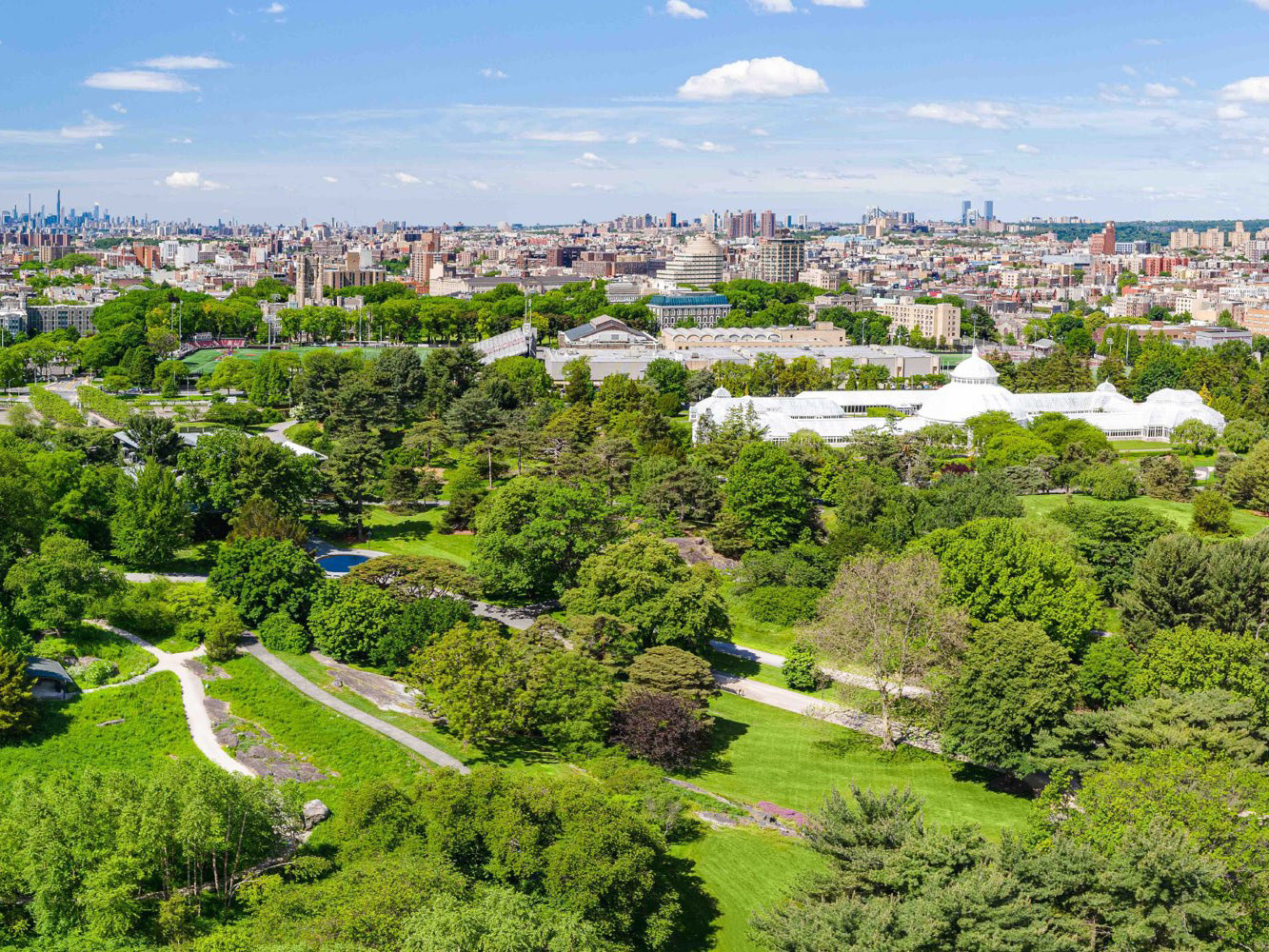
The largest and most expensive option here, and the one with the widest range of things flowering while the rest of the region is still bare. Its witch-hazel collection peaks from January through early March, concentrated in the Chilton Azalea Garden, the Home Gardening Center, the Native Plant Garden and the Burke Oak Collection, and snowdrops carpet the azalea garden understory from mid-January into March. Two things are worth knowing before you book: the $35 adult ticket rises to $39 on weekends, and a cheaper grounds-only pass exists but is sold to New York City residents alone.
Brooklyn Botanic Garden
The easiest of the big gardens to reach without a car, and the one that documents its late-winter bloom most carefully. Snowdrops and hellebores carry through the winter, winter aconite and eastern cyclamen follow, and drifts of purple crocus are the signature March sight. Pussy willows open their catkins around March in the Discovery Garden and Water Garden, and the earliest magnolias on Magnolia Plaza start in late March. At 52 acres it is a couple of hours rather than a full day, and the Eastern Parkway entrance has been closed for restoration, so enter at Flatbush Avenue or Washington Avenue.
Wave Hill
A 28-acre former estate on a bluff over the Hudson, and the best value on this list if you can go on a Thursday, when admission is free all day. In March the draw is under glass and among the rocks: alpine plants in the T. H. Everett Alpine House begin flowering as soon as the snow melts, and the Palm House in the Marco Polo Stufano Conservatory holds a refreshed display of plants at peak bloom all winter and into early spring. It is small enough to see properly in a morning, and the river views do a lot of work on a grey day.
Shakespeare Garden, Central Park
Four densely planted acres on a hillside below Belvedere Castle, given over to plants named in Shakespeare's plays and poems. It is the smallest thing on this list and the only one you can reach on foot from midtown, which makes it the sensible choice for an hour rather than a day. The Conservancy's zone gardener puts it plainly: something is blooming here every day of the year, and in the cold months that means hellebores and snowdrops, sometimes under snow. Crocuses follow through the park in early March. There are no restrooms in the garden itself.
Untermyer Gardens
A restored Gilded Age estate garden in Yonkers, free every day and open from nine in the morning, seven days a week. The reason to come in March is Daffodil Hill, where more than 30,000 daffodils cover half an acre and peak from late March into April, making this the earliest of the region's big bulb displays. The formal Walled Garden and the views down to the Hudson are worth the walk on their own. Note that the gardens close on major holidays between November and the end of March.
Teatown Lake Reservation
A thousand-acre Westchester preserve whose trails are open dawn to dusk every day of the year, with a $7 parking charge for non-members. Its famous two-acre Wildflower Island holds roughly 230 species, but it is fenced, reachable only by guided tour, and those tours run April through September, so a March visitor sees the wider preserve rather than the island. That is the honest trade here: come in March for quiet woods, lake views and the first stirrings along the wetlands, and come back in late April or May for the wildflowers the place is known for.
Leonard J. Buck Garden
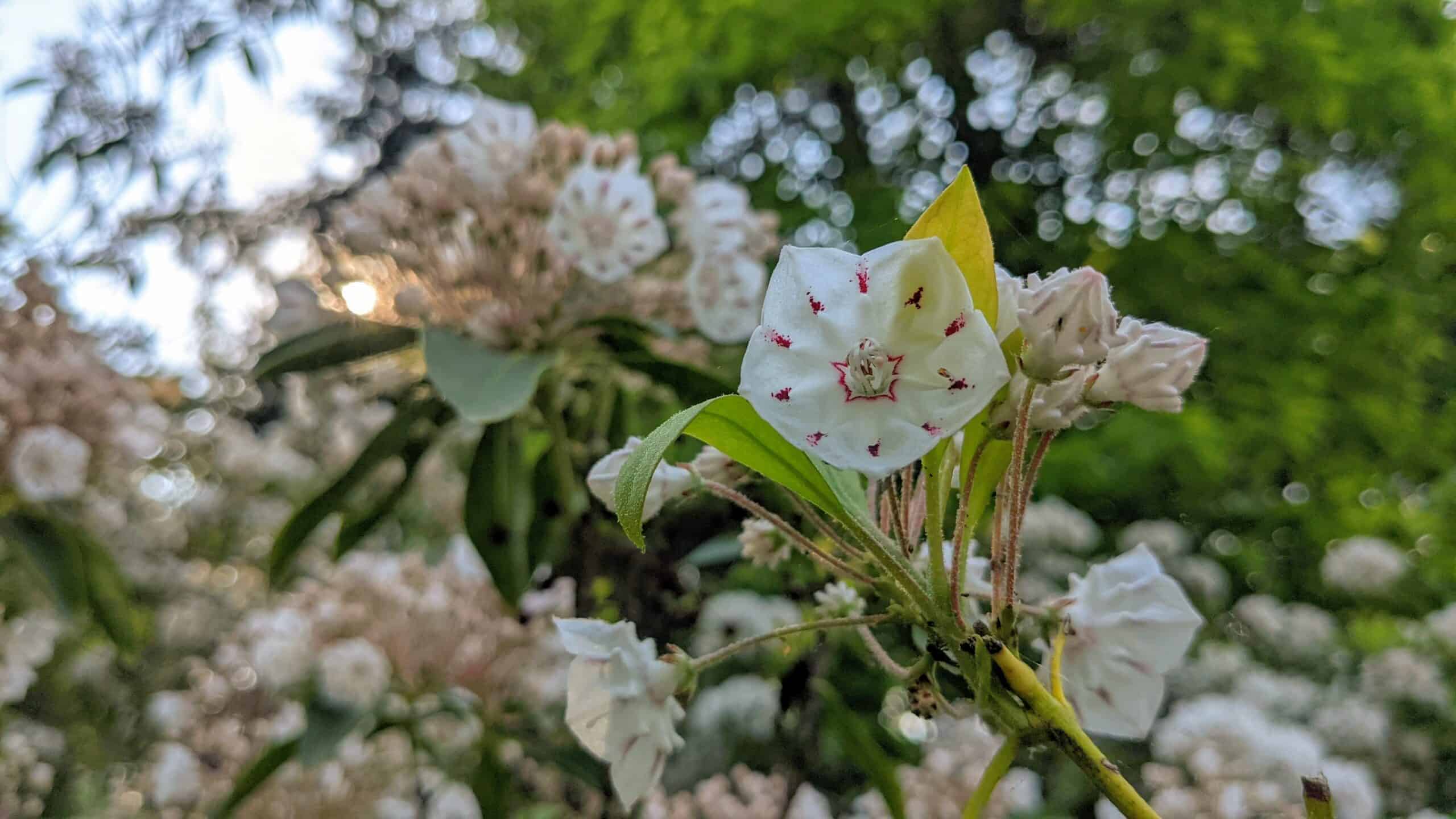
A 33-acre wooded stream valley built around natural rock outcrops, and probably the richest early-spring bloom of any garden in this set. The Park Commission's own bulb announcement lists hellebores, winter aconite, snowdrops, crocus and dwarf netted iris already flowering, with winter aconite carpeting the beds in yellow, snowdrops along the woodland edge and crocus naturalized along the Helen R. Buck Trail. Wooded trails between the outcrops are lined with wildflowers that have multiplied over decades. One real catch: through March it is open weekdays only, closed weekends and major holidays.
Frelinghuysen Arboretum
A 124-acre Morris County arboretum around a Colonial Revival mansion, free to enter and open daily from eight in the morning until dusk. The March reason to come is the Beth Fisher Winter Garden between the education center and Matilda's Cottage, planted specifically for flower, fragrance, bark and fruit through winter and early spring. The rest of the property is a mix of formal gardens, woodlands, meadows and trails with close to 2,000 specimen trees. Its showier collections, cherries and azaleas and rhododendrons, do not start until April.
Duke Farms
The biggest property on this list by a wide margin: 2,700 acres of woodland, meadow and wetland in Somerset County, with about 20 miles of trails. It is managed as a conservation landscape rather than a display garden, so what you find in March are the genuine early natives, the spring ephemerals that Duke Farms runs late-March walks to look for. Bald eagles nest here and are a draw in their own right. Two practical notes: it is closed Wednesdays, and Saturday visits from April through October need a parking pass reserved in advance.
New Jersey Botanical Garden at Skylands
Ninety-six acres of formal and naturalistic gardens inside Ringwood State Park, wrapped by a thousand acres of woodland, and free to enter every day of the year. Woodland crocus is naturalized through the garden and blooms from late winter into early spring, though the garden does not publish a March bloom list, so time your visit loosely. The Tudor-style Skylands Manor and the surrounding hills make it the most scenic setting here. The seasonal parking fee applies only on summer weekends, so a March visit costs nothing at all.
Bartlett Arboretum & Gardens
The only Connecticut option here, free to enter, and 93 acres of champion trees, red maple wetlands with boardwalks, woodland trails and wildflower meadows. Its Jane B. Heisinger Wildflower Garden packs more than 100 local native species into about a quarter acre, though its named plants, Virginia bluebells, trout lilies and mayapples, are April rather than March flowers. The English Garden begins its season with hellebores. Bartlett does not publish a March bloom list, so treat it as a walking destination first and a flower destination second.
How we researched this
The March Blooms column is the strict one here. A cell is filled only where the site itself, or its operator, ties a plant to March or to late winter and early spring. Teatown, Skylands and Bartlett publish no such statement, so those cells are blank; Bartlett's English Garden begins its season with hellebores, but the page says spring, not March. Several strong spring destinations failed the month. Mianus River Gorge keeps its trails closed until April 1, Reeves-Reed Arboretum's Daffodil Bowl is an April event, Old Westbury Gardens opens in April, Willowwood Arboretum mentions only witch hazels in winter, and Planting Fields' early-March peak is camellias under glass, a flower show rather than wildflower viewing. Greenwich Audubon Center was left out because its own pages state neither a fee nor its March flowers.
Cost to Visit is per adult except at Teatown, where the only charge is parking per car. The Shakespeare Garden, Buck Garden and Duke Farms cells are blank because none of them states an admission price in writing, and Untermyer's Size is blank because its Conservancy publishes no acreage. The Shakespeare Garden's 4 acres are a garden inside Central Park, not the park. These lists describe what each site publishes for March, and the flowers keep their own calendar, so look for a current bloom update before a long drive.