Best free time tracking apps
Updated .
| Option | Cheapest Paid Plan | Free Plan Users | Tracking Style | Billing Model |
|---|---|---|---|---|
The best-known timer-first tracker, and the one most reviewers point solo workers and small teams toward. Tracking runs from the web app, desktop and mobile apps and browser extensions, with optional background tracking you switch on per app or website, and Toggl makes a point of its anti-surveillance stance: no screenshots, no camera tracking. The catch on the free plan is that Toggl will not say how big it is, describing it only as a limited number of users, so a growing team cannot plan around it. | $9source | Manual timersource | Per user, per monthsource | |
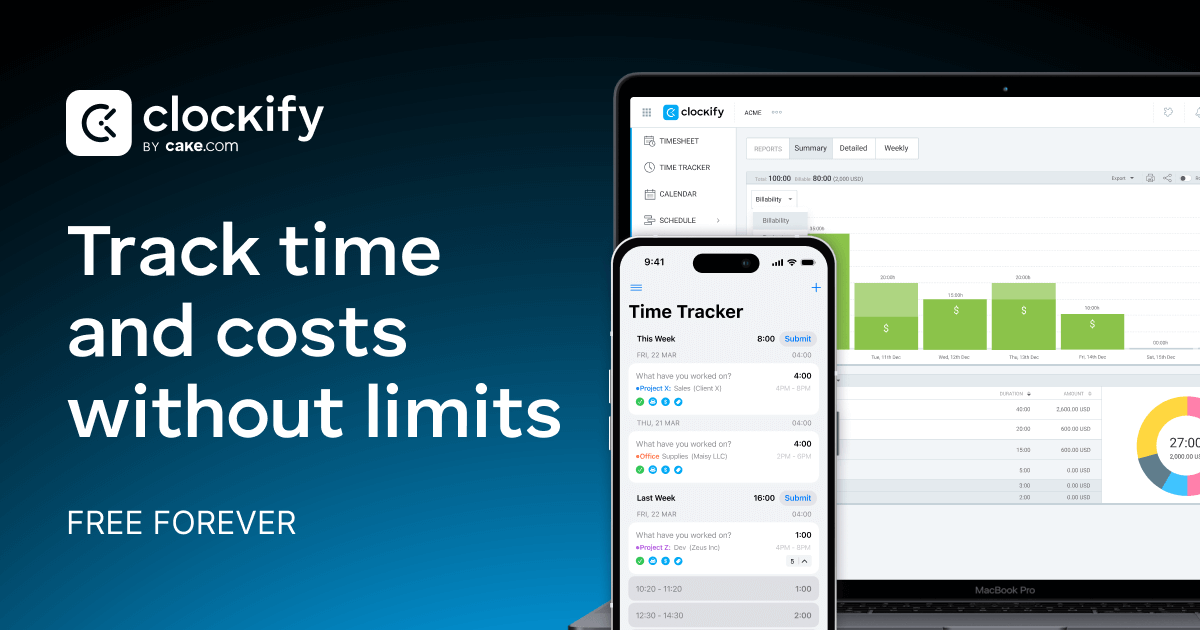
A team-oriented tracker whose free plan covers five people with unlimited tracking, a timesheet view, a kiosk mode and mobile and desktop apps. It is the most feature-dense free tier here for the money, which is none. Two limits to know before committing: reports on the free plan only reach back one month, and invoicing sits on the paid tiers rather than the free one. | $3.99source | Up to 5 userssource | Manual timersource | Per user, per monthsource |
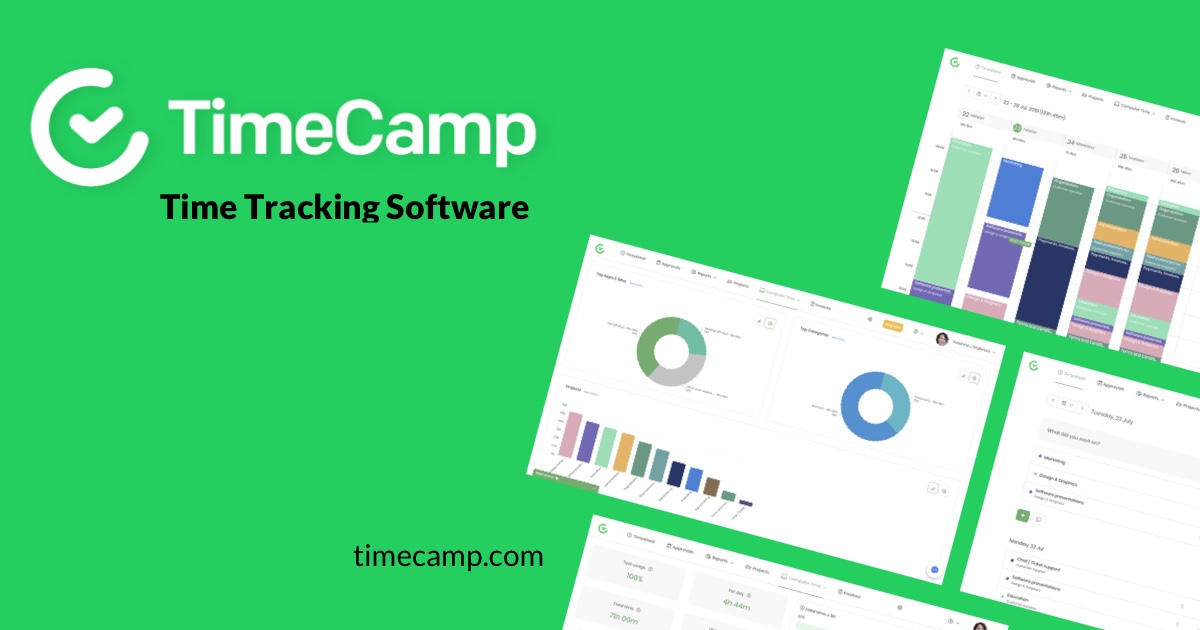
The rare free plan with no headcount limit at all: unlimited users and unlimited projects, on web, desktop and mobile. TimeCamp leans on automatic capture, recording work hands-free rather than waiting for someone to press start, which suits teams where people forget to track. Its newer AI time-entry suggestions are billed separately by token usage, so that part is not free. | $3.99source | Unlimited userssource | Automatic trackingsource | Per user, per monthsource |
Harvest is built around turning tracked hours into paid invoices, and it is the only tool here that puts invoicing and expense tracking on the free plan rather than behind an upgrade. The trade is a hard ceiling: one seat and two projects, so it is a freelancer's tool, not a team's. Tracking is a one-click timer, weekly timesheets, or entries pulled from a connected calendar. | $9source | 1 usersource | Manual timersource | Per user, per monthsource |
A project time tracker for small teams, free for five active users with unlimited projects and clients. Entry is flexible: a stopwatch when you want one, or a spreadsheet-like grid when you are filling in the week from memory. Upgrading is the cheapest step up of the team tools here, and the paid tiers add billable rates, budgets and timesheet approvals. | $4source | Up to 5 userssource | Manual timersource | Per user, per monthsource |
Everhour's pitch is tracking that lives inside the tools a team already uses, with timers started from Asana, Linear, Jira and GitHub issues. The free plan covers five seats, but it is deliberately stripped: integrations, the whole point of the product, are paid-only, and the cheapest paid plan bills a minimum of five seats whether or not you have five people. Best suited to agencies billing client work. | $8.5source | Up to 5 userssource | Manual timersource | Per user, per monthsource |
A work-management app with time tracking and invoicing attached, aimed at independent professionals. The free plan is one user, capped at one client and two projects, but within those walls the time tracking and the invoicing are both unlimited, and there are desktop and mobile apps as well as the browser. Note that the advertised entry price is a three-month promotional rate for new accounts; the standing Solo price is higher. | $9.9source | 1 usersource | Manual timersource | Per user, per monthsource |
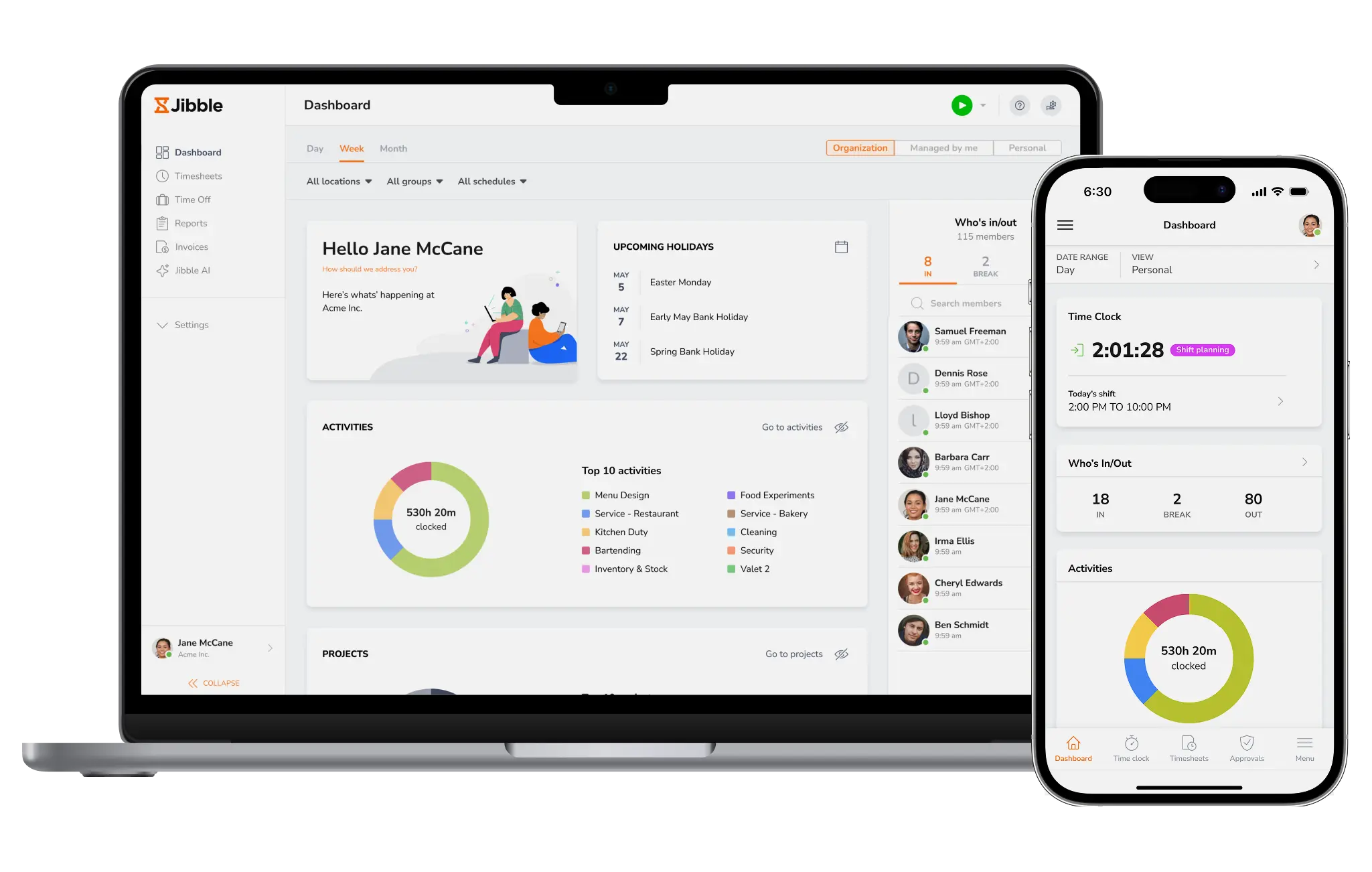
Jibble is an attendance clock rather than a project tracker: staff clock in from a phone or the web, and the hours land in timesheets meant for payroll. It is the most generous free offer in this table, unlimited users at no cost forever, with Slack, Microsoft Teams and QuickBooks integrations included. Paid tiers do exist for extras like facial recognition and GPS, but Jibble does not publish their prices on its pricing page. | Unlimited userssource | Employee time clocksource | ||
Built for shift work in shops, cafes and restaurants, where the question is who is on the clock rather than which project an hour belongs to. Staff clock in with a PIN from any phone, tablet or POS device, and hours, breaks and overtime roll into payroll-ready timesheets. The free plan is real but narrow: one location and up to ten employees, and it is priced per location rather than per person once you outgrow it. | $24source | Up to 10 userssource | Employee time clocksource | Per location, per monthsource |
A deskless-workforce app whose time clock is one hub among scheduling, forms and team chat, with GPS and geofencing so clock-ins can be tied to a job site. Its Small Business plan gives teams of ten or fewer every feature free for life, which is unusually complete for a free tier. Above ten people the pricing changes shape entirely: a flat monthly fee covering the first thirty users rather than a per-seat charge. | $29source | Up to 10 userssource | Employee time clocksource | Flat fee per teamsource |
An open-source tracker that runs on your own machine and records which apps and websites you actually used, with no timer to remember to start. Everything stays local rather than going to a vendor's servers, which is the reason most people choose it over RescueTime, and it covers Windows, macOS, Linux and Android. It is genuinely free with no tiers or limits, but it is a personal productivity tool: there is no team dashboard, no billing, and it is maintained by volunteers. | Unlimited userssource | Automatic trackingsource | No paid plansource | |
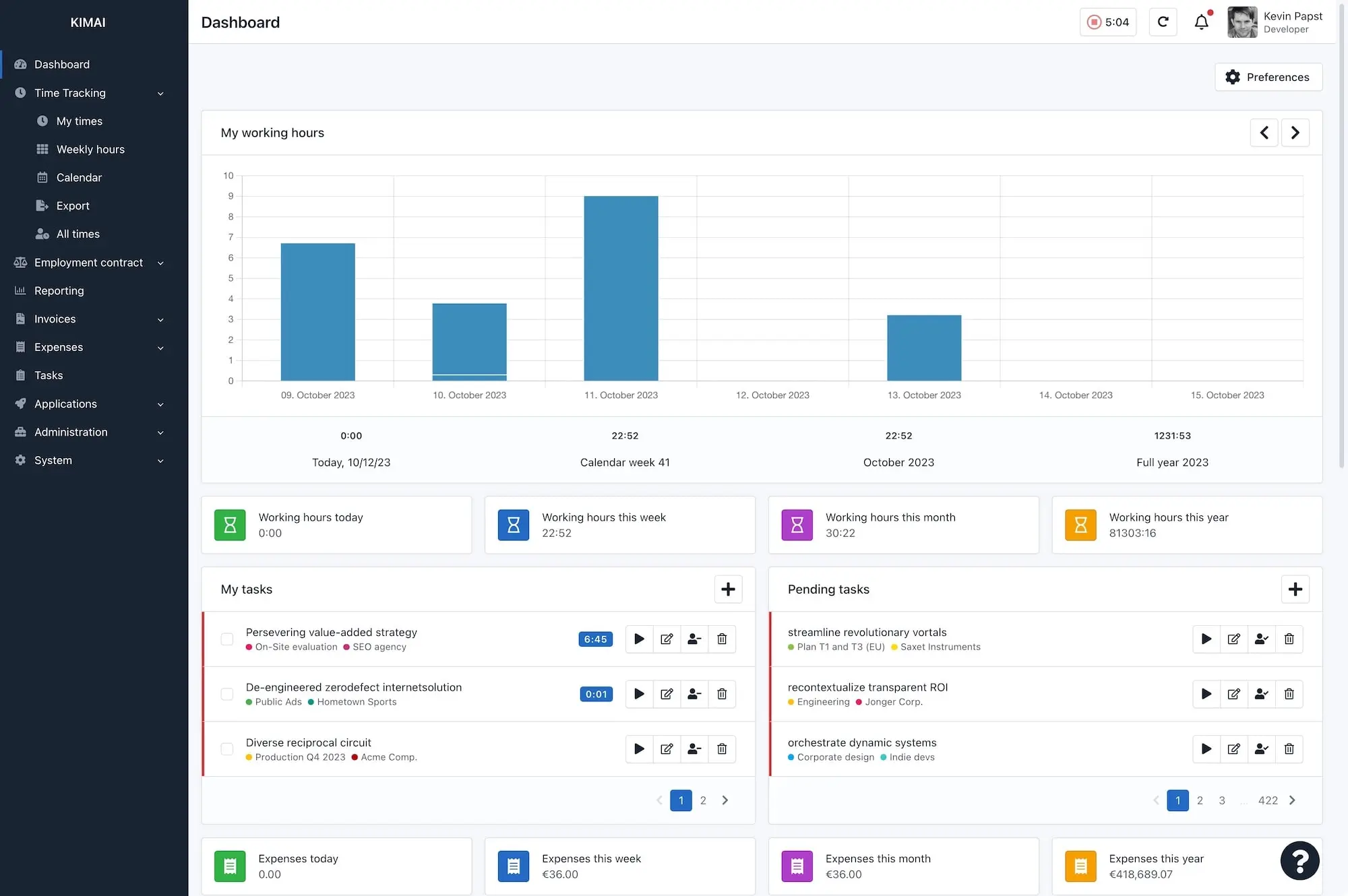
An open-source, self-hosted tracker for project-driven teams, and the answer for anyone who needs the data to stay on their own server. Host it yourself and it costs nothing for as many users as you like, with invoicing, expenses and per-team permissions included rather than sold as upgrades. The trade is that you run it: there is a paid hosted version if you would rather not, but its plans are priced in euros. | Unlimited userssource | Manual timersource | Per user, per monthsource |
.png)