Best learning management systems for schools
Updated .
| Option | Vendor | Platform Type | Grade Levels | Pricing | Launched |
|---|---|---|---|---|---|
Google's free assignment hub, bundled with Google Workspace for Education and wired tightly into Docs, Drive and Meet. Qualifying schools pay nothing for the Fundamentals edition, which is the main reason it spread across districts faster than any paid platform. It is lighter than a full LMS, though: Google positions it as a place to create, distribute and grade assignments rather than a system of record for curriculum, standards-based grading or district reporting, and the more advanced AI features sit behind the paid Education Plus edition. | Googlesource | Blended learning platformsource | K-12 and higher educationsource | Freesource | 2014source |
Instructure's LMS and the default choice across much of US higher education, with a fast-growing K-12 practice alongside it. The code is published under an open licence, unusual for a commercial LMS, and the gradebook and SpeedGrader are the features reviewers single out most often. One thing to check before shortlisting: Instructure has stopped registering new Free-for-Teacher accounts, so an individual teacher can no longer sign up to trial it without going through a sales demo. | Instructuresource | Learning management systemsource | K-12 and higher educationsource | Quote-basedsource | 2011source |
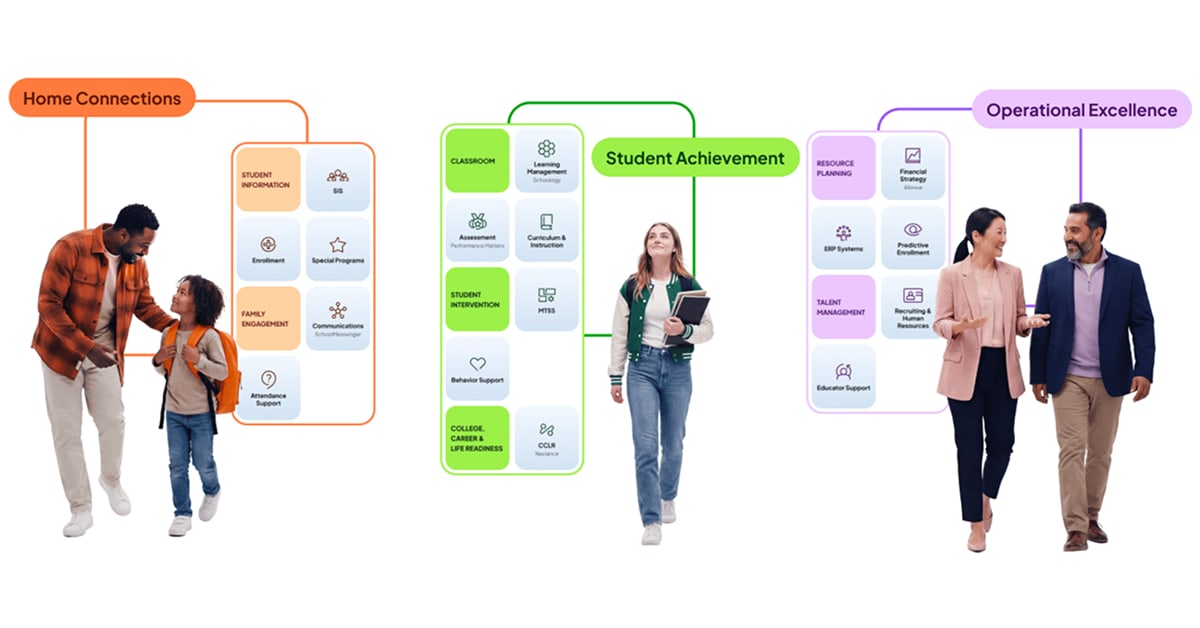
PowerSchool's K-12 learning management system, built around a single hub for assignments, assessments and family communication. It is the natural fit for districts already running PowerSchool SIS, though PowerSchool says it also connects to other student information systems through OneRoster. Younger grades get a simplified Elementary Experience, and families can create their own accounts to see what students are working on, which is a recurring reason districts pick it over a lighter tool. | PowerSchoolsource | Learning management systemsource | K-12source | Quote-basedsource | 2009source |
Microsoft's collaboration platform with a classroom layer on top: Assignments, Class Notebook and meetings, free with a valid school email address. Schools already standardised on Microsoft 365 get it without a separate purchase, which is most of its appeal. It is a communication and meeting tool first, so districts needing curriculum management, standards-based grading or a full gradebook usually run it alongside a dedicated LMS rather than in place of one. | Microsoftsource | Collaboration platformsource | Free tier availablesource | 2017source | |
The open-source standard, in continuous development since 2002 and distributed under the GNU General Public License. A school can download it and run it on its own server with no licence fee, or pay one of the certified Moodle Partners to host and support it. The plugin ecosystem is the largest of any platform here, but the trade-off is real: somebody has to own hosting, upgrades and security, which is why smaller schools usually go through a partner rather than self-hosting. | Moodle HQsource | Learning management systemsource | K-12 and higher educationsource | Freesource | 2002source |
One of the oldest platforms in this comparison, first released in 1997 and now run by Blackboard T&L after several years inside Anthology. It serves higher education, government and workforce training as well as K-12, and it has historically been installable on an institution's own servers as well as taken as a hosted service. Recent work has concentrated on accessibility through Blackboard Ally and on AI built into the core licence, though the platform has also lost some large university contracts to competitors. | Blackboard T&Lsource | Learning management systemsource | K-12 and higher educationsource | Quote-basedsource | 1997source |
D2L's cloud learning platform, with a K-12 business run separately from its higher-education one rather than as an afterthought. The district pitch is analytics dashboards and system-wide reporting alongside parent communication tools, and D2L markets it from elementary through high school. D2L is a publicly traded Canadian company, which makes it one of the more financially transparent vendors on this list for a district worried about a platform being acquired mid-contract. | D2Lsource | Learning management systemsource | K-12 and higher educationsource | Quote-basedsource | |
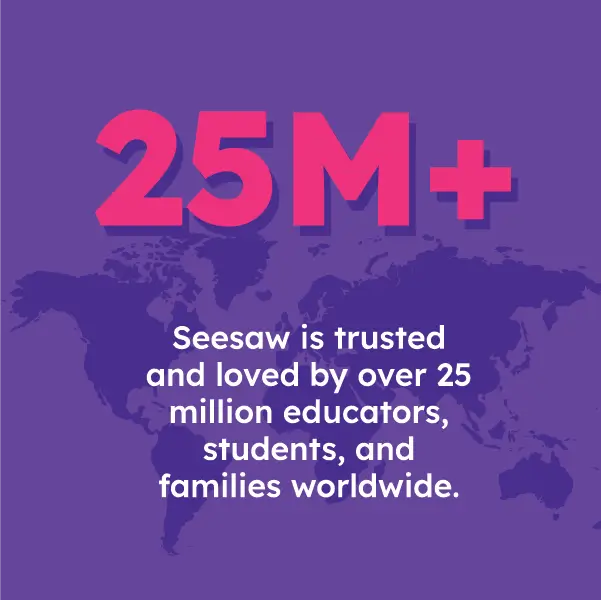
Built specifically for the youngest grades: student portfolios, activities and family communication for PreK through grade 6, rather than a general-purpose platform scaled down. Teachers can create a free account to try it, with school and district plans sold on top. The narrow scope is the point, and it is also the limitation: a district that wants one platform running through grade 12 will outgrow Seesaw somewhere in middle school. | Seesaw Learningsource | Learning experience platformsource | Elementarysource | Free tier availablesource | |
A Norwegian platform founded in Bergen in 1999 and widely used across European school systems, now owned by the media group Sanoma. It leans harder on curriculum planning and learning-objective tracking than most US-built platforms, which fits school systems working to a national curriculum. It covers both school and higher-education use and integrates with Microsoft 365, but it has a much smaller footprint in US districts than the American vendors here. | Itslearning ASsource | Learning management systemsource | K-12 and higher educationsource | Quote-basedsource | 1999source |
A Canadian K-12-only platform that pairs a learning management system with analytics, attendance and district reporting, built by the team behind FirstClass. It is sold to school districts rather than to individual teachers, and its activity feed for parents and students is what most distinguishes it from the larger vendors. Being K-12-only means none of the higher-education baggage some platforms carry, but it is also a considerably smaller company than the others on this list. | Edsbysource | Learning management systemsource | K-12source | Quote-basedsource | 2010source |
A free, open-source platform governed by the Apereo Foundation and developed collaboratively by the institutions that use it rather than by a vendor. That community model is the reason institutions pick it: members get a genuine say in the roadmap and there is no licence cost, only hosting and staff time. It is almost entirely a higher-education product, so a K-12 district will find very little here built for its needs. | Apereo Foundationsource | Learning management systemsource | Higher educationsource | Freesource | 2005source |
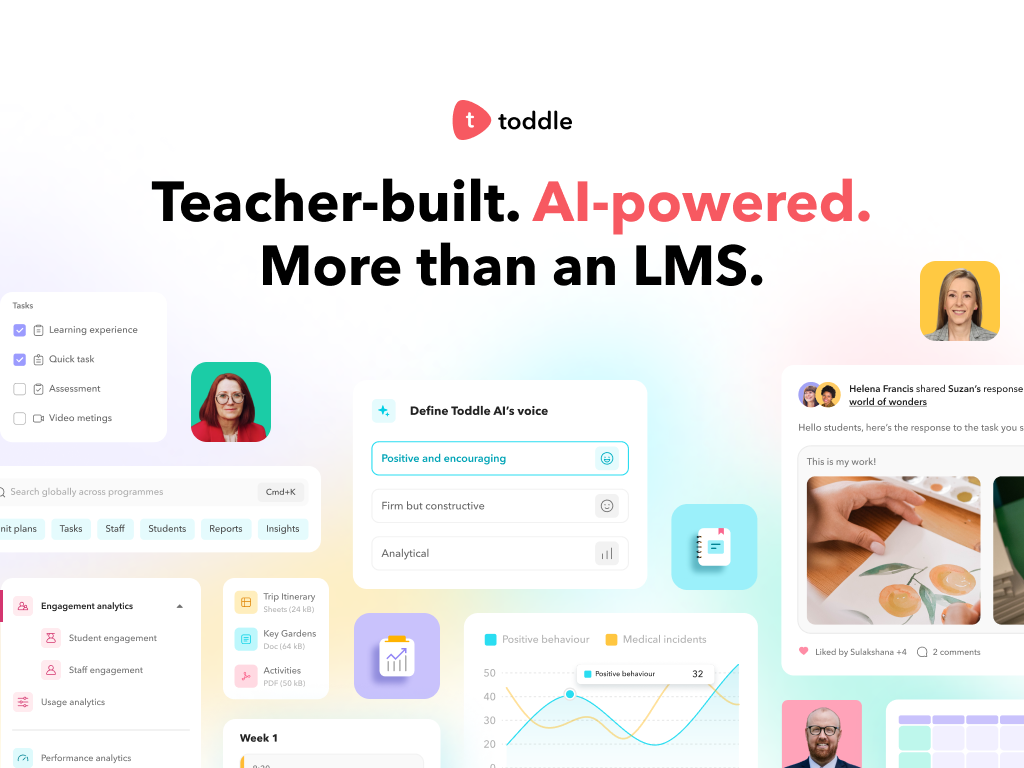
A newer platform aimed at international schools, with curriculum planning built around the IB programmes, the Cambridge curriculum and the English National Curriculum rather than US state standards. It bundles planning, assessment, portfolios, reporting and parent communication into one system, which suits schools that would otherwise stitch several tools together. It is well established in the IB world and increasingly visible in US independent schools, but it is the least proven option here for a large US public district. | Teacher Tools Pvt. Ltd.source | Learning management systemsource | K-12source | Quote-basedsource |