Best Inventory Management Software for Restaurants
Updated .
| Option | Price | Pricing | Platform Type | Invoice Capture | Recipe Costing | Rating | Reviews |
|---|---|---|---|---|---|---|---|
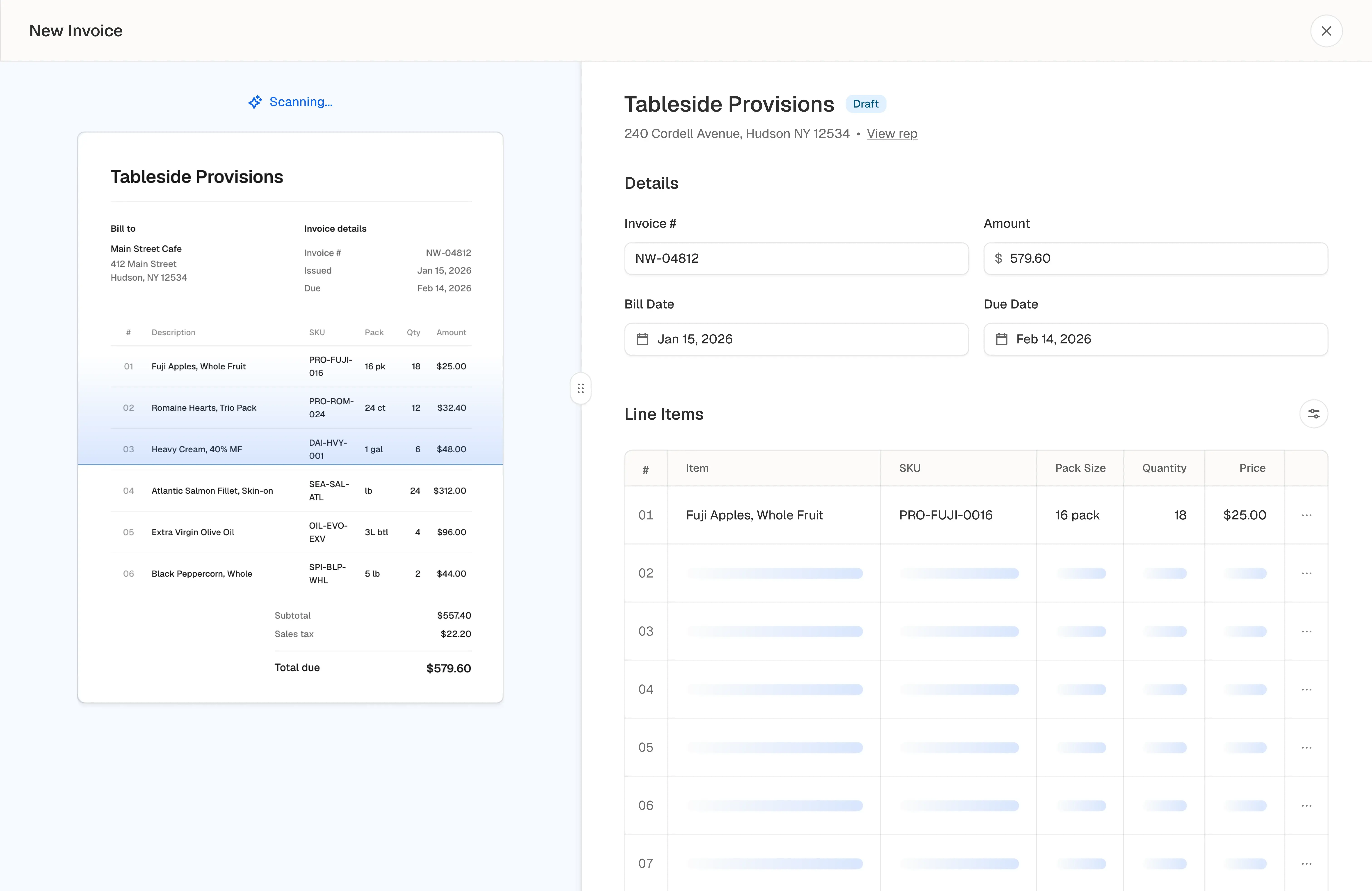
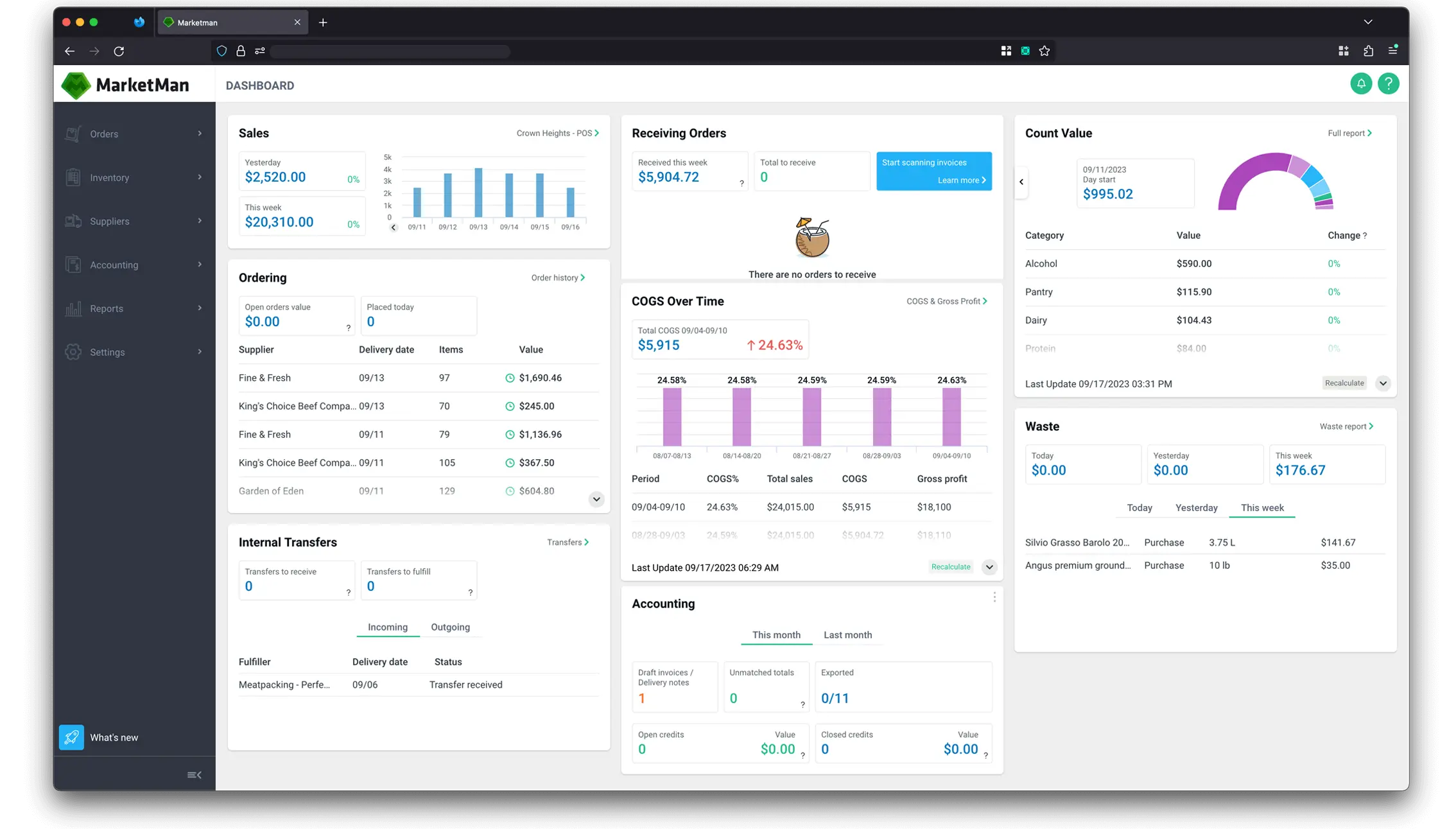
A cloud back-of-house platform aimed squarely at independent operators and small groups, covering counts, purchasing, invoices and recipe costing in one place. Its Starter plan is the cheapest published tier that still includes real-time recipe costing and actual-vs-theoretical reporting, which is unusual at that price. The catch is the invoice cap: Starter reads 50 invoices a month, and unlimited scanning only arrives on the $299 Growth plan. Vendor EDI connections are metered the same way, one on Starter, two on Growth. | $249source | Published ratesource | Inventory and food costsource | Included with limitssource | Includedsource | 4.7source | 112source |
Built by former operators around one flat price and no feature tiers, which is why it shows up so often in accountant recommendations. Everything is bundled: unlimited invoice processing, bill pay, vendor statement reconciliation, inventory and menu analysis all sit inside the same $350 per location. That flat rate is the most expensive entry point here, but there is nothing to upgrade to and no per-invoice metering. Toast users should budget extra, since MarginEdge notes Toast charges a separate per-location API fee. | $350source | Published ratesource | Inventory and food costsource | Includedsource | Includedsource | 4.6source | 47source |
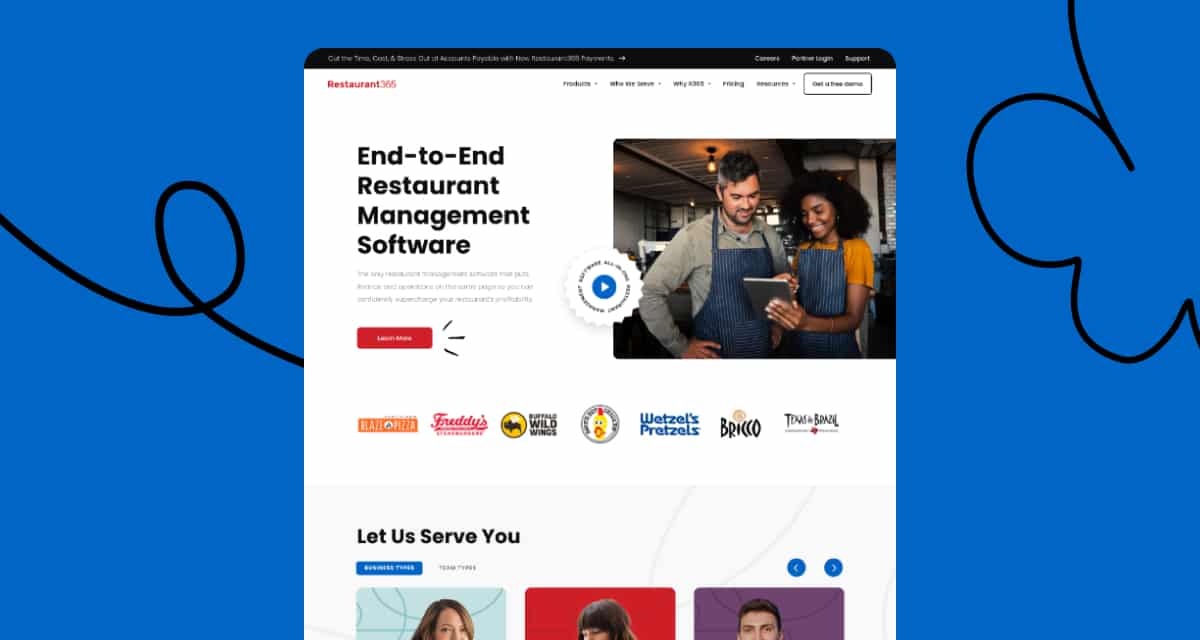
The heavyweight of the category, and the only option here that is a full restaurant accounting system as well as an inventory one. Recipes price themselves off live vendor costs, and AP capture pulls invoices straight into a coded general ledger, which is the real reason multi-unit groups buy it. It is aimed at operators running many locations rather than a single independent, and its rating is the lowest in this table across a substantial 72 reviews. Restaurant365 does not publish pricing on its own site; the $499 figure comes from its Capterra listing. | $499source | Quote on requestsource | All-in-one back officesource | Includedsource | Includedsource | 4.1source | 72source |
A back-office suite for restaurants and hotels that leans hard on accounts-payable automation: its AI matches invoices to purchase orders, flags discrepancies and routes approvals rather than just digitising paper. Inventory and recipes are tied to theoretical usage so variance shows up before it reaches the P&L, and it claims connections to over a thousand POS, EDI and API systems. It sells heavily into hotels and multi-outlet groups, which shows in the case studies. There is no pricing page on the site, so a demo is the only way to get a number. | Quote on requestsource | All-in-one back officesource | Includedsource | Includedsource | 4.5source | 123source | |
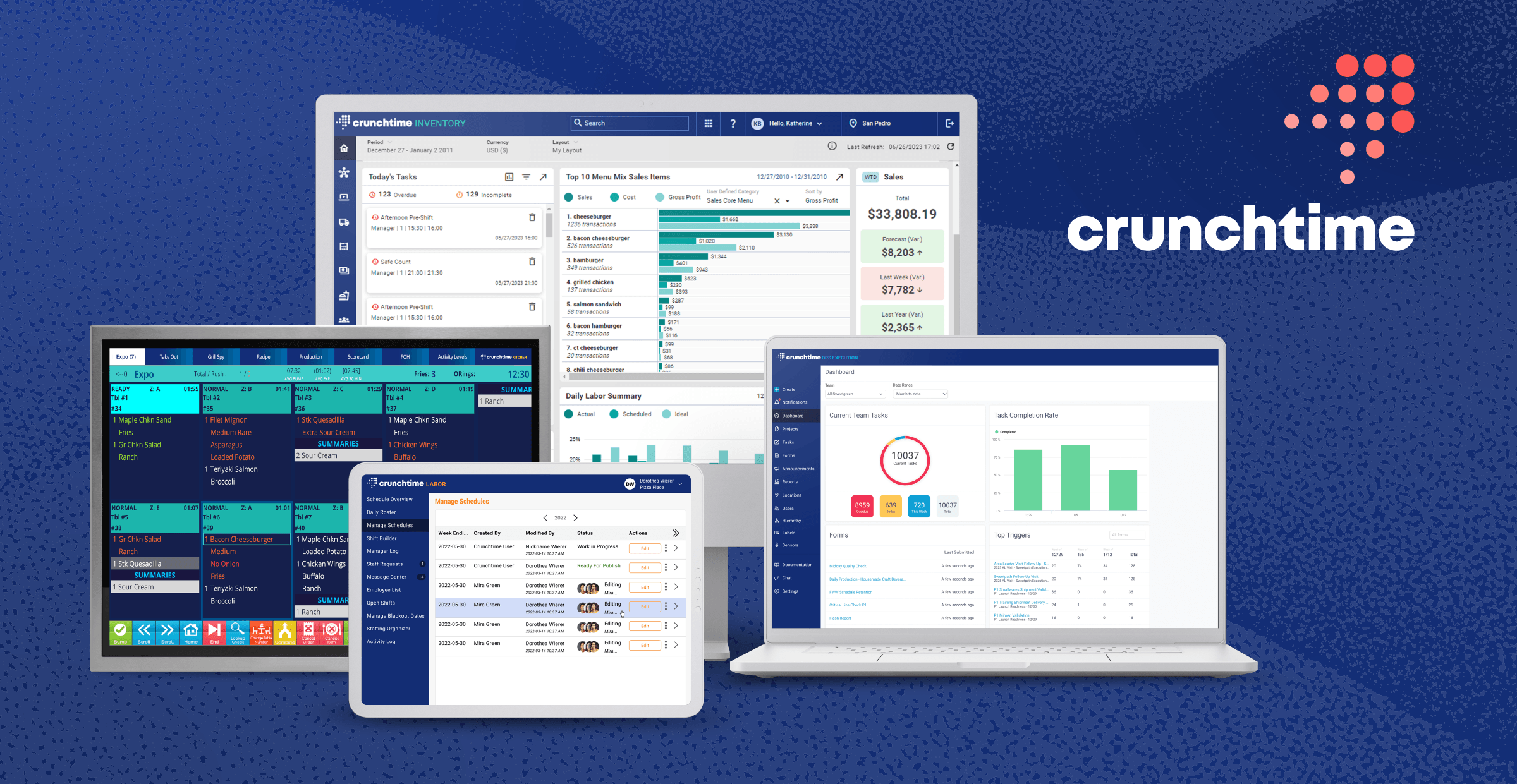
An enterprise operations suite where inventory sits alongside labor scheduling, task execution and staff training, sold to chains that need every location run the same way. The inventory side covers forecasting, purchasing, counting, recipe management and reconciliation, with actual-versus-theoretical food cost as its own named product. This is the option built for scale rather than for a single dining room, and its review count is small because its customers are few and large. Pricing is quote-only. | Quote on requestsource | All-in-one back officesource | Includedsource | 4.4source | 14source | ||
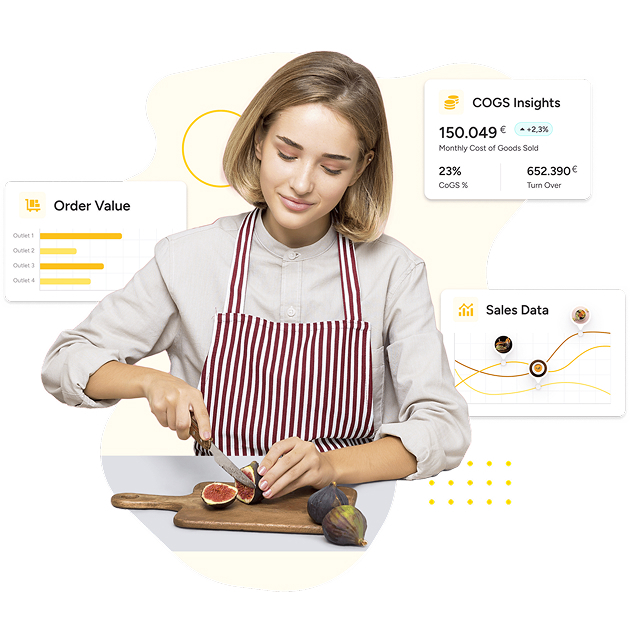
A European-born platform for multi-site foodservice that starts from the recipe rather than the invoice: standardised recipes, menu engineering and production planning feed purchasing and stock. Counting supports barcode and voice input, and purchasing includes automated invoice matching against orders. It is explicitly sold from five outlets upwards, so a single independent restaurant is not the target. Subscriptions are billed annually, with a 15% surcharge for monthly billing, and the price itself comes only from a sales conversation. | Quote on requestsource | All-in-one back officesource | Includedsource | Includedsource | 4.6source | 35source | |
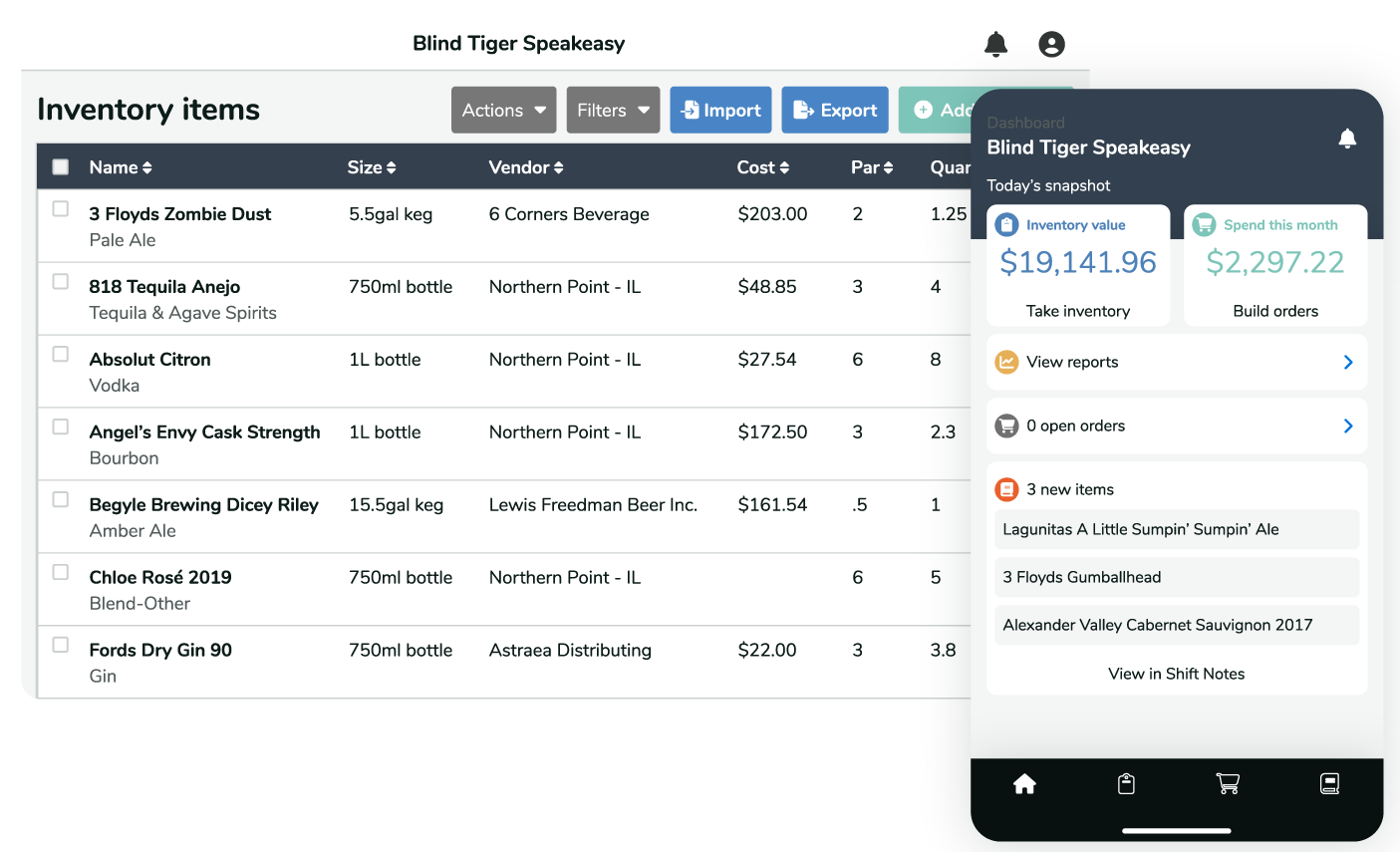
Beverage-led inventory that has grown into food as well, with a Bluetooth scale for weighing open bottles and over sixty POS connections. Pricing is unusually transparent for this category: beverage or food alone is $249 a month for one venue, the combined bundle $399, and multi-outlet properties are banded by outlet count. Invoice reading is metered rather than unlimited, at 75 AI invoices a month on the single-venue tier. There is no free trial; WISK offers a 60-day money-back guarantee instead, and it carries no verified reviews in the Capterra pool. | $249source | Published ratesource | Bar and beveragesource | Included with limitssource | Includedsource | ||
The only option here with a genuinely free tier: the Basic plan costs nothing per location and still does counts, ordering and POS-synced inventory, capped at ten recipes and six months of history. Paid plans are $79 and $129 a month, and automatic invoice entry, where you photograph an invoice and it fills itself in, is held back to the top Professional tier. It is beverage-first, built around pour costs and drink pricing, so a food-heavy kitchen will outgrow it. Backbar has no verified reviews in the Capterra pool. | Freesource | Published ratesource | Bar and beveragesource | Included with limitssource | Includedsource | ||
A single all-inclusive plan at $199 a month per store, with unlimited users, free training and support, and one POS integration thrown in rather than metered. Plate costing, recipe cards, sales forecasting and commissary handling all sit inside that one price, and the app keeps working offline while you count. Two things to watch: there is a one-time licensing fee on top of the subscription, and invoice capture is explicitly excluded from the suite as a separate in-app purchase. Its seven Capterra reviews are polarised, with five five-star and one one-star. | $199source | Published ratesource | Inventory and food costsource | Paid add-onsource | Includedsource | 4.3source | 7source |
The veteran of this list, from TracRite, and the only one still built as Windows desktop software rather than a browser app. It is cheap to start at $150 a month, though a $250 setup fee applies and the Premier tier jumps to $300 with a $1,000 setup, and it integrates with a long list of older POS systems like Aloha, Micros and POSitouch that newer tools ignore. Recipe costs update automatically as purchases are entered. The trade-off is data entry: invoices are typed in rather than photographed, and only seven people have reviewed it. | $150source | Published ratesource | Inventory and food costsource | Not offeredsource | Includedsource | 4.6source | 7source |
Worth knowing about because the inventory comes attached to the till rather than bought separately: stock deducts in real time as menu items sell, and recipe costs and margins track every ingredient price change. The $69 Starter plan is the cheapest published entry point in this table, but advanced inventory is an add-on at that tier and only bundled from the $189 Essential plan up. There is no supplier invoice scanning, so invoices are still someone's job. Best fit for an operator who wants one vendor for POS and stock rather than the deepest food-cost tooling. | $69source | Published ratesource | Built into a POSsource | Paid add-onsource | 4.4source | 216source | |
Invoice processing and food-cost analysis that Toast acquired in 2021 and now sells as an add-on to its own point-of-sale. Photograph an invoice and it digitises the document, extracts the line items and pushes them into accounting and inventory, and gross margin per menu item is calculated from those ingredient prices against Toast sales data. The obvious constraint is that it is tied to Toast: it is not a fit if you run a different till. Toast publishes no price for it, and only seven people have reviewed it. | Quote on requestsource | Built into a POSsource | Includedsource | Includedsource | 4.3source | 7source |
.jpg)