Best free project management software for startups
Updated .
| Option | Free plan team size | Free plan limit | Free plan storage | Cheapest paid plan | Built for |
|---|---|---|---|---|---|
Trello is the simplest thing on this list: drag cards across columns and you have a project. The free plan carries a real team (ten collaborators per Workspace, unlimited cards) and the ten-board ceiling is generous for a startup running a handful of workflows. The catch is views: calendar, timeline, table and dashboard all sit behind Premium, so a free Trello board stays a board. Teams usually outgrow it when they need dependencies or reporting rather than when they hit a limit. | Up to 10 userssource | Up to 10 boards per Workspacesource | Unlimited storage, 10MB max per filesource | $5 per user/month billed annually ($6 monthly), Standard plansource | Any teamsource |
Asana is a polished, widely used work tracker, but its free tier is now the tightest of the mainstream options: two people. Within that it is unrestricted, with unlimited tasks and projects and list, board and calendar views, so it works well for a founding pair before the first hires. A third teammate means paying, and Asana's entry price is among the higher ones here. Worth choosing on the assumption that you will pay for it, not as a free tool. | Up to 2 userssource | Unlimited tasks and projectssource | Unlimited storage, 100MB max per filesource | $10.99 per user/month billed annually ($13.49 monthly), Starter plansource | Any teamsource |
ClickUp has the most generous headline free plan here: unlimited members and unlimited tasks, which no other hosted option matches at this price. The real limit is storage, at 60MB for the whole workspace, so attachments push you to pay long before headcount does. It is also the densest interface of the group, with docs, chat, whiteboards and sprints layered into one app, which suits teams that want to consolidate tools and frustrates teams that just want a task list. | Unlimited userssource | Unlimited taskssource | 60 MBsource | $7 per user/month billed yearly ($10 monthly), Unlimited plansource | Any teamsource |
Notion is a documents-and-databases workspace that many startups run projects inside rather than a project tracker as such. Free is effectively unlimited for one person, but the moment a second member joins the workspace, block usage is capped, which is the limit teams actually hit. File uploads are also capped at 5MB each, so it is a poor home for design assets. Best when your bottleneck is scattered knowledge (specs, meeting notes, a roadmap page) rather than task tracking. | Unlimited pages and blocks for one person, limited for teams of 2+source | 5 MB max per file uploadsource | $10 per member/month, Plus plansource | Docs and databasessource | |
Jira's free plan is the most substantial one aimed at engineering teams: ten users, unlimited projects and work items, 2GB of storage, and backlog, board, timeline and calendar views without paying. It expects more setup than the others here, and its vocabulary (work items, workflows, sprints) is built around software delivery, which is either exactly right or entirely wrong for your team. Startups that already use it for issue tracking tend to stay; teams that are not shipping code usually find it heavy. The eleventh hire is what forces the upgrade. | Up to 10 userssource | Unlimited goals, projects, tasks and formssource | 2 GB file storagesource | $7.91 per user/month, Standard plan (estimated)source | |
Linear is an opinionated issue tracker for product and engineering teams, known for being fast and for keeping its feature set narrow on purpose. Its free plan is shaped unusually: everyone on the team can join, but the workspace is capped at 250 issues and two teams, so it runs out by volume rather than by headcount. That makes it a fine place to start and a poor place to stay once you are shipping steadily. Teams that like it tend to like it a lot and pay early. | Unlimited userssource | 250 issuessource | $10 per user/month billed yearly, Basic plansource | Software teamssource | |
monday.com is a colourful, highly configurable work platform, but its free tier is the thinnest here: two seats and three boards, which is closer to an extended trial than a plan you can run a company on. Everything that makes the product interesting (automations, dashboards, timeline views, guests) begins on paid tiers. Consider it if you expect to buy quickly and want the free plan only to check the fit. | Up to 2 userssource | Up to 3 boardssource | $9 per seat/month billed annually, Basic plansource | Any teamsource | |
Zoho Projects gives away more of a conventional project tool than anyone else at this size: five users, three projects and 5GB of storage, with subtasks, timesheets-adjacent basics and mobile apps included. Its upgrade is also by far the cheapest real one on this list, so growing out of the free plan is not a budget event. The trade-off is the wider Zoho ecosystem: the interface feels of a piece with Zoho's other apps, and integrations lean towards its own suite rather than the tools startups usually already run. | Up to 5 userssource | 3 projectssource | 5 GBsource | US$4 per user/month billed annually, Premium plansource | Any teamsource |
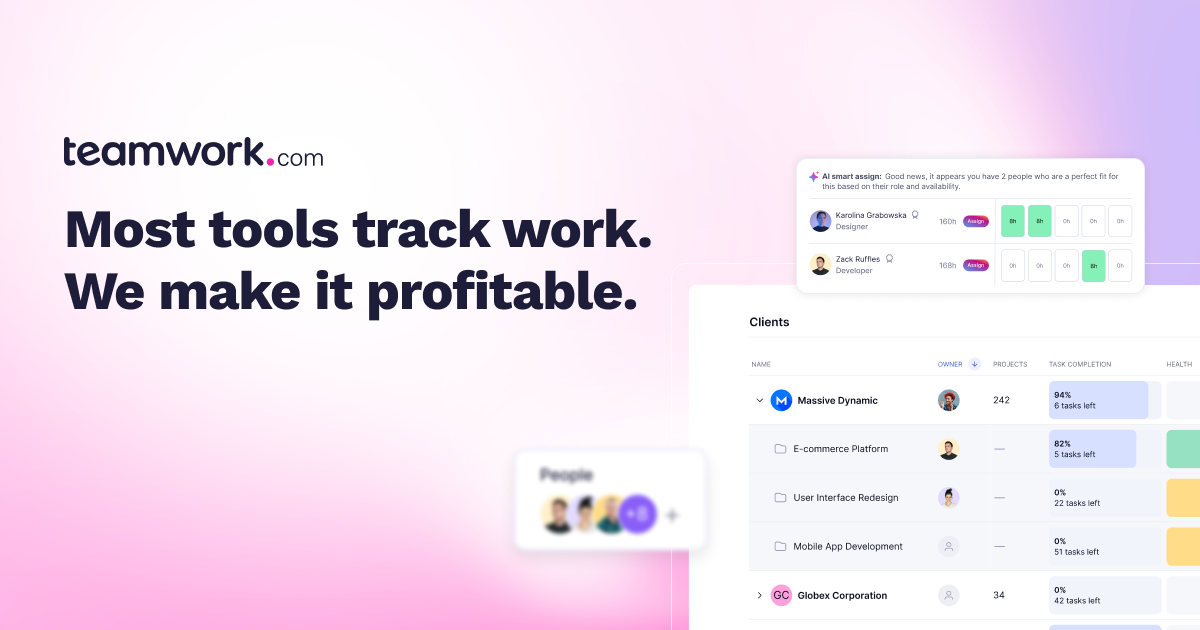
Teamwork.com is built around billable client work rather than internal projects, so it carries time tracking, client users and per-client organisation as first-class ideas. For an agency-shaped startup that matters more than any feature count. The free plan is a genuine five-person, five-project workspace with Gantt and table views, but 100MB of storage across the account is small, and anything to do with budgets, invoicing or capacity planning starts on paid tiers. | Up to 5 userssource | Up to 5 projectssource | 100 MBsource | $9.99 per user/month billed yearly, Basics plansource | Client worksource |
Airtable is a relational database with project-shaped views bolted on, which is the right tool when what you are tracking is structured records (candidates, inventory, content, customers) rather than tasks. The free plan allows five editing collaborators and unlimited read-only viewers, and its binding limit is 1,000 records per base, which arrives quickly for anything operational. Its upgrade is the most expensive on this list. Choose it for flexibility, not for project management conventions. | Up to 5 userssource | 1,000 records per basesource | 1 GB of attachments per basesource | $20 per user/month billed annually, Team plansource | Docs and databasessource |
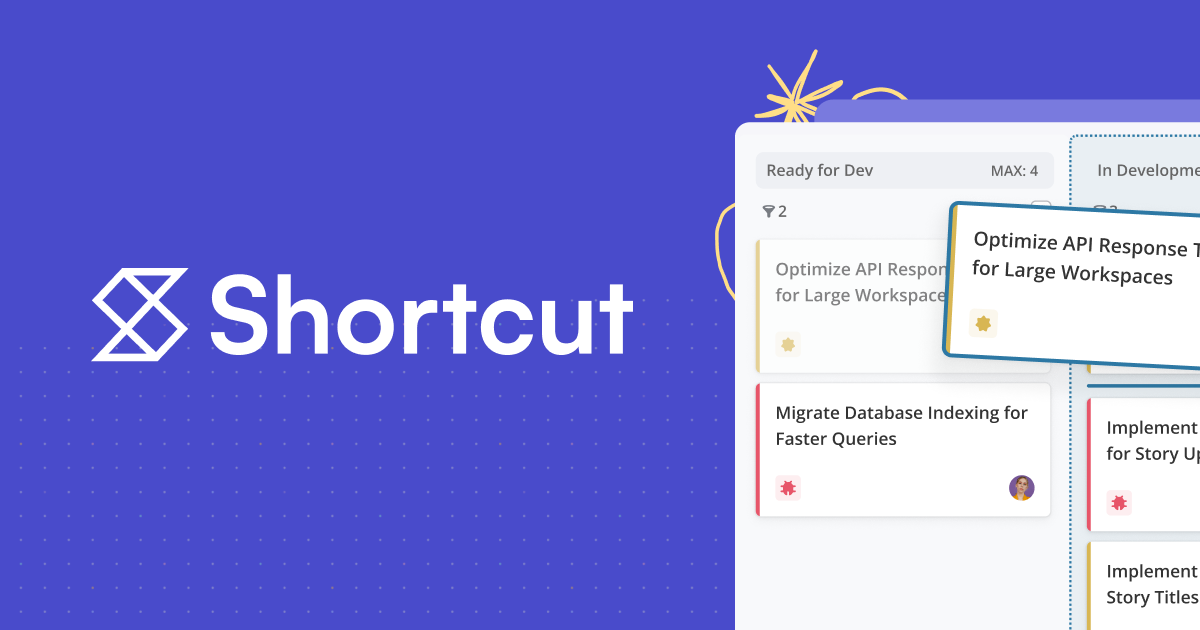
Shortcut is issue tracking for software teams that find Jira heavy, with kanban boards, iterations, a roadmap and GitHub, Slack and Figma integrations available on the free tier. Ten users is a real engineering team, and unlike Linear's free plan there is no cap on how much work you track. Reporting depth, work-in-progress limits and automations are the things reserved for paid plans. A strong default for a technical startup that has outgrown a board but is not ready to configure Jira. | Up to 10 userssource | 5 GBsource | $8.50 per user/month billed yearly, Team plansource | Software teamssource | |
Freedcamp is the only tool here whose free plan is unlimited on every axis that usually forces an upgrade: users, projects, tasks and total storage, subject to a fair use policy. For a startup that wants everyone in one workspace without counting seats, nothing else on this list competes. The trade-offs are a dated interface and a 10MB cap on any single file, and its paid tiers exist mostly to add integrations, templates and larger uploads rather than core features. | Unlimited userssource | Unlimited projects and taskssource | Unlimited storage under a fair use policysource | $1.49 per user/month billed annually ($2.49 monthly), Pro plansource | Any teamsource |
Plane is an open-source project tracker that can be self-hosted, which is the reason to look at it: a startup with an engineer to spare can run it on its own infrastructure with no per-seat cost at all. The hosted free plan covers twelve users with cycles, modules, multiple layouts and project pages, and its paid tier is cheaper per seat than any incumbent here. It is younger than the rest, so expect a smaller integration ecosystem and rougher edges around the corners of the product. | Up to 12 userssource | $6 per seat per month, Pro plansource | Any teamsource |