best project management software for nonprofits
Updated .
| Option | Price | Nonprofit Offer | Free Plan | Tool Type | User Rating |
|---|---|---|---|---|---|
Asana is one of the most widely adopted work management tools, and its nonprofit program is refreshingly simple: a flat 50% off paid plans once your organization is verified. It is strong at running repeatable programs, with templates, workload views and approvals that suit teams coordinating grants, events or campaigns across departments. The catch for small nonprofits is the free tier, which Asana has narrowed to two people, so most teams pay from day one. Reviewers rate it highly for ease of use, though a minority report slow responses when they need support urgently. | $10.99source | 50% or more offsource | Limited userssource | Work management platformsource | 4.5source |
monday.com has the most generous entry offer here: ten seats free for eligible nonprofits, with additional seats at a steep discount on top. The interface is colourful and board driven, which tends to land well with volunteers and program staff who have never used a project tool before. It also bends easily into things that are not really projects, like a volunteer roster or a grant pipeline. The trade-off is that features nonprofits often want, time tracking among them, are locked to the higher paid plans. | $9source | Free up to a seat capsource | Limited userssource | Work management platformsource | 4.6source |
ClickUp packs the most into its free plan: unlimited members, unlimited tasks and native time tracking, which is unusual at no cost and genuinely useful for allocating staff hours against a grant. Its nonprofit discount is real but unpublished, so you apply and find out what you are offered rather than reading a number off a page. The depth cuts both ways: reviewers praise the feature set and the value, while small teams can find the sheer number of settings overwhelming to configure. It is the strongest pick for a budget-conscious nonprofit willing to invest the setup time. | $7source | Discount by applicationsource | Unlimited userssource | All-in-one workspacesource | 4.6source |
Trello is the simplest tool on this list and the one volunteers pick up fastest, because the whole model is a card moved across a board. It works well for a single recurring workflow such as an event checklist, a donation acknowledgement queue or a content calendar, and much less well once you need reporting across many projects at once. Its free plan covers a small team per workspace, which is enough for plenty of grassroots nonprofits to never pay anything. Because Atlassian owns it, paid upgrades also fall under the same nonprofit program that covers Jira. | $5source | 50% or more offsource | Limited userssource | Kanban task boardssource | 4.5source |
Notion is a documents-first workspace where a project is a database you build yourself, which suits nonprofits that want program notes, policies and task lists living in one place instead of three. It is the most flexible option here and the most work to set up, because almost nothing arrives preconfigured. Two limits matter for this audience: the nonprofit discount applies only to the Business plan, and the free tier is really built for one person, capping at 1,000 blocks once a second workspace owner joins. If someone on staff enjoys building systems, Notion rewards that; if nobody does, it stalls. | $10source | 50% or more offsource | Individual use onlysource | All-in-one workspacesource | 4.7source |
Airtable is a database that looks like a spreadsheet, and nonprofits reach for it when the thing they are tracking is not really a project: grant deadlines, volunteer records, program participants, equipment. It links records together in ways a normal spreadsheet cannot, and it can put simple forms and internal apps on top of that data without code. It is the priciest per seat in this comparison, though the 50% nonprofit discount on the Team plan brings it back toward the pack. The free plan is capped at five editors, so it works better as a small back-office system than as an all-staff tool. | $20source | 50% or more offsource | Limited userssource | Database and app buildersource | 4.6source |
Wrike is the most conventional project management tool in this group, built around folders, Gantt timelines and intake request forms, and it fits nonprofits running formal projects with defined phases and handoffs. Its free plan is unusual in supporting unlimited users, so a large volunteer base can be brought in without paying per head, which few competitors allow. The gap for this audience is that Wrike publishes no nonprofit program at all: special pricing exists but has to be negotiated with their sales team, so budget planning starts with a phone call. Reviewers most often flag the learning curve rather than the feature set. | $10source | Unlimited userssource | Work management platformsource | 4.4source | |
Smartsheet is the grid-based option, closest to running your programs out of a very capable spreadsheet, and it turns up most often in larger nonprofits whose staff already live in Excel. It handles portfolios, resource allocation and approval routing at a scale most tools here do not attempt. Two things make it harder on a small budget: the free plan was retired for new signups in August 2024, leaving only a 30-day trial, and the nonprofit discount is unpublished and settled during the purchase conversation. It suits an organization that already has a dedicated operations person more than one buying its first tool. | $9source | Discount by applicationsource | Trial onlysource | Work management platformsource | 4.5source |
Zoho Projects is the cheapest paid option in this comparison by a wide margin, and the rest of the Zoho suite sits behind it, which matters if you also need a CRM, accounting or a donor database on the same bill. Zoho's nonprofit program works as wallet credit rather than a percentage off the invoice, covering up to half of what you spend. The free tier holds five users and three projects, enough for a very small team to trial it properly rather than just look at it. It is less polished than the leaders here, but on a tight budget the value is hard to argue with. | $4source | 50% or more offsource | Limited userssource | Work management platformsource | 4.5source |
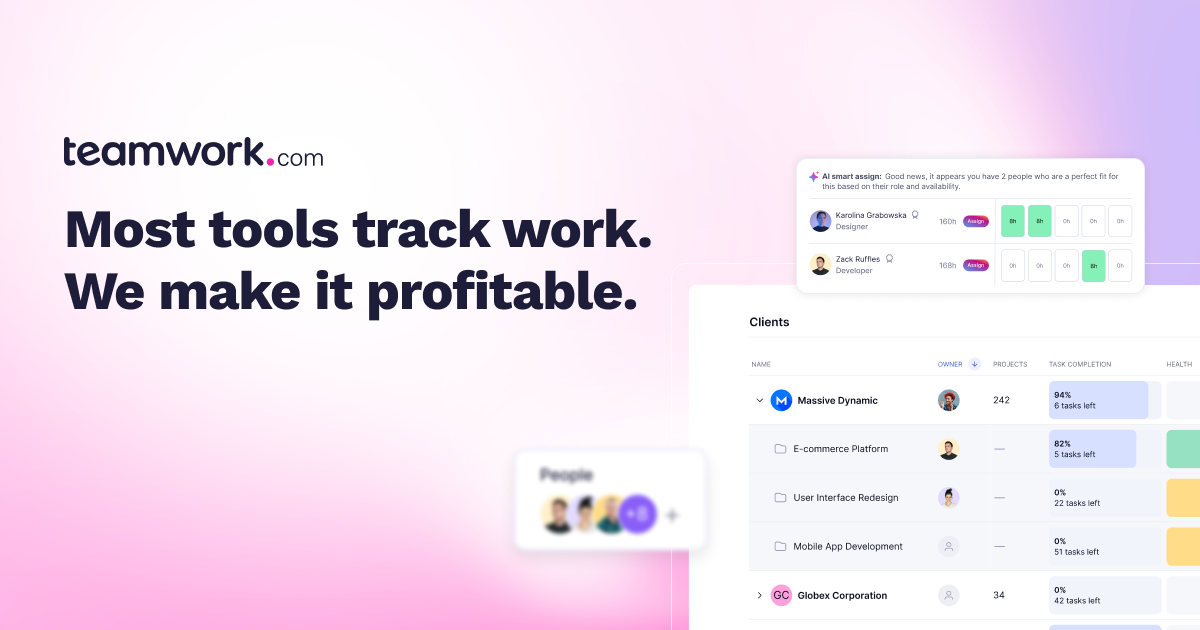
Teamwork.com is built for organizations delivering work against a budget and a deadline for somebody else, which maps unusually well onto grant-funded program delivery. Time logging, rates and capacity forecasting are core rather than add-ons, so tracking staff hours against a specific grant is a first-class job rather than a workaround. Its nonprofit pricing is not published; their billing team handles requests case by case. The free plan tops out at five users and five projects, so treat it as an extended trial rather than a permanent home for a growing team. | $9.99source | Discount by applicationsource | Limited userssource | Work management platformsource | 4.5source |
Jira carries the strongest free offer on this list: Atlassian's social impact program currently gives eligible nonprofits 100% off Jira for up to 25 users, which is a real staff-sized team at no cost. It was built for software teams and still reads that way, with sprints, backlogs and issue workflows, so a nonprofit with no technical staff will find it heavier than the job requires. Where it earns its place is an organization that also runs a website, an app or an internal IT function alongside its programs. Even without applying, the ordinary free plan covers ten users. | $7.91source | Free up to a seat capsource | Limited userssource | Agile issue trackingsource | 4.4source |
Nifty is a smaller all-in-one option bundling tasks, docs, chat and time tracking into one workspace, aimed at teams who would otherwise pay for three separate tools. Its free plan allows unlimited members, which almost nothing else here does, though it caps you at two active projects, so it behaves as a real trial rather than a permanent free tier. Nonprofits get 50% off its paid plans, which puts a small staff team well under the cost of the better-known names. The trade-off is a much smaller review base and a thinner integration ecosystem, so verify it connects to the tools you already run. | $10source | 50% or more offsource | Unlimited userssource | All-in-one workspacesource | 4.6source |