free project management software for small business
Updated .
| Option | Paid Plan From | Free Plan Users | Free Plan Projects | Free Plan Storage |
|---|---|---|---|---|
Trello is the Kanban board almost everyone tries first: cards in columns, drag them across as work moves, and there is essentially nothing to learn. The free plan is unusually generous on people (10 collaborators per Workspace) but tight on structure, capping you at 10 boards, and Trello counts storage per file rather than in total. It suits a small team running a handful of repeatable workflows more than one juggling many separate client projects. The common complaint is that once you want a timeline, a table across boards, or reporting, you are into the paid tiers. | $5source | Up to 10source | Up to 10source | Unlimitedsource |
Asana has the cleanest task-and-project interface of the mainstream tools, and its free tier gives you unlimited projects with list, board and calendar views. The catch is the one that matters most here: the free Personal plan is capped at two users, so it is really a solo or two-person tool rather than a small-business one. Timeline and Gantt views, reporting dashboards and automation all sit behind the $10.99 Starter plan. If your team is three or more people, treat Asana's free plan as a trial rather than a home. | $10.99source | Up to 2source | Unlimitedsource | Unlimitedsource |
ClickUp is the most feature-dense free plan on this list and the only mainstream one that lets an unlimited number of people in without paying. Free accounts get unlimited tasks, docs, Kanban boards and calendar view, but are held to five Spaces and just 60MB of file storage, which is the limit most teams hit first. Gantt charts, native time tracking and unlimited storage start at the $7 Unlimited plan. The trade-off people mention most is that the sheer number of settings and views takes real effort to tame. | $7source | Unlimitedsource | Up to 5source | Under 1 GBsource |
Jira is built for software teams working in sprints, and its free tier is one of the few that includes a timeline view rather than paywalling it. Up to 10 users get unlimited projects, backlogs, boards and reports with 2 GB of storage, which is a lot of capability for a small dev shop at no cost. It is a poor fit for non-technical work: the vocabulary is issues, epics and workflows, and setup assumes someone will invest time in configuration. Small businesses without a developer usually find it heavier than they need. | $7.91source | Up to 10source | Unlimitedsource | 2 GB or moresource |
monday.com is the colourful, spreadsheet-like work platform that a lot of small businesses end up on, but its free plan is the most restrictive here: two seats and three boards. That is a demo, not a workspace, and almost any real small business will be on the $9 Basic plan from day one. What you get for that is a genuinely approachable interface, 200+ templates and easy automations. Judge monday on its paid pricing rather than its free tier. | $9source | Up to 2source | Up to 3source | Under 1 GBsource |
Wrike lets an unlimited number of people into its free plan, which is rare, and then caps the work instead: 200 active tasks per account and 2 GB of storage. That shape suits a whole small team dipping in on a modest amount of live work, and it breaks down as soon as your task list grows. Free accounts get board and table views but not the Gantt charts Wrike is known for, which start on the $10 Team plan. It is the most enterprise-flavoured tool here, which shows in both the interface and the price. | $10source | Unlimitedsource | 2 GB or moresource | |
Zoho Projects is the value pick: the free plan covers five users and three projects with a generous 5 GB of storage, and the first paid tier is the cheapest of the well-known tools. It is a proper project-management tool with subtasks, workflow actions and real reporting rather than a task list with extras. Gantt charts and timesheets are not in the free tier, so time-billing agencies will need to upgrade. It makes most sense if you already use other Zoho apps, since the integrations are where it pulls ahead. | $4source | Up to 5source | Up to 3source | 2 GB or moresource |
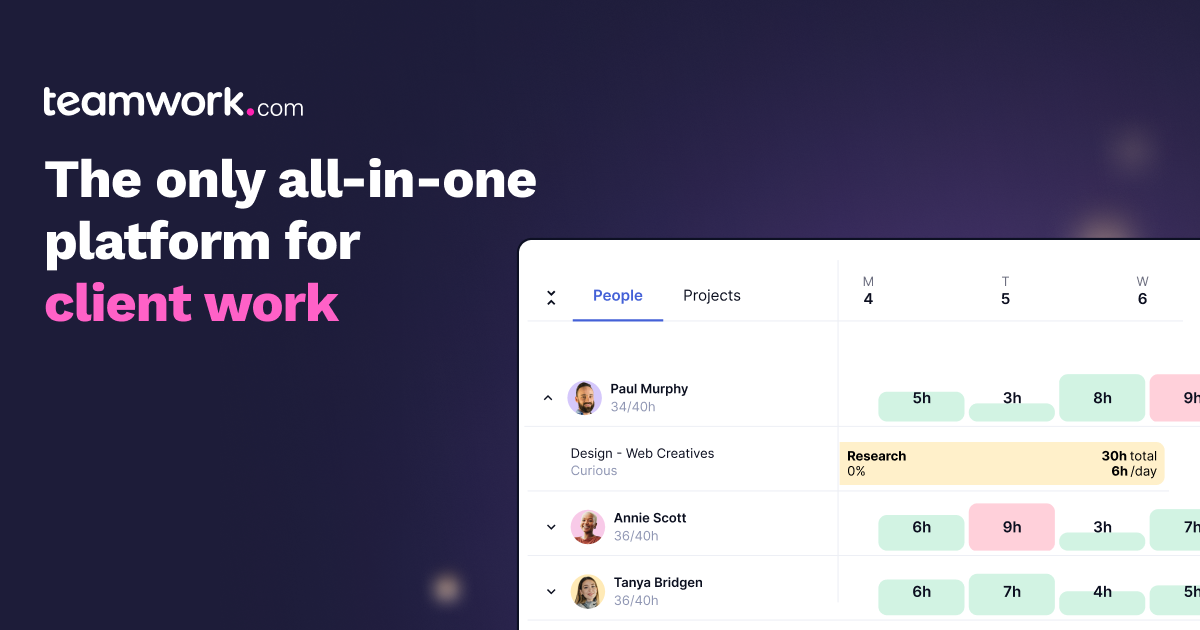
Teamwork.com is built around client work, and it is the only tool here whose free plan includes both Gantt views and time logging, the two things agencies and consultancies actually need. Five users and five projects is a real working allowance rather than a demo, though 100MB of storage is the tightest limit on this list and file-heavy teams will hit it fast. Work can be organised by client out of the box, which no other free plan does. If you bill hours to clients, start here. | $9.99source | Up to 5source | Up to 5source | Under 1 GBsource |
Freedcamp has the most generous free plan of anything on this list: unlimited users, unlimited projects and unlimited total storage, subject only to a fair-usage policy and a 10MB cap on any single file. Tasks, milestones, discussions, files, a calendar and time tracking are all included at no cost. The paid Pro tier is $1.49 per user, an order of magnitude below the big names. It is less polished than Asana or monday.com and Gantt charts only appear on the $7.49 Business tier, but for a budget-conscious small business it is hard to beat on raw allowance. | $1.49source | Unlimitedsource | Unlimitedsource | Unlimitedsource |
Plaky is a monday.com-style board tool from the makers of Clockify, and it does the thing monday.com does not: let an unlimited number of people in for free, with unlimited spaces, boards and items. The free tier trades away depth instead, holding you to six custom fields per board and a seven-day activity log. Files are capped at 10MB each. It is a strong fit for a growing team that wants everyone in one place without counting seats, and a weak one if you need reporting or a timeline view. | $3.99source | Unlimitedsource | Unlimitedsource | |
Nifty bundles tasks, milestones, docs, team chat and time tracking into one workspace, so a small team can drop a couple of other subscriptions. Its free plan is unusual in shape: unlimited team members but only two active projects and 100 MB of storage. That works if you run one or two long-running efforts with everyone involved, and not at all if you juggle many small client jobs. The $10 Pro tier is priced with the mainstream tools rather than the budget ones. | $10source | Unlimitedsource | Up to 2source | Under 1 GBsource |
GoodDay is the least famous name here and quietly one of the best-shaped free plans for an actual small business: up to 15 users, unlimited projects and tasks, 1 GB of storage, plus dashboards, custom workflows and basic analytics at no cost. That covers a whole small company rather than a couple of seats or a couple of projects. Gantt views, time tracking and unlimited automations are held back for the $4 Professional tier, which is still among the cheapest on this list. The trade-off is a smaller community and fewer third-party integrations than the household names. | $4source | Up to 15source | Unlimitedsource | 1 GBsource |
Airtable is a spreadsheet-database hybrid rather than a project tracker, and small businesses reach for it when their work is really a structured list: an inventory, a content calendar, a client pipeline. The free plan allows five collaborators with editing rights and 1 GB of attachments per base, but the limit that actually bites is 1,000 records per base. It gives you far more control over fields, views and linked data than any board tool here. It is also the most expensive to upgrade, at $20 per user per month. | $20source | Up to 5source | 1 GBsource |