Best password managers with a free plan
Updated .
| Option | Free plan devices | Free plan password limit | Phone app | Where your passwords are stored | Cheapest paid upgrade |
|---|---|---|---|---|---|
Bitwarden is the free plan most people end up recommending, and the reason is on its own pricing page: unlimited passwords on unlimited devices, with desktop, mobile and browser apps all included at no cost. It is open source, and even free accounts can share items with one other person, which almost no rival allows. Premium at $1.65 a month adds file attachments, a built-in authenticator and vault health reports rather than anything you need day to day. The trade-off is polish: the apps are plainer and fussier to set up than the paid-first managers. | Unlimited devicessource | Unlimitedsource | Android and iPhonesource | The maker's cloudsource | Premium, $1.65 a month billed annuallysource |
Proton Pass comes from the Swiss company behind Proton Mail, and its free tier is unusually generous: unlimited logins, notes and card details on unlimited devices, passkeys everywhere, and ten hide-my-email aliases thrown in. Everything syncs automatically across the desktop, mobile and browser apps. The catch is sharing: passing a vault or a link to someone else sits behind Pass Plus, along with the built-in 2FA authenticator and dark web monitoring. At $35.88 a year it is one of the pricier upgrades here, though a Proton Unlimited subscription folds it in with Mail, VPN and Drive. | Unlimited devicessource | Unlimitedsource | Android and iPhonesource | The maker's cloudsource | Pass Plus, billed at $35.88 every 12 monthssource |
NordPass, from the makers of NordVPN, puts no cap at all on how many passwords, passkeys or personal details a free account can hold, and you may install it on as many devices as you like. What the free plan will not do is keep you signed in on more than one of them: NordPass's own support pages state that a free account allows a single active session, so logging in on your phone signs you out of your laptop. That makes it a fine free manager if you live on one machine, and an irritating one if you move between a desk and a pocket. Premium, $23.88 for a first year, lifts the limit and adds password health checks and a data breach scanner. | One device at a timesource | Unlimitedsource | Android and iPhonesource | The maker's cloudsource | Premium, $23.88 for the first 12 months, normally $35.88source |
Zoho Vault's free tier is labelled Free Forever and it is genuinely unrestricted for one person: unlimited passwords, passkeys and storage across unlimited devices, with iOS and Android apps, browser extensions, a desktop app for Mac and Windows and offline access. It is built as a business tool, so the free plan stops exactly where teamwork begins, and secure sharing with other people is the first thing you buy in the Standard plan. Vault data is encrypted in your browser and only the ciphertext reaches Zoho's servers. Anyone already using Zoho's other apps gets the tightest integration here. | Unlimited devicessource | Unlimitedsource | Android and iPhonesource | The maker's cloudsource | Standard, US$0.90 per user each month billed annuallysource |
LastPass still gives free accounts unlimited password storage, autofill, dark web monitoring and basic sharing, but restricts them to one device type: you pick computers or mobile devices, not both. For anyone who saves a password on a laptop and needs it on a phone, that single rule is the whole story, and it is why the free plan is usually a stepping stone to the $3.00-a-month Premium tier. The apps themselves are mature and cover every browser, Windows, Mac, Linux, Android, iOS and even Apple Watch. | One device typesource | Unlimitedsource | Android and iPhonesource | The maker's cloudsource | Premium, $3.00 a month billed annuallysource |
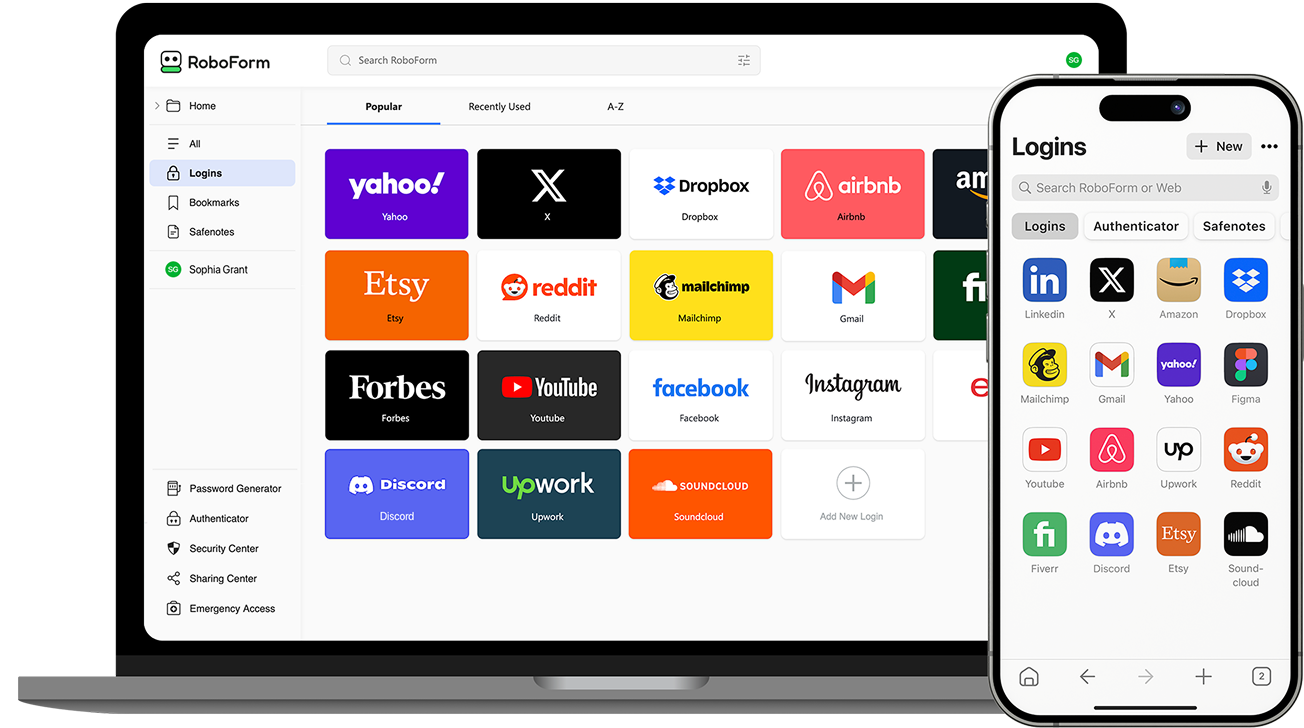
RoboForm's free plan is unlimited in the way that matters least and limited in the way that matters most: you can store as many logins as you like, but only on a single device, with no syncing to a second one. It is the oldest name here and still the strongest at filling long web forms, not just login boxes, and the free tier includes two-factor authentication, breach monitoring and sharing. Premium, which unlocks unlimited devices, is $19.90 for a first year and $29.88 a year after that, among the cheaper upgrades in this table. | One devicesource | Unlimitedsource | Android and iPhonesource | Premium, $19.90 for the first year, then $29.88 a yearsource | |
Keeper's free plan is the thinnest here by a wide margin: ten saved records, on one mobile device, with identity and payment details kept locally on that phone. It is really a taster for the paid product, which is a polished, business-grade manager with unlimited devices, sharing and cloud backup. Keeper does not publish its personal price as readable text on its pricing page; the iPhone App Store listing prices Keeper Unlimited at $42.99 a year as an in-app purchase, which is higher than buying on the web. Worth a look if you want the paid experience, not if you want to stay free. | One devicesource | Up to 10 itemssource | Only your own devicesource | ||
Enpass is the odd one out: it keeps no central vault of its own, and your encrypted data lives wherever you put it, typically your own iCloud, Dropbox, Google Drive or OneDrive account. That means nothing to breach at scale, and it also means the syncing is your problem to set up. The free plan gives you the full app on Windows, macOS and Linux with no item limit, but caps you at 25 items on Android and iOS, so phone users hit the wall quickly. Paid plans start at $1.99 a month, and unusually there is still a one-off lifetime licence at $99.99. | Unlimited on desktop onlysource | Unlimited on desktop, 25 on phonessource | Android and iPhonesource | Your own cloud accountsource | Individual Plan, $1.99 a month billed yearly for the first yearsource |
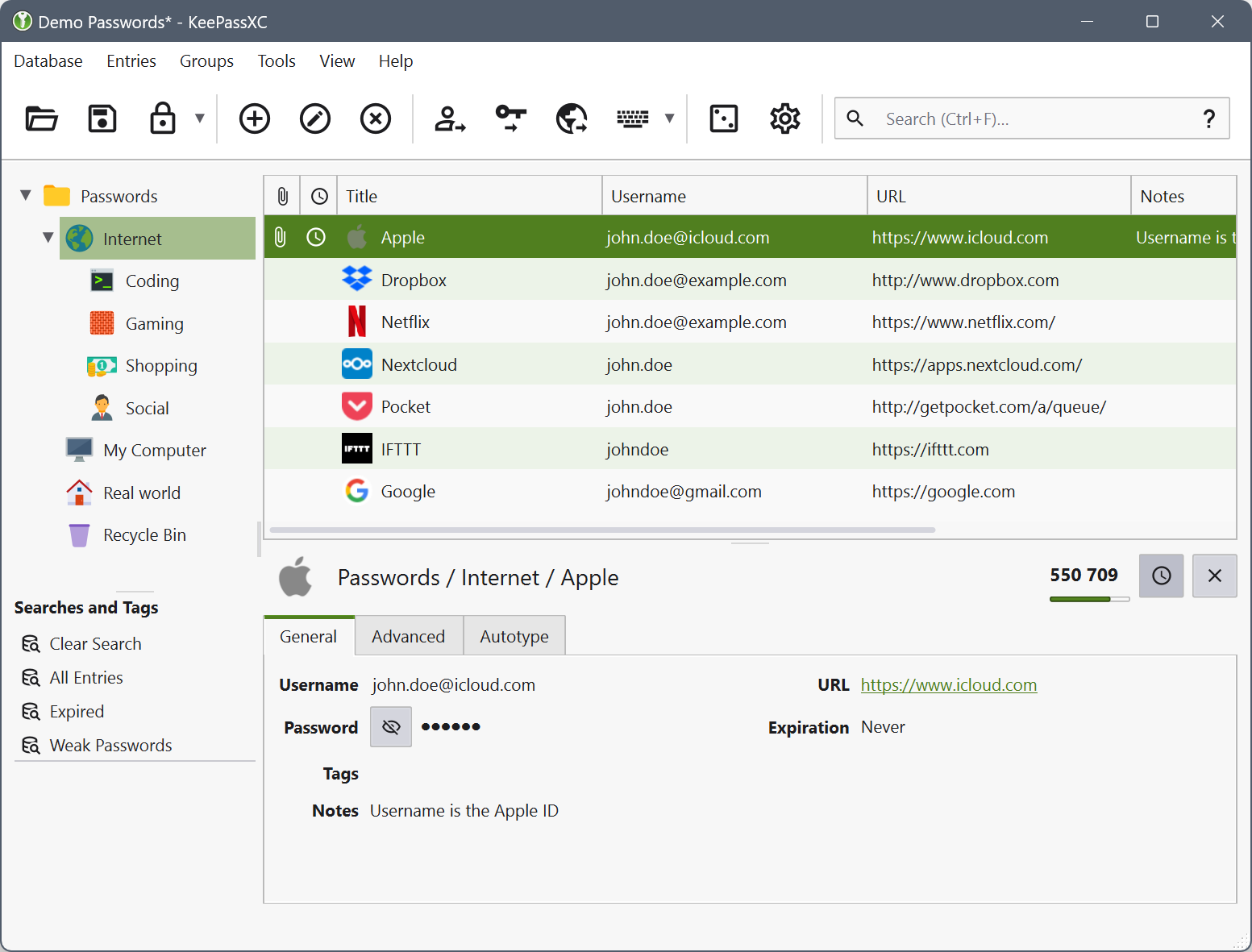
KeePassXC is not a service at all: it is a free, open-source desktop program that keeps your passwords in an encrypted file on your own computer, with no account to create and nothing stored on anyone's servers. There is no paid tier and no upsell, and the project is funded by donations. The cost is convenience: the team publishes no mobile app of its own and points Android and iOS users to third-party apps like KeePassDX and Strongbox that open the same file, and any syncing between machines is something you arrange yourself. It suits people who would rather own the risk than rent the storage. | Unlimited on desktop onlysource | No official mobile appsource | Only your own devicesource | No paid plan: free and open sourcesource | |
Since iOS 18 and macOS Sequoia, Apple's passwords have their own app rather than hiding in Settings, and it handles passwords, passkeys, Wi-Fi keys and verification codes, syncing through iCloud Keychain and warning you about weak or leaked entries. It costs nothing because it comes with the device, and you can share a group of logins with family. The limit is the ecosystem: there is no Android app, and Windows access means installing iCloud for Windows and using Chrome or Edge. For a household that is entirely on Apple hardware it is the least effort of anything here. | Unlimited devicessource | Apple devices onlysource | The maker's cloudsource | No paid plan: included with iOS, iPadOS, macOS and visionOSsource | |
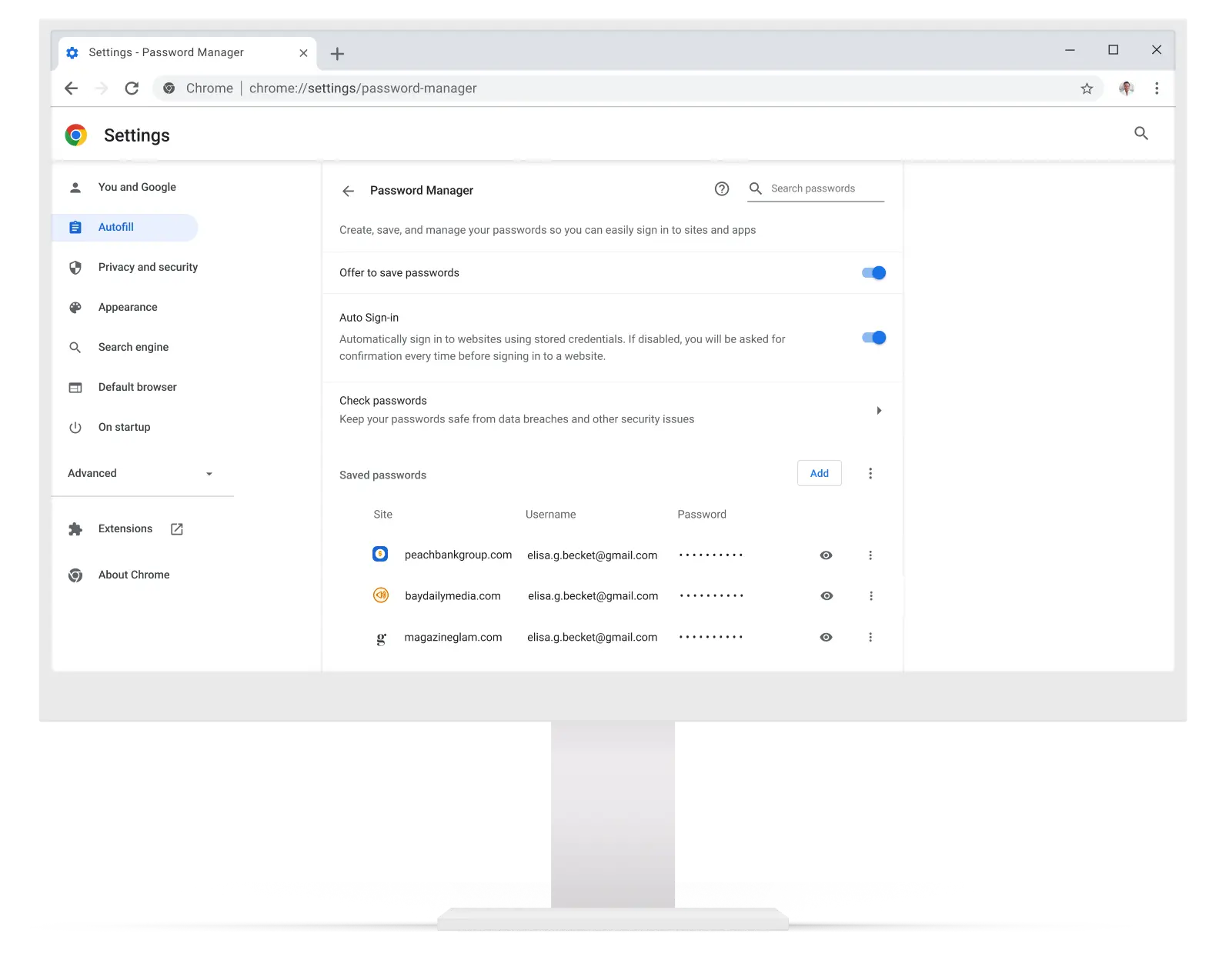
Google's password manager is already installed for most people: it is part of Chrome on every platform and part of every Android app, it costs nothing, and it syncs through the Google Account you are probably signed into anyway. Saving and filling passwords needs no setup at all, and there is no upgrade to buy. The weaknesses are the flip side of that convenience: outside Chrome and Android it barely exists, and your vault is tied to the same account as your mail, so a compromised Google login is a compromised password vault. It is a sensible free default rather than a considered choice. | Unlimited devicessource | Android and iPhonesource | The maker's cloudsource | No paid plan: built into Chrome and Androidsource | |
Norton gives its password manager away as a standalone free product rather than as a trial: a cloud vault you reach from a browser extension on a computer or the mobile app, with autofill, two-factor authentication and Face ID or fingerprint unlock, on as many devices as you want. There is no paid version of it to buy; it is also folded into Norton AntiVirus Plus and Norton 360 subscriptions. What you give up against the specialists is sharing, and any published guarantee about how many items you may store. Reasonable if you want free syncing without a limit and do not need to share logins with anyone. | Unlimited devicessource | Android and iPhonesource | The maker's cloudsource | No paid plan; also included with Norton AntiVirus Plus and Norton 360source |